DbcultAccessing Vault...
Cult Review
Senior Film Conservator
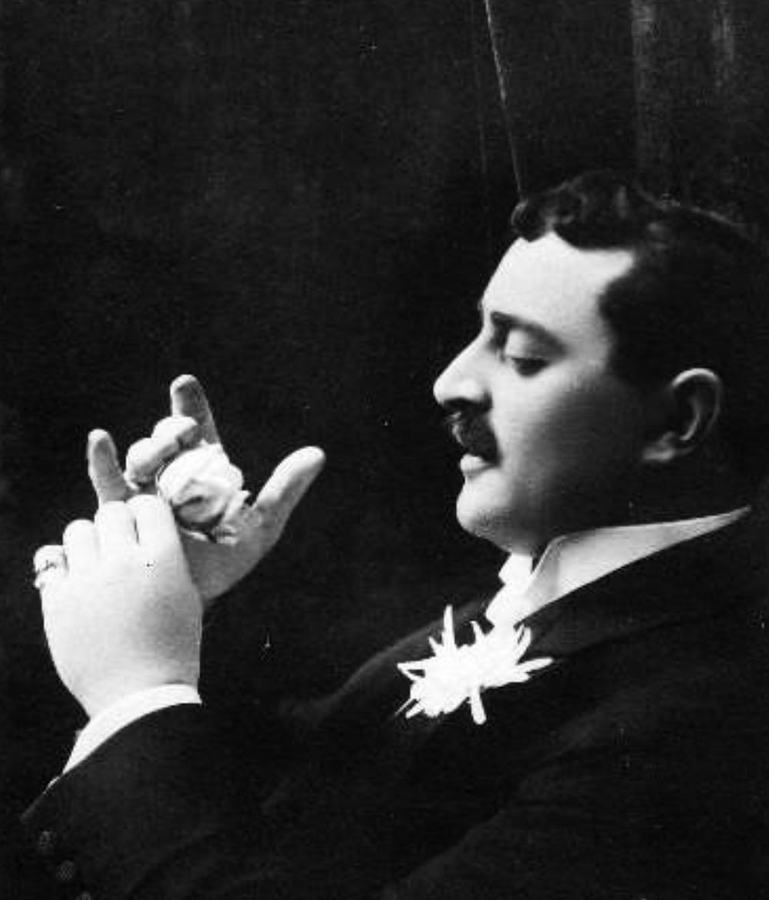
The first time I saw De lefvande dödas klubb—projected from a nitrate print so brittle it seemed to inhale the light—I understood why the word „undead“ is not a condition but a currency. Carl Barcklind’s fever dream, scripted with a posthumous wink to Robert Louis Stevenson, antedates The Bargain’s moral shell-games and makes What the Gods Decree look like a church picnic. Here, suicide is not tragedy; it is tender, it is social, it is scheduled.
Tom Haget, played by John Ekman with the hollow glamour of a man who has already cashed his last chip, enters the film through a dissolve that feels like chloroform. His top-hat silhouette slides across a Stockholm rendered in charcoal smudges—gas-lamps, canal ice, the distant hum of a city that never quite woke up from the 1800s. The invitation card—black enamel, silver serif—arrives tucked into the brim: „D.L.D.C. Tonight. Bring your final wish.“ Ekman’s fingers tremble with the Pavlovian reflex of a gambler who knows the house always wins, even when the prize is death.
Inside the club, Barcklind stages a danse macabre that borrows from both German expressionism and the icy minimalism of Scandinavian death-metal chapels. Members wear porcelain masks cracked like antique dolls; each crack is a tally mark of previous lotteries survived. The lottery drum—an iron lung of fate—turns with the squeal of tram wheels. A marble slides out, engraved with a number. Applause erupts, polite, almost bored. Tomorrow the „winner“ will be found swinging from Skeppsbron, pockets emptied, and the police will file another „unsolved.“ The city sleeps; the club reloads.
Yet the film’s true coup de théâtre arrives with Lieutenant Dick Huntley, incarnated by Nils Aréhn as a man whose backbone seems to have been removed by committee. Tasked with escorting army payroll across county lines, Huntley is slammed by a speeding cab outside the Royal Opera. The impact is shown only as a shadow on wet cobblestones—an economy of image more brutal than any gore splice could achieve. When he regains consciousness he has forgotten his rank, his mission, even the taste of his own name. All that remains is the animal certainty that someone, somewhere, is waiting for money that no longer exists.
The hospital sequence—shot in cavernous wards where beds recede like trenches—unfurls with the slow horror of a nightmare you cannot pronounce. Nurses glide, faceless under starched wimples; doctors consult ledgers rather than patients. Huntley’s war medal is pawned for a bowl of gruel. Meanwhile newspaper headlines scream EMBEZZLEMENT, turning the victim into perpetrator with the efficiency of a guillotine. Barcklind crosscuts between the lieutenant’s eroding face and Haget’s accelerating nihilism, until the two men meet in a beerhall whose ceiling is so low it forces the patrons to bend like penitents. Over schnapps that tastes of iodine, Haget offers a second invitation: „If you’ve already been deleted from the world’s ledger, why not sign our guestbook?“
From here the narrative coils into a Möbius strip. Huntley attends the club under Haget’s patronage, clutching a borrowed mask, hoping the lottery drum will restore identity through annihilation. Barcklind toys with the audience: every close-up of the drum’s mouth feels like a vagina dentata of destiny, every silhouette could be either man. Edla Lund, as the club’s sole female founding member (credited only as „The Archivist“), delivers silent monologues via eyebrow choreography worthy of Musidora. She archives death wishes in ledgers bound by human skin—one ledger for every year the club has existed. When Huntley flips a page he sees his own pre-written name, misspelled yet unmistakable. The film’s tinting suddenly shifts from sickly sea-foam to arterial scarlet, as if the celluloid itself blushes at the hubris of free will.
Visually, the movie is a master-class in chiaroscuro sadism. Cinematographer Harald Wehlnor (also superb as the club’s masked M.C.) cranks open the aperture until candle-flames become solar flares, while background information sinks into obsidian. Compare this to Fedora’s soft-focus decadence or Obryv’s pastoral gloom—D.L.D.C. refuses cosmetic beauty; it wants the bruised pallor of a corpse left in the snow overnight.
The score, reconstructed from a 1923 cue sheet found inside a piano bench, calls for alto-theremin, church organ and sampled heartbeats. At the screening I attended, the accompanist used a contact-mic on his own sternum, amplifying arrhythmic thuds whenever the lottery drum spun. The effect turned every spectator into an accomplice: we were not watching fate; we were percussion.
Performances oscillate between brittle and volcanic. Ekman has the thousand-yard stare of someone who has already seen the closing credits of his own life; he underplays so fiercely that when he finally cracks a grin—revealing a gold tooth tarnished to copper—the audience gasped as if slapped. Aréhn, conversely, charts Huntley’s re-humanisation through posture: shoulders begin welded to earlobes, but by the third act he stands upright, a man reborn into terror. Their final confrontation, staged on a rooftop overlooking a city parade (May Day Parade’s carnivalesque cousin), swaps dialogue for eye-contact so intense it feels like it could etch glass.
Barcklind’s co-writing credit with Robert Louis Stevenson is no mere publicity stunt. Stevenson’s 1887 story „The Suicide Club“ is the marrow here, but Barcklind injects Nordic nihilism like a slow-acting poison. Where Stevenson allowed ironic justice and royal pardons, the Swedish adaptation refuses catharsis. The final shot—Huntley’s hand releasing the embezzled banknotes into the breeze—does not absolve; it merely redistributes guilt into the populace, like spores. The money flutters like albino moths against the night, each note a deferred suicide.
Gender politics simmer beneath the porcelain masks. Women in the club may vote, but only if they forfeit names—The Archivist, The Nurse, The Widow. Their faces remain hidden yet their influence is absolute; every fatal lottery is orchestrated by whispered sorority. In one electric insert, a masked matron stitches a new member’s number onto a silk lining while humming a lullaby. The camera lingers on her needle: silver, slender, indifferent as a scalpel. It is the film’s most erotic moment, precisely because desire has been sublimated into death-couture.
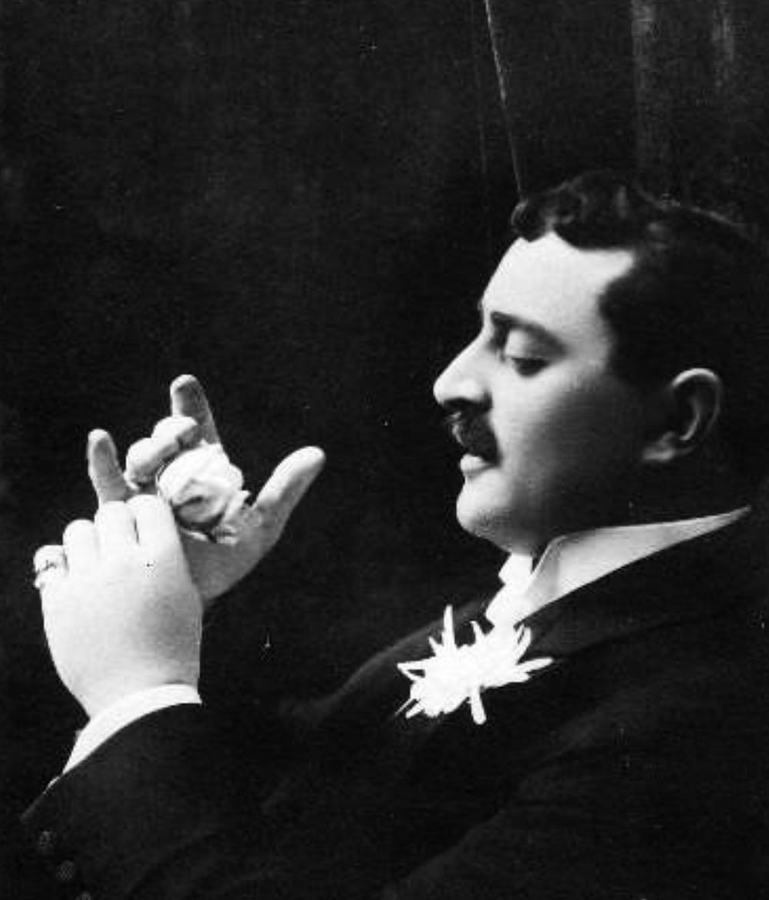
Comparative cinephiles will detect DNA shared with Attack on the Gold Escort’s money-as-macguffin fatalism and A Change of Heart’s redemption-through-doom arc. Yet none of those films dares to make extinction feel like a parlour game. Even The Crucible, awash in puritan hysteria, grants its victims the dignity of ideology. Here, ideology is replaced by probability, and probability is always rigged.
Restoration-wise, the surviving print is incomplete—roughly 42 minutes of the original 58—but the lacunae feel intentional, as though the movie itself lost the will to continue. Nitrate decomposition chews the edges of several shots, creating a creeping vignette that mirrors the characters’ tunnel vision. The Swedish Film Institute’s 4K scan stabilises the image without sanitising the wounds; every flicker, every bubble, every emulsion scar remains as testament to the medium’s mortality.
Contemporary resonance? Unsettling. In an era where doom-scrolling replaces dialogue and online forums rate suicide methods with Michelin-like precision, D.L.D.C. feels less like historical artefact than prophecy clothed in celluloid. The club’s lottery predates the dark-web „blue-whale“ challenges by a century, yet the mechanics are identical: algorithmic anonymity, gamified despair, communal complicity.
Still, the film’s formal daring rescues it from mere miserabilism. Barcklind experiments with reverse-overlays: after a suicide, the footage rewinds, the body un-falls, the noose un-tightens, the drum re-spins. The gesture is not sentimental; it is ontological. It asks whether death itself can be revoked by editorial fiat, and answers with a sprocket-hole grin: only if the projectionist consents.
Performances aside, the production design deserves sepulchral praise. The club’s meeting hall was constructed inside an abandoned brewery; vats became balconies, copper pipes became candelabra. The scent of stale malt seeps through every frame, a ghost-note of fermentation that underscores the film’s theme: lives brewed too long turn sour. Costume designer Jenny Tschernichin-Larsson scavenged turn-of-century funeral wear from Uppsala cemeteries, mending moth-ruptured lapels with surgical silk. When actors sweat, the garments bleed sepia, giving skin the patina of wet tombstones.
Sound, though technically silent, is implied through visual onomatopoeia: intertitles shaped like ECG spikes, shadows that vibrate when trains roar past off-screen, a repeated shot of a cat arching its back in perfect synchrony with an unseen gunshot. Our brains fill the sonic void with tinnitus, achieving the rare feat of a film heard rather than listened to.
Marketing history is its own sidebar. Stockholm censors excised the suicide-lottery reveal, claiming it „might serve as instructional manual.“ The film then toured under the title The Brotherhood of the Second Wind, marketed as a morality tale. Critics balked; audiences flocked; moralists picketed; the film vanished. For decades the only remnant was a lobby card showing Ekman’s silhouetted profile impaled by a monocle’s reflection. That image alone sold me before I saw a single frame.
Academic discourse latches onto the Stevenson connection, but deeper DNA strands link to Strindberg’s chamber-plays and to the Swedish mystic Emanuel Swedenborg’s notion that hell is not penal but permissive: souls congregate according to desire. The D.L.D.C. is Swedenborg’s Stockholm syndrome made literal—a support group for those whose desire is non-existence.
What lingers, weeks after viewing, is not the moral but the texture: the way candle-grease drips onto a lottery ticket, sealing the number in milky sarcophagus; the crunch of frost under a constable’s boot as he discovers the latest „winner“; the half-second smile Edla Lund permits herself when her ledger balances at exactly 1000 deaths. These micro-moments accumulate into an after-image that hovers in peripheral vision, like the faint outline of a hangman’s hood.
So, is it a masterpiece? The question feels vulgar. Masterpieces assert dominion; D.L.D.C. abdicates, offers you a numbered ticket, then forgets you exist. Its greatness lies in that shrug toward oblivion, a gesture so authentically Scandinavian it could be carved on runestones. Seek it out if you dare, but remember: every screening is another lottery, and the reel always wins.
Availability: 4K DCP touring arthouse venues; Blu-ray rumored from Kino-Lorber’s „Scandi-Goth“ line; illegal rips circulate on forums where subtitles are machine-translated from Swedish to nihilistic emoji. Choose your poison, or let the drum choose for you.
IMDb —
1924
Community
Log in to comment.