DbcultAccessing Vault...
Cult Review
Senior Film Conservator
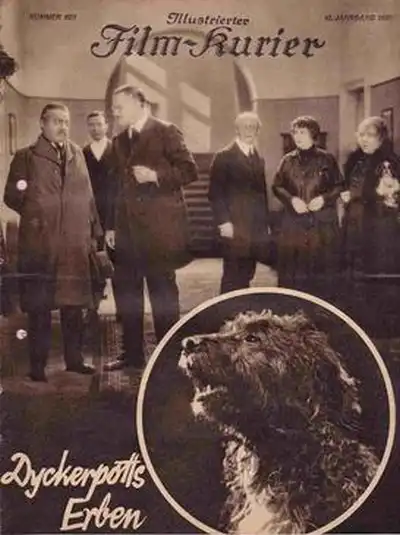
If you have ever been to a funeral and caught yourself wondering who gets the good silver, you will probably find something to like in Dyckerpotts Erben. It is worth a look if you enjoy late-silent era German comedies that rely more on facial tics and social embarrassment than big slapstick stunts. People who need a tight, logical plot will probably find the middle hour a bit of a slog, but if you like watching character actors sweat under stage lights, it’s a decent time.
There is something inherently funny about watching people pretend to be devastated while they are actually counting someone else’s money. The movie captures that specific kind of family tension where everyone is being overly polite but their eyes are darting around the room, measuring the furniture. The Dyckerpotts estate itself feels like a character—it’s big, slightly cold, and filled with the kind of clutter that only old money produces.
Paul Morgan is the one to watch here. He has this way of moving his hands that feels totally disconnected from what his face is doing. There is a scene early on where he’s trying to look somber, but his fingers are twitching like he’s already practicing counting a stack of bills. It’s a tiny detail, but it’s much more effective than the broader comedy beats later in the film. Unlike the more polished performances in something like The Man Who Played God, the acting here feels a bit more raw and uncoordinated, which actually fits the theme of a family falling apart at the seams.
The editing is... strange. There’s a sequence in the garden where the cuts feel about two seconds too early, so you see an actor start to drop their character right before the scene ends. It gives the whole thing a slightly frantic, unfinished quality. It’s not necessarily bad, but it makes you realize how much work went into the more 'prestige' films of the era. Here, it feels like they were in a rush to get to the next gag. I noticed a similar hurried energy in Hot Heels, though that was a very different kind of comedy.
I spent a lot of time looking at the costumes. Georg Alexander wears a suit that looks like it’s about half a size too small, which makes him look even more high-strung and uncomfortable than the script probably intended. Every time he sits down, you expect a seam to pop. It adds to the general feeling of claustrophobia in the house. The women, particularly Lotte Lorring, are draped in these heavy, dark fabrics that seem to swallow them up in the wide shots. It makes the heirs look like vultures circling a carcass, which I assume was the point, but it’s handled with a surprisingly light touch.
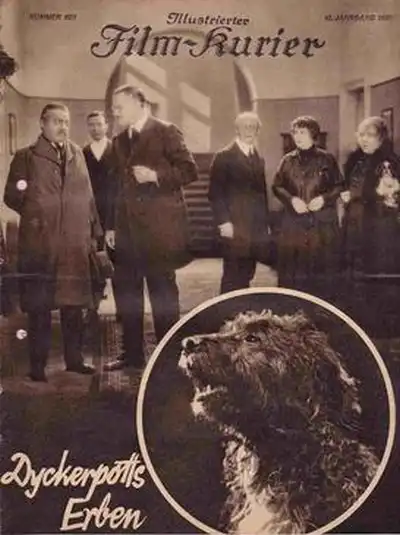
There is a subplot involving a missing document that drags on way too long. About forty minutes in, the movie hits a wall where everyone is just walking in and out of doors, and you start to lose track of who is lying to whom. It’s the kind of pacing problem that often plagues these inheritance stories. You just want them to get to the reading of the will and be done with it. It lacks the tight, focused narrative drive you see in something like Sealed Lips, where every scene feels like it's pushing toward a specific revelation.
One shot really stuck with me: a close-up of a coffee cup being stirred. The camera stays on it for what feels like a full minute while two characters argue off-screen. You just see the spoon going round and round, and the steam rising. It’s a quiet, weirdly domestic moment in the middle of all the screaming and scheming. It’s those little observational bits that make the movie feel like it was made by people who actually noticed how humans behave when they’re stuck in a room together.
Paul Hörbiger shows up and, as usual, he’s just better than everyone else. He doesn't have to do much; he just stands there and looks slightly disappointed in humanity, and it works. There’s a chemistry between him and Ilka Grüning that feels lived-in, like they’ve been having the same argument for twenty years. It’s a nice contrast to the younger cast members who are all trying a bit too hard to be 'funny.'
The ending is a bit of a letdown—it wraps up too neatly and tries to inject a moral lesson that the rest of the movie didn't really earn. It’s much more fun when it’s being cynical. When the movie tries to be heartwarming, it feels as fake as the heirs’ grief. Still, for a movie about people being awful to each other for money, it’s surprisingly charming in its own clunky way. If you’ve seen That Sort, you’ll recognize the same kind of stagey, slightly stiff drama, but Dyckerpotts Erben has enough humor to keep it from feeling like a museum piece.
Ultimately, it’s a movie of small moments. The way a hat is tilted, the sound of a heavy door closing, the look of pure panic on a man’s face when he thinks he’s lost a key. It’s not a masterpiece, but it’s a very human piece of filmmaking. Just don't expect it to change your life.
IMDb —
1917
Community
Log in to comment.