DbcultAccessing Vault...
6.3/10
Senior Film Conservator
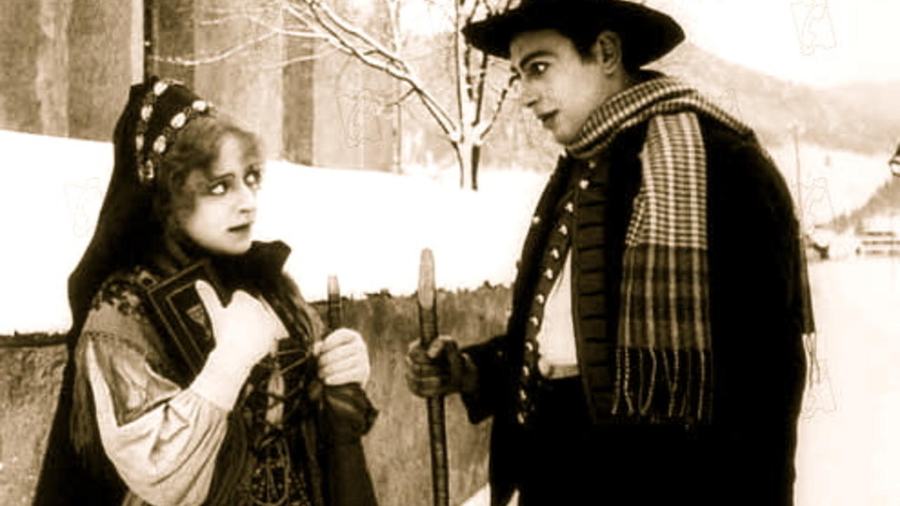
A definitive 6.3/10 rating for a film that redefined the boundaries of cult cinema. Romeo and Juliet in the Snow remains a cornerstone of transgressive art.
Ernst Lubitsch’s 1920 effort, Romeo and Juliet in the Snow (Romeo und Julia im Schnee), stands as a testament to the director's burgeoning 'Touch'—that elusive, sophisticated blend of wit, visual economy, and psychological irony. While contemporary audiences might associate the era with the heavy shadows of German Expressionism, Lubitsch was busy carving out a niche for the 'Kammerspiel' comedy, a genre that thrived on the intimacy of human folly. In this particular work, he takes the most recognizable narrative in Western literature and drags it through the mud—or rather, the thick, slushy snow of a German farmhouse. This isn't the ethereal, doomed romance of Shakespeare; it is a gritty, hilarious, and ultimately more human look at how petty grievances define our social structures. Unlike the heavy-handed moralizing found in The Sin Woman, Lubitsch opts for a levity that pierces deeper than any melodrama could.
The brilliance of the film lies in its setting. By moving the action to a snow-covered village, Lubitsch introduces a physical comedy element that is both organic and visually striking. The snow acts as a character itself—a cold, indifferent witness to the hot-blooded stupidity of the Montekugerls and the Capulethofers. Every movement is a struggle; every romantic gesture is hampered by the sheer weight of winter gear. This physical impedance serves as a brilliant metaphor for the social barriers the lovers face. Where The Trap might use suspense to build tension, Lubitsch uses the friction of the environment to create a comedic friction that is far more engaging.
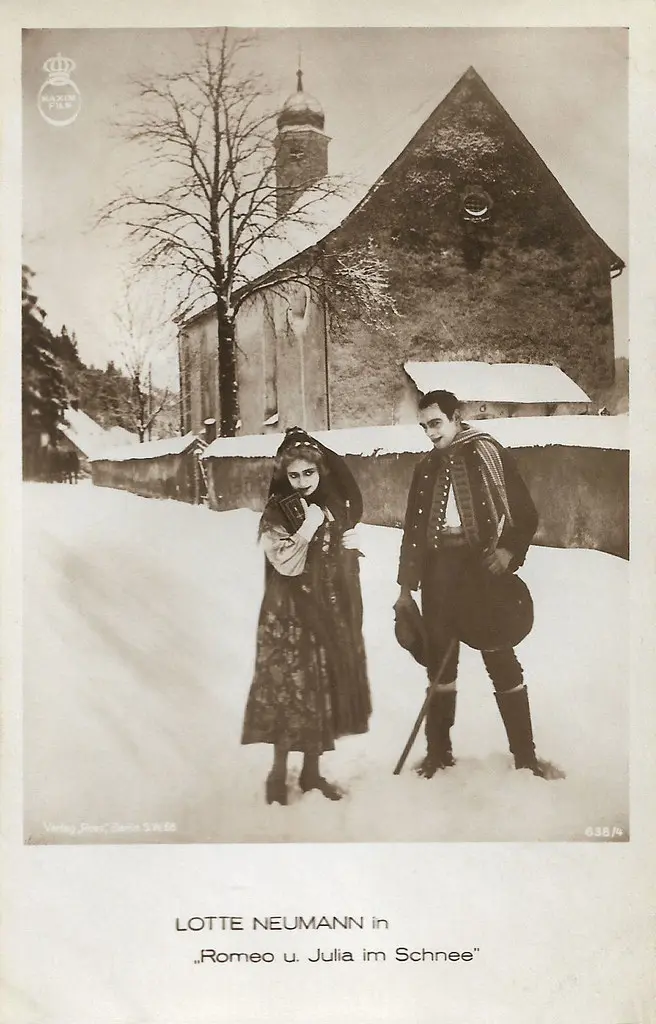
What Lubitsch achieves here is nothing short of a cinematic deconstruction. He takes the tropes of the star-crossed lovers and filters them through a lens of provincial mundanity. Julius Falkenstein and Lotte Neumann do not play Romeo and Juliet as icons; they play them as hormonal, slightly dim-witted youths caught in the crossfire of their parents' stubbornness. Their chemistry is not one of poetic longing, but of desperate, clumsy attraction. This approach is a stark contrast to the stylized performances in Kak oni lgut, where the artifice is the point. In Lubitsch’s world, the artifice is the enemy, and the truth is found in the awkwardness of a first kiss in a cold stable.
The supporting cast, featuring the likes of Jakob Tiedtke and Josefine Dora, provides a masterclass in ensemble character acting. Tiedtke, in particular, embodies the stubborn patriarch with a physicality that is both imposing and ridiculous. His movements are broad, yet his facial expressions carry the subtle nuances of a man who is secretly exhausted by his own rage. This balance of the broad and the minute is what separates a Lubitsch production from the more straightforward slapstick of Two Tough Tenderfeet. Here, the comedy is derived from character, not just situation.
The cinematography by Theodor Sparkuhl is surprisingly sophisticated for a 1920 comedy. The use of natural light against the white expanse of the snow creates a high-contrast aesthetic that feels modern even a century later. The camera doesn't just record the action; it participates in the joke. There are moments where the framing deliberately obscures the resolution of a gag, only to reveal it with a sharp cut or a sudden movement. This rhythmic editing, a hallmark of Lubitsch’s later masterpieces, is already present here in embryonic form. It provides a pacing that is vastly superior to the often-plodding narrative flow of The Night Workers.
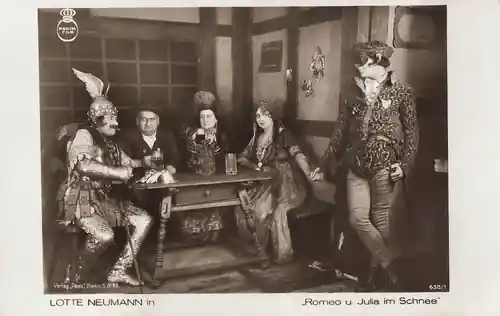
The costume design by Ali Hubert also deserves mention. The heavy, traditional Bavarian garb serves to caricature the characters, making them look like overstuffed dolls battling in a snow globe. This visual choice reinforces the theme of entrapment—these people are literally and figuratively weighed down by their traditions and their environment. It’s a subtle touch that adds a layer of social commentary to the film, suggesting that their feud is as much a product of their claustrophobic lifestyle as it is of any genuine grievance. This level of detail is something often missing in films like An Amateur Orphan, where the setting feels like an afterthought.
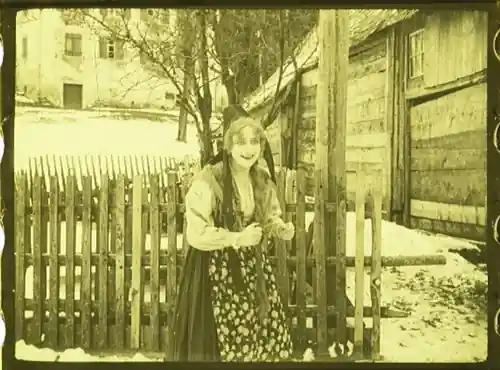
The most daring aspect of Romeo and Juliet in the Snow is its refusal to acknowledge the tragedy of its source material. By turning the double suicide into a comedic misunderstanding, Lubitsch and Kräly are making a profound statement about the nature of storytelling. They are suggesting that tragedy is often just a matter of perspective—or perhaps, a matter of bad timing. When the lovers take the 'poison,' the audience isn't gripped by fear, but by anticipation of the inevitable, hilarious awakening. This subversion of expectation is a technique Lubitsch would perfect in his later American films, but its roots are firmly planted here in the frozen soil of Bavaria.
In comparison to the melodramatic resolutions of Should a Husband Forgive? or the grim finality of The Ship of Doom, Lubitsch’s ending is a breath of fresh, albeit chilly, air. It embraces the messy, unresolved nature of human relationships. The families don't necessarily become friends; they simply stop fighting because they are too tired and cold to continue. It is a pragmatic, cynical, and utterly delightful conclusion that rings truer than any poetic sacrifice.
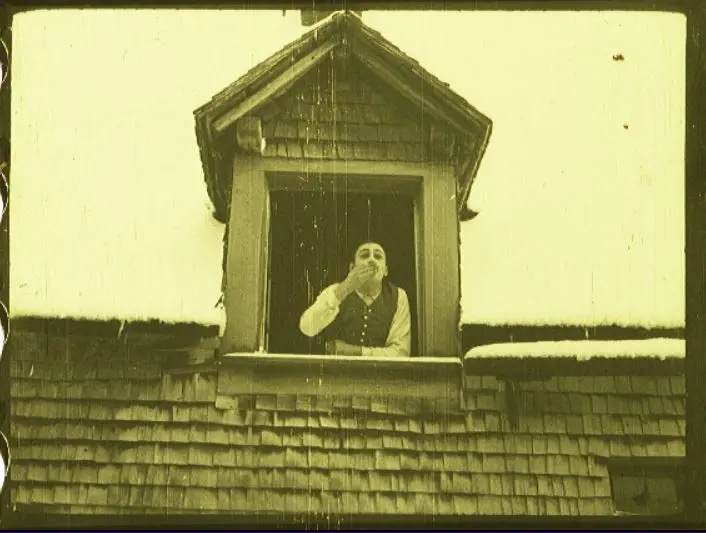
While Romeo and Juliet in the Snow is ostensibly a light comedy, it cannot be fully understood without considering the context of post-WWI Germany. The Weimar Republic was a time of immense social upheaval and economic instability. In this light, a film about two families stubbornly clinging to an ancient, pointless feud takes on a sharper edge. Lubitsch is poking fun at the very idea of nationalism and entrenched conflict. By moving the conflict to a rural setting, he universalizes the theme, making it a critique of human nature rather than just a specific political commentary. This depth of thought is what elevates the film above the mere entertainment value of something like The Dodgers.
The film also explores the generational divide, a common theme in the cinema of the time. The young lovers are the only ones capable of seeing past the feud, yet they are constantly thwarted by the rigid structures imposed by their elders. This dynamic is handled with a much lighter hand than in Die Tragödie auf Schloss Rottersheim, but the underlying message is the same: the past is a weight that the future must struggle to throw off. Lubitsch’s genius is in making that struggle look like a snowball fight.
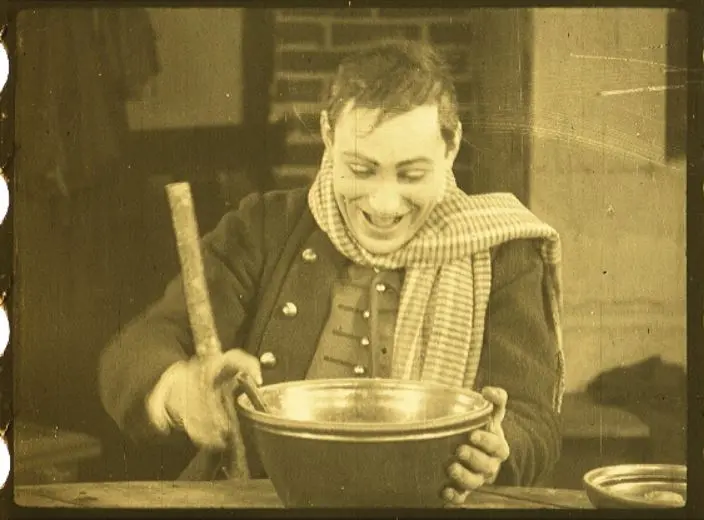
Viewing Romeo and Juliet in the Snow today, one is struck by how much of the modern romantic comedy template is present here. The use of misunderstanding as a plot driver, the eccentric supporting characters, and the focus on the absurdity of social norms are all elements that would become staples of the genre. Lubitsch was not just making a movie; he was inventing a language. While films like By Right of Purchase or Jess of the Mountain Country were following established theatrical patterns, Lubitsch was pushing the boundaries of what the medium could do with humor.
The film’s influence can be seen in everything from the screwball comedies of the 1930s to the dry, satirical works of Wes Anderson today. The meticulous composition and the focus on the inherent silliness of human behavior are direct ancestors of the modern aesthetic. It is a far cry from the chaotic energy of A kölcsönkért csecsemök, offering instead a controlled, deliberate form of comedy that respects the intelligence of its audience.
Ultimately, Romeo and Juliet in the Snow is a celebration of the 'Touch' in its most primal form. It is a film that finds beauty in the grotesque and humor in the tragic. It reminds us that while Shakespeare’s Verona might be a land of poetry and death, Lubitsch’s Bavaria is a land of schnapps, snow, and the enduring power of a well-timed joke. It is a vital piece of cinematic history that remains as sharp and refreshing as a winter morning. For those who find the melodrama of Le scandale or the sentimentality of Jack to be too much, this film offers a perfect, icy antidote.
IMDb —
1934
Community
Log in to comment.