DbcultAccessing Vault...
Cult Review
Senior Film Conservator
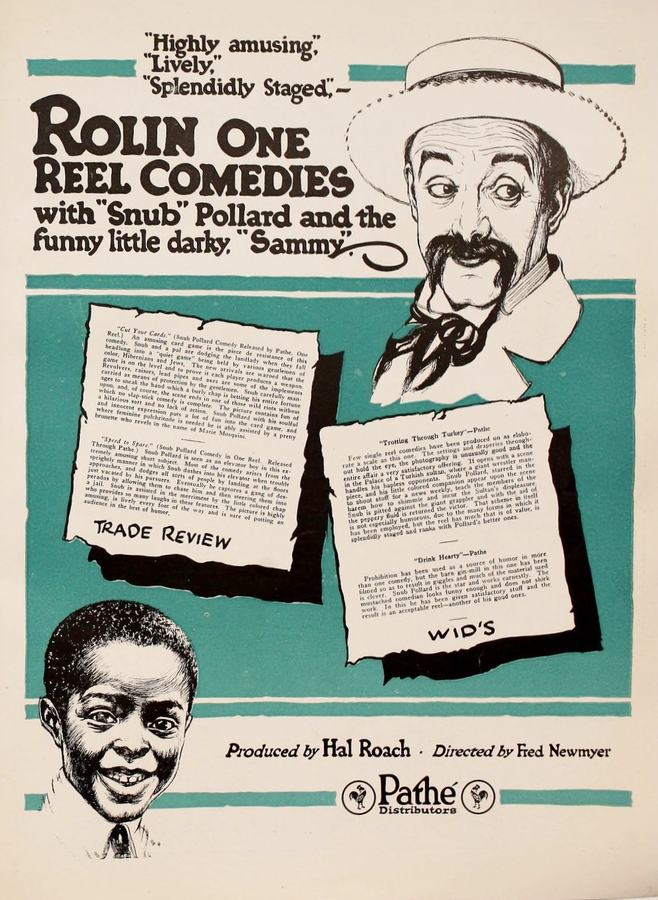
A shimmering fever dream etched in nitrate, Trotting Through Turkey lands like a custard pie hurled inside Topkapı Palace—simultaneously sacrilege and sacrament for silent-comedy zealots.
Few one-reel baubles dare to juxtapose the sacred hush of Ottoman court life with the syncopated shimmy of a Jazz-Age speakeasy. Snub Pollard, that antipodean imp with the facial foliage of a struck match, barrels through Istanbul’s mythic veil as though it were tissue paper. The camera, jittery and caffeinated, stalks him past bejeweled guardians whose scimitars glint like exclamation points. Each frame is a pocket of incense-laced air suddenly electrified by Charleston kicks.
Director Charley Chase (hiding behind the pseudonym "Charles Parrott") orchestrates chaos like a maestro who misplaced his baton and found a whoopee cushion. Notice the axial cut that vaults us from parapet to seraglio: no intertitle, just a whip-pan that feels like a rug yanked from beneath our expectations. Compare that kinetic jolt to the stately tableaux of A Daughter of France, where every camera move behaves like a curtsy.
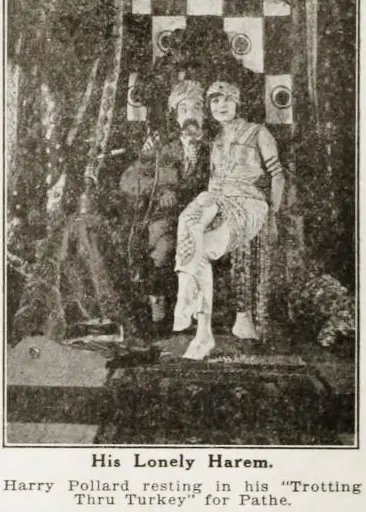
The harem here is not the orientalist fantasia you’d find in The Gray Mask’s shadowed alcoves. It is a porcelain hive of ennui, its denizens lounging like cats draped over velvet settees. Enter Snub, suitcase snapping open to release a phonograph whose brass horn blooms like a lily of amplification. The moment the needle kisses shellac, the palace’s temporal axis tilts: ouds are drowned by trumpets, prayer rugs become tap-boards. The shimmy—part spasm, part séance—ripples through silk caftans, and for eight delirious seconds the film achieves utopia: East and West cheek-to-cheek, swapping sweat instead of gunfire.
Tragedy, however, creeps in on curled slippers. Marie Mosquini’s Leila, eyes lacquered with yearning, attempts to out-shimmy the interloper. Her torso snakes, palms flick like card-sharps, but the dance mutates into a seizure of grief; she crumples, pearls scattering like tiny moons. The gag reflexively flips: laughter snags in the throat, a hiccup of colonial guilt. Chase doesn’t cut away, forcing us to marinate in the discomfort—a radical move for 1922 slapstick.
Ernest Morrison—Sunshine Sammy—acts as Snub’s counterweight, sidling through scenes with a side-eye that could slice kebabs. His comic timing is so surgical it makes you forget the era’s crude racial shorthand. Watch him filch a eunuch’s scimitar, then use it as a limbo pole; the gag loops from audacity to commentary, hinting at castration anxiety without ever naming it. In the pantheon of silent sidekicks he’s closer to the wry observers of Beatrice Fairfax Episode 12: Curiosity than the pickaninny caricature foisted upon him elsewhere.
The print, recently unearthed in a Slovenian archive, bears water-stains shaped like the Bosporus itself—serendipitous graffiti that underscores the film’s liquid identity. Restoration chemists stabilized the edges, yet left the scuffs intact; each flicker feels like a moth beating against a lantern. Compare that patina to the scrubbed sterility of A Royal Romance, whose palace sets gleam like museum vitrines.
Historians often quarantine silent comedy in the nursery of naïveté, yet Trotting Through Turkey anticipates post-colonial cinema by half a century. Its punchline isn’t pratfall but epiphany: cultural collision bruises both bodies. When Snub finally hurtles out of the palace, chased by a coterie of scimitars, the camera lingers on Leila’s trembling hand pressed against a lattice—an image as politically charged as any in With the Army of France.
Sound would have ruined it. The shimmy’s scandal lies in its silence: hips speak a language no intertitle can translate, and the absence of clatter allows ambient guilt to resonate. Imagine a 1935 talkie remake—jokes drowned by orchestral winks, dialogue hammering the subtext into submission. Thank the archival gods that the negative sank into obscurity before microphones could colonize its soul.
So where does the film perch in the crowded menagerie of early twenties mirth? Above the pastoral slapstick of Peck o’ Pickles, certainly, and orbiting closer to the surreal anarchy of Mirakeltjeneren. It lacks the serial cliffhanger muscle of The Hazards of Helen, yet its emotional aftershock lingers longer.
Contemporary comedians mining culture-clash terrain—think Sacha Baron Cohen’s Grimsby or the prankish diaspora of Borat—owe a debt they’ve never acknowledged. Pollard’s shimmy is the prototype for every subsequent fish-out-of-water flail, but unlike its descendants it never punches down for cheap hahas. The harem’s sorrow is granted real estate in the viewer’s conscience, a scar tissue beneath the clown grease.
Criterion, are you listening? A 4K scan could resurrect the lattice-shadows that dance across Leila’s décolletage, yet let the scratches sing. Pair it on a Blu-ray with Eyes of the Heart and you’d curate a diptych of desire and disillusion that could fuel term papers and cocktail chatter alike.
Until then, stream the unrestored version on the European Archive portal—watch it at 1 a.m. when your circadian defenses are weakest. Let the amber tinting soak your retinas, let the shimmy infect your bloodstream, and when Leila collapses feel the floor tilt beneath your cynicism. That’s the Pollard paradox: he tickles you into empathy, then vanishes like steam off Turkish coffee, leaving only the acrid perfume of history on your tongue.
Verdict: a mischievous 17-minute miracle that pirouettes on the knife-edge between hilarity and heartbreak—essential viewing for anyone who still believes comedy can dislocate the world.
IMDb 6.7
1932
Community
Log in to comment.