DbcultAccessing Vault...
Cult Review
Senior Film Conservator
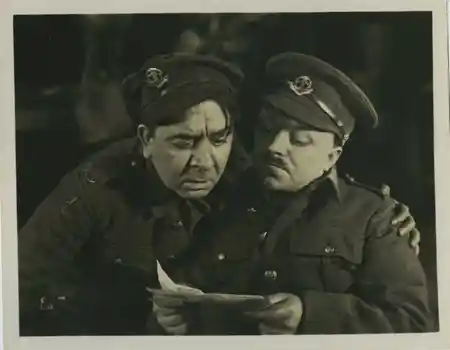
Alright, so you’re looking at a 1915 film, East Lynne on the Western Front, and wondering if it’s worth a second glance in 2024. For certain folks, yes, absolutely. If you’re into the quirks of early cinema or just fascinated by how people coped during WWI, this one’s a little gem. But if you need modern pacing or crisp dialogue, you’ll probably find yourself a bit lost. It’s definitely *not* for the casual viewer expecting a smooth ride.
The premise is kinda brilliant in its simplicity: bored soldiers, stuck on the Western Front in 1915, decide to put on a play. Not just any play, mind you, but a burlesque of "East Lynne." That choice itself, a very popular melodrama of the time, tells you a lot about the humor they were going for. It’s all about lampooning the dramatic.
The film opens with this wonderful sense of mundane waiting. You see the soldiers, just… *being* there. No big battles, no grand speeches. Just a lot of time to fill. Then, someone gets the idea for the play, and suddenly, there's a spark. It’s less about the war and more about the human need for distraction and a good laugh, even in the worst circumstances.
What really gets me is the commitment from the actors, I mean, the soldiers. Herbert Mundin, playing one of the main leads, really throws himself into it. He's so over-the-top, but in a way that feels authentic to the burlesque style. Like, he *gets* it.
There's a scene where they're trying to find costumes. The bits where they're scrounging for props and clothes from their meager supplies, it’s really endearing. One guy tries on a dress that’s clearly three sizes too big, and the way he preens is just classic.
The actual performance of "East Lynne" is where the film shines. They’ve got this makeshift stage, probably in a tent or a barn. And the acting, oh boy. It’s silent film acting, so everything is *big*. Roger Livesey, who was quite young here, has a moment where he’s trying to be super dramatic, but he keeps tripping over his fake beard. It’s genuinely funny, not just because it’s old, but because the *moment* itself is funny.
You can see the other soldiers in the audience, roaring with laughter. It makes you think about how vital these small moments of joy must have been. This isn't high art, no, but it’s *real* entertainment for them.
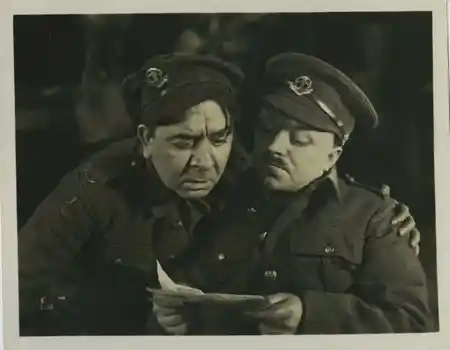
Hugh E. Wright plays a character who just *can’t* take anything seriously. Every time something dramatic happens on their makeshift stage, his character in the audience is stifling giggles, then bursts out laughing. It's a nice touch that grounds the whole thing. The film understands its own silliness.
The pacing is a little… well, it’s 1915. Things move at their own speed. Sometimes a shot lingers just a beat too long on someone’s reaction. But you know, that's part of its charm. It makes you feel like you’re actually *there*, watching a rough-and-ready show.
There’s a small detail I loved: one of the soldier-actors keeps forgetting his lines (or rather, his cues for gestures, since it's silent). Another soldier, off-camera, has to gently nudge him. It’s such a tiny, human error, and it made me smile.
The film isn't trying to be profound. It’s just trying to capture a very specific, very human response to an impossible situation. The absurdity of war, contrasted with the even more absurd attempts to stage a play, works surprisingly well.
While the actual "East Lynne" plot is kinda hard to follow if you don’t know the original melodrama, it doesn’t even matter. The *point* isn't the story. The point is the soldiers doing it. That's the whole show.
You know, there’s a moment near the end, after the play is over, and everyone is packing up. The brief glimpse of their faces, tired but with a lingering smile, says more than any grand battlefield scene ever could. It’s just a quiet, understated ending.
For a film that's over a century old, East Lynne on the Western Front manages to feel pretty fresh in its spirit. It reminds you that even when everything is terrible, people will still find a way to make each other laugh. And sometimes, that’s all you really need.
If you're ever in the mood for something truly different, or you just want to see what early WWI-era film was like, give it a shot. It's not perfect, but it's got a lot of heart. ❤️
IMDb 6.7
1922
Community
Log in to comment.