DbcultAccessing Vault...
Cult Review
Senior Film Conservator
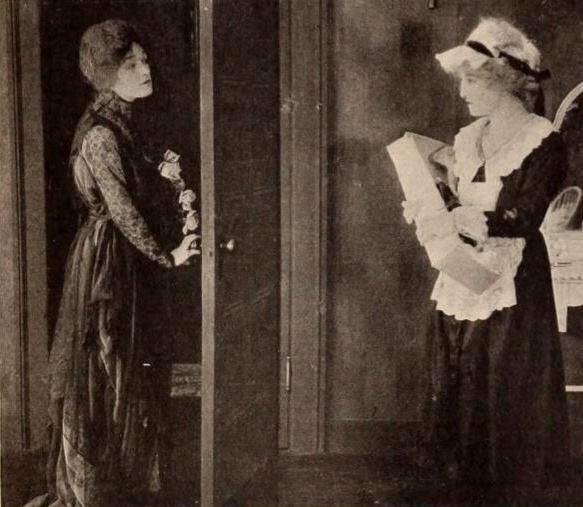
In the lacquered twilight of 1924 American cinema, when bootleg gin and saxophones bled into flickering nitrate, Her One Mistake arrives like a cracked mirror held to the Jazz Age—its shards catching both champagne shimmer and guttering candle smoke. Director George Scarborough and scenarist Charles Kenyon weave a morality tale that refuses the era’s easy binaries: virgin or vamp, hero or heel. Instead they hand us a prism where every facet refracts guilt.
The film’s prologue unspools in a road house perched on the Illinois prairie, a liminal nowhere scented of wet straw and kerosene. Gladys Brockwell’s Harriet Gordon enters swaddled in mink, eyes aglow with the entitled curiosity of the unfettered rich. Across the table, Mark Fenton’s Chicago Charlie leans in, his smile a switchblade wrapped in newspaper society pages. Cinematographer Charles Perley bathes them in chiaroscuro: Harriet’s porcelain cheekbones carved by flicker of oil-lamp, Charlie’s profile a gargoyle against rain-streaked clapboard. There is no minister—only a drugged glass of champagne that turns the room into a tilting carousel of leers.
Cut to five years later; the cityscape is now vertical, all granite and neon. Harriet, engaged to district attorney William Scott, glides through charity galas where trumpets exhale gilt confetti. Yet Brockwell lets us glimpse hairline fractures beneath the lacquer: a hesitation before the bridal veil, a gloved hand that trembles when police whistles echo from riverfront warehouses. Scarborough withholds flashbacks, trusting Brockwell’s micro-expressions to exhume trauma. The result is a portrait of survivorhood rare in 1920s melodrama, predating the therapeutic vocabulary we now take for granted.
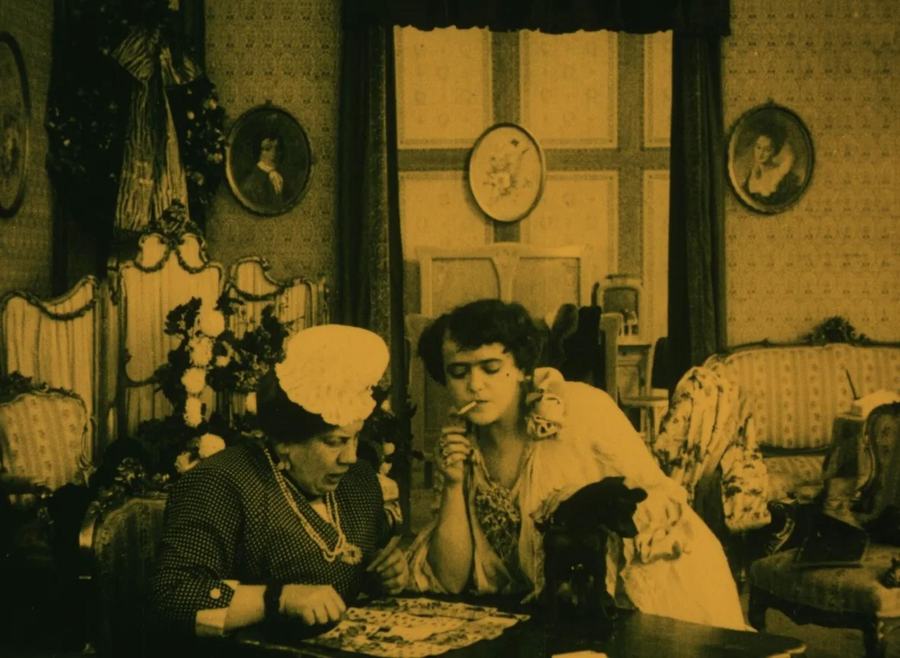
Enter Peggy—Helen Wright in a career-high turn—Charlie’s erstbed paramour, all gum-snapping pathos and dime-store dignity. Her plea to visit the death-house is framed in a single iris shot: face circled by blackness like a penny-arcade cameo. Harriet’s acquiescence feels less altruism than self-flagellation; she invites the past to dwell in her servants’ quarters, a daily hair-shirt. Wright plays Peggy with a slouching, cigarette-rattled languor that anticipates the pre-Code molls of 1930. Watch her stub out a lipstick-stained stub on a crystal saucer—an act equal parts sacrilege and sacrament.
Charlie’s prison-break sequence, rendered in stark day-for-night tinting, is a masterclass of economy: a rivet hammered into a freight-car door becomes a lock-pick; a guard’s dropped sandwich, a distraction. When he emerges into winter fog, Fenton’s body language shifts—less escaped convict than resurrected satyr, coat collar turned up like bat wings. His telegram to Peggy—“Need dough. Same old place.”—is pure pulp poetry, the phrase same old place dripping venomous déjà vu.
The climactic drawing-room showdown luxuriates in DeMille-worthy spatial tension. A mahogany table, an open drawer, a pearl-handled fruit knife lying like an uncast vote. Harriet’s ring—once symbol of dynastic alliance—now currency of extortion. Charlie’s demand for it is less theft than ritual reenactment: he wants to re-wound, re-possess. When Harriet plunges the blade, the film jump-cuts to the ring rolling across parquet, a metallic teardrop. The murder is neither sanitized nor eroticized; we hear the wet thud through orchestrated silence, a technique that makes the ensuing censorship boards look prudish rather than protective.
Willard Louis’s Detective Scully arrives too late for heroics, yet his ethical calculus supplies the picture’s coda. Recognizing the patriarchal machinery that would grind both women, he files a fabulist report: Detective killed fugitive in self-defense. The lie lands like absolution shot-through with coppery aftertaste. Scarborough refuses to punish either woman, indicting instead a society that monetizes female virtue then auctions the debt.
Stylistically, the film straddles two worlds. Interior sets boast Germanic angularity—doorframes that lean inward like coffin lids—while location shots along Lake Michigan embrace American expanse. The tonal whiplash is intentional: civilization’s polish cannot contain the wilderness of appetite. Compare this with The Gulf Between, whose two-color Technicolor fantasias aestheticize discord; Her One Mistake prefers soot and candle-grease, making its melodrama feel excavated rather than manufactured.
Performances operate on calibrated registers. Brockwell’s Harriet evolves from giddy ingénue to steel-sinewed Fury without the aid of dialogue, relying on ocular semaphore: pupils that dilate at the scrape of a man’s shoe, shoulders that square when she decides to survive. Fenton’s Charlie channels urban coyote—part charm, part carrion—his smirk a neon sign that flickers just before short-circuiting. Meanwhile, Wright’s Peggy embodies the film’s bruised heart, her final sob—stifled behind a velvet drape—summoning empathy for women caught between loyalty and self-preservation.
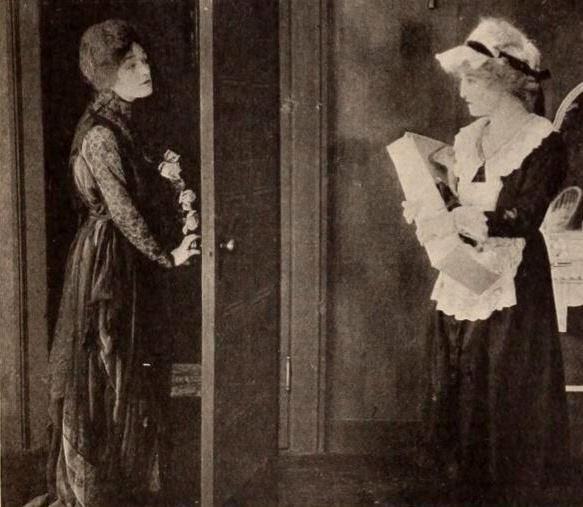
Kenyon’s intertitles deserve singling out. Rather than mere exposition, they stutter with colloquial grit: “She gave him the kale, but he wanted the rock.” Such argot roots the narrative in underclass vernacular, contrasting Harriet’s marble-halled diction and hinting at class fluidity that Prohibition made momentarily possible.
Scholars often bracket silent-era crime pictures between the gangster swagger of The Gray Ghost and the sentimental pieties of Home, Sweet Home. Her One Mistake occupies the gray zone, anticipating film-noir’s moral relativism by at least a decade. Its DNA can be traced to the femme fatale’s ambiguous heroism, the detective who falsifies truth to protect fragile order, the city as labyrinth where every exit loops back to original sin.
Yet the film is not flawless. A comic-relief scene involving a drunk butler chasing a goose through the kitchen feels grafted from a two-reel farce, rupturing tension. The goose, presumably symbolic of errant desire, honks once and is never seen again—an absurdist non sequitur that even Eisensteinian montage cannot justify. And the courtroom coda—though mercifully brief—leans on title-card sermonizing about “the wages of sin.” One wishes Scarborough trusted his audience to metabolize ambiguity without moral spoon-feeding.
Restoration-wise, the current 4K transfer rescues Perley’s chiaroscuro from the vinegar-syndrome abyss. Grayscale gradations now reveal Harriet’s velvet gown devouring light, while Charlie’s striped prison uniform pulses like venous blood. A new score by Monica Hennebelle—a sinewy blend of muted trumpet and tremolo-laden viola—underscores the narrative without mickey-mousing every stab or sidelong glance. Listen for the dissonant piano cluster that blooms the instant Harriet’s knife meets flesh; it decays into room-tone silence, replicating the victim’s last exhalation.
Comparative touchstones abound. Where The Heart of Humanity sanctifies maternal sacrifice and What Happened to Mary serializes damsel-in-peril cliffhangers, Her One Mistake interrogates the very scaffolding of rescue. Its women extricate themselves, though the cost is complicity, perjury, and a silence that will calcify into future neuroses. Think of it as a proto-Gaslight where the husband-to-be is incidental; the real phantom is memory.
Commercially, the feature underperformed in rural circuits—Midwest exhibitors complained its urban grit “lacked uplift.” Yet Manhattan’s Rialto reported queues around the block, particularly among flappers who recognized in Harriet’s predicament the double-standard that punishes sexual daring while rewarding masculine predation. Trade papers called it “a picture for the suffragette with a stiletto in her garter,” a tagline both salacious and prescient.
Modern viewers will note eerie resonances with contemporary true-crime podcasts: the charismatic con man, the wealthy mark, the loyal moll, the eventual “self-defense” homicide whose evidentiary gaps are papered over by narrative expedience. Scully’s falsified report prefigures today’s plea bargains that trim messy lives into jury-ready arcs. The more cinema changes, the more its skeletons keep the same rattle.
In sum, Her One Mistake is a tarnished tiara dug from the archives: flawed, yes, but gleaming with the kind of uncomfortable brilliance that no studio polish could simulate. It asks what constitutes mistake—the elopement, the elixir-spiked glass, the mercy that invites the viper indoors, or the lie that lets the survivor walk free? Scarborough offers no answer, only the fading echo of a ring clattering across parquet, a sound that reverberates long after the house lights rise.
Verdict: Mandatory viewing for devotees of pre-Code moral murk, feminist reclamation projects, and anyone who believes the silent era whispered louder than talkies ever could.
IMDb —
1917
Community
Log in to comment.