DbcultAccessing Vault...
6.7/10
Senior Film Conservator
A definitive 6.7/10 rating for a film that redefined the boundaries of cult cinema. Kodachrome Two-Color Test Shots No. III remains a cornerstone of transgressive art.
To witness the Kodachrome Two-Color Test Shots No. III is to step into a temporal rift where the ghosts of 1922 are reanimated through a kaleidoscope of early chemical ingenuity. Unlike the narrative complexities found in The Maelstrom, this short film eschews plot for the sake of pure, unadulterated visual data. It is a document of a dream—the dream of a world no longer restricted to the binary of black and white. In this experimental crucible, Eastman Kodak was not merely filming actresses; they were mapping the very boundaries of human perception.
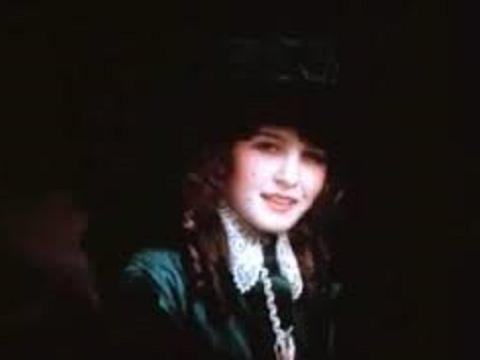
The film presents a series of vignettes that feel almost voyeuristic in their stillness. We see Mae Murray, the 'Girl with the Bee-Stung Lips,' posing with an ethereal poise that suggests she is well aware of her role as a scientific specimen. The two-color subtractive process—relying on a palette of red-orange and blue-green—creates a dreamlike atmosphere that feels more 'real' than the hyper-saturated digital formats of today. There is a soft, painterly quality to the image, a texture that reminds one of the impressionist experiments seen in the peripheries of Artist's Muddle. But here, the color isn't an afterthought; it is the protagonist.
The technical prowess exhibited in these four minutes is staggering when contextualized within the cinematic landscape of the early twenties. While films like The Grey Automobile were pushing the boundaries of action and urban grit, Kodak was focused on the micro-textures of the salon. The way the light hits Hope Hampton's velvet gown reveals a depth of field that monochrome simply could not articulate. The two-color process had a unique way of rendering skin; it gave the performers a porcelain, almost translucent quality that feels both fragile and immortal.
When we compare this to the stark, expressionistic shadows of Der Andere, the Kodachrome test feels like a radical departure toward naturalism, even if its color palette remains restricted. The reds are surprisingly vibrant, almost aggressive in their saturation, while the greens provide a cooling, oceanic counterpoint. It is a visual dialogue between warm and cool tones that predates the sophisticated color theories of modern cinematography. This wasn't just a test of film stock; it was a test of how much beauty the human eye could tolerate before the artifice of the medium became apparent.
The choice of subjects—Murray, Hampton, and Mary Eaton—was a stroke of marketing genius by Kodak. These were women whose public personas were built on glamour and visual excess. By placing them in front of the experimental camera, Kodak was essentially saying that their new process was the only medium capable of capturing such radiance. In Daddy-Long-Legs, we see the power of the star vehicle in black and white, but here, the stars are used as calibration tools. Their movements are slow, deliberate, and almost sculptural. They are not acting; they are manifesting.
Mary Eaton’s segment is particularly haunting. Known for her work in the Ziegfeld Follies, her presence here bridges the gap between the tactile reality of the stage and the ephemeral nature of the screen. The film stock captures the intricate beadwork of her costume with a fidelity that rivals the costume dramas of Love Never Dies. There is a sense that the camera is trying to memorize every thread, every stray hair, and every subtle shift in the light. It is a preservation of vanity that has, over a century later, become a preservation of history.
To understand the impact of Kodachrome Two-Color Test Shots No. III, one must look at the contemporary works that were defining the era. While The Young Lady and the Hooligan utilized the camera to tell stories of social friction and raw emotion, Kodak’s test shots were interested in the physics of light. There is a clinical coldness to the shots, yet they are infused with a strange, unintended romanticism. It is the same kind of unintentional beauty found in the criminal documentation of Sonka zolotaya ruchka, where the camera’s primary goal is to record, but the result is a captivating piece of art.
The film lacks the narrative drive of Uncharted Channels or the moral weight of Dangerous Hours, yet it commands attention with an intensity that those films often struggle to maintain. This is because the 'conflict' in the Kodachrome shots is internal to the image itself—it is the struggle between the limitations of the chemistry and the vibrancy of the subject. When a shot successfully captures the flush of a cheek or the deep crimson of a rose, it feels like a victory against the void of monochrome.
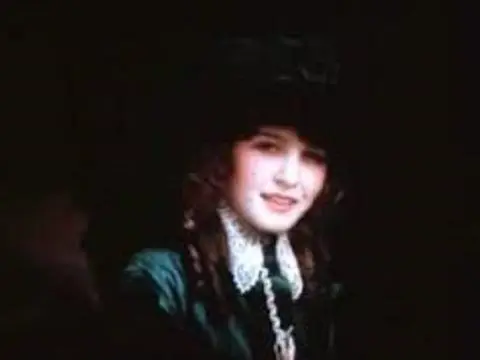
The subtractive process used here is a fascinating relic. By using two filters to record different parts of the spectrum and then dyeing the resulting positives, Kodak created a look that is distinct from the later three-strip Technicolor. It is less 'natural' but perhaps more 'expressive.' The absence of true blues and yellows creates a world that feels slightly alien, like a memory of a sunset that lasted forever. This aesthetic can be seen as a precursor to the stylized visuals in Conceit, where the visual style is used to mirror the internal states of the characters.
In the test shots, this 'alien' quality works to the film's advantage. It elevates the mundane act of posing into something sacred. When we see a close-up of a hand holding a colorful bird, the colors feel like they are vibrating on the surface of the screen. This is a level of sensory engagement that was rare in the 1920s, where most films relied on intertitles and pantomime to convey meaning. Here, the meaning is the color. The color is the message. It is a precursor to the visual storytelling found in You Never Can Tell, where the art direction begins to take a front seat in the narrative experience.
Looking back at Kodachrome Two-Color Test Shots No. III from a modern perspective, it is easy to dismiss it as a mere technical exercise. However, that would be a mistake. This film is the ancestor of every color film we watch today. It represents the moment when the industry decided that the world was too beautiful to be captured in grey. It shares a certain DNA with the experimental spirit of Framing Framers, where the medium itself is questioned and pushed to its limits.
There is also a poignant social element to these shots. The actresses involved were at the height of their fame, yet these test shots have outlasted many of their feature films. While The Usurper or Two-Bit Seats might be remembered for their plots or their place in the studio system, the Kodachrome shots are remembered for their sheer existence. They are a testament to the fact that sometimes, the most important thing a film can do is simply look at something and record it with as much fidelity as the era allows.
The archival quality of the footage is also worth noting. The colors have remained remarkably stable compared to some later processes that suffered from fading and vinegar syndrome. This stability allows us to see exactly what the technicians at Kodak saw in 1922. We are looking through the same lens, seeing the same hues, and experiencing the same sense of wonder. It is a direct link to a vanished world, a world where color was a miracle rather than a given.
Ultimately, Kodachrome Two-Color Test Shots No. III is a masterpiece of the 'cinema of attractions.' It doesn't ask us to follow a protagonist or solve a mystery; it simply asks us to look. In an age of digital perfection, there is something deeply moving about the imperfections of this early process—the slight registration errors, the color fringing, and the organic grain of the emulsion. These are the fingerprints of the creators, the evidence of a human hand reaching out to grasp the light.
As we watch Mae Murray turn her head and smile, we are reminded that cinema has always been a marriage of art and science. This four-minute reel is the honeymoon of that marriage. It is a celebration of what is possible when we stop trying to tell stories and start trying to see. It remains an essential watch for anyone interested in the history of the medium, a hauntingly beautiful reminder that before there was the 'talkie,' before there was the blockbuster, there was the color—and it was glorious.
Community
Log in to comment.