DbcultAccessing Vault...
6/10
Senior Film Conservator
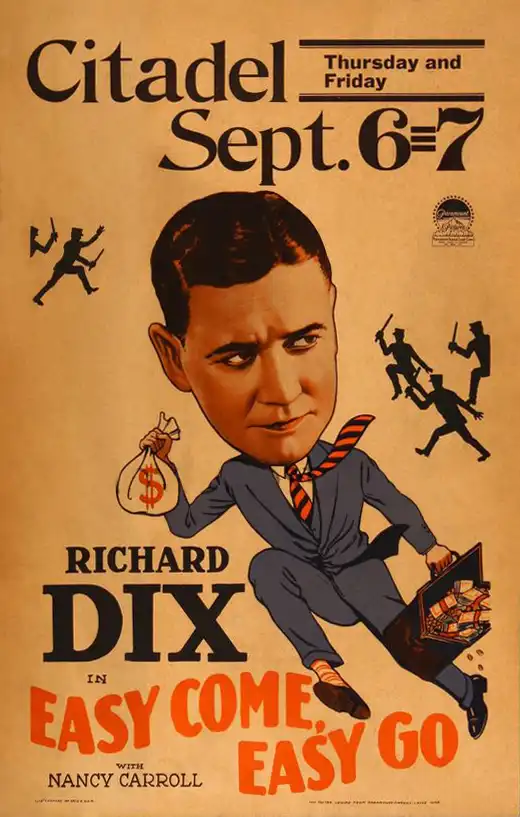
A definitive 6/10 rating for a film that redefined the boundaries of cult cinema. Easy Come, Easy Go remains a cornerstone of transgressive art.
If you are looking for a masterpiece of silent cinema, this isn't it. But if you have an hour to kill and you like watching Richard Dix look increasingly panicked while wearing a very well-tailored suit, Easy Come, Easy Go is a decent enough time. It’s for people who enjoy those specific 1920s comedies where the entire plot relies on a guy being too polite to ask, 'Hey, why are we running away from the police with this heavy bag of money?'
Richard Dix plays Robert Parker, and he has this specific kind of silent-movie face—big eyes, very expressive eyebrows—that makes him look like a kicked puppy whenever things go wrong. He’s out of work, he’s sincere, and he’s basically a magnet for trouble. The movie kicks off with him accidentally becoming an accomplice to Jim Bailey, played by Guy Oliver. Bailey is the 'veteran thief' archetype, but honestly, he just looks like a tired uncle who decided to start stealing payrolls on a whim.
There is a scene early on where Parker is just kind of standing there while the robbery is happening, and the way he holds himself—stiff, trying to look busy but having absolutely no idea what’s going on—is actually pretty funny. It’s that relatable feeling of being in a room where everyone knows the plan except you. The movie does a good job of capturing that specific social anxiety before it turns into a crime caper.
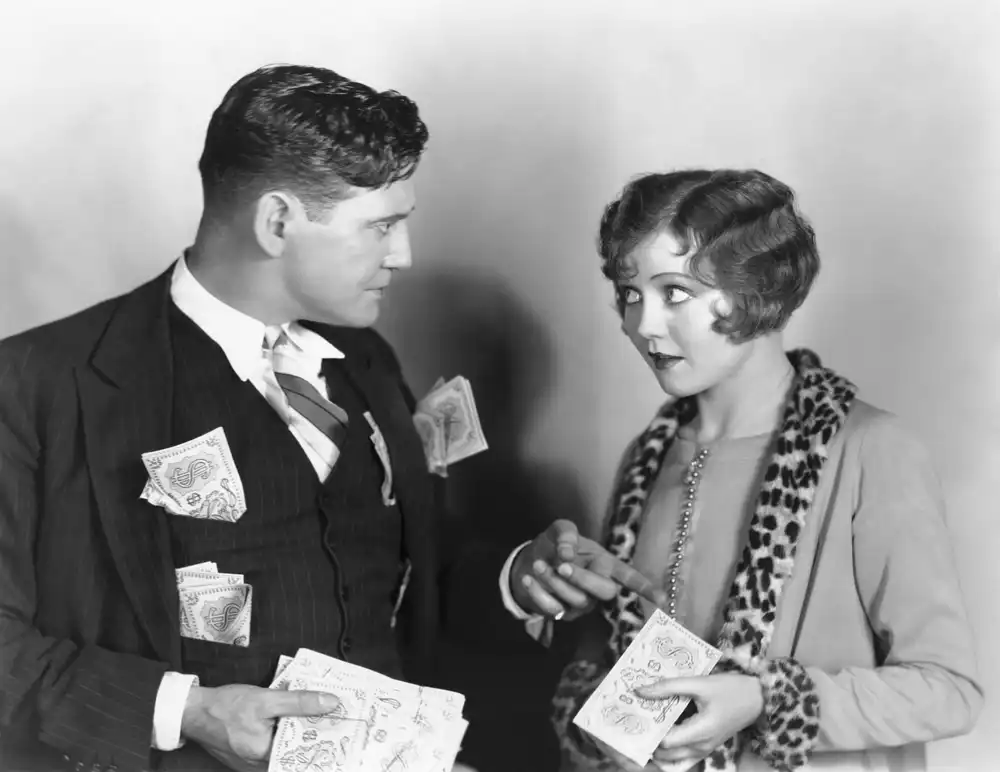
The pacing is a bit of a rollercoaster. It starts fast, then there is a middle section where they are hiding out that feels like it goes on for about ten minutes too long. You can almost feel the director, Frank Tuttle, trying to stretch the tension, but instead, you just end up looking at the background actors. Speaking of which, the extras in the bank scenes are fascinating. There is one woman in a cloche hat in the background who looks like she is genuinely annoyed to be there, staring off to the side while the main action is happening. I couldn't stop watching her.
Nancy Carroll shows up as the love interest, and while she’s charming, her character feels like an afterthought. She’s mostly there to give Parker a reason to want to be 'respectable' again. Their chemistry is fine, but it’s the kind of screen romance where you feel like they’ve only spoken for about four minutes before deciding they are soulmates. It reminds me a bit of the rushed romantic subplots in Pretty Smooth, where the plot just demands a wedding by the final reel.
Most of the movie is just Parker trying to return the stolen payroll to Mr. Quayle, the bank president. The logistics of this are absurd. He spends so much energy trying to sneak back into a place he should be running away from. There’s a specific shot where he’s trying to hide the money under a coat, and the bag is so clearly bulging out that it becomes a piece of physical comedy on its own. Dix is good at that—using his whole body to show how much he sucks at being a criminal.
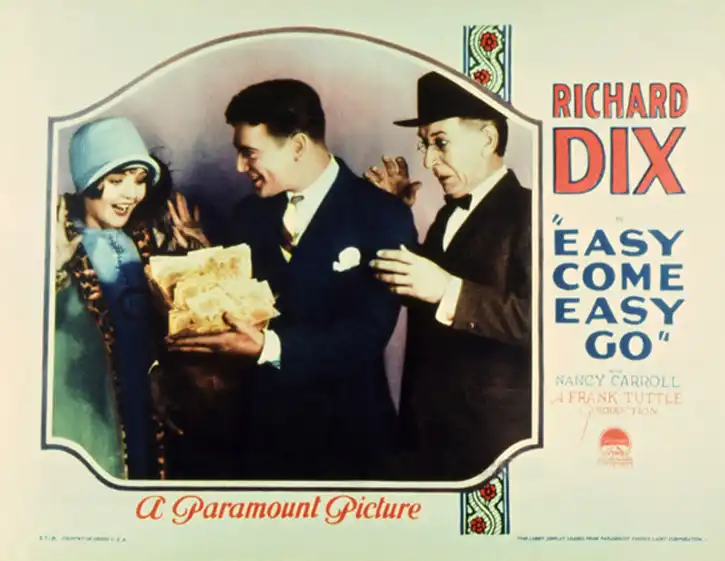
The editing gets a little weird during the chase sequences. There are some jump cuts that feel unintentional, like they lost a few frames of film or just gave up on the transition. It gives the movie a frantic, slightly broken feeling that actually kind of fits the tone of Parker’s mental state. It’s not as polished as something like Out to Win, but it has more personality in its awkwardness.
I did find myself getting a bit bored during the long dialogue-heavy intertitles. Since it’s a late silent (1928), you can tell they were starting to write scripts that really wanted to be 'talkies.' People stand around moving their mouths a lot, and then you get a wall of text. It breaks the flow. You miss the pure visual storytelling of the mid-20s. However, when the movie stops talking and lets Dix do some physical business—like a bit where he’s trying to avoid a security guard by pretending to be a janitor—it finds its feet again.
One thing that’s oddly specific: the hats. Everyone is wearing these heavy, structural hats that seem to have a life of their own. There’s a moment where a hat falls off during a scuffle and the actor almost breaks character to grab it, then remembers he’s supposed to be in a fight. It’s those little 'unpolished' moments that make these old films feel human. They aren't these pristine artifacts; they’re just movies made by people in a hurry.
Is it a must-watch? Probably not unless you’re a completionist for Richard Dix or you have a thing for 1920s bank heist tropes. It’s much lighter than something like The Great Impersonation, and it doesn't have the grit of the early crime dramas. It’s a fluff piece. But as fluff goes, it’s got a certain charm. The ending is predictable, the 'transformation' of the thief is unearned, and the logic is paper-thin, but I didn't regret watching it. It’s the cinematic equivalent of a decent ham sandwich—nothing special, but it fills the hole.
If you've seen Dynamite Dan, you’ll recognize that same kind of 'scrappy hero' energy here, though Dix is a much more 'polished' version of that archetype. The film eventually just sort of stops rather than ending. Everything is resolved because the plot says it has to be, not because the characters actually figured anything out. But hey, that’s 1928 for you.
IMDb —
1921
Community
Log in to comment.