DbcultAccessing Vault...
Cult Review
Senior Film Conservator
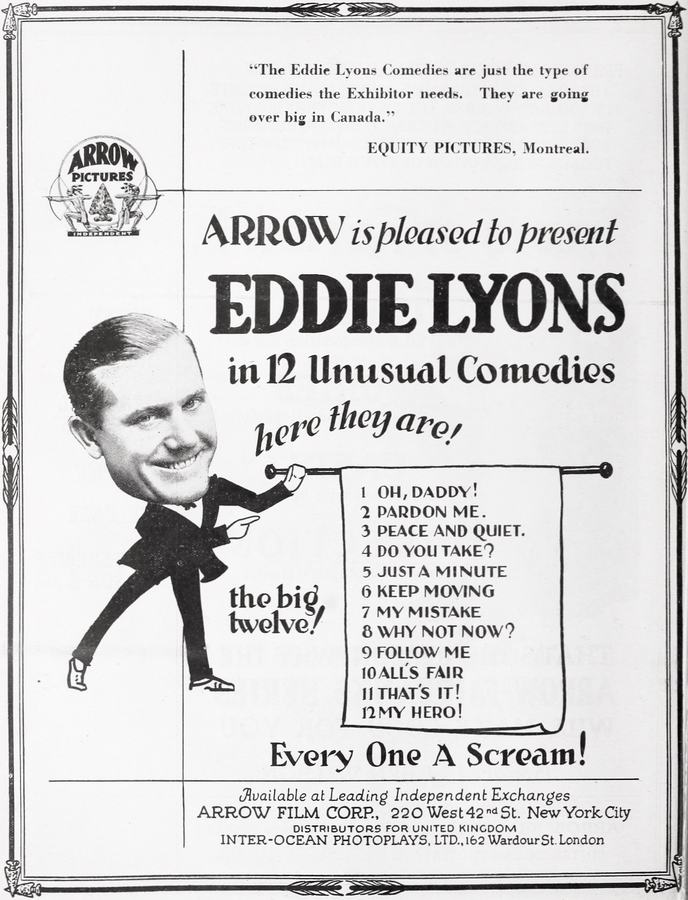
In the annals of early cinema, where the silent screen often served as a boisterous canvas for slapstick and melodrama, certain forgotten gems occasionally resurface, reminding us of the era's boundless creativity and comedic ingenuity. Among these, the unassuming title "Peace and Quiet" emerges as a delightful, if often overlooked, testament to the power of well-orchestrated chaos. This 1921 feature, starring the inimitable Eddie Lyons, plunges viewers headfirst into a world where the pursuit of tranquility leads only to a spiraling vortex of absurdity, a narrative conceit that remains surprisingly resonant even a century later.
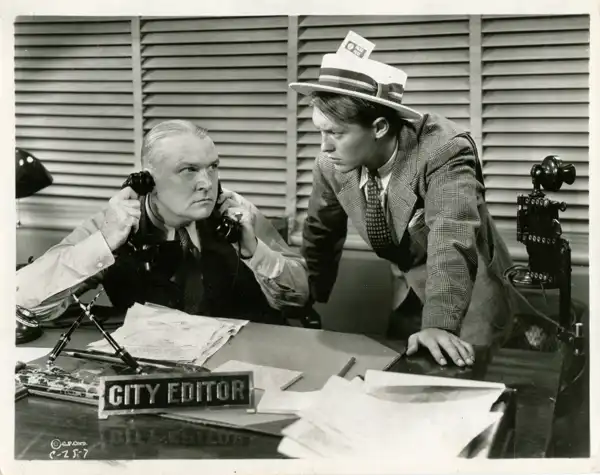
The film opens, as many a classic comedy does, in a setting ripe for misunderstanding and mishap: a bustling newspaper office. Here, the ink-stained world of deadlines and scoops provides the perfect backdrop for the initial spark of pandemonium. Our protagonist, Eddie, a fresh-faced editor, navigates this frenetic environment with a mixture of earnestness and burgeoning exasperation. The newsroom, even in its nascent cinematic depiction, is a microcosm of human foibles – a hotbed of hurried decisions, misinterpreted directives, and the ever-present threat of a typo becoming a headline disaster. It's a place where reputations can be made or shattered in the blink of an eye, or in this case, the mischievous flick of a copy boy's wrist.
The inciting incident, a masterstroke of comedic misfortune, revolves around a copy boy's imagined slight against Eddie. In a petty act of revenge, he deliberately mixes the type, transforming a seemingly innocuous society notice into a sensational scandal. A debutante, a figure of social grace and unblemished reputation, is erroneously described as being "wanted by the police." The sheer audacity of this misprint, and the catastrophic social fallout it engenders, sets the entire farcical plot into motion. It's a clever lampoon of the nascent media's power, highlighting how easily public perception could be warped by a simple error, intentional or otherwise. One can almost hear the collective gasp of the morning's readers, followed by the frenzied rustle of newspapers as the scandal spreads like wildfire.
Eddie, burdened by the weight of this journalistic faux pas and the ensuing public outcry, finds his nerves utterly shredded. The ceaseless clamor of the city, the relentless demands of his profession, and the looming specter of a libel suit propel him towards a desperate quest for solace. His chosen refuge? A sanitarium, a place synonymous with serene recuperation, with the promise of a restorative quietude. The irony, of course, is palpable from the outset. A place designed for peace, especially in the hands of a seasoned comedic director, is almost guaranteed to become anything but.
As Eddie arrives at this supposed sanctuary, the film masterfully orchestrates a delicious twist of fate. The very debutante whose reputation he inadvertently sullied has also, quite understandably, sought refuge within the sanitarium's walls. Her public humiliation has driven her to seek a retreat from the judgmental gaze of society, leading to an exquisitely awkward and profoundly humorous reunion. This accidental convergence of victim and perpetrator under the same roof immediately elevates the comedic stakes, promising a delicate dance of avoidance, recognition, and eventual, inevitable confrontation. The film capitalizes on the inherent humor of two individuals, both seeking escape from a shared predicament, finding themselves inextricably linked once more.
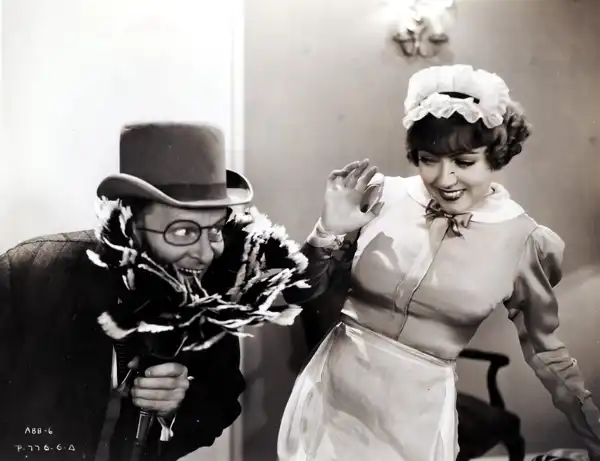
The sanitarium itself is not merely a backdrop; it's a character in its own right, populated by an ensemble of eccentrics who collectively ensure that peace remains an elusive dream. Among them is a bootlegger, a figure emblematic of the Prohibition era, whose illicit operations demand a high degree of discretion. His presence immediately injects a layer of clandestine activity into the already fragile ecosystem of the institution. Then there's the superstitious housemaid, a character who, with her wide-eyed credulity and propensity for panic, becomes a crucial catalyst for the ensuing spectral shenanigans. These secondary characters are not mere props; they are essential cogs in the comedic machine, each contributing to the escalating sense of delightful disarray.
The bootlegger, desperate to secure an undisturbed environment for his illegal endeavors, devises a scheme as audacious as it is ill-conceived: he decides to pose as a ghost. His rationale is simple – a haunted sanitarium would surely scare away any inquisitive staff or fellow patients, leaving him to ply his trade in peace. However, as is often the case in farcical narratives, the best-laid plans of mice and bootleggers often go spectacularly awry. His spectral masquerade, far from securing his coveted solitude, ignites a chain reaction of terror and confusion. The superstitious housemaid, of course, is the first to fall prey to his antics, her genuine fear providing fertile ground for exaggerated reactions and widespread panic.
The ensuing chaos is a masterclass in silent film comedy. Doors creak open and shut mysteriously, shadows dance on walls, and the bootlegger's clumsy attempts at ethereal movement result in a series of hilarious near-misses and mistaken identities. Eddie and the debutante, already on edge from their own predicaments, find themselves caught in the crossfire of this manufactured haunting. The film brilliantly uses visual gags and physical comedy to convey the spiraling pandemonium, demonstrating a keen understanding of how to extract maximum humor from escalating absurdity. Unlike the psychological drama of Der Eid des Stephan Huller, which delves into moral dilemmas, "Peace and Quiet" firmly roots itself in the lighter, more chaotic side of human experience.
Eddie Lyons, as the perpetually flustered editor, delivers a performance that perfectly encapsulates the everyman caught in an extraordinary situation. His expressions of bewilderment, exasperation, and occasional flashes of heroic resolve are finely tuned to the silent screen's demands. Lyons, a prolific actor and director in the early Hollywood era, had a knack for physical comedy and a relatable persona that made him a consistent draw. Here, he navigates the escalating madness with a compelling blend of resignation and bewildered energy, serving as the audience's anchor in a sea of increasingly outlandish events. His interactions with the debutante, initially fraught with tension, gradually evolve into a hesitant camaraderie as they both confront the bootlegger's spectral ruse.
Beyond the surface-level gags, "Peace and Quiet" offers subtle thematic explorations. It satirizes the burgeoning power of the press and the ease with which reputations could be manufactured or destroyed. It also playfully examines the human desire for solitude and the ironic ways in which we often disrupt our own peace in pursuit of it. The sanitarium, a place intended for healing and tranquility, becomes a crucible of anxiety and fear, a testament to the idea that true peace is often an internal state, not merely a physical location. This subversion of expectations is a hallmark of effective comedy, and the film executes it with admirable precision.
The film's pacing is brisk, a necessity for silent comedies aiming to maintain audience engagement without dialogue. The visual storytelling is clear and economical, with each scene building upon the last to create a crescendo of comedic tension. The use of intertitles is judicious, providing just enough exposition and dialogue to guide the narrative without slowing down the visual flow. One might compare its frantic energy to the more overt slapstick of contemporaries, yet "Peace and Quiet" distinguishes itself with a more narrative-driven approach to its humor, relying heavily on mistaken identity and situational irony rather than purely physical gags, though those are certainly present and effective.
The dynamic between the characters—Eddie, the debutante, the bootlegger, and the housemaid—is what truly fuels the film's comedic engine. Each character, despite their archetypal nature, feels distinct enough to contribute uniquely to the unfolding pandemonium. The debutante's initial indignation slowly gives way to a shared predicament, fostering a reluctant alliance with Eddie. The bootlegger's motivations, though selfish, are understandable, and his increasingly desperate attempts to maintain his ghostly charade are a source of constant amusement. The housemaid, with her wide-eyed terror, serves as the perfect foil, amplifying the perceived threat of the 'ghost' and driving the other characters to increasingly frantic reactions.
Performances in silent film are an art unto themselves, requiring exaggerated yet nuanced facial expressions and body language to convey emotion and intent. Eddie Lyons, a seasoned veteran of the era, truly shines. His ability to communicate exasperation, fear, and eventual determination without uttering a single word is commendable. He deftly balances the physical comedy with a genuine sense of character, making Eddie more than just a clown. The supporting cast, while perhaps less prominent, also delivers effectively, particularly the actress portraying the debutante, whose transformation from indignant socialite to terrified patient is a subtle joy. The bootlegger's furtive movements and increasingly frantic attempts to maintain his ruse are equally well-executed, contributing significantly to the film's comedic texture.
When considering the broader landscape of silent cinema, "Peace and Quiet" stands as a charming example of how well-crafted narratives, even without the benefit of sound, could captivate and amuse. It might not possess the grand scale of an epic like The Dumb Girl of Portici, or the dramatic intensity of Redemption, but its strength lies in its focused, character-driven comedy. It’s a testament to the timeless appeal of a good farce, where human foibles and external circumstances conspire to create a delightful mess. The film’s ability to build tension and release it through laughter is a skill that many contemporary comedies still strive to perfect.
The production values, typical for a film of its time, are functional yet effective. The sets, particularly the newspaper office and the sanitarium, are convincingly rendered, providing appropriate backdrops for the unfolding events. The lighting, crucial in silent film for establishing mood and highlighting action, is utilized to good effect, especially during the 'ghostly' sequences, where shadows and dramatic contrasts enhance the sense of mystery and fear. The film's direction, while not overtly flashy, demonstrates a solid understanding of comedic timing and blocking, ensuring that each gag lands effectively and the narrative progresses smoothly.
While "Peace and Quiet" may not enjoy the widespread recognition of some of its more celebrated silent film peers, its rediscovery offers a rewarding experience for enthusiasts of early cinema. It serves as a valuable document, illustrating the diverse range of comedic styles that flourished during the silent era. It’s a reminder that even amidst the grand narratives and dramatic spectacles, there was a vibrant tradition of witty, character-driven farces that found humor in the everyday absurdities of life, albeit amplified for the silver screen. It's a film that, despite its age, still manages to elicit genuine chuckles, proving that true comedic genius transcends the limitations of its medium or era.
The film's central conceit—the relentless pursuit of peace only to find oneself embroiled in greater chaos—is a universal theme. Whether it's a frantic editor fleeing a libelous typo or a bootlegger trying to carve out a quiet corner for his illicit trade, the human desire for a moment of calm is often thwarted by external forces or, more humorously, by our own misguided attempts to achieve it. "Peace and Quiet" captures this irony with a light touch and an abundance of good humor, making it a film that is not just historically significant but genuinely entertaining.
In a world that often feels as chaotic as Eddie's newspaper office, or as ironically turbulent as the sanitarium he seeks refuge in, "Peace and Quiet" offers a charming escape. It invites us to laugh at the absurdities of life, at the predicaments brought about by human error and ambition, and at the sheer delightful unpredictability of it all. It’s a compelling argument for revisiting the forgotten corners of cinematic history, where unexpected pleasures often await, proving that sometimes, the greatest joy comes from embracing the beautiful chaos rather than futilely chasing an elusive calm.
IMDb —
1918
Community
Log in to comment.