DbcultAccessing Vault...
Cult Review
Senior Film Conservator
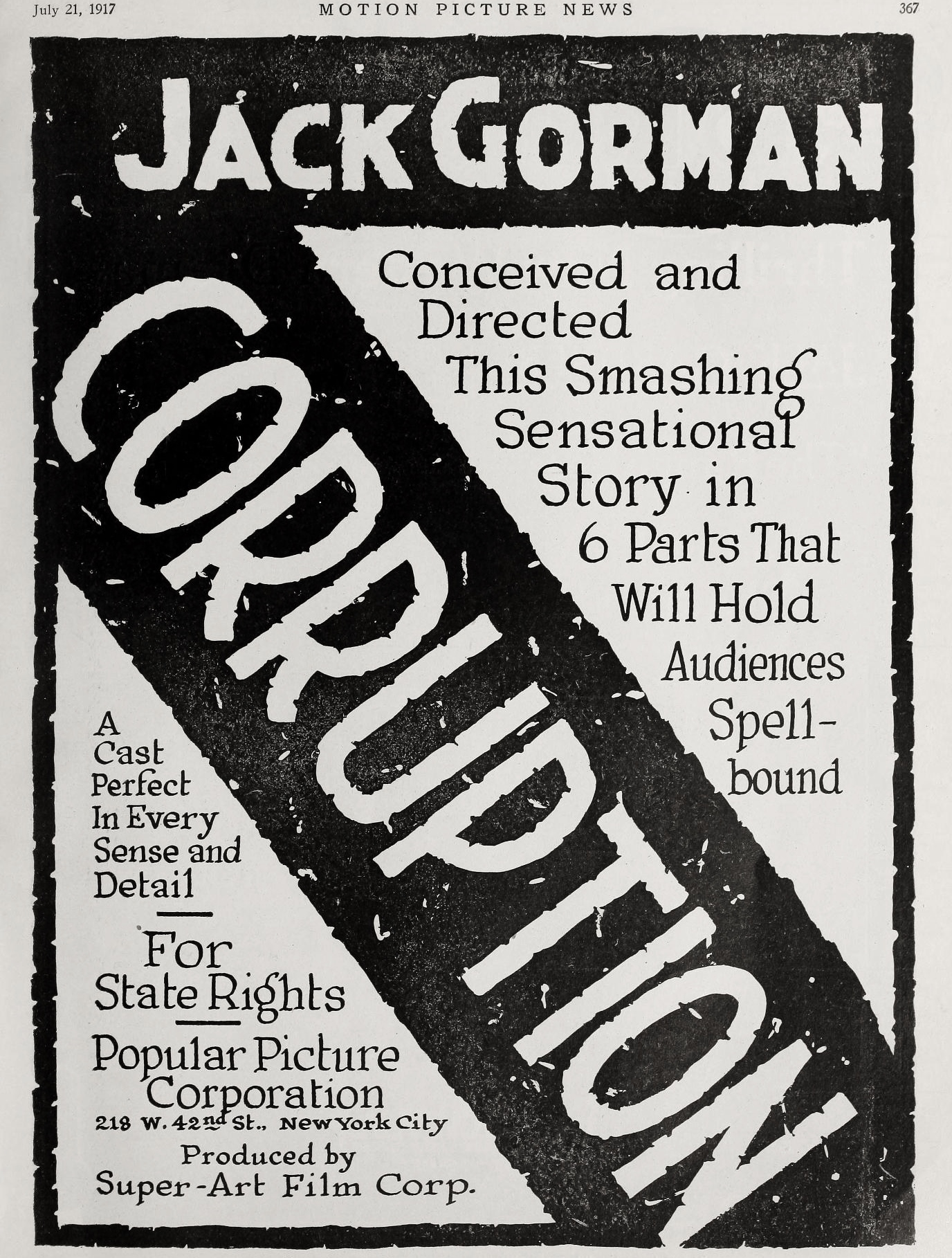
The flickering shadows of early cinema often reveal more about societal anxieties than any historical treatise. Such is the case with Corruption, a 1917 film that plunges headfirst into a maelstrom of moral quandaries, illicit passions, and the corrosive power of secrets. It is a work that, while firmly rooted in the melodramatic conventions of its era, offers a surprisingly complex tapestry of human frailty and resilience. The narrative unspools with a relentless tragic momentum, pulling its characters through a gauntlet of societal judgment and personal despair, culminating in a poignant, if somewhat convenient, resolution that speaks to the era's yearning for order amidst chaos.
At its core, Corruption is a searing indictment of hypocrisy, particularly the double standards applied to women in turn-of-the-century society. Grace, our protagonist, finds herself ensnared in a predicament as old as time: an affair with her boss's son, Philip Montrose, results in an unwanted pregnancy. Her desperation is palpable, driving her to seek out the clandestine services of Dr. Robert Lynn, an abortionist whose practice operates in the shadowy margins of legality. This initial setup immediately establishes a tension between individual desire and societal dictates, a theme explored with varying degrees of nuance in countless films of the period, from the cautionary tales to more subversive narratives. Grace's journey is not merely one of personal tribulation; it mirrors the broader struggles of women grappling with limited agency and profound social stigma. The film doesn't shy away from depicting the harsh realities faced by those who transgressed moral boundaries, making her character an empathetic focal point for the audience's sympathies.
The plot takes a dramatic, almost operatic, turn with the stunning revelation that Dr. Lynn's wife is, in fact, Grace's biological mother, a child she had abandoned years prior. This twist, a hallmark of melodramatic storytelling, injects a potent dose of familial drama and moral reckoning into the proceedings. Mrs. Lynn, confronted with the shocking truth, transforms from a peripheral figure into a catalyst for justice. Her righteous fury and rediscovered maternal instinct propel her to expose Philip's deceit to his powerful father, Mr. Montrose. This pivotal confrontation is not just about personal vengeance; it's about holding the privileged accountable, a rare and compelling narrative choice for its time. The moral weight of this discovery is immense, forcing characters to confront their past decisions and the long-reaching consequences of their actions. It underscores how easily lives can intersect and collide, often with devastating effects, and how secrets, no matter how deeply buried, inevitably resurface.
The ensuing forced marriage between Philip and Grace, orchestrated by Mr. Montrose to salvage his family's reputation, is a union doomed from its inception. It's a marriage of convenience, devoid of genuine affection, and thus becomes a breeding ground for resentment and despair. The film masterfully portrays the psychological toll this arrangement takes on both parties. Philip, compelled by patriarchal authority, resents his entrapment, while Grace endures a marriage that offers security but no emotional solace. Their domestic life quickly deteriorates, culminating in a fit of rage where Philip strikes Grace. This act of violence is a brutal manifestation of his internal turmoil, his inability to cope with the consequences of his actions, and the stifling expectations placed upon him. The immediate aftermath—Philip's horrified belief that he has killed her and his subsequent flight—underscores the fragility of human control and the devastating power of impulse. This segment of the film resonates with a raw, visceral intensity, depicting the darkest corners of human behavior when pushed to their limits.
Grace's recovery from the physical assault is juxtaposed with the tragic fragmentation of her mind. Her descent into derangement is depicted with a poignant sensitivity, highlighting the psychological scars that run deeper than any physical wound. The film explores the arduous journey back to sanity, a path fraught with challenges for those around her. It's a testament to the era's understanding, albeit nascent, of mental trauma and its profound impact. The narrative posits that conventional medical intervention is insufficient; instead, it is the transformative power of genuine love and remorse that holds the key to her healing. The repentant husband's return, his arms offering solace and acceptance, becomes the ultimate catalyst for Grace's restoration. This conclusion, while leaning into the romantic ideals of redemption, speaks to a deeply human need for forgiveness and connection, suggesting that true healing comes not from isolation but from reconciliation and understanding. This arc, while perhaps overly sentimental by modern standards, would have offered a powerful message of hope to contemporary audiences grappling with similar societal pressures and personal tragedies.
Parallel to the Montrose family's domestic turmoil, the subplot involving Dr. Lynn unfolds with its own tragic inevitability. The exposure of his illicit practice serves as a stark commentary on the moral rot that can fester beneath the veneer of respectability. His decision to take poison, a desperate act of self-annihilation, is a grim conclusion to a life lived in ethical compromise. His fate is a direct consequence of the corruption he both facilitated and embodied, a stark reminder that actions, however hidden, ultimately demand accountability. This parallel narrative reinforces the film's overarching theme: that the consequences of moral transgressions are inescapable, affecting not only the individuals directly involved but also those in their orbit. The film, therefore, acts as a cautionary tale, warning against the dangers of moral compromise and the inevitable unraveling of lives built on deceit.
The performances, particularly from Helen Marten as Grace and Henry Sedley as Philip, navigate the heightened emotions characteristic of silent film acting with notable conviction. Their exaggerated gestures and expressive facial movements, while perhaps appearing theatrical to a modern eye, were essential tools for conveying complex emotions without spoken dialogue. Marion Stevenson as Mrs. Lynn delivers a powerful portrayal of rediscovered motherhood and righteous indignation, anchoring the film's moral core. The direction, by an uncredited hand, manages to maintain a compelling pace, utilizing intertitles effectively to bridge narrative gaps and convey internal thoughts. The film's aesthetic, constrained by the technology of the time, relies heavily on close-ups to emphasize emotional states and wide shots to establish the social milieu. The use of light and shadow, though rudimentary, adds a layer of dramatic tension, particularly in scenes of confrontation and despair. It's a testament to the skill of these early filmmakers that they could evoke such strong emotional responses with relatively limited means, proving that compelling storytelling transcends technological limitations.
The thematic resonance of Corruption extends beyond its immediate plot. It delves into the patriarchal structures that dictated women's lives, the class distinctions that afforded privilege to some while condemning others, and the enduring human quest for redemption. Grace's journey from victim to survivor, albeit with a significant detour through mental illness, is a powerful narrative arc. Philip's transformation from callous seducer to repentant husband, though perhaps too swift for contemporary tastes, underscores the film's belief in the possibility of moral awakening. The film's exploration of these complex themes places it firmly within the tradition of social problem films of the era, akin to works like Sins of Her Parent, which similarly grappled with societal expectations and the consequences of moral transgression. Both films use the dramatic vehicle of individual suffering to highlight broader societal ills, prompting reflection on the ethical frameworks that govern human interaction.
However, the film is not without its anachronisms and narrative conveniences. The suddenness of Grace's mental recovery upon Philip's return, while emotionally satisfying, might strike a modern audience as overly simplistic. Such resolutions were common in early cinema, reflecting a desire for clear moral outcomes and happy endings, even if somewhat forced. Yet, even with these narrative contrivances, Corruption manages to retain a certain power. It’s a fascinating artifact, offering a window into the moral anxieties and narrative sensibilities of its time. Its depiction of societal judgment, the fragility of reputation, and the enduring human capacity for both cruelty and compassion remains compelling. The film's title itself is a potent descriptor, encapsulating not just the moral failings of its characters but also the systemic corruption that permeates the societal fabric it portrays.
The film's exploration of female agency, or rather the lack thereof, is particularly striking. Grace's initial predicament is a direct result of her limited options and vulnerability within a patriarchal society. Her choices are dictated by circumstances beyond her control, from the affair itself to the forced marriage. Even her eventual recovery is contingent upon the actions of a man. This theme is a stark contrast to more proto-feminist narratives emerging around the same time, such as the adventures of the titular character in Filibus, who actively defies societal norms and embraces a life of independence and daring. While Grace's story is one of passive suffering and eventual redemption through traditional means, Filibus represents an alternative vision of female empowerment, however fantastical. This juxtaposition highlights the diverse ways in which women's roles were being explored and challenged on screen during this formative period of cinema. Corruption, in its own way, contributes to this dialogue by portraying the very constraints that other films sought to dismantle, thereby providing a crucial context for understanding the broader cinematic landscape.
The character of Mr. Montrose, Philip's father, embodies the societal power structures that dictate much of the film's action. His decision to compel Philip to marry Grace is not born of genuine concern for her well-being, but rather a pragmatic move to protect his family's standing and reputation. This illustrates how social decorum and the maintenance of appearances often superseded genuine ethical considerations in the upper echelons of society. His actions, while seemingly resolving one problem, inadvertently create another, leading to a deeply unhappy marriage and further trauma. This highlights a cynical aspect of the era: that solutions were often sought not for moral rectitude, but for damage control. The film thus subtly critiques the superficiality of social standing and the lengths to which individuals would go to preserve it, even at the cost of personal happiness and emotional integrity. The power dynamics at play are a microcosm of the broader societal forces that shaped lives and dictated destinies during this period.
The climax, with Philip's return and Grace's subsequent recovery, is undeniably a powerful emotional beat, even if it skirts the edges of plausibility. It speaks to a profound belief in the redemptive power of love and remorse, a common trope in melodramas of the era. The idea that a genuine emotional connection can heal even the most profound psychological wounds offers a comforting, albeit idealistic, message. This contrasts sharply with the grim realism of Dr. Lynn's fate, where there is no redemption, only exposure and self-destruction. The dual outcomes underscore the film's nuanced approach to morality: while some transgressions can be forgiven and healed through love, others lead inevitably to ruin. This moral dichotomy adds depth to the narrative, preventing it from becoming a simplistic tale of good versus evil. Instead, it presents a more complex view of human nature, where actions have varied and often unforeseen consequences, and where the path to redemption is not always clear or guaranteed.
From a purely cinematic perspective, Corruption showcases the evolving language of film in the early 20th century. While silent, it relies heavily on visual storytelling, using evocative imagery and the expressive capabilities of its actors. The pacing, though deliberate, builds tension effectively, particularly in the dramatic confrontations and the scenes depicting Grace's mental state. The film's overall production, while modest by today's standards, demonstrates a clear understanding of dramatic construction and character development. It serves as a valuable historical document, not just for its narrative content but also for what it reveals about the nascent art form of cinema itself. The choices made in framing, editing, and performance all contribute to a unique cinematic experience that, despite its age, still manages to captivate and provoke thought. It stands as a testament to the foundational principles of visual storytelling that continue to influence filmmaking to this day.
The societal commentary embedded within Corruption extends to the very concept of corruption itself. It's not merely about individual moral failings but about the systemic flaws that enable and perpetuate such transgressions. The hidden abortion practice, the forced marriage to preserve reputation, the class disparities – all point to a society grappling with its own internal contradictions. The film suggests that true corruption lies not just in individual acts, but in the societal structures that create fertile ground for them. This makes the film more than just a personal drama; it becomes a broader critique of the social and ethical landscape of its time. It’s a film that asks profound questions about justice, accountability, and the true cost of maintaining appearances. The narrative, therefore, functions as a mirror, reflecting the era's struggles with morality and the complex interplay between personal choices and societal pressures. This depth of thematic exploration elevates it beyond a mere melodrama, offering enduring relevance.
In conclusion, Corruption is a compelling piece of early cinema that, despite its age and adherence to period conventions, offers a rich narrative tapestry. It explores themes of betrayal, hidden parentage, societal pressure, violence, and the arduous path to redemption with a dramatic flair that remains engaging. While its resolutions may sometimes feel overly convenient, the film's emotional core and its commentary on the moral landscape of its time are undeniably powerful. It serves as a valuable reminder of the enduring power of storytelling to reflect and critique the human condition, even through the silent, expressive language of a bygone cinematic era. For enthusiasts of film history and those interested in the evolution of melodrama, Corruption offers a fascinating and thought-provoking experience, a journey into the moral labyrinth of early 20th-century life, rendered with a raw intensity that transcends its technical limitations. Its enduring legacy lies in its bold tackling of taboo subjects and its exploration of the human heart's capacity for both profound darkness and ultimate healing. The film, in its entirety, is a testament to the foundational power of narrative to captivate, challenge, and ultimately, move its audience.
IMDb 7.2
1929
Community
Log in to comment.