DbcultAccessing Vault...
Cult Review
Senior Film Conservator
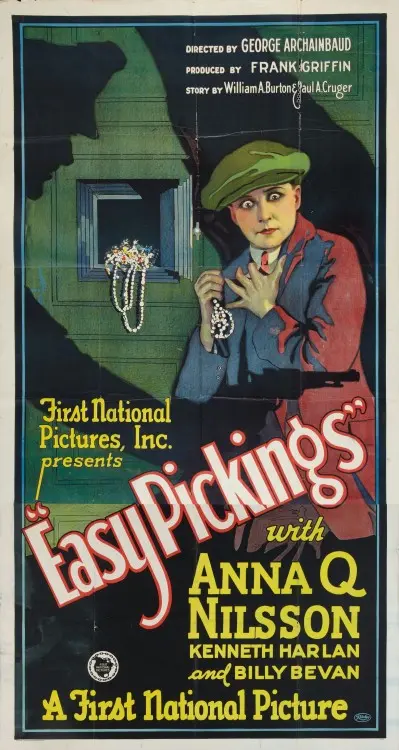
Is Easy Pickings worth watching today? Short answer: yes, but with a significant caveat. This 1927 silent film, a relic from an era brimming with cinematic experimentation, offers a fascinating, if sometimes frustrating, glimpse into the nascent stages of the mystery-thriller genre.
It is a film crafted for the dedicated silent film aficionado, the historian of early cinema, and those with a genuine curiosity for how narrative suspense was constructed before the advent of sound. Conversely, it is decidedly not for the casual viewer seeking modern pacing, crisp dialogue, or a straightforward plot free of the conventions and occasional narrative eccentricities of its time.
This film works because of its audacious plot twists and its commitment to a bewildering, almost farcical, sense of mystery that keeps the audience guessing, even if the “how” is often sacrificed for the “what.”
This film fails because its narrative coherence occasionally buckles under the weight of its own ambition, leading to moments of genuine confusion that even a seasoned viewer might struggle to untangle.
You should watch it if you appreciate the raw, unpolished energy of early cinema, enjoy a good old-fashioned “whodunit” with a mansion full of secrets, and are willing to engage with a film that demands a certain level of interpretive generosity.
The silent era, often unfairly dismissed as a quaint precursor to “real” cinema, was a hotbed of innovation. Films like Easy Pickings stand as testament to the boundless creativity and determination of filmmakers to captivate audiences without a single spoken word. Directed by Charles Sellon, this particular entry into the mystery genre leans heavily into the tropes of the haunted house, the hidden passage, and the disguised villain, all staples that would continue to define thrillers for decades to come.
What strikes a modern viewer immediately is the sheer audacity of its premise. A lawyer, Stewart, poisons his client, Simeon Van Horne, then attempts to defraud the estate by convincing a burglar, Mary Ryan, to impersonate a dead heiress. This isn't just a simple crime; it's a cascade of moral compromises and desperate measures, setting the stage for a truly chaotic unfolding of events.
The film doesn't waste time establishing its stakes, throwing the audience into the thick of the conspiracy almost immediately. It’s a bold move, prioritizing immediate intrigue over slow-burn character development, a hallmark of many silent-era programmers designed for quick entertainment.
At its core, Easy Pickings is a masterclass in narrative convolution, a quality that is both its charm and its Achilles' heel. The initial setup is deliciously wicked: Stewart (Philo McCullough) orchestrates the poisoning of Simeon Van Horne, believing he can manipulate the inheritance shared by young Peter Van Horne and the supposedly deceased Dolores. His plan involves coercing the opportunistic burglar Mary Ryan (Anna Q. Nilsson) into playing the role of the long-lost cousin, a scheme fraught with immediate peril.
However, the plot quickly spirals beyond simple impersonation. The Van Horne mansion itself becomes a character, a labyrinth of secrets. Mary's companion, Tony, is inexplicably pulled into a secret passage, a classic, almost comedic, plot device that generates instant confusion and raises the stakes for Mary. Then, the body of Simeon Van Horne vanishes entirely, escalating the mystery from a mere poisoning to something far more spectral and unsettling.
The introduction of Remus, the colored servant (Zack Williams), who witnesses a black-hooded figure, further deepens the supernatural undertones, albeit briefly. The lights flicker dramatically, a tried-and-true method for heightening tension in any era. The film then introduces a detective, only to have him become the victim of numerous hoaxes perpetrated by the very mysterious figure he’s meant to apprehend. This playful, almost farcical, element distinguishes Easy Pickings from more straightforward thrillers, suggesting a director who enjoyed toying with audience expectations.
The final reveal, where the mysterious figure (played alternately by Tony and Dr. Naylor) uses Van Horne's features to scare a confession from Stewart, then unmasks himself as Peter’s “chauffeur,” is a twist of magnificent, if slightly absurd, proportions. It’s a moment that demands a suspension of disbelief that few modern films would dare to ask. Yet, in the context of 1927, it’s a stroke of genius, culminating in Peter’s realization that Mary deserves a share of the fortune and his declaration of love – a surprisingly romantic conclusion to such a dark and tangled affair.
The success of any silent film hinges on its actors' ability to convey emotion and narrative through gesture, expression, and physical presence alone. In Easy Pickings, the cast delivers a range of performances that are both emblematic of the era and surprisingly effective.
Kenneth Harlan as Peter Van Horne embodies the dashing, slightly naive leading man, though his character’s true cunning is only revealed at the climax. His expressions are broad, yet controlled, conveying surprise, suspicion, and eventually, affection, often with just a subtle shift of his gaze. Philo McCullough, as the villainous lawyer Stewart, truly shines. His performance is a masterclass in silent-era villainy: sneering smiles, furtive glances, and exaggerated gestures of greed and fear. Every movement telegraphs his nefarious intentions, making him a compelling, if one-dimensional, antagonist.
Anna Q. Nilsson, as Mary Ryan, carries much of the film's emotional weight. Her portrayal of a burglar thrust into a high-stakes impersonation is nuanced, showing her initial reluctance, her growing fear, and ultimately, her burgeoning affection for Peter. She manages to convey a complex emotional journey without a single spoken word, a testament to her skill. One particular scene where she registers pure terror upon discovering the vanishing body is genuinely impactful, her wide eyes and trembling hands speaking volumes.
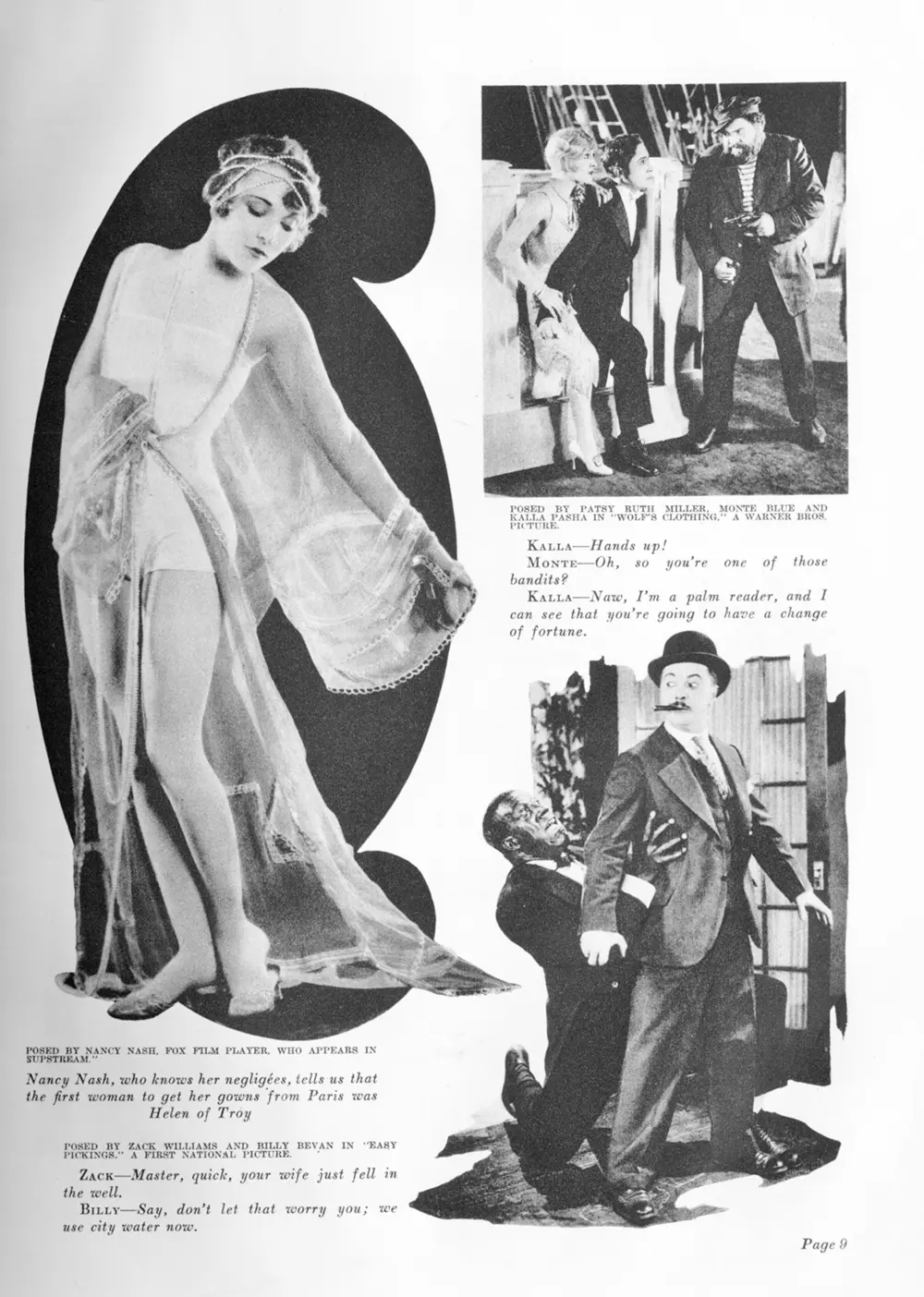
The supporting cast, including Zack Williams as Remus, provides moments of comic relief and genuine fright. Williams’s wide-eyed terror upon seeing the hooded figure is a classic silent film reaction shot, designed to elicit a similar response from the audience. While some performances lean into caricature, it's a deliberate choice that fits the film's tone, which often oscillates between genuine suspense and lighthearted absurdity.
Charles Sellon's direction in Easy Pickings is a fascinating study in early cinematic suspense. He understands the power of suggestion and the visual language of mystery. The film makes excellent use of its single, sprawling location – the Van Horne mansion – transforming it into a character in itself. The cinematography, though basic by modern standards, effectively uses shadows and stark lighting to create an atmosphere of unease and hidden dangers. The flickering lights, a simple yet effective trick, amplify the sense of a house alive with unseen forces.
Sellon employs classic techniques to build tension: quick cuts between characters' reactions, close-ups on significant objects (like the disappearing body or the secret passage entrance), and the strategic use of darkness. The black-hooded figure, for instance, is rarely shown clearly, enhancing its mysterious and threatening presence. This approach, while perhaps less sophisticated than later masters of suspense like Alfred Hitchcock's *Number 17*, is remarkably effective for its time.
One particularly clever directorial choice is the way the film handles the detective character. Instead of making him an all-knowing figure, Sellon allows him to be the target of the mysterious figure's hoaxes. This not only adds a layer of dark humor but also highlights the elusive nature of the villain, constantly staying one step ahead. It's a bold move that subverts audience expectations and keeps the mystery genuinely perplexing.
However, Sellon's direction is not without its flaws. There are moments where the staging feels a little too theatrical, a remnant of the stage plays from which many silent films drew inspiration. Some transitions feel abrupt, and the geography of the mansion isn't always clear, which can lead to minor confusion during the more frenetic chase sequences. Despite these minor issues, the overall visual storytelling is commendable, demonstrating a clear effort to use the camera as a tool for narrative and emotional impact.
The pacing of Easy Pickings is a curious beast. It begins with a rapid-fire introduction to the plot, quickly establishing the poisoning and the impersonation scheme. This initial burst of energy promises a breathless thriller. However, once Mary is installed in the mansion, the pace shifts, becoming more deliberate, allowing the various mysterious occurrences – the disappearing body, the secret passages, the hooded figure – to unfold with a theatrical flourish.
This shift isn't necessarily a flaw, but it does demand a certain adjustment from the viewer. The film takes its time to revel in the confusion and the characters' reactions to the increasingly bizarre events. The intermittent hoaxes played on the detective, for example, punctuate the tension with moments of almost farcical comedy, preventing the film from becoming too grim. This tonal balancing act is one of the film's most distinctive features, blending genuine suspense with a playful, almost whimsical, approach to its own narrative.
The climax, with its rapid succession of reveals and a surprisingly swift resolution to both the mystery and the budding romance, brings the film back to a faster pace. It’s a rollercoaster of narrative twists, some earned, some seemingly plucked from thin air. While modern audiences might find the suddenness of the final revelations a bit jarring, it was a common technique in silent mysteries to provide a satisfying, if convoluted, denouement.
Ultimately, the film’s tone is one of playful menace, a haunted house romp with genuinely high stakes for its characters. It's a testament to the era's ability to combine genres and moods without feeling entirely disjointed, even if it occasionally sacrifices logical consistency for pure entertainment value.
Yes, for specific audiences, Easy Pickings is absolutely worth watching. It offers a unique window into silent cinema's approach to the mystery genre.
The film’s historical value is undeniable. It showcases the visual storytelling techniques and acting styles prevalent in 1927.
It's a good choice for those interested in the evolution of film narrative. You will see tropes that became foundational to suspense thrillers.
However, expect a different kind of pacing. The plot twists are abundant, sometimes to the point of absurdity. This requires patience and an open mind.
For casual viewers, it might feel slow or overly melodramatic. But for enthusiasts, it’s a rewarding experience.
Easy Pickings is a delightful, if imperfect, relic. It’s a film that demands a certain patience, a willingness to forgive its occasional narrative stumbles for the sheer joy of seeing early cinematic ingenuity at play. It works. But it’s flawed. The plot, while ambitious, occasionally feels like a house of cards, threatening to collapse under its own weight of twists and contrivances. Yet, it’s precisely this over-the-top nature that gives it a peculiar charm. It’s a testament to a time when filmmakers were throwing everything at the screen to see what stuck, and in the case of this film, a surprising amount did. While it won't redefine your cinematic palate, it offers a fascinating glimpse into the foundations of the mystery genre, delivered with silent-era flair. It’s more than just an easy pick; it’s a rewarding, if challenging, watch for the discerning cinephile.
IMDb —
1914
Community
Log in to comment.