DbcultAccessing Vault...
4.2/10
Senior Film Conservator
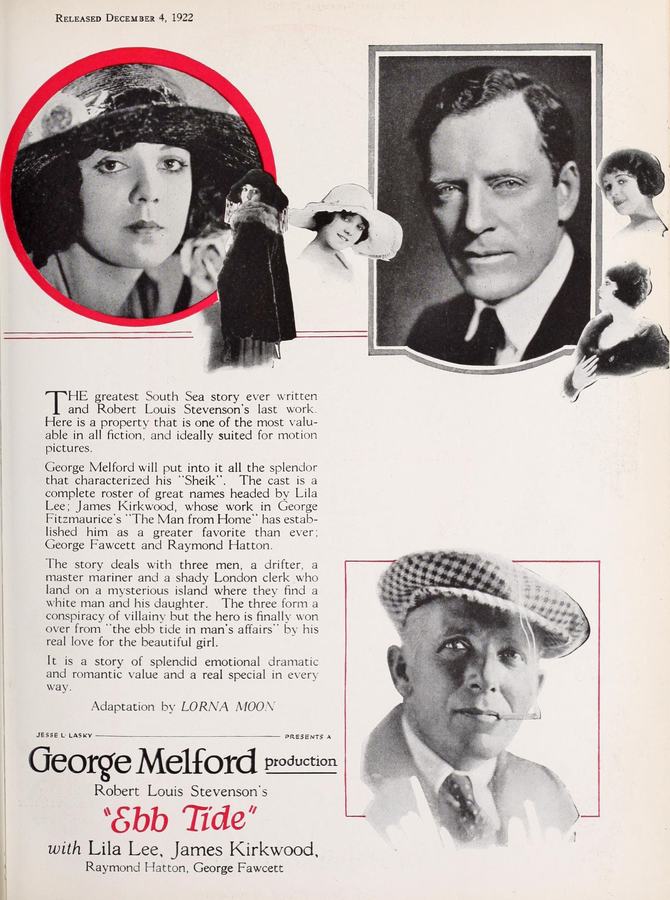
A definitive 4.2/10 rating for a film that redefined the boundaries of cult cinema. Ebb Tide remains a cornerstone of transgressive art.
The first image that lingers after the credits of Ebb Tide is not of blazing masts or a kraken’s embrace, but of a single drop of brine falling from George O’Brien’s lashes—an inadvertent tear for a morality play that knows salvation is merely another type of drowning. Director George Melford translates Stevenson’s Pacific nightmares into a chiaroscuro fever where every frame appears soaked in iodine and kerosene. You feel the salt rash, taste the nickel tang of fear.
“A derelict ship is the perfect cathedral for men who have already sunk.”
We open on a horizon that quivers like faulty celluloid, the vessel Farallone bobbing like a discarded matchbox. Captain Davis (James Kirkwood) sports a uniform more frayed than his nerves, while Huish (Raymond Hatton) slouches in a perpetual stupor, eyes glittering with the chaotic humor of a man who trusts neither God nor gravity. Between them stands Robert Herrick (George O’Brien), lantern-jawed yet hollow-cheeked, clutching dog-eared verses that mock his dwindling courage. These are not swashbucklers; they are receipts for unpaid debts.
Enter the atoll: a ring of crushed coral that glints like shattered crockery beneath a merciless sun. Attwater (George Fawcett) rules this micro-kingdom with the bored serenity of Prospero if he’d swapped sorcery for accounting ledgers. His pearl beds are Fort Knox in nacre; his civility, a thin glaze over tectonic contempt. Daughter Ruth (Lila Lee) drifts through the compound in diaphanous linens, a Giotto angel marooned among packing crates and mission furniture. Melford’s camera ogles her through mosquito-netting, transforming gauze into bridal flames—an omen of conflagrations to come.
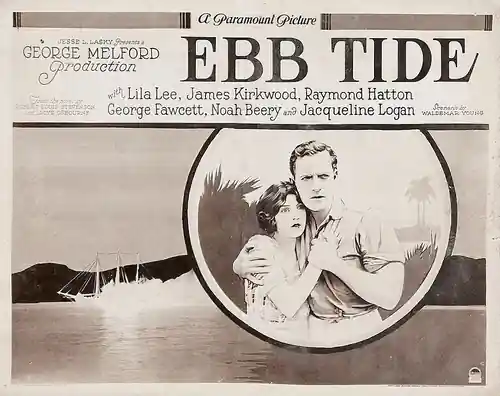
Davis and Huish conspire in the bilge by candle-stump, their shadows writhing like cut-rate demons. The plan? Ply Attwater with praise, chloral hydrate, and scripture, then skip with the oyster’s glistening embryos. Yet every rehearsal collapses under the weight of Herrick’s conscience, which grows heavier each time Ruth recites Keats to the gulls. O’Brien plays the dilemma with micro-gestures: a tightening of the mandible, a swallow that ripples down his sunburned throat. Silent cinema rarely grants us such intimate cartography.
The pivotal feast arrives soaked in tropic sweat—china clinks, palms fan, and Attwater proposes a toast to “fortune’s fair whore.” Fawcett delivers the line with languid menace, eyes half-lidded like a Komodo dragon basking. Beneath the table Huish’s fingers drum Morse code for damnation. Watch how cinematographer Paul Perry racks focus from a carving knife to Ruth’s hand brushing Herrick’s sleeve: an erotic jolt that foreshadows violence more acutely than any title card.
When Huish finally lunges for the treasure chest, Melford detonates the sequence with Eisensteinian ferocity. An oil lamp arcs through darkness—its flame trails like a comet—then crashes. Instant inferno. Hatton’s scream is a needle scratch across the orchestra’s lush swell; his body becomes a dancing wick, a human candle whose grease-sizzling demise still feels transgressive a century later. Censors clutched their pearls, but audiences lined up, morbidly thrilled to see vice pay in thermite currency.
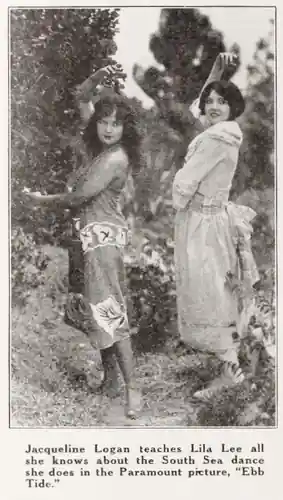
Attwater’s reckoning arrives via toppling spar: a splintered javelin hurled by divine bookkeeping. Fawcett’s eyes, wide in disbelief, reflect the inferno as he collapses—tyrant, protector, pearl-keeper now reduced to carrion under blistered canvas. The visual rhyme is unmistakable: the mast that once pointed toward conquest now skewers its master. Fate, it seems, keeps its own ledger.
If you arrived expecting tentacles merely for pulp spectacle, brace for subtext. The octopus erupts from the shallows as the ship burns—a writhing metaphor for grasping colonial avarice, each sucker a ledger of extracted wealth. Herrick hacks at the limbs with a belaying pin, but the creature re-knots itself, relentless. Only when Ruth offers her ivory necklace—fake pearls, paste trinkets—does the beast recoil, repelled by the null value of sham empire. In that moment, Melford inverts monster lore: the creature isn’t vanquished by brute force but by the renunciation of plunder.
Compare this to the landlocked intrigues of Secret Marriage or the drawing-room cynicism of Behind Closed Doors. Ebb Tide refuses parlors and persiflage; its drama is scraped bare by coral, sun-blistered and barnacled.
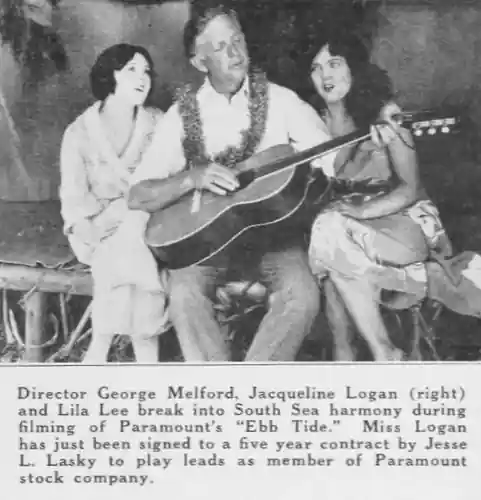
George O’Brien, fresh from Fox’s western backlots, wields a physical candor that recalls a young Gary Cooper stripped of heroics. His Herrick is all knuckles and yearning, a man who courts Ruth by reciting fragments of Endymion while gutting fish. Watch the tremor in his wrist when Ruth places her palm over his—O’Brien lets desire register as seismic, not swoon.
Lila Lee counters with quiet magnetism, her Ruth neither damsel nor firebrand but a girl raised on scripture and low-tide anatomy. She measures men by the calluses on their hands, not their promises. In medium close-up, Lee’s eyes shimmer like tidal pools—opaque until you kneel—and her final smile as the dinghy drifts seaward contains both sunrise and shroud.
As for Hatton, his Huish is a grotesque aria: prancing, wheedling, then plunging into sulfurous self-immolation. The performance anticipates The Vortex’s drug-addled decadence, though Melford refuses redemption. Huish dies as he lived—cackling at the cosmic joke.
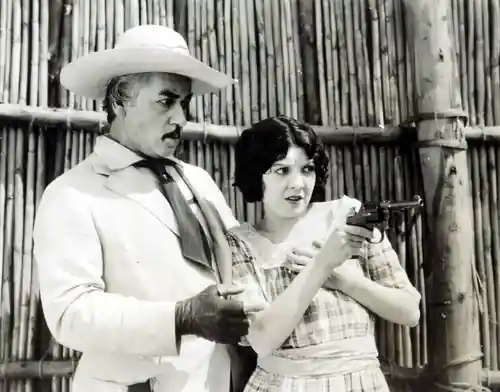
Though monochromatic, the film’s tinting schema speaks a dialect of mood: amber for daylight avarice, cyan for nocturnal dread, rose for the fleeting blush of romance. The conflagration is hand-painted in crimson across each 35mm print—an artisanal flourish lost in later digital grays. Imagine The Lure of Luxury drained of champagne shimmer and replaced with iodine; that’s the palette.
Adapted from a collaborative Stevenson novella, the screenplay by Waldemar Young and Lorna Moon compresses imperial angst into pulp poetry. Dialog cards are sparse yet barbed: “Pearls are the milk teeth of ocean—sooner or later they bite back.” The line evokes both manifest destiny and karmic dentistry. Cinephiles tracking authorship breadcrumbs will note Stevenson’s fascination with dual natures—Jekyll & Hyde reverberate in Herrick’s tug-of-war between lust and honor, while Attwater’s cultivated menace recalls Master of Ballantrae.
Original exhibition prints shipped with a cue sheet recommending “The Storm” by J.S. Zamecnik for the conflagration, but many provincial houses improvised on harmonium, creating a feverish dissonance. Modern restorations (Kino Lorber 4K, 2021) commission a chamber quartet that plucks atonal tremolos beneath the crackle of optical thunder. The effect is uncanny—sea air seems to seep from the speakers.
While Ebb Tide never ascended to canonical heights like Salomy Jane’s frontier melodrama, its DNA swims through later maritime noirs—note the greed-cursed skiffs of The Wages of Fear or the eroticized brutality in Dead Reckoning. Spielberg reportedly screened a 16mm dupe while prepping Jaws, studying how predation could pivot from shark to man without narrative whiplash.
For aficionados of An Honorable Cad’s roguish charm, Ebb Tide offers a bleaker proposition: honor is not innate but forged in salt, sweat, and the refusal to plunder what you covet.
Is the film flawless? Hardly. The octopus interlude, while thematically rich, stalls pacing like an anchor snagged on reef. Secondary native characters remain silhouettes, a regrettable staple of 1920s exoticism. Yet these barnacles do not sink the vessel. Ebb Tide endures because it understands that every paradise is somebody else’s graveyard, and that pearls, like hearts, accrete around irritation.
Seek it out—preferably at a cinematheque with a live sextet, or via Kino’s 4K disc where emulsion scratches flicker like heat lightning. Let its salt crust your lashes, its flames warm your cheeks, and when the final dinghy merges with a tangerine horizon, you may find yourself weighing the freight of your own desires against the heft of human mercy. In that suspended moment, Ebb Tide achieves what only great cinema dares: it turns greed into gospel, fire into baptism, and romance into the only compass that points true north.
IMDb 6.8
1934
Community
Log in to comment.