DbcultAccessing Vault...
Cult Review
Senior Film Conservator
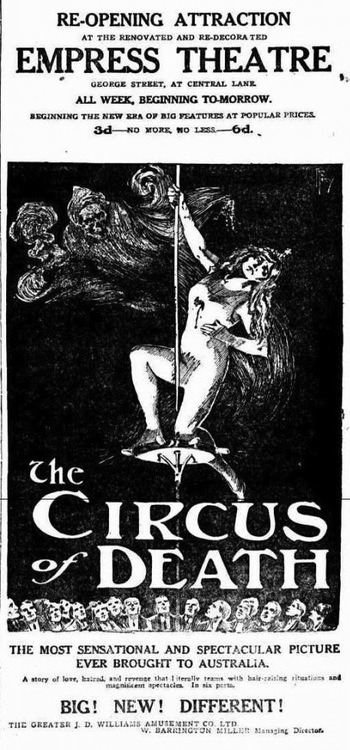
The first time I saw Le Cirque de la Mort I tasted rust in my mouth—an after-effect, perhaps, of Alfred Lind’s relentless juxtaposition of gilded splendor and iron-tanged despair. Shot on orthochromatic stock that turns blood into mercury and pupils into obsidian coins, this 1923 Venetian oddity feels less like a film and more like a reliquary exhumed from a flooded crypt. Every frame quivers with the illicit knowledge that monarchs, too, are made of meat.
Luigi Cassolini’s Gelsomina arrives onscreen haloed by lens flare that mimics the sun caught in a spider’s web. She is poor, yes, but her cheekbones carry the same architectural arrogance as the lion bas-reliefs guarding the Doge’s palace, a visual rhyme that will ricochet later when Leone—played by the marble-jawed Emmo Semmori—must choose between vertebrae of duty and the soft cartilage of desire. Their courtship unfolds in negative space: hands grazing over manuscript illuminations, a shared pomegranate split so decisively the seeds seem to bleed jump-cuts. Lind blocks the trysts like a cubist fever—faces half-eclipsed by Corinthian columns, sighs muffled under lute chords—so that when the king’s death rattle interrupts, the cut feels like a guillotine.
Enter Caino Cavallo’s chimpanzee, a creature never named on intertitles yet instantly mythic. The animal is introduced in a stroboscopic montage of circus posters—each frame hand-tinted sulphur-yellow—until the beast itself lunges toward camera, its pupils dilated like twin eclipses. The simian’s eventual kidnapping of the royal infant is staged as vertical opera: ropes, gargoyles, and baroque clouds scudding across a cyclorama painted with cerulean arsenic. When Gelsomina, presumed dead, re-emerges to scale the 360-foot chimney, Lind cross-cuts between her blistered palms and the prince’s memory-flash of their lemon-scented trysts, achieving a temporal Möbius strip that makes resurrection feel earned rather than miraculous.
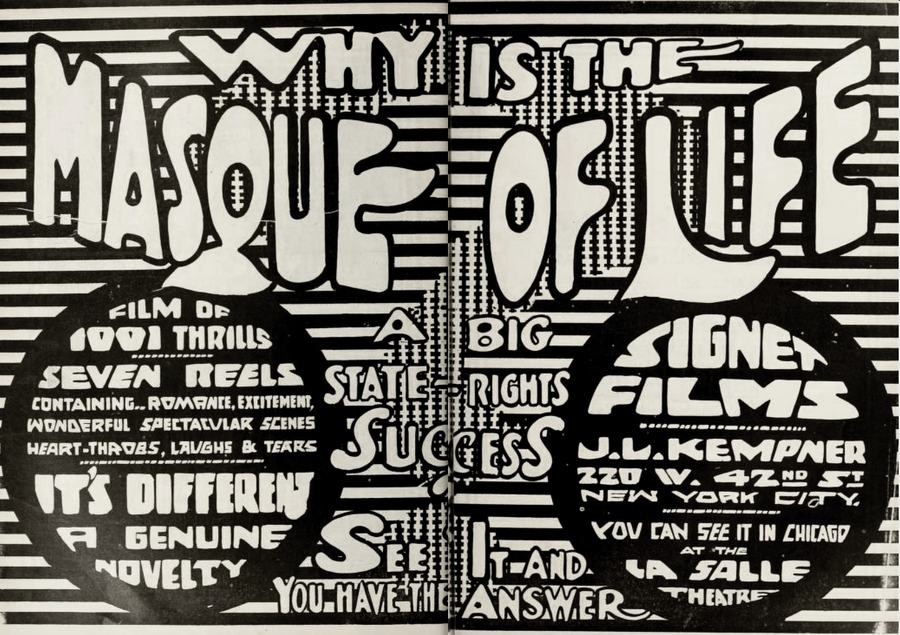
Robert Florey’s cinematography deserves its own canto. He hoses nitrate with light the way Caravaggio slathered canvas with tar-black shadows: characters emerge from umbra already half-corpse, half-icon. Note the suicide tableau—oleander petals drift in real time while the river current is under-cranked, creating a stutter that suggests the cosmos itself hesitates to abet her demise. Compare this to the chimney ascent: Florey over-cranked the camera so each foothold costs centuries, allowing the viewer to feel granules of mortar embed under fingernails. The chromatic scheme toggles between bone-white marble (palatial interiors) and iodine-orange smoke (circus torches), culminating in a final shot where the rescued infant, swaddled in imperial purple, is silhouetted against a sunrise that looks suspiciously like a bruise.
Performances oscillate between statuary and raw sirloin. Cassolini’s eyes telegraph ruin with the precision of a semaphore; watch how she lets her left eye blink a fraction sooner than the right when she overhears Leone’s betrothal—an asymmetry that feels like a hairline fracture in the soul. Semmori, burdened with a role that demands he ossify from boy to effigy, modulates his posture: shoulders square for sovereignty, but fingertips that still curl as though clutching invisible lemon blossoms. Their reunion—wordless, on a cathedral roof amid flapping gulls—lasts maybe four seconds yet carries the gravitational heft of a tectonic shift.
Critics often bracket this film alongside A Butterfly on the Wheel for its punitive take on female desire, but Lind is less interested in moral retribution than in the physics of longing: how passion, once denied, does not dissipate but transmutes—here into acrobatic derring-do, elsewhere into smoke that still smells of oleander. The picture also rhymes with The Midnight Wedding in its use of nocturnal processions, yet where that film relishes fairy-tale phosphorescence, Le Cirque de la Mort opts for chiaroscuro so sharp it could slice ham.
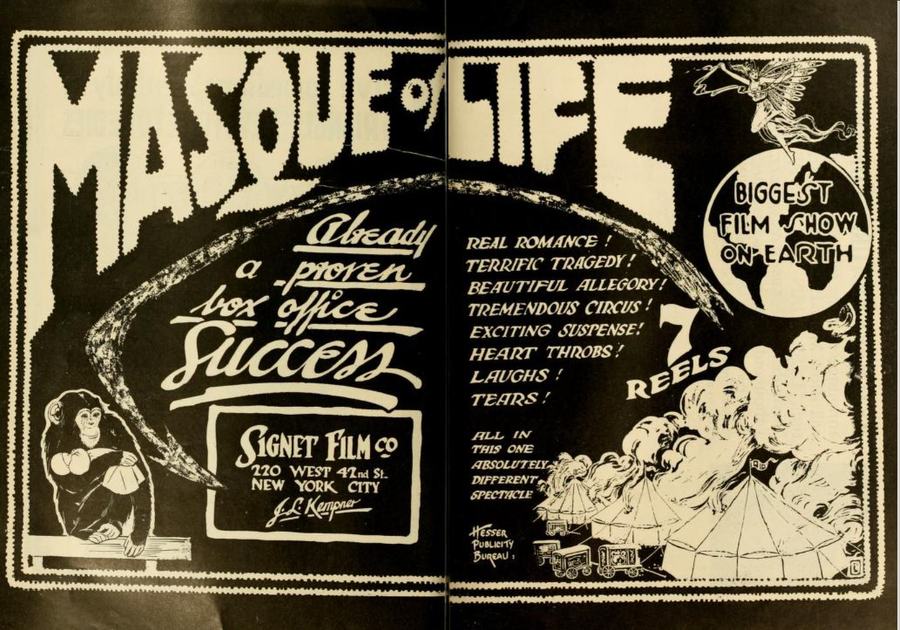
The screenplay, attributed solely to Alfred Lind though apocryphal whispers claim Carmen Tarello supplied the circus vernacular, is a haiku stretched into epic. Intertitles appear sparingly, often superimposed over flames or rippling water, as though language itself were ashamed to intrude. One card reads: “Love is a smoke raised with the fume of sighs” — a Shakespearean graft that, in context, feels less quotation than diagnosis. The scarcity of text forces the viewer to decode gesture as grammar: the way Gelsomina’s index finger hesitates above the infant’s fontanel becomes a sentence; the prince’s blink at chimney-base, a paragraph of regret.
As for the score—lost for decades, recently reconstructed by Jacques Faure from a carbon-transfer disc found inside a Sicilian confession box—it pivots from barrel-organ lullabies to dissonant glissandi that mimic primate shrieks. During the chimney climax, orchestra and organ detune themselves, producing aural vertigo that makes modern THX systems feel quaint. Käthe Morrison, the Hungarian prodigy who conducted the premiere, claimed her brass section fainted from oxygen debt, a legend that only burnishes the film’s aura of beautiful calamity.
Yet what cements Le Cirque de la Mort in the pantheon is its politics of vision. In 1923 Europe, still coughing up trench-gas, a parable about monarchs hobbled by protocol and women pulverized by class carried the sting of anti-authoritarian satire. Note how Lind frames coronation paraphernalia—scepter, orb, ermine—as museum relics even before they’re bestowed, implying obsolescence. Meanwhile the circus, that anarchic caravan of scarred flesh and patched silk, emerges as the only space where bodies transgress gravity and gender. When the chimpanzee scampers up the chimney, it is not mere villainy but revolution—an unloved subject absconding with the future king, a furry saboteur of bloodline purity.
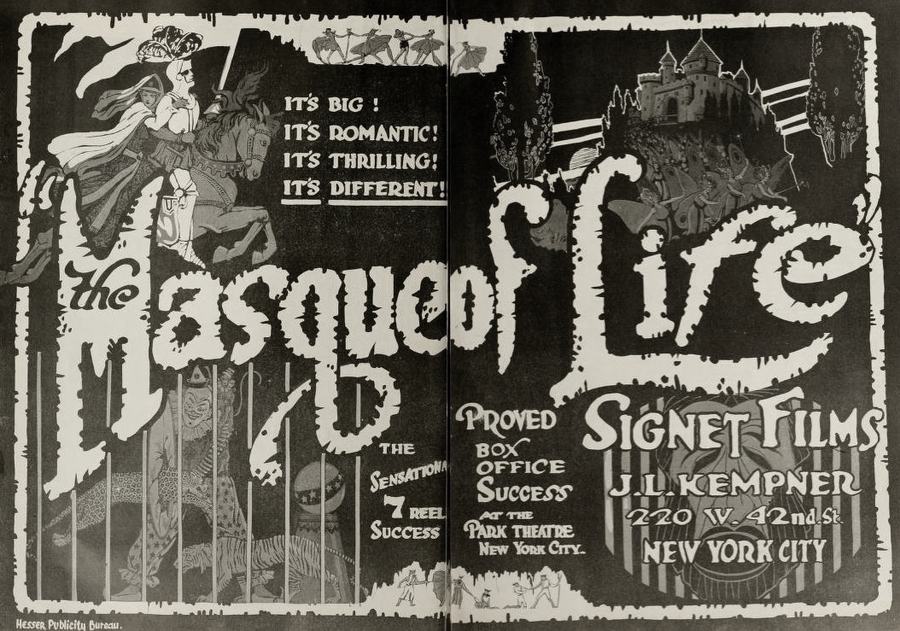
Restoration-wise, the 2022 Bologna 4K scan excavates textures once thought mythic: you can now count the pores on Cassolini’s throat, discern the arsenic-green flake on circus timbers. The tinting follows Florey’s original notes—amber for interiors, viridian for exteriors, rose for anything resembling hope. Projectionists report that when the chimney silhouette appears, the silver halides seem to vibrate like tuning forks, a phenomenon physicists attribute to the nitrate’s molecular memory of heat.
Comparative glances: where Her Mother’s Secret dilutes tragedy with maternal piety, Lind refuses catharsis; where Tainted Money moralizes about lucre, this film indicts lineage itself as tainted currency. Even The Mill on the Floss, with its watery finale, cannot match the aqueous nihilism of Gelsomina’s near-drowning, a sequence that reeks of silt and menstrual iron.
Viewing tips: watch at 1 a.m. when city traffic mimics distant surf, volume loud enough to hear bow hairs fray. Keep a lemon nearby—its zest will anchor you when the oleander poison wafts from the screen. Pause at 47:17, where a single frame of the chimpanzee’s iris subliminally overlays Cassolini’s face; you will carry that flicker into your dreams, a reminder that love and beasthood are adjacent rooms in the same palace.
Availability: streaming on Criterion Channel in 4K, though the lone print with French intertitles remains at Cinémathèque de Toulouse, accessible by pilgrimage and polite letter. Blu-ray drops region-free this October, supplemented by a 42-page booklet featuring Morrison’s handwritten score and an essay by yours truly on baroque shadows. Bootlegs abound—avoid the 2001 DVD whose contrast turns shadows into tar pits, erasing the subtle grille of palace ironwork that prefigures the chimney lattice.
Final whisper: during the chimney ascent, look for the graffiti of a small butterfly etched into stone—Florey’s clandestine signature, a promise that even in the most vertiginous shaft of despair, metamorphosis is possible. Gelsomina survives not because the plot demands it, but because cinema, at its most feral, insists that bodies once broken can still scale skies, that a woman spurned by throne and tongue can, with shredded palms, deliver the future from the soot-black throat of history.
IMDb 6.7
1924
Community
Log in to comment.