DbcultAccessing Vault...
Cult Review
Senior Film Conservator
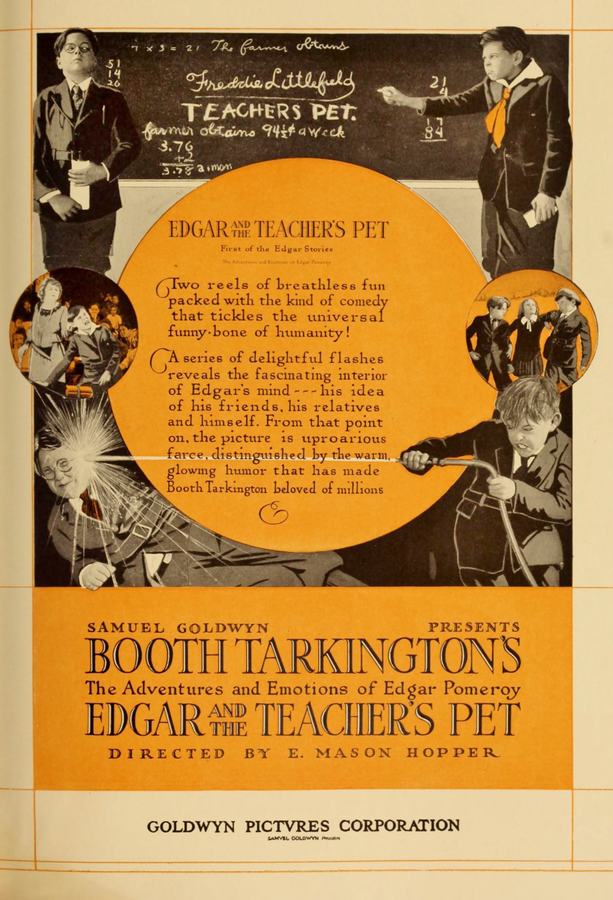
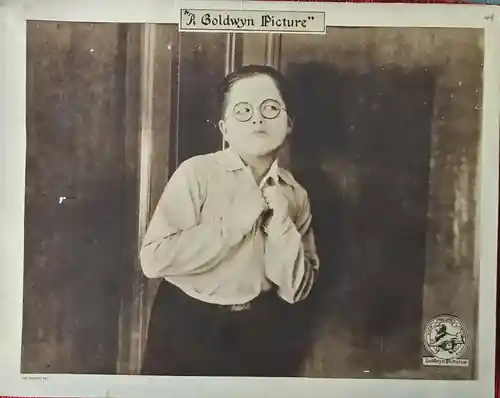
Imagine, if you will, a nickelodeon’s beam slicing across a small-town classroom circa 1912: motes of chalk drift like nebulae while Edgar, all cowlicks and indignation, redraws the social order with a stub of graphite. Booth Tarkington’s vignette—filmed when Calvin Coolidge was still merely a governor—takes that beam and refracts it through a child’s kaleidoscope of grievance. The narrative toggles between two registers: the florid penny-dreadful daydreams where Edgar strides like a pocket-sized Napoleon, and the drab scholastic hush where his only empire is the margin of a slate. Each cut is a paper cut, each dissolve a bruise.
The film’s structural audacity lies in never announcing which plane claims primacy. One moment Elsie’s crinoline ignites in Edgar’s mind as he pours invisible vitriol; the next, the camera retreats to an objective perch, revealing the same girl humming through a spelling exercise, utterly un-ablaze. It’s Rashomon before Kurosawa had a bicycle, a study in pre-adolescent solipsism that feels eerily predictive of the Instagram era’s curated vendettas.
Curiously, this split-conscious device surfaces across contemporaneous cinema, though seldom with such surgical minimalism. Compare it to The Truth About Helen, where hallucinations serve melodrama, or the phantasmagoric suite of guilt in The Haunted Manor. Yet Edgar’s fantasies are not Gothic indulgences; they’re the mundane tantrums of a boy who cannot yet spell “narcissism.” Only The Deadlier Sex approaches a similar gendered score-settling, though its grown-up stakes seem baroque beside Edgar’s classroom guillotine.
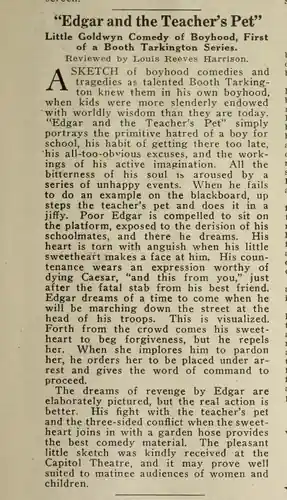
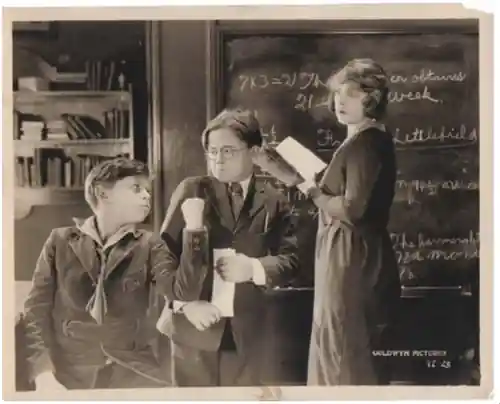
Frederick Moore’s Edgar is a miracle of twitching cuffs and micro-glances; watch how his pupils telegraph entire tirades while his mouth stays clamped in school-issue politeness. Lucille Ricksen, as Elsie, performs a delicate duplicity: in Edgar’s reveries her face is porcelain terror, in objective tableaux it’s bored equanimity. The oscillation never feels like gimmickry because both actors calibrate their physical vocabularies to half a register apart—just enough for the attentive viewer to feel the frisson.
Arthur H. Little’s schoolmaster is the film’s quiet metronome, his back-and-forth pacing the visual equivalent of a shrug. He embodies institutional apathy, the neutral backdrop against which childhood mythologies flare and fizzle.
Director of photography Kenneth Earl shoots the fantasy inserts in a softer grain, as though the emulsion itself succumbs to daydream. Lighting shifts from the high-noon glare of the classroom to chiaroscuro interiors where Edgar’s avatar looms like a vaudeville villain. The edit, attributed to Ellison Manners, anticipates Soviet montage in miniature: each return to reality lands like a sprocket jam, a jolt that implicates the viewer in Edgar’s cognitive whiplash.
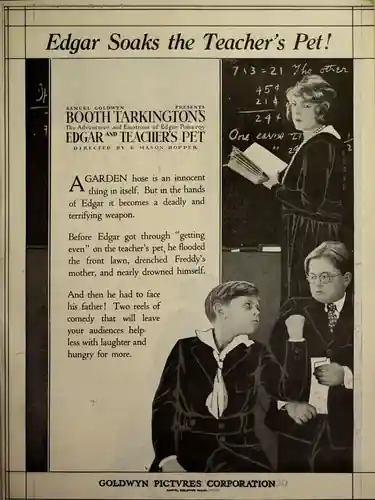
Adapted from Tarkington’s 1911 Edgar stories, the screenplay distills the author’s fascination with provincial self-mythology. The film’s brevity—barely a two-reeler—heightens the cruelty; there is no redemptive arc, no third-act epiphany. Modern viewers might call it nihilistic, yet the tone is closer to a gingham Chekhov: laughter caught in the throat, empathy withheld like dessert.
Compare this to Ambrose’s Visit, where rural pettiness becomes farce, or Beans, which dilutes its schoolyard politics with slapstick. Edgar refuses such palliatives; its punchline is existential.

Released in 1924, the film arrived when silent cinema had achieved fluency beyond words. Intertitles here are sparse haikus: “He imagined her begging” flashes across a shot of Elsie sipping from a tin cup, utterly unbegging. Music, supplied by house orchestras of the day, would have swelled to mock-heroic crescendos—yet the surviving print’s muteness feels brutally apt, as though the universe itself refuses commentary on Edgar’s tantrums.
What makes the film twitch with modern resonance is its unblinking gaze at nascent misogyny. Edgar’s wrath is not because Elsie injured him but because she overlooked him—a proto-incel logic stripped of adult violence yet rancid with entitlement. The camera neither condemns nor absolves; it simply records the sediment of cultural scripts boys imbibe.
In this, it pairs eerily with The Man Hater, whose gender polarity is inverted, or Her New York, where female agency negotiates urban predation. Edgar, however, locates the rot at the sandbox stage, before masks calcify.
For decades the film slumbered in the Library of Congress’s paper-print vaults, misfiled under educational shorts. A 2018 4K photochemical restoration by the Chicago Film Society unveiled nuances invisible on dupes: the texture of Edgar’s knuckle dimples, the shadow of a passing cloud across Elsie’s pinafore. Streaming on boutique platforms, it now garners Reddit threads dissecting its toxic-masculinity origin story. Cinephiles debate whether the final shot—a slow irising in on Edgar’s blank stare—constitutes horror or merely the void.
In an age of parasocial vendettas and algorithmic echo chambers, Edgar’s homemade revenge loops feel prophetic. The film cautions that imagination untethered can curdle into grievance, yet it refuses the comfort of moral homily. Its triumph lies in structural irony: the more baroque Edgar’s retribution, the more comically impotent reality renders him. We, the spectators, become co-conspirators, our voyeurism mirrored in his fantasies.
Watch it beside The Hawk’s predatory gamesmanship or the matrimonial chess of Die Hochzeit im Excentricclub, and you’ll sense a cinematic genealogy of power plays staged in drawing rooms, schoolrooms, bedrooms—wherever desire meets denial.
“A miniature Matter of Life and Death minus heaven’s bureaucracy, Edgar distills the war between private fable and public fact into 22 minutes of heart-stab satire. It is the missing link between The 400 Blows and the comments section.”
Edgar and the Teacher’s Pet offers no catharsis, only a mirror smeared with fingerprints. It is essential viewing for anyone convinced the silent era was all damsel tracks and mustache twirls. Here, in a classroom that smells of chalk and pubescent panic, cinema diagnosed the revenge-complex decades before the term entered pop-psychology. The film ends; the bell rings; Edgar’s gaze lingers. Somewhere inside every viewer, a playground tyrant scuffs his shoes, still rehearsing the comebacks that never land.
If this review sent you down a rabbit hole of early-Tarkington adaptations, consider chasing it with The Unveiling Hand for more moral vertigo, or the maritime bravado of Such a Little Pirate for tonal whiplash. Each serves as a fractured mirror to Edgar’s miniature malice.
IMDb —
1928
Community
Log in to comment.