DbcultAccessing Vault...
Cult Review
Senior Film Conservator
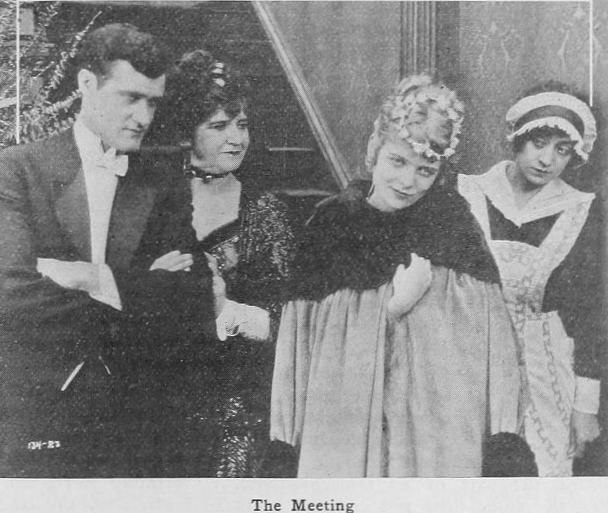
Stepping back into the cinematic annals of the early 20th century often feels like unearthing a forgotten language, a visual lexicon rich with exaggerated gestures, dramatic intertitles, and an emotional intensity that transcends the absence of spoken dialogue. Among these fascinating relics, James Young and Margaret Turnbull’s "The Thousand-Dollar Husband" emerges not merely as a historical curiosity, but as a compelling human drama that, despite its silent origins, speaks volumes about the enduring complexities of love, class, and societal expectation. Released at a time when cinema was still finding its voice, this film, starring the luminous Blanche Sweet, the formidable Lucille La Verne, and the earnest Tom Forman, offers a window into the moral quandaries and romantic entanglements that captivated audiences over a century ago. It’s a testament to the power of storytelling that a narrative crafted without the benefit of synchronized sound can still resonate with such profound thematic depth, challenging our preconceptions about what constitutes a 'purchased' heart.
At its core, "The Thousand-Dollar Husband" is a poignant examination of a marriage born not of passion, but of practicality, a common trope in the literature and cinema of the era. We are introduced to Elinor Vance, a young woman whose delicate beauty belies a fierce spirit, yet whose family finds itself on the precipice of financial ruin. Her formidable Aunt Agatha, portrayed with chilling gravitas by Lucille La Verne, embodies the era's rigid social climbing and economic anxieties. La Verne's performance is a masterclass in silent menace, her every glance and gesture conveying a calculating determination to secure her family's perceived social standing, even at the cost of Elinor's happiness. Aunt Agatha orchestrates a union between Elinor and John Caldwell, a wealthy industrialist whose pockets are as deep as his demeanor is reserved. Caldwell, brought to life with understated dignity by Tom Forman, is no dashing hero of romance novels; he is a man of substance, yes, but also of a certain brusqueness that Elinor initially mistakes for cold indifference. The film’s very title, with its blunt economic descriptor, immediately establishes the transactional nature of this impending bond, setting the stage for a conflict that is as much internal as it is external.
Elinor, played with exquisite sensitivity by Blanche Sweet, enters this arranged marriage with a heart heavy with resentment and a longing for a different life. Her internal turmoil is palpable, communicated through the subtle shifts in her facial expressions and the eloquent language of her body. Sweet, a veteran of early cinema, had a remarkable ability to convey complex emotions without uttering a single word, making her an ideal choice for this role. Her character’s initial disdain for Caldwell is understandable, given the circumstances. She pines for Robert Sterling, a struggling artist, whose romantic ideals stand in stark contrast to Caldwell’s pragmatic reality. E.L. Delaney, in the role of Sterling, embodies the sort of charming but ultimately feckless suitor that often populated these melodramas, serving as a foil to Caldwell's more grounded character. The tension between these two men, one representing the allure of passion and the other the security of stability, forms a central pillar of the narrative, forcing Elinor to confront her own values and desires.
The ensemble cast of "The Thousand-Dollar Husband" delivers performances that are both era-appropriate and surprisingly nuanced. Blanche Sweet, often celebrated for her work with D.W. Griffith, brings a captivating blend of vulnerability and resilience to Elinor. Her performance is a masterclass in silent acting, conveying a spectrum of emotions from quiet despair to burgeoning affection with remarkable clarity. One can observe the subtle shifts in her posture, the slight tremor of a hand, or the fleeting expressions across her face that speak volumes more than any intertitle could. She doesn't just act; she embodies the emotional turmoil of a woman caught between duty and desire. Her portrayal prevents Elinor from becoming a mere victim, instead presenting her as a complex individual navigating an impossible situation.
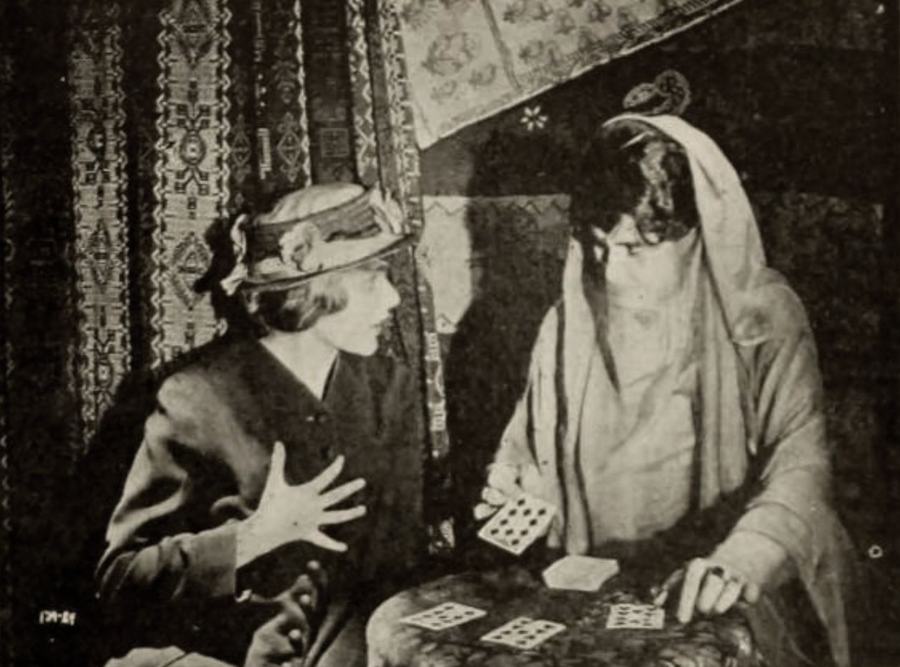
Lucille La Verne, a Broadway actress who transitioned to film, is utterly captivating as Aunt Agatha. She eschews broad caricature for a more insidious portrayal of a woman driven by social ambition. Her eyes, often narrowed, convey a shrewdness that is both chilling and utterly believable. Her scenes with Sweet are particularly potent, highlighting the power imbalance and the suffocating pressure placed upon Elinor. La Verne’s presence anchors the film's initial conflict, establishing the very stakes of Elinor's arranged marriage. Her performance reminds us of the societal forces that often dictated women's lives in that period, making Aunt Agatha a symbol of a particular kind of patriarchal and class-driven control.
Tom Forman, as John Caldwell, has the unenviable task of portraying a character who is initially perceived as unappealing, yet must gradually win over both Elinor and the audience. Forman achieves this with quiet strength. His Caldwell is not overtly charming, but his actions speak louder than any romantic declarations. He observes Elinor with a watchful intensity, his stoicism slowly revealing itself as a form of protective affection rather than coldness. The arc of his character is crucial to the film’s success, and Forman navigates it with a measured hand, allowing the audience to discover Caldwell's true nature alongside Elinor. His performance stands in contrast to the more overtly dramatic roles of the era, offering a grounded, realistic portrayal of a man of integrity. This nuanced approach to character development is what elevates "The Thousand-Dollar Husband" beyond a simple melodrama into a more sophisticated study of human relationships. For similar explorations of complex male leads navigating challenging social landscapes, one might draw parallels to the protagonist's journey in The Dictator, though the contexts are vastly different, both films delve into the internal battles of men in positions of power or influence.
The supporting cast, including James Neill, Theodore Roberts, and Horace B. Carpenter, further enriches the film's tapestry, providing authentic portrayals of the various societal figures that populate Elinor's world. Their collective efforts contribute to the immersive quality of the film, making the fictional world feel remarkably real. Even in smaller roles, the meticulous attention to character detail is evident, a hallmark of quality silent film production.
"The Thousand-Dollar Husband" delves into themes that remain remarkably pertinent today: the tension between love and financial security, the societal pressures on women, and the often-misleading nature of first impressions. The film challenges the audience to look beyond superficial appearances and material wealth to discern true character. Elinor’s journey is one of profound self-discovery, as she learns that the 'value' of a person cannot be quantified by money. Her initial idealization of Robert Sterling, the penniless artist, slowly crumbles as his true character is revealed – a man whose romantic gestures mask a manipulative and financially desperate streak. This disillusionment is a painful but necessary step in her growth.
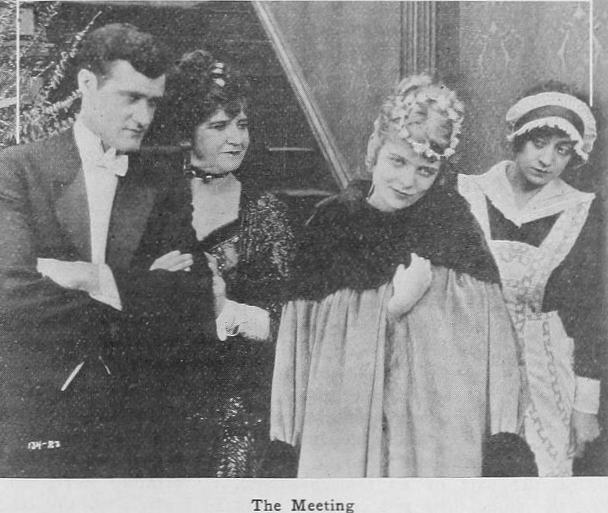
Caldwell, in contrast, consistently acts with integrity, even when his actions are misinterpreted. His quiet acts of generosity and his steadfast protection of Elinor, despite her initial coldness, gradually chip away at her preconceived notions. The film cleverly uses the 'thousand-dollar' sum not just as a plot device, but as a metaphor for the initial misunderstanding and the eventual transcendence of material concerns in favor of genuine human connection. This thematic exploration of finding love where one least expects it, and the moral complexities that arise from financial necessity, finds an echo in other silent dramas like The Price of Tyranny, which also explores the oppressive forces of power and wealth, albeit in a more overtly political context. The personal struggle in "The Thousand-Dollar Husband" feels universal, making it a timeless narrative about the human heart's capacity for adaptation and affection.
James Young, credited as one of the writers alongside Margaret Turnbull, likely also directed this feature, given the common practice of the era. His direction is characterized by a clear narrative focus and an ability to extract powerful performances from his cast. While the cinematic language of 1917 might appear simplistic by modern standards, Young employs techniques that effectively build tension and convey emotion. The use of close-ups, though not as ubiquitous as in later films, is employed strategically to highlight the emotional states of the characters, particularly Elinor and Caldwell. The pacing, typical of early silent features, allows moments of quiet contemplation to breathe, giving the audience time to absorb the unfolding drama.
The film's visual composition, while perhaps lacking the grand scale of some contemporary epics like In the Days of the Thundering Herd, is nonetheless effective in establishing the contrasting worlds of Elinor's impoverished gentility and Caldwell's opulent, yet initially cold, mansion. Lighting is used to great effect, particularly in scenes that emphasize Elinor's isolation or Caldwell's somber reflections. The interior sets, while perhaps not groundbreaking, serve their purpose in creating a believable backdrop for the domestic drama. The attention to detail in costume and set design further immerses the viewer in the period, lending an air of authenticity to the proceedings. The collaborative effort between writers and director is evident in the seamless flow of the narrative, where intertitles serve not just as dialogue but as crucial narrative bridges, guiding the audience through the emotional labyrinth of the plot.
Compared to other films of its time that explored similar themes of marital discord or societal expectations, "The Thousand-Dollar Husband" stands out for its nuanced character development. While films like Kreutzer Sonata delved into the destructive forces within a marriage, "The Thousand-Dollar Husband" offers a more redemptive arc, focusing on the potential for growth and understanding. It avoids simplistic villainy, instead presenting characters with believable motivations and flaws, making their eventual reconciliation feel earned rather than forced. This commitment to psychological realism, even within the confines of silent film melodrama, is what gives the film its lasting power. It’s not just a story of a woman finding love; it’s a story of a woman finding herself and learning to see beyond the superficiality of social constructs.
"The Thousand-Dollar Husband" might not be as widely known as some of its more famous silent contemporaries, but its quiet strength and compelling performances ensure its place as a significant piece of early American cinema. It’s a film that speaks to the perennial human struggle to balance personal desires with societal demands, and the often-surprising ways in which love can bloom in the most unexpected of circumstances. The film’s resolution, where Elinor chooses to embrace her marriage not out of obligation but out of a newfound respect and affection for Caldwell, is deeply satisfying. It’s a testament to the idea that true wealth lies not in monetary value, but in the integrity of character and the depth of emotional connection. This message, delivered through the powerful, wordless performances of its cast, continues to resonate, proving that some stories are truly timeless.
Revisiting films like "The Thousand-Dollar Husband" offers more than just a nostalgic trip; it provides valuable insight into the evolution of cinematic storytelling and the enduring power of human drama. It reminds us that even without the complexities of modern sound design or elaborate visual effects, a well-crafted narrative, brought to life by talented performers, can captivate and move an audience. The film serves as a poignant reminder that the foundations of cinematic art were built on these silent narratives, each frame a brushstroke in the grand canvas of film history. Its exploration of personal growth within the confines of an arranged marriage can be seen as a precursor to later films that tackled similar themes of female agency and societal constraints, perhaps even finding thematic kinship with films like Her Triumph, which also centered on a woman's journey through adversity to self-realization. The silent era, often overlooked, was a fertile ground for such profound explorations, and "The Thousand-Dollar Husband" is a shining example of its artistic depth and emotional potency.
IMDb —
1925
Community
Log in to comment.