DbcultAccessing Vault...
6.2/10
Senior Film Conservator
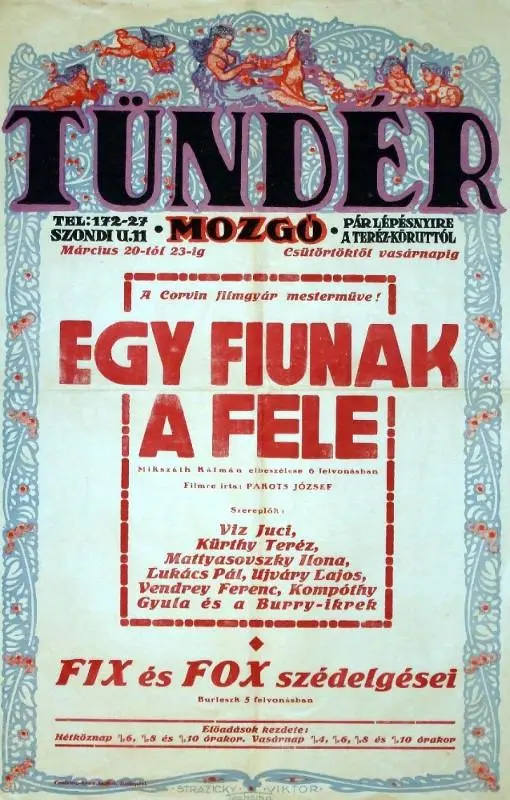
A definitive 6.2/10 rating for a film that redefined the boundaries of cult cinema. Egy fiúnak a fele remains a cornerstone of transgressive art.
Set against the backdrop of a tumultuous era, 'Egy fiúnak a fele' (meaning 'For a Son') delves into the heart of a complex family drama, where the line between reality and deception blurs. The film opens with Ujhelyiné, the wife, and her two sons, Paul and Tibor, in a small, isolated Hungarian countryside. The narrative unfolds through the eyes of Paul, as he grapples with the hidden truth of his lineage, a secret his father, Soma Szarvasi, has meticulously concealed from his mother.
The plot thickens as the boys, now grown men, face the challenges of adult life, their fates entwined with the looming specter of a devastating war. Paul, with his dark past, navigates a murky ethical landscape, while Tibor, the seemingly innocent one, begins to question the nature of his own existence. The film's exploration of identity and the impact of parental deception is both profound and unsettling, creating a rich tapestry of emotions and moral quandaries.
Director Géza von Bolváry and screenwriter Kálmán Mikszáth weave a narrative that is as intricate as it is emotionally resonant. The cast, led by the formidable Ujhelyiné as the wife and mother, delivers performances that are nuanced and deeply moving. Paul Lukas and Tibor Hegedüs bring authenticity and depth to their roles, making their characters' journeys both relatable and compelling.
The film's visual style is a testament to its artistic ambitions. Cinematographer Lajos Ujváry captures the raw beauty of the Hungarian landscape, juxtaposing it with the internal turmoil of the characters. The use of natural light and deep shadows creates a sense of unease, mirroring the psychological tension that permeates the story.
One of the most striking aspects of 'Egy fiúnak a fele' is its exploration of motherly love. Ujhelyiné's character, despite being unaware of the truth, exhibits a profound and unconditional love for both her sons. This aspect of the film adds a layer of complexity, as it challenges the notion of what constitutes true maternal love and the role of forgiveness in such a scenario.
Comparatively, 'Egy fiúnak a fele' shares thematic similarities with 'It Happened to Adele,' which also delves into the consequences of parental deception. However, where 'Adele' focuses more on the external fallout, 'Egy fiúnak a fele' delves deeper into the emotional and psychological ramifications, making it a more introspective and nuanced exploration.
The film's pacing is deliberate, allowing the audience to fully immerse themselves in the characters' lives. The screenplay, with its rich dialogue and well-crafted subtext, invites viewers to ponder the ethical dilemmas at play. The use of flashbacks and present-day scenes interweaves the past and present, creating a seamless narrative that keeps the audience engaged from start to finish.
Moreover, the film's exploration of identity and the impact of parental choices resonates with contemporary discussions on the ethics of family and the nature of truth. It poses challenging questions that are as relevant today as they were when the film was made, making it a timeless piece of cinema.
While the film's themes and content may be heavy, the performances and direction elevate the story, making it a cinematic experience that is both thought-provoking and deeply moving. The film's pacing, combined with its visual and aural elements, creates a powerful emotional impact, leaving viewers with a profound sense of the complexity of human relationships and the enduring power of truth and love.
In conclusion, 'Egy fiúnak a fele' is a masterpiece of art house cinema, a film that demands attention and invites multiple viewings. It is a poignant and powerful exploration of identity, love, and the consequences of deception. Whether you are a fan of deep character studies or a lover of nuanced storytelling, this film is a must-watch. It stands as a testament to the power of cinema to explore complex, human emotions and moral dilemmas with grace and depth.
IMDb 1.9
1920
Community
Log in to comment.