DbcultAccessing Vault...
6/10
Senior Film Conservator
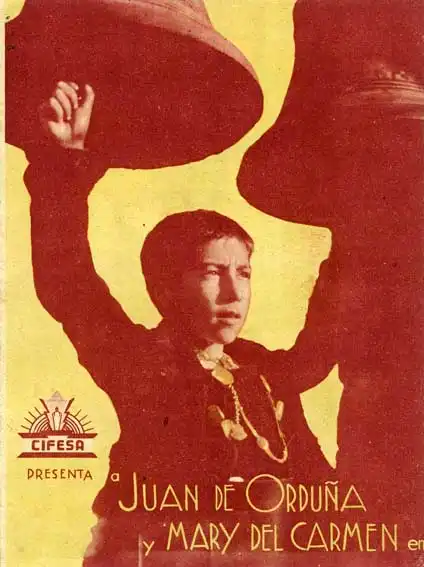
A definitive 6/10 rating for a film that redefined the boundaries of cult cinema. El cura de aldea remains a cornerstone of transgressive art.
Alright, so we’re talking about _El cura de aldea_, a Spanish film from 1936. If you’re really into seeing how movies were made way back when, or you just like slow-burn historical slices of life, then yeah, this might be worth a look. It’s got a certain quiet charm to it. But if you need fast pacing, sharp dialogue, or, you know, _things happening_ all the time, you’ll probably find yourself staring at the ceiling pretty quickly. It’s a very particular kind of film.
The story, such as it is, centers on this young priest, played by Pablo Álvarez Rubio, who arrives in a small, traditional village. He's very earnest. You can see it in his eyes, he really wants to do good. The villagers, they're a mixed bag; some are welcoming, others are a bit more guarded. It feels like a real snapshot, not a dramatized version.
There's this one old man, played by Manuel Arbó, who's just _stubborn_. You see him in the background a lot, kind of scowling or just observing. His performance, even with minimal lines, just sort of anchors that village feeling. You get the sense he’s seen a lot, and a new priest isn't going to shake his world up much.
The film takes its sweet time. I mean, _really_ sweet time. We get long scenes of daily life. Kids playing in the dusty streets. Women doing laundry by a stream. There’s a shot of a mule just standing there, unmoving, for what felt like an eternity. It’s not boring, exactly, but it’s a lot of atmosphere building. Sometimes it feels like the camera just got set up and left running. 😅
Pablo Álvarez Rubio, as the cura, or priest, he’s got a really kind face. It’s easy to root for him. He’s trying to connect, trying to understand. There’s this small scene where he tries to explain something a bit complicated to a very simple farmer, and you can just feel his effort. It’s subtle, but it works.
The technical side, it’s 1936, so manage expectations. The sound can be a bit rough in places, muffled here and there. Sometimes you have to really lean in to catch all the dialogue. And the picture quality, well, it’s got that old film look. Lots of grain, some flickering. But honestly, it adds to the whole historical document feel.
What I found most interesting was how they showed the village's reaction to change. Not big, dramatic changes, but just the subtle ripple of a new face, a new voice of authority. There’s no huge villain or anything. Just human nature, you know? People being people.
One particular moment stuck with me: the priest is walking through the village at sunset, and the shadows are really long. It’s a simple shot, but it makes you think about loneliness, about the weight of his calling. It’s a quiet film, but moments like that hit a bit harder because of the overall stillness.
It’s not a movie you’d put on for a party. Not even for a casual Friday night. This is for when you want to really settle in and let a different era wash over you. It’s a film that asks for your patience, and if you give it, it offers a gentle, sometimes slow, but ultimately quite **earnest** look at a specific slice of life. It’s _definitely_ not trying to be anything it isn't, which is refreshing. 😊
IMDb 5.8
1930
Community
Log in to comment.