DbcultAccessing Vault...
Cult Review
Senior Film Conservator
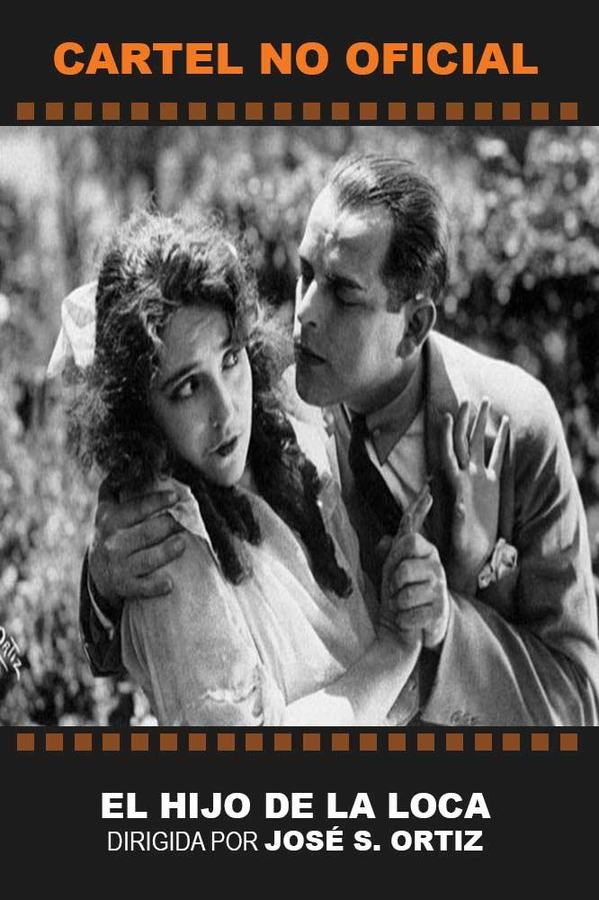
There are cinematic experiences that transcend mere storytelling, burrowing deep into the collective consciousness to excavate universal truths about the human condition. José S. Ortiz’s "El hijo de la loca" is undeniably one such film, a profound and searing melodrama that, despite its vintage, resonates with an astonishing contemporary relevance. This is not merely a historical curiosity; it is a vibrant, beating heart of a narrative, a testament to the enduring power of silent cinema to articulate complex emotional landscapes without uttering a single spoken word. The film, a powerful vehicle for the talents of Adela Sequeyro, Ángel E. Álvarez, Napoleón Placeres, and El Caballero Robert, orchestrates a symphony of societal judgment, familial love, and the relentless pursuit of honor against an unforgiving backdrop.
From its very premise, "El hijo de la loca" signals its intent to delve into the darker recesses of social hypocrisy. The narrative introduces us to Luisa (Adela Sequeyro), a woman whose life, once promising and imbued with the glow of societal acceptance, is tragically derailed by a clandestine affair and an ensuing pregnancy outside the sanctity of marriage. In an era where such transgressions were met with unbridled condemnation, Luisa's refusal to conform to the prescribed penance—either a life of cloistered solitude or a loveless, arranged union—marks her as a rebel, albeit a reluctant one. Her defiance, however, comes at a steep price: public ostracism and the cruel, indelible label of 'la loca.' This moniker, far from being a simple descriptor, becomes a brand, a scarlet letter that isolates her and threatens to define her existence. Sequeyro, even in the silent medium, conveys the crushing weight of this stigma with an almost unbearable poignancy, her eyes often betraying a profound sorrow that speaks volumes.
The film's opening acts are a masterclass in establishing atmosphere and character. We witness Luisa's descent, not into madness as the townspeople perceive, but into a fierce, protective maternal instinct. She retreats to a secluded cabin, a refuge from the venomous gossip and the withering stares, dedicating her life to nurturing her son, Roberto. This period of isolation, though harsh, is painted with a tender brush, highlighting the unbreakable bond between mother and child. Luisa, despite her own suffering, endeavors to shield Roberto from the full extent of her past and the ignominy attached to her name. She instills in him a rigorous moral compass and an ambition that burns bright, a hope that he might transcend the limitations imposed upon them by a judgmental society.
This early character development sets the stage for the dramatic conflicts to come. Roberto, portrayed by Ángel E. Álvarez with a compelling blend of youthful vigor and earnest determination, grows into a man unaware of the true depth of his mother's sacrifice or the whispers that dog their lineage. His aspirations are pure: to achieve success, to provide a life of comfort and respect for his mother, to erase the shadows that cling to their humble existence. He is a character brimming with a nascent idealism, a stark contrast to the jaded cynicism of the town that surrounds him. Álvarez’s performance, particularly in his scenes of youthful exuberance and later, bewildered confusion, is a testament to the power of non-verbal acting, conveying complex internal states through gesture and expression.
The narrative gains significant momentum with Roberto’s burgeoning romance with Elena, the daughter of Don Armando (Napoleón Placeres), a man who embodies the very rigidity and moral certitude that condemned Luisa. This forbidden love affair serves as the primary catalyst for the film's climactic unraveling. Don Armando, a figure of formidable authority and unyielding social standing, naturally opposes the union. Placeres imbues Don Armando with an imposing presence, his every gesture radiating a sense of unshakeable conviction, even if that conviction is rooted in prejudice. His subtle insinuations about Roberto's 'tainted' lineage are enough to reignite the dormant embers of gossip, threatening to engulf Roberto's aspirations and Elena’s affections in a conflagration of scandal.
Here, the film cleverly employs a familiar trope of classic melodrama: the star-crossed lovers battling societal barriers. However, "El hijo de la loca" elevates this by grounding it in a very specific and painful historical context of a woman's reputation. The whispers become louder, fueled by a jealous rival for Elena's affections, played with appropriate smarminess by El Caballero Robert. This character, though perhaps a more archetypal villain, effectively serves as the narrative's agent of chaos, digging up Luisa's past and unleashing it upon Roberto's fragile world. The tension builds inexorably, a slow-burning fuse leading to an explosive revelation. The film masterfully uses close-ups and dramatic intercutting to heighten the emotional stakes, drawing the audience into Roberto’s growing confusion and Luisa’s quiet dread.
The film's climax is a tour de force of emotional intensity. Roberto, confronted with the insidious rumors, demands the truth from his mother. This scene, devoid of dialogue, relies entirely on the raw, unvarnished performances of Sequeyro and Álvarez. Luisa's revelation is not a confession of guilt, but a powerful, agonizing recounting of injustice. Sequeyro’s portrayal here is nothing short of magnificent; her face, etched with years of suppressed pain, transforms into a canvas of defiant strength as she reclaims her narrative. It is a moment of profound vulnerability coupled with an unyielding assertion of her innocence, a silent scream against the societal forces that sought to crush her spirit. The film ensures that the audience understands the full weight of her suffering, making her eventual stand all the more cathartic.
This personal confrontation spills into a public arena, perhaps a town meeting or a significant social gathering, a deliberate choice by Ortiz to elevate the personal to the political. Roberto, armed with his mother's truth and fueled by a righteous indignation, confronts not just Don Armando, but the entire prejudiced community. Luisa, finding her voice and her dignity, delivers a silent but powerful sermon on hypocrisy and judgment. It is in these moments that "El hijo de la loca" truly distinguishes itself. Unlike many melodramas that might descend into saccharine sentimentality, this film maintains a gritty realism, portraying the arduous struggle for social justice. The potential reappearance of Ricardo, the father, adds another layer of complexity, threatening to derail Luisa's hard-won vindication, but ultimately serving to underscore her singular strength.
"El hijo de la loca" operates on multiple thematic levels. At its core, it is a searing indictment of societal judgment and the devastating impact of gossip and prejudice. The film brilliantly exposes the hypocrisy of a community quick to condemn based on appearances and rumor rather than truth. This theme finds echoes in other powerful silent dramas of the era. One might draw parallels, for instance, to the social critiques present in films like The Dwelling Place of Light, which similarly explores the struggles of women against restrictive social norms, or the moral complexities of Broken Barriers, where personal integrity clashes with societal expectations. The film also delves into the enduring strength of maternal love, a bond so potent it can withstand years of ostracism and pain. Luisa’s unwavering devotion to Roberto is the emotional anchor of the entire narrative, a beacon of hope in a world shrouded in darkness.
The film's aesthetic choices further enhance its thematic weight. The use of stark contrasts in lighting, particularly in scenes depicting Luisa's isolation versus the town's bustling squares, is highly effective. The cinematography, though perhaps rudimentary by today's standards, masterfully captures the emotional nuances of its performers. Close-ups on Sequeyro’s expressive face are particularly impactful, allowing the audience to feel every tremor of her despair and every flicker of her resolve. The pacing, characteristic of silent-era melodramas, allows for a deliberate unfolding of events, building tension through sustained emotional sequences rather than rapid-fire cuts. This deliberate rhythm immerses the viewer more deeply into the characters' inner worlds.
Adela Sequeyro's performance as Luisa is nothing short of monumental. She navigates the character's journey from a naive young woman to a fiercely protective mother and finally to a dignified survivor with remarkable depth and subtlety. Her ability to convey profound emotion through gesture, posture, and facial expression is a testament to her skill as a silent film actress. She avoids overt theatrics, opting instead for a portrayal that feels deeply human and authentic. It's a performance that evokes comparisons to the great dramatic actresses of her time, those who could command the screen with a single glance, much like one might observe in a European melodrama such as Gräfin Küchenfee, albeit with a distinct Mexican sensibility. Her portrayal of a woman unjustly labeled 'mad' is particularly compelling, challenging the audience to look beyond superficial judgments.
Ángel E. Álvarez, as Roberto, provides a powerful foil to Sequeyro. His youthful idealism and eventual disillusionment are portrayed with an earnest conviction that draws the audience into his plight. The chemistry between mother and son is palpable, forming the emotional core of the film. Napoleón Placeres, as Don Armando, effectively embodies the rigid, patriarchal authority of the era, his stern demeanor and unyielding expressions creating a formidable antagonist. El Caballero Robert, in his role as the jealous rival, adds a layer of conventional villainy, serving to propel the plot forward with his malicious machinations. The ensemble, under Ortiz's direction (or perhaps more accurately, his writing, given his credit), works in harmonious concert, each performance contributing to the film's overall emotional resonance.
Upon its release, "El hijo de la loca" undoubtedly stirred considerable debate, challenging prevailing social mores and shining a spotlight on the often-cruel treatment of women who deviated from prescribed norms. Its themes of social redemption, the power of truth, and the enduring nature of love remain potent, making it a film that continues to provoke thought and discussion. The resolution, while offering a measure of peace and vindication for Luisa and a future for Roberto and Elena, is not overtly saccharine. It acknowledges that some scars, once inflicted, linger, a poignant reminder of the lasting impact of prejudice. This nuanced ending prevents the film from becoming a mere fairytale, grounding it in a more realistic understanding of human struggles. The film's enduring appeal lies in its ability to tap into universal emotions: the pain of injustice, the fierce loyalty of family, and the hope for acceptance.
Considering the broader cinematic landscape of its time, "El hijo de la loca" stands as a significant contribution to Mexican cinema and silent film melodrama globally. It shares a certain dramatic intensity with films such as Jealousy, which also explored the destructive power of human emotions, or even the grander social narratives seen in works like Old Heidelberg, though with a distinctly more intimate and culturally specific focus. The film's narrative structure, though adhering to certain melodramatic conventions, feels fresh due to the raw performances and the unflinching exploration of its difficult subject matter. It's a testament to the vision of José S. Ortiz that he crafted such a compelling and enduring story, one that continues to speak to audiences about the timeless struggle for dignity and acceptance in the face of an often-unforgiving world.
In conclusion, "El hijo de la loca" is a cinematic gem that deserves wider recognition. It is a powerful, emotionally resonant film that showcases the formidable talents of its cast and crew. Its themes are as relevant today as they were upon its initial release, serving as a poignant reminder of the enduring human capacity for both cruelty and compassion. For aficionados of classic cinema, and indeed for anyone interested in the social commentary embedded within historical narratives, this film is an absolute imperative. It is a profound exploration of identity, reputation, and the unbreakable bonds that define us, leaving an indelible mark long after the final frame fades to black. Its legacy is not just in its historical value, but in its ability to continue to move and challenge its audience, proving that true art transcends the limitations of its medium and its era.
A timeless testament to human resilience and the complexities of societal judgment.

IMDb 7.6
1932
Community
Log in to comment.