DbcultAccessing Vault...
Cult Review
Senior Film Conservator
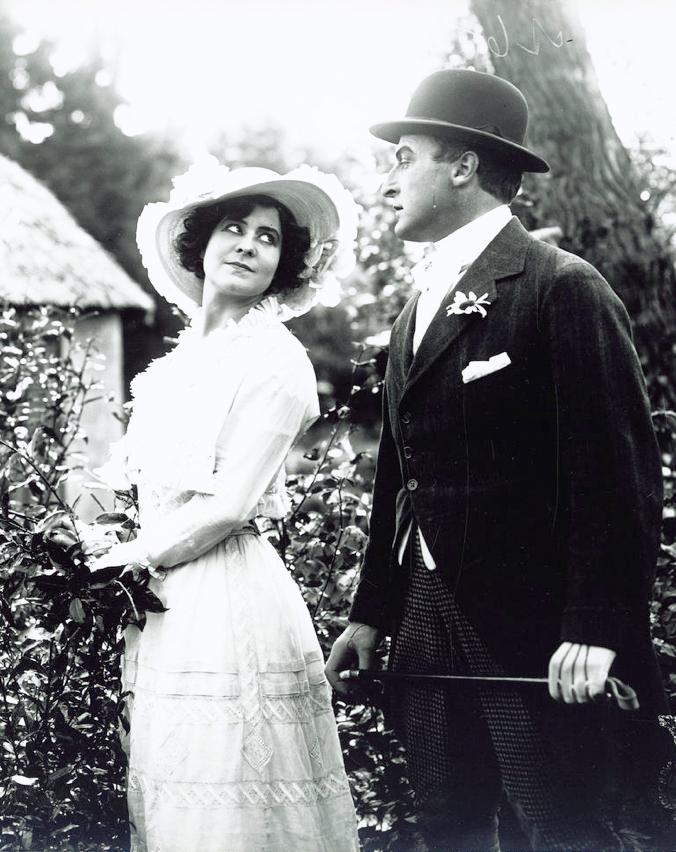
In the annals of early cinema, where flickering shadows conveyed narratives of grand passion and tragic consequence, D. Von der Lyke Zernikow's Syndig Kærlighed (Sinful Love) stands as a monumental testament to the era's preoccupation with moral quandaries and the devastating power of societal condemnation. Released during a period when the nascent art form was grappling with its capacity for profound emotional articulation, this Danish masterpiece, featuring the luminous Else Frölich and the captivating Anton de Verdier, transcends mere melodrama to offer a searing critique of human hypocrisy and the enduring struggle between individual desire and collective morality. Its intricate tapestry of forbidden romance, class disparity, and ultimate sacrifice resonates with a timeless poignancy, inviting contemporary audiences to ponder the true cost of love deemed illicit.
The film introduces us to Eleonora, portrayed with an exquisite blend of fragility and inner fortitude by Else Frölich, a governess whose modest existence is upended by an encounter with the aristocratic Baron von Helberg, brought to life with dangerous charisma by Anton de Verdier. Their initial interactions, conveyed through the subtle glances and charged gestures so characteristic of silent film acting, quickly escalate into a clandestine affair. Von Helberg, though engaged to the imperious Countess Isolde (a splendidly icy Ellen Kornbeck), finds himself drawn to Eleonora's unadorned beauty and genuine spirit, a stark contrast to the calculated social machinations of his intended. The narrative unfurls with a deliberate pace, allowing the audience to become intimately acquainted with the burgeoning affections and the ever-present shadow of discovery that looms over the lovers. The writer, D. Von der Lyke Zernikow, crafts a scenario that, while familiar in its archetypes, feels remarkably fresh in its psychological depth, portraying not just the external events but the internal turmoil of characters caught in an ethical maelstrom. This meticulous character development allows the audience to understand the motivations behind Eleonora's choices, even as they anticipate the inevitable tragic repercussions.
The societal strictures of the time are not merely a backdrop but an active antagonist, personified by the judgmental gaze of the community and the unforgiving nature of the Countess Isolde. When their secret liaison is inevitably exposed, the consequences for Eleonora are immediate and brutal. Stripped of her position, her reputation irrevocably tarnished, and bearing the physical manifestation of her 'sin' – a child – she is cast out, an outcast in a world that offers little mercy. This segment of the film is particularly harrowing, showcasing Frölich's exceptional ability to convey profound suffering without a single spoken word. Her silent screams of despair, her haunted eyes, and her desperate attempts to navigate a hostile world are rendered with an authenticity that transcends the limitations of the medium. The contrast between the Baron's relatively unscathed social standing and Eleonora's utter ruin serves as a potent commentary on the gendered double standards prevalent in the era, a theme also powerfully explored in films such as Bought and Paid For.
Amidst the bleakness of Eleonora's predicament, a glimmer of unselfish affection emerges in the form of Erik, a humble sculptor portrayed with understated grace by Rasmus Christiansen. Erik's love for Eleonora is pure and unwavering, a stark counterpoint to the Baron's more complicated, ultimately self-serving, passion. He offers her solace, understanding, and a path towards a life of quiet dignity, free from the societal judgment that continues to hound her. This dynamic introduces a classic silent film trope: the virtuous, steadfast admirer versus the charming, flawed aristocrat. Christiansen imbues Erik with a quiet strength and an inherent goodness that makes his character deeply sympathetic, even as his love remains largely unreciprocated, at least in the romantic sense. His presence highlights the moral compass that Eleonora struggles to regain, offering her a choice between clinging to the remnants of a destructive past or embracing a future built on genuine, if less passionate, affection.
The film masterfully builds towards a climactic confrontation, a scene of profound emotional weight where all the principal players are brought together. The Baron, now facing the societal pressures of his impending marriage and the consequences of his dalliance, is forced to confront Eleonora and the child. This sequence is a tour de force of silent acting, with each performer conveying a complex array of emotions – guilt, defiance, despair, and a lingering, painful love. Ulla Nielsen, in a smaller but impactful role, contributes to the emotional resonance of these later scenes, perhaps as a sympathetic confidante or a witness to the unfolding tragedy, further deepening the film's exploration of human connection and betrayal. The visual storytelling here is particularly potent, relying on close-ups and carefully orchestrated blocking to underscore the emotional distances and connections between the characters. It is in these moments that the film truly earns its title, laying bare the 'sinful love' not just as a physical act, but as a corrosive force that eats away at reputations, relationships, and ultimately, the soul.
Beyond its compelling narrative, Syndig Kærlighed distinguishes itself through its remarkable cinematic craftsmanship. The direction, though uncredited to a specific individual in the provided information, exhibits a sophisticated understanding of visual storytelling, a hallmark of Danish silent cinema. The use of natural light, the evocative set designs that range from opulent aristocratic drawing rooms to the stark, unforgiving streets, and the meticulous attention to costume all contribute to a rich, immersive experience. The cinematography employs a dynamic range of shots, from sweeping long shots that establish the social hierarchy to intimate close-ups that reveal the characters' innermost turmoil. This visual artistry is crucial in a silent film, where every gesture, every facial expression, and every compositional choice must convey layers of meaning. The film's pacing is deliberate, allowing emotional beats to fully register, yet it never drags, maintaining a steady, melancholic rhythm that draws the viewer deeper into Eleonora's plight. The film's aesthetic qualities can be seen as a precursor to the visual poetry found in later European silent dramas, echoing the dramatic tension and visual flair of works like Dzieje grzechu, though perhaps with a slightly more restrained, Nordic sensibility.
The success of Syndig Kærlighed rests heavily on the shoulders of its principal cast, each delivering performances that are both nuanced and powerfully expressive. Else Frölich, in particular, delivers a performance of breathtaking intensity. Her Eleonora is not merely a victim; she is a woman of profound emotional depth, whose choices, though leading to ruin, stem from a genuine, if ill-fated, love. Frölich's mastery of pantomime, her ability to convey despair, defiance, and a fragile hope through her eyes and body language alone, solidifies her status as a silent screen icon. She embodies the tragic heroine with such conviction that her suffering becomes palpable, drawing the audience into her emotional vortex. Her work here could be favorably compared to the intense emotional portrayals seen in A Woman's Way, where female protagonists often navigate similarly treacherous emotional terrain.
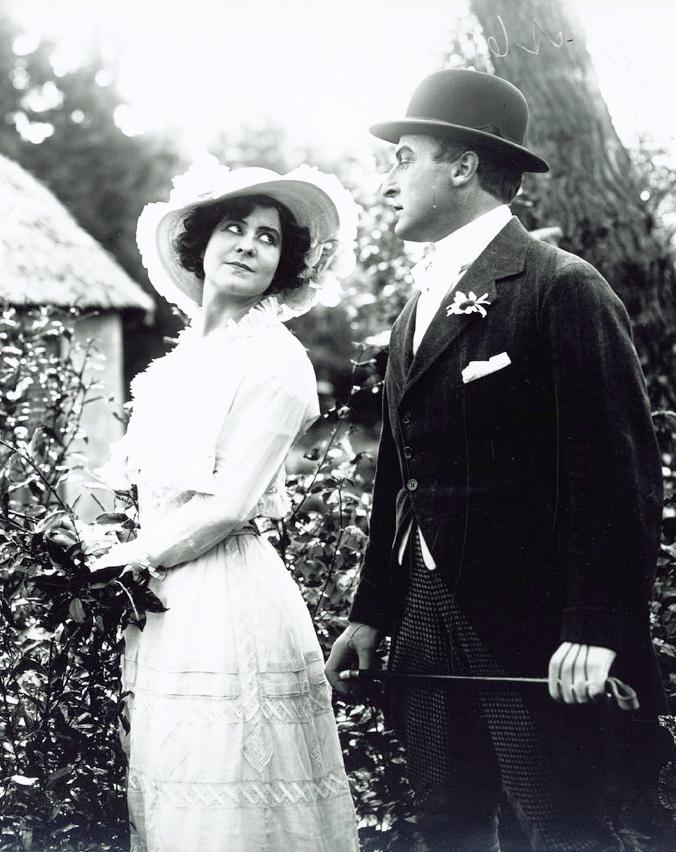
Anton de Verdier's Baron von Helberg is a marvel of complex characterization. He is not a one-dimensional villain but a man torn between passion and duty, societal expectation and personal desire. De Verdier imbues the Baron with a compelling blend of charm and weakness, making his actions understandable, if not forgivable. His internal conflict is subtly conveyed, suggesting a man trapped by his own privileges and the rigid class structure he inhabits. His performance prevents the character from becoming a mere caricature, instead presenting a flawed individual whose choices drive much of the narrative's tragedy. Ellen Kornbeck's portrayal of Countess Isolde is equally impactful, serving as the embodiment of aristocratic rigidity and moral judgment. Her cold beauty and unyielding demeanor provide a powerful foil to Eleonora's vulnerability, making her a formidable presence whenever she appears on screen. The silent rivalry between these two women, one driven by love and the other by social standing, is one of the film's most compelling aspects.
Rasmus Christiansen's Erik, as the moral anchor of the film, provides a crucial counterpoint to the dramatic turmoil. His quiet strength and unwavering loyalty offer a glimpse of hope, even in the darkest moments. Christiansen's performance is a masterclass in understated acting, conveying deep affection and empathy through subtle gestures and heartfelt expressions. His presence prevents the film from descending into unremitting despair, suggesting that even amidst ruin, genuine goodness and selfless love can persist. The ensemble cast, including the contributions of Ulla Nielsen, works in remarkable synchronicity, each performance building upon the others to create a cohesive and emotionally resonant whole. The interplay of these distinct personalities, their desires and their moral failings, forms the rich thematic core of Syndig Kærlighed.
At its heart, Syndig Kærlighed is a profound exploration of societal hypocrisy and the destructive power of moral judgment. The film challenges the simplistic notion of 'sin,' suggesting that true transgression often lies not in the act of love itself, but in the rigid, unforgiving structures that condemn it. Eleonora's 'sin' is primarily a social one, a violation of class boundaries and conventional morality, rather than an inherent evil. The film asks us to consider who truly bears the greater moral failing: the woman who loves passionately and pays the ultimate price, or the society that ruthlessly punishes her while often excusing the transgressions of its privileged members. This nuanced approach to morality elevates the film beyond a mere cautionary tale, transforming it into a compelling social commentary.
The themes of sacrifice and redemption are also central to the narrative. Eleonora's journey is one of immense suffering, but also of a quiet strength born from her maternal love and her refusal to entirely relinquish her dignity. The film does not offer an easy resolution, instead opting for a conclusion that is both heartbreakingly realistic and profoundly moving. It forces the audience to confront the harsh realities of a world where justice is often unevenly applied, and where the scars of the past can never truly be erased. This unflinching portrayal of human struggle, a characteristic often found in the more serious dramas of the period like The Edge of the Abyss, ensures that Syndig Kærlighed remains relevant and thought-provoking even today.
Furthermore, the film delves into the complexities of love itself. Is the Baron's affection for Eleonora truly 'sinful,' or merely a human response to genuine connection, albeit one that defies social norms? Is Erik's steadfast devotion, though perhaps less fiery, a more virtuous and ultimately more enduring form of love? Syndig Kærlighed refuses to provide simple answers, instead inviting viewers to grapple with these difficult questions, much like other morally ambiguous narratives of the time such as The Way of the World. The film's enduring power lies in its ability to provoke empathy for its characters, even those whose actions are questionable, and to challenge preconceived notions of right and wrong.
Syndig Kærlighed is more than just a historical artifact; it is a vibrant piece of cinematic art that continues to speak volumes about the human condition. Its meticulous direction, coupled with the extraordinary performances of its cast, particularly Else Frölich, creates an experience that is both intellectually stimulating and emotionally devastating. The film's exploration of forbidden love, societal judgment, and the quest for redemption resonates deeply, reminding us that the struggles of individuals against rigid social structures are timeless. It stands as a testament to the power of silent cinema to convey profound narratives with an elegance and intensity that often eludes later, more technologically advanced productions.
For enthusiasts of silent film, and for anyone interested in the evolution of cinematic storytelling, Syndig Kærlighed offers a rich and rewarding viewing experience. It is a film that demands attention, rewards contemplation, and ultimately leaves an indelible mark on the viewer's psyche. Its legacy is one of artistic integrity and emotional honesty, solidifying its place among the essential works of early European cinema. Much like the enduring impact of films such as The Coquette or Her Reckoning, this film remains a powerful reminder of the profound stories that can be told without a single spoken word, relying instead on the universal language of human emotion and masterful visual composition. It compels us to reflect on the nature of love, sin, and the societal forces that shape our destinies, making it a film that truly endures.
IMDb 3.8
1911
Community
Log in to comment.