DbcultAccessing Vault...
Cult Review
Senior Film Conservator
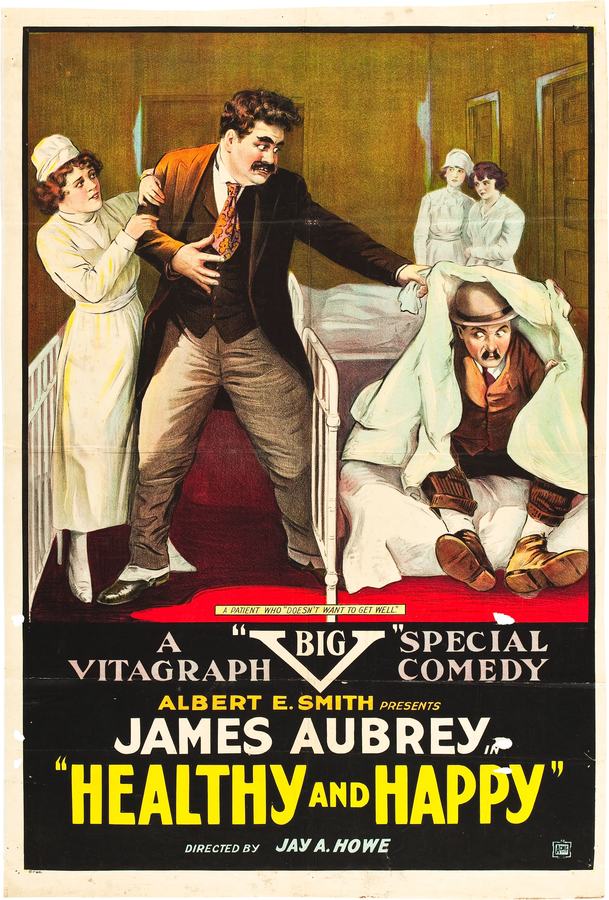
Step back in time, dear readers, to an era where the silver screen whispered its tales through exaggerated gestures, expressive eyes, and the universal language of physical comedy. The year is 1917, a pivotal moment in cinematic history, and amidst the burgeoning landscape of motion pictures arrives a delightful confection of chaos titled Healthy and Happy. This film, a vibrant testament to the burgeoning art of slapstick, offers a fascinating glimpse into the foundational elements that would define comedic storytelling for decades to come. It's a journey into pure, unadulterated hilarity, showcasing the raw talent of performers like Jimmy Aubrey and, notably, a young Oliver Hardy, long before his legendary partnership with Stan Laurel solidified his iconic status.
The narrative unfurls with the hapless Jimmy, a character seemingly predestined for misfortune, tumbling through a torrential downpour, his journey a literal and metaphorical slip-and-slide into destiny. His accidental encounter with the peculiar Dr. Nerve, a man whose 'canon hall express' – a two-seater contraption of questionable mechanical integrity – serves as an early harbinger of the film's whimsical absurdity, sets the stage for the ensuing pandemonium. It’s a moment of serendipitous chaos, where the protagonist quite literally stumbles into the central conflict, a common yet effective trope in early comedies designed to immediately engage the audience with a relatable, if exaggerated, predicament.
Within the surprisingly lively confines of Dr. Nerve's hospital, Jimmy's rain-soaked misery is instantly forgotten upon the sight of Kellie, the 'nifty nurse.' This instantaneous infatuation, a love-at-first-sight trope delivered with silent film's characteristic directness, propels the entire plot forward. Jimmy's subsequent attempts to flirt are as clumsy as his initial entrance, and predictably, they run afoul of the stern Dr. Nerve, leading to Jimmy's swift and unceremonious ejection. This expulsion, however, serves not as a deterrent but as an ignition for Jimmy's increasingly desperate and hilariously ill-conceived schemes to re-enter the hospital and, more importantly, to remain near Kellie. This singular focus on a romantic pursuit, often bordering on obsession, is a hallmark of many early comedies, providing a simple yet potent motivation for all manner of outrageous antics.
The lengths to which Jimmy goes to achieve his goal are nothing short of spectacular. His initial attempts to 'wreck himself' are a darkly humorous exploration of self-inflicted injury for the sake of love, a concept that, while morbid on paper, is rendered with a lighthearted touch characteristic of the era's slapstick. The ingenuity truly shines when he finally gains entry through the aid of one of the doctor's own tools, a moment that perfectly encapsulates the film's spirit of playful subversion. It’s a testament to the cleverness of the silent film writers, who often had to rely on visual gags and physical comedy to convey complex motivations and plot points without the luxury of dialogue. This sequence, in particular, might draw a chuckle from those familiar with the escalating absurdity found in other early comedies, perhaps even echoing the ingenious, if perilous, contrivances seen in films like The Iron Test, albeit with a comedic rather than dramatic intent.
Once inside, unable to pay for his 'examination' – a direct consequence of his self-induced injuries – Jimmy is forced to work off his debt. This setup provides the perfect canvas for the film's most uproarious sequences: Jimmy's tenure as an impromptu, and entirely unqualified, medical assistant. His 'novel way of treating the patients' is a masterclass in comedic disruption. He injects an anarchic energy into the staid hospital environment, turning routine medical procedures into opportunities for physical comedy. Imagine the bewildered expressions of patients subjected to his unique brand of 'therapy,' a series of gags that likely involved everything from accidental jostling to misplaced instruments, all designed to elicit maximum laughter from the audience.
This section of the film is where the true genius of silent slapstick shines, emphasizing the performers' ability to convey character and humor through purely physical means. Jimmy Aubrey, in particular, must have been a whirlwind of motion, his every movement calculated for comedic effect. His interactions with the patients and the increasingly exasperated Dr. Nerve would have built a crescendo of absurdity, highlighting the clash between institutional order and individual chaos. It’s a theme that resonates across many early comedies, from the domestic disarray of Hoodoo Ann to the broader societal critiques sometimes found in films like Men, Women, and Money, albeit with a more direct and physically expressive approach here.
Unsurprisingly, Jimmy's unorthodox methods lead to a final, spectacular break with Dr. Nerve. The culmination of their professional and personal friction ignites the film's grand finale: an automobile chase. This sequence is a thrilling, high-octane (for its time) ballet of vehicular mayhem, a staple of early action and comedy films. The inclusion of the police, who join the pursuit, amplifies the chaos, transforming a personal spat into a public spectacle. The chase scene, a common device for injecting adrenaline and excitement, is masterfully employed here to bring the narrative to a climactic, laugh-out-loud conclusion.
The visual storytelling required for such a sequence in a silent film is immense. Directors and cinematographers had to meticulously choreograph the action, ensuring clarity of movement and comedic timing without the benefit of sound effects or dialogue. The escalating speed, the near misses, the inevitable crashes – all contribute to a sense of exhilarating anarchy. This kind of elaborate chase sequence can be seen as a comedic parallel to the dramatic pursuits in films like The Hawk's Trail or Peril of the Plains, demonstrating the universal appeal of a good pursuit, regardless of genre. The final image of the ambulance carrying Jimmy away, a victim of his own collision, provides a perfectly ironic and humorous resolution, neatly tying a bow on the chaotic proceedings.
Jimmy Aubrey, as the central figure, carries the film with an energetic performance that encapsulates the spirit of early slapstick. His rubbery expressions, his precise physical gags, and his unwavering commitment to comedic desperation are the engines of the film's humor. Aubrey was a prolific actor in the silent era, and Healthy and Happy showcases his ability to command the screen through sheer force of personality and physical prowess.
The presence of Oliver Hardy in the cast, even in what might have been an early or supporting role, is a significant historical footnote. Long before he became one half of the immortal Laurel and Hardy duo, Hardy was honing his craft, developing the nuanced expressions and physical presence that would later define his iconic character. While the specific details of his role in Healthy and Happy might be limited in contemporary descriptions, his inclusion underscores the film's place within the formative years of cinematic comedy and offers a glimpse into the early careers of legends. One can imagine him, even in a minor capacity, bringing his distinctive gravitas and subtle exasperation to Dr. Nerve's beleaguered world.
The supporting cast, led by Richard Smith, would have been crucial in providing the straight men and foils necessary for Aubrey’s antics to truly shine. The dynamic between the bumbling hero, the stern authority figure, and the object of affection is a timeless comedic triangle, expertly played out through the exaggerated pantomime of the silent screen. This interplay of characters, where each actor contributes to the overall comedic rhythm, is a hallmark of well-executed ensemble work in silent films, much like the intricate character dynamics observed in the more dramatic Trilby (1915) or the romantic entanglements of A Heart in Pawn.
Healthy and Happy is more than just a series of gags; it's a cultural artifact, a snapshot of American entertainment in the late 1910s. The film's themes – the pursuit of love, the subversion of authority, the triumph of the underdog (however clumsy) – are universally relatable, transcending the passage of time and the absence of spoken dialogue. Its humor, rooted in physical comedy and situational irony, remains accessible and enjoyable even to modern audiences, proving the timelessness of well-executed slapstick.
The film’s production values, typical for the era, would have emphasized clear visual storytelling, dynamic camera work (within the technological constraints of the time), and effective editing to maintain a brisk pace. The art of silent film direction was about conveying emotion and action through visual cues alone, a skill beautifully demonstrated in the escalating chaos of Jimmy's hospital stay and the climactic chase. Comparing its energetic pacing to films like Eastward Ho! or The Stormy Petrel, one can appreciate the shared emphasis on narrative drive, albeit with differing tonal objectives.
In an age before sophisticated special effects, the stunts and physical comedy were often performed by the actors themselves, adding a layer of authenticity and daring to the proceedings. This raw, unadulterated form of entertainment is part of what gives films like Healthy and Happy their enduring charm. It's a reminder of cinema's humble beginnings, a period of exuberant experimentation where filmmakers were actively inventing the language of movies, frame by glorious frame. The sheer joy of creation and performance is palpable, making it a delightful watch for anyone interested in the evolution of comedy or the history of film itself.
Healthy and Happy stands as a charming example of early silent comedy, a genre that perfected the art of visual humor. It’s a film that, despite its age, continues to deliver genuine laughs through its inventive gags, spirited performances, and escalating absurdity. The journey of Jimmy, from a rain-soaked wanderer to an ambulance-bound patient, all in the name of love and a hilariously misguided sense of medical practice, is a testament to the enduring power of slapstick.
For enthusiasts of classic cinema, or those simply looking for a dose of pure, unpretentious fun, Healthy and Happy offers a delightful excursion into a bygone era. It's a film that doesn't just entertain; it educates, providing a window into the foundational techniques and comedic sensibilities that paved the way for countless cinematic masterpieces. So, if you ever find yourself in need of a good chuckle, or wish to witness the early comedic stylings of a titan like Oliver Hardy, seek out this spirited silent gem. It’s a reminder that sometimes, the best medicine is a hearty dose of laughter, even if it comes from a dangerously unqualified doctor.
IMDb 6
1935
Community
Log in to comment.