DbcultAccessing Vault...
Cult Review
Senior Film Conservator
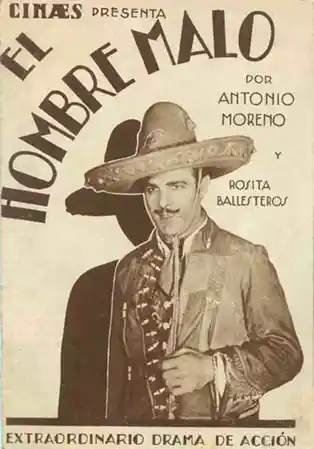
If you are into film history or just like seeing how Hollywood used to work before dubbing was a thing, you should probably give El hombre malo a look. It is basically a time capsule from that weird window in 1930 when they shot the same scenes twice—once in English and once in Spanish with a different cast.
You’ll enjoy this if you like melodramatic bandits and don't mind a movie that feels very much like a play where someone forgot to move the furniture. You will probably hate it if you need fast editing or actors who don't pause for five seconds after every sentence.
Carlos Villarías plays the lead bandit, Pancho Lopez. Most people know him from the Spanish version of Dracula, but here he is much more lively and honestly, a bit more fun to watch.
He has this way of walking into a room like he owns the floorboards, the walls, and maybe the people standing in front of them too. He’s playing a "bad man" with a heart of gold, which is a trope as old as the hills, but he makes it feel less like a cliché and more like a guy who is just bored and looking for something to do.
The plot is mostly about a ranch that is about to be taken away. There is a lot of talking about money and debts and who loves who, which gets a bit dry after the first twenty minutes.
It reminds me a bit of the stiff staginess you see in The Royal Family of Broadway, where you can practically hear the actors waiting for their cue. It’s that early talkie vibe where everyone is terrified of the microphone hidden in the flower vase.
When Villarías finally shows up, the energy shifts. He’s wearing this huge hat and enough gun belts to sink a small boat.
There is a scene where he is eating while people are arguing about their lives, and he looks like he’s having the best time. It’s the kind of small detail that makes a movie feel human instead of just a script being read out loud.
The supporting cast is... fine. Rosita Ballesteros does a lot of pining and looking worried, which was pretty much the job description for women in these types of movies back then.
I found myself getting distracted by the shadows on the walls. They are huge. I don't know if it was intentional or if they just didn't have enough lights, but it gives the whole ranch a spooky feeling that doesn't really match the comedy-drama tone.
It’s definitely better than some of the other desert dramas from that year, like maybe On the Border, mostly because the central character actually has a personality. Usually, these western-adjacent movies are just guys in dusty shirts looking grim, but Pancho Lopez is a riot.
The middle part of the movie drags. There is a lot of standing around in the living room.
I think they spent all their budget on the bandit's outfit and forgot to buy a second set. Everything happens in that one room. It starts to feel a bit claustrophobic, like you’re stuck at a dinner party that won't end.
There is a strange moment where a character reacts to a gun being drawn about three seconds after it actually happens. The timing is just... off.
But that’s part of the charm of these old films. They weren't trying to be perfect; they were just trying to figure out how to make movies talk.
If you've seen the English version with Edward G. Robinson, this one is a bit more theatrical. Spanish-language versions of the era often went for bigger emotions and more sweeping gestures.
I kept waiting for something big to happen, but the movie is really more about the conversation. It’s about who has the power in the room.
It’s not a masterpiece, and I probably won't watch it again next week, but I’m glad I saw it. It’s a glimpse into a way of making movies that died out almost as soon as it started.
The ending is satisfying in a "don't think too hard about it" kind of way. It’s just a bandit doing bandit things for his friends.
If you can find a decent copy, it’s worth a watch just for Villarías. He really was a star in his own right, even if he spent most of his career in the shadow of the English-speaking versions of his films.
IMDb —
1922
Community
Log in to comment.