DbcultAccessing Vault...
5.8/10
Senior Film Conservator
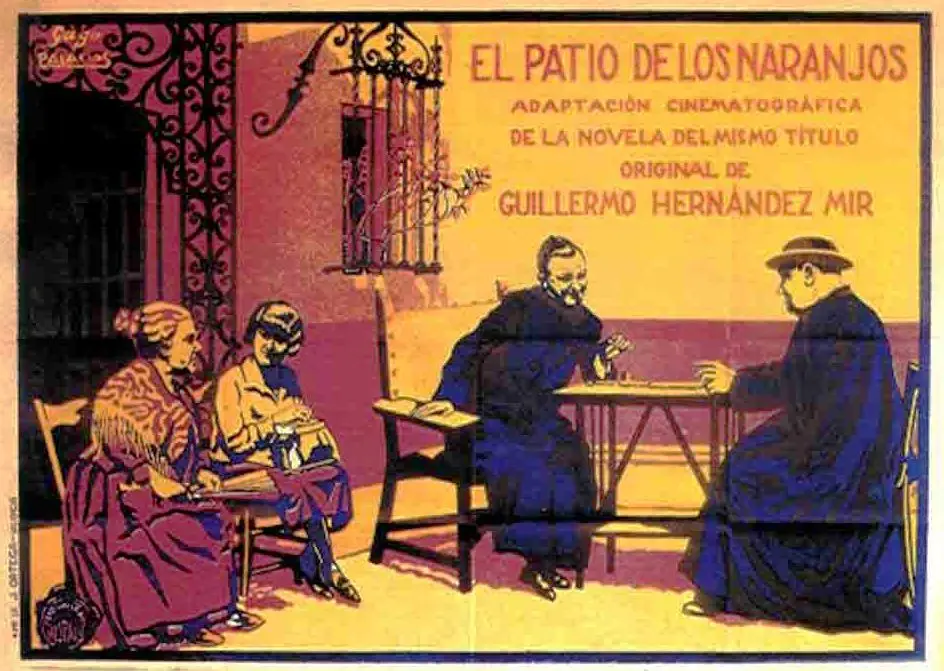
A definitive 5.8/10 rating for a film that redefined the boundaries of cult cinema. El patio de los naranjos remains a cornerstone of transgressive art.
Is El patio de los naranjos worth watching today? Short answer: yes, but with significant caveats that demand a particular kind of viewer. This silent-era melodrama, with its rich emotional tapestry and evocative setting, offers a compelling glimpse into a bygone era of filmmaking, yet it struggles with pacing and narrative conventions that may alienate modern audiences. It is a film best suited for dedicated silent cinema aficionados, film historians, and those with an appreciation for dramatic storytelling that prioritizes visual expression over verbal exposition. Conversely, it is decidedly not for viewers seeking rapid-fire plots, contemporary dialogue, or a straightforward, easily digestible narrative.
This film works because of its potent visual symbolism and the raw, unadulterated emotion conveyed through its lead performances. It fails because its reliance on melodramatic tropes occasionally pushes the boundaries of believability, and its protracted runtime can test the patience of even seasoned viewers. You should watch it if you cherish silent film for its artistic merit and are willing to engage with a story that unfolds deliberately, rewarding patience with genuine pathos.
The narrative core of El patio de los naranjos, though seemingly straightforward in its romantic melodrama, is subtly woven with threads of social commentary. At its heart lies Elena, portrayed with a captivating blend of vulnerability and defiance by Clotilde Romero. Her struggle against the rigid expectations of her aunt, embodied by Reglita Astolfi's stern presence, is immediately relatable, even a century later. The film cleverly uses the titular orange tree patio not merely as a backdrop, but as a living, breathing character in itself. It is here that Elena and Miguel, a passionate sculptor brought to life by Rafael Triana’s earnest portrayal, nurture their forbidden love. The scent of orange blossoms, though unseen, permeates the screen, symbolizing the fleeting beauty and ultimate fragility of their dreams.
Writers Pedro Rodríguez Torres and Guillermo Hernández Mir craft a conflict that transcends simple good-versus-evil. Don Ricardo, played with a chillingly understated menace by Manuel Argiles, is not a cartoon villain but a product of his time, driven by societal norms and a possessive desire rather than pure malice. His deception, while cruel, feels rooted in a desperate attempt to secure his place and his desired bride, making his character more complex than initially perceived. The film’s greatest strength in its storytelling lies in its ability to evoke profound sympathy for Elena, whose choices are systematically stripped away by circumstance and manipulation. Her quiet despair, particularly in the scenes following her forced marriage, is palpable, a testament to Romero’s expressive capabilities.
However, the narrative isn't without its stumbles. The prolonged period of Miguel’s absence and subsequent return, while necessary for the arc of his character’s success, stretches the audience’s suspension of disbelief. The contrivance of their chance reunion, though dramatically satisfying, feels a touch too convenient, a common pitfall in silent melodramas. One might argue that the film could have explored the nuances of Elena's life with Don Ricardo in greater depth, rather than simply portraying her as a figure of perpetual sorrow. This would have added layers to her suffering and made her eventual realization of the truth even more impactful. The film makes a clear choice to focus on the emotional devastation rather than the day-to-day indignities, which is a valid artistic decision, but one that leaves some dramatic potential untapped.
The acting in El patio de los naranjos is a masterclass in silent film performance, relying heavily on exaggerated yet effective gestures and facial expressions. Clotilde Romero as Elena is undoubtedly the film’s emotional anchor. Her eyes, often downcast or brimming with unshed tears, convey a universe of internal conflict. Consider the scene where she receives the news of her impending marriage to Don Ricardo; Romero’s subtle flinching, the way her hand instinctively clutches her chest, speaks volumes without a single intertitle. It’s a performance that transcends the theatricality often associated with the era, achieving genuine poignancy.
Rafael Triana’s Miguel, while perhaps less nuanced than Romero’s Elena, embodies the ardent, idealistic lover with conviction. His youthful exuberance in the early scenes, contrasting sharply with his weathered, stoic demeanor upon his return, clearly delineates his journey. There’s a particular moment where, believing Elena has betrayed him, he clenches his fists and turns abruptly from the camera, a simple gesture that communicates immense heartbreak. Manuel Argiles, as the antagonist Don Ricardo, excels in his more subtle villainy. He avoids overt sneering, instead favoring a calculating gaze and an air of quiet entitlement that makes his manipulations all the more insidious. His performance is a testament to the power of suggestion in silent cinema.
The direction, credited to both Pedro Rodríguez Torres and Guillermo Hernández Mir, demonstrates a keen understanding of visual storytelling. They effectively utilize close-ups to emphasize emotional states, a technique that was still evolving in the silent era. The recurring shots of the orange tree patio, often framed to highlight its beauty or its oppressive nature depending on Elena's emotional state, are particularly effective. For instance, an early scene shows Elena and Miguel joyfully strolling amidst the trees, bathed in dappled sunlight, symbolizing their burgeoning love. Later, after her marriage, a shot of Elena gazing out at the same patio, now shrouded in shadow, powerfully conveys her entrapment. The directors understood that in silent film, the environment is not just a setting, but an extension of the characters’ inner lives.
The cinematography in El patio de los naranjos, while perhaps not groundbreaking for its time, is consistently competent and occasionally inspired. The use of natural light, particularly in the exterior shots of the patio, gives the film an authentic, sun-drenched quality that grounds it in its Sevillian setting. The camera often lingers on significant objects – a wilting orange blossom, a discarded letter, a sculpted bust – allowing them to carry immense symbolic weight. This visual language is crucial for a film without spoken dialogue, transforming everyday items into narrative devices.
One particularly striking visual choice is the recurring motif of bars or shadows that fall across Elena, especially after her marriage. This subtle technique visually reinforces her emotional imprisonment without the need for exposition. Consider the scene where she sits by a window, the light streaming in through a gridded pane casting a prison-like pattern across her face. It’s a simple, yet profoundly effective, piece of visual poetry that speaks volumes about her emotional state. The set design, particularly of the manor interiors, evokes a sense of old-world grandeur and stifling formality, contrasting sharply with the natural beauty and freedom implied by the patio.
However, there are moments where the visual storytelling leans too heavily on conventional symbolism, becoming somewhat predictable. While the orange tree patio is a powerful central metaphor, its repeated use sometimes feels less like an organic element and more like a signpost for the audience. This isn't a fatal flaw, but it does highlight the challenges of maintaining visual freshness within the constraints of silent film conventions. Despite this, the film generally succeeds in creating a visually rich and emotionally resonant world, demonstrating a solid understanding of how to communicate complex feelings through composition and mise-en-scène.
Pacing in silent cinema is a delicate art, reliant on editing, performance, and the strategic placement of intertitles. El patio de los naranjos often adopts a deliberate, almost languid pace, particularly in its first act. This allows the audience to immerse themselves in the setting and the slow burn of Elena and Miguel’s romance. The unhurried progression builds a sense of intimacy and allows for the emotional weight of their separation to truly land. However, this same deliberate pace can, at times, feel protracted. Modern viewers accustomed to faster cuts and more dynamic narrative propulsion might find some sequences test their patience. The film asks for engagement, not passive consumption.
The tone is undeniably melodramatic, a hallmark of the era, yet it is often tempered by moments of genuine human emotion. The film skillfully navigates the fine line between heartfelt drama and overt sentimentality. While some gestures and expressions might appear over-the-top by today's standards, they were the communicative tools of the time, essential for conveying feeling without dialogue. The initial scenes of blossoming love feel genuinely sweet, and the subsequent heartbreak is conveyed with a raw, almost operatic intensity. The film never shies away from tragedy, but it also hints at the resilience of the human spirit, even in the face of overwhelming sorrow.
One unconventional observation is how the film, despite its dramatic excesses, manages to feel surprisingly grounded in the psychological realism of its characters' predicaments. Elena’s silent suffering, her quiet rebellion, and Miguel’s initial bitterness are all deeply human responses to their circumstances. The film’s greatest triumph in pacing and tone is its ability to build to a powerful, cathartic climax within the orange tree patio, where all the suppressed emotions finally erupt. This scene, despite its dramatic flair, feels earned because of the slow, careful build-up of tension throughout the preceding acts.
Yes, for a specific audience. This film offers a rich, if slow-burning, emotional experience. It demands patience. It rewards with profound visual storytelling. If you appreciate the artistry of silent cinema, it's a valuable watch. If you prefer fast-paced modern narratives, it might not be for you.
When considering El patio de los naranjos, it’s useful to place it within the broader context of silent cinema. Its melodramatic leanings and focus on grand emotional statements align it with films like The Foolish Virgin, which similarly explores themes of societal pressure and romantic heartache. However, El patio de los naranjos distinguishes itself with its distinctly Spanish setting and cultural nuances. While it doesn't possess the groundbreaking visual experimentation of a film like The Dragon Painter, its strength lies in its emotional sincerity and the tangible sense of place it evokes.
The film’s portrayal of a woman trapped by circumstance echoes themes found in many silent dramas, from the social commentary of Paddy the Next Best Thing to the more overt romantic struggles of The Girl from Nowhere. What makes El patio de los naranjos memorable is its commitment to its central metaphor. The orange tree patio isn't just a pretty location; it’s a character, a symbol, a silent witness to love, betrayal, and enduring hope. This level of symbolic integration elevates it beyond a mere formulaic melodrama. It works. But it’s flawed.
While it may not achieve the widespread recognition of some American or European silent blockbusters, El patio de los naranjos is a significant piece of cinematic history, offering a window into the narrative styles and emotional sensibilities of its era. It reminds us that powerful storytelling isn't confined to spoken words or rapid pacing; it can be found in a lingering gaze, a symbolic setting, and the raw, unfiltered emotions of its performers. It asks for patience, yes, but it offers a rich reward for those willing to lean in and listen to its silent whispers.
Ultimately, El patio de los naranjos is a film that deserves to be seen, particularly by those with an appreciation for the historical tapestry of cinema. It is not a perfect film, burdened by some of the narrative conventions and pacing challenges inherent to its era. However, its strengths – particularly the compelling performances of Clotilde Romero and Manuel Argiles, and its masterful use of visual symbolism – far outweigh its weaknesses. It's a poignant, if at times arduous, journey into the heart of a love story tragically impacted by societal constraints and human deceit. For the discerning viewer, this silent drama offers a deeply resonant experience, an echo from the past that still speaks volumes about the enduring complexities of the human heart. It’s a film that lingers, much like the scent of orange blossoms, long after the final frame.

IMDb 5.9
1935
Community
Log in to comment.