DbcultAccessing Vault...
6/10
Senior Film Conservator
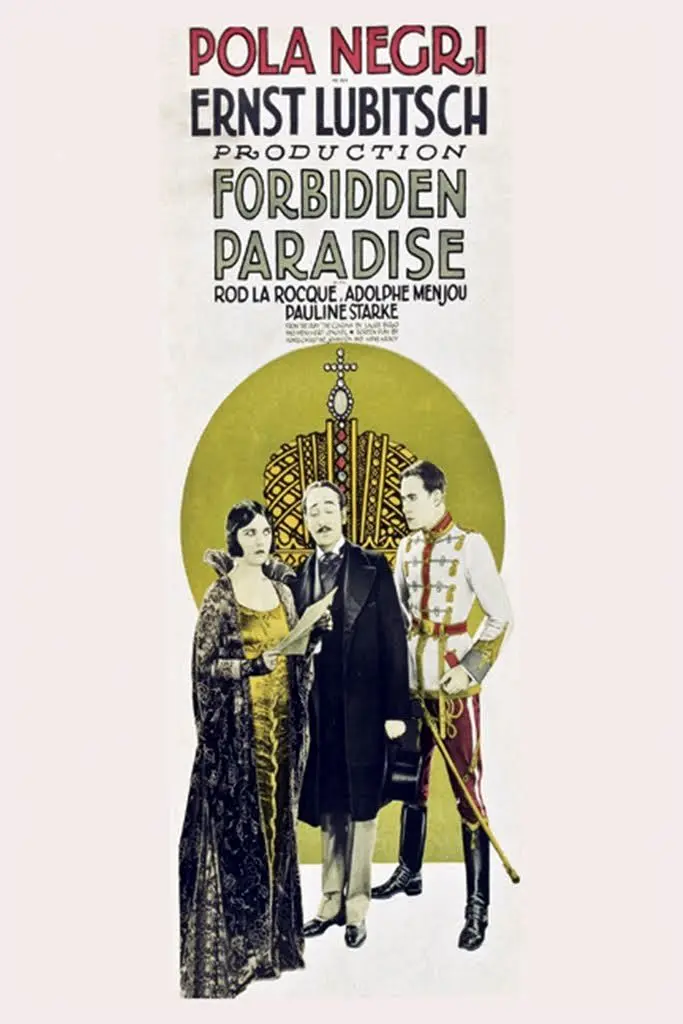
A definitive 6/10 rating for a film that redefined the boundaries of cult cinema. Forbidden Paradise remains a cornerstone of transgressive art.
The silent era, often erroneously perceived as a primitive precursor to modern cinema, frequently reached heights of psychological sophistication that contemporary blockbusters struggle to emulate. In Forbidden Paradise, we find a quintessential example of this artistic maturity. It is a film that breathes through its subtext, leveraging the legendary 'Lubitsch Touch' to dissect the fragility of power and the volatile nature of human devotion. While some might look to The Black Crook for early spectacle, Forbidden Paradise offers a more cerebral brand of grandeur, one where a raised eyebrow carries more weight than a thousand-man army.
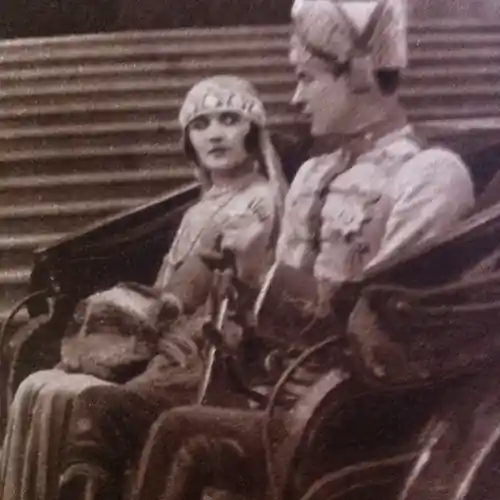
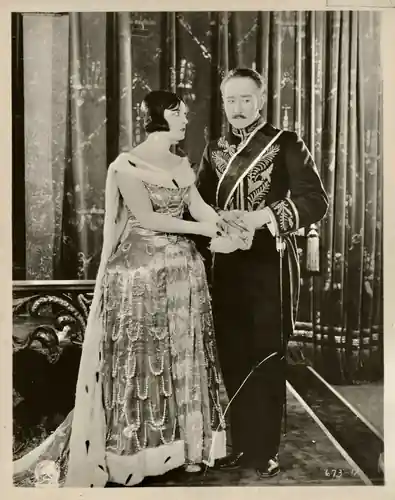
Pola Negri, portraying the Czarina, delivers a performance that is nothing short of elemental. She does not merely occupy the screen; she dominates it with a predatory elegance. Her character is a complex amalgam of Catherine the Great’s historical gravitas and a distinctly modern cynicism. In every frame, Negri conveys a woman who has traded her soul for a crown and finds the bargain increasingly tedious. Unlike the more straightforward romantic tensions found in The Boomerang, Negri’s interactions with her subordinates are layered with a dangerous ambiguity. She is a monarch who treats love like a state secret—something to be guarded, exploited, and eventually discarded when its utility expires.
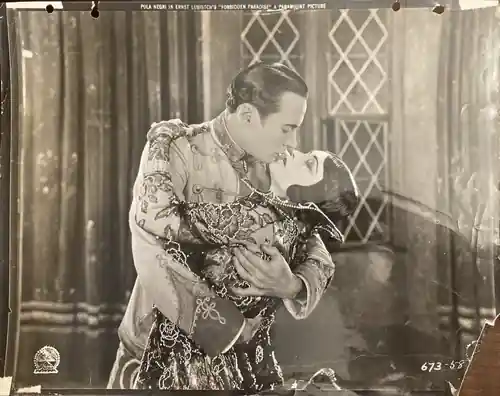
Rod La Rocque’s Alexei serves as the perfect foil to this royal vortex. His transition from a wide-eyed savior to a bitter revolutionary is handled with a nuanced physicality. Initially, his loyalty is a rigid, almost naive construct. When he saves the Czarina from the conspirators, his actions are born of a pure, unadulterated patriotism. However, as he is drawn into the Czarina’s inner sanctum, we see that rigidity soften into the malleable clay of infatuation. The tragedy of Alexei is not merely that he loses his sweetheart, Anna (played with a delicate pathos by Pauline Starke), but that he loses his sense of self in a palace of mirrors. This thematic exploration of lost identity is far more profound than the domestic entanglements of The Divorce Trap.
The screenplay, a collaborative effort by Hanns Kräly, Lajos Biró, Melchior Lengyel, and Agnes Christine Johnston, is a masterclass in satirical pacing. It avoids the heavy-handed moralizing often found in early dramas like The Learnin' of Jim Benton. Instead, it employs a razor-sharp wit to expose the absurdity of court life. Adolphe Menjou, as the Chancellor, embodies this cynicism perfectly. He is the quintessential diplomat—unflappable, amoral, and perpetually bored by the passions that drive his superiors. His performance provides a necessary grounding, reminding the audience that while Alexei and the Czarina play at love and war, the machinery of the state continues its cold, indifferent grind.
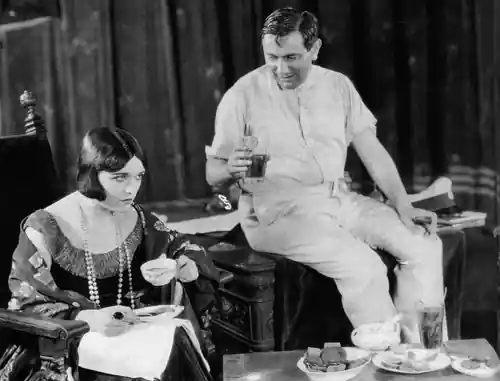
One cannot discuss the film without addressing its visual opulence. The set design is a feast of Rococo excess, creating a sense of claustrophobia despite the vastness of the rooms. The lighting, particularly in the nocturnal scenes where the revolution begins to simmer, creates a chiaroscuro effect that mirrors the moral ambiguity of the characters. This visual storytelling is as intentional as the brushstrokes in Dabbling in Art, though the stakes here are significantly more existential. The palace is not just a setting; it is a character—a silent witness to the decay of an empire.
The pivot in the second act, where Alexei discovers the Czarina’s infidelity, is executed with a jarring intensity. The realization that he is but one in a long line of 'saved' guardsmen shatters his worldview. It is here that the film transcends the boundaries of a simple romance. Alexei’s rage is not just the anger of a jilted lover; it is the awakening of a class consciousness. His decision to join the revolution is presented not as a sudden whim, but as the only logical conclusion for a man who has seen the rot at the heart of the monarchy. This shift from personal grievance to political action is handled with more gravitas than the adventure-focused narratives of The Light of Western Stars or Desert Gold.
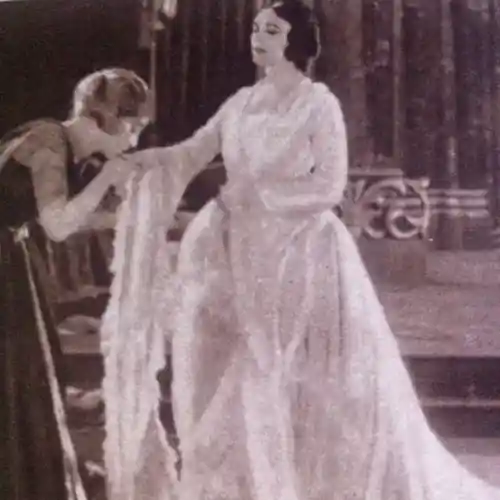
The revolution itself is depicted with a gritty realism that contrasts sharply with the earlier scenes of courtly splendor. The shadows grow longer, the faces of the extras more haggard. The film captures the chaotic energy of an uprising, where the lines between justice and vengeance become blurred. It echoes the dark, unsettling atmosphere of The Vampires: Satanas, suggesting that the fall of a tyrant often births new, equally terrifying monsters. The inclusion of a young, uncredited Clark Gable among the soldiers adds a fascinating layer of hindsight for modern viewers, a brief glimpse of a burgeoning star in a film already crowded with titans.
Throughout Forbidden Paradise, there is a recurring sense of predestination. Like the characters in The Cycle of Fate, Alexei and the Czarina seem trapped by their social roles and their inherent flaws. The Czarina cannot stop being a predator any more than Alexei can stop seeking a cause to die for. This fatalism is what gives the film its lasting power. It suggests that even in the midst of a revolution, the fundamental patterns of human behavior remain unchanged. The ending, which I will not spoil, is a haunting reflection on the circular nature of power.
In comparison to other films of the era, such as Curtain, which explores the performative nature of identity, Forbidden Paradise goes a step further by showing the consequences of when that performance fails. It is a film about the stripping away of masks. When the Czarina is finally confronted with the reality of her situation, her reaction is not one of repentance, but of a chilling, regal acceptance. It is this refusal to offer easy redemption that makes the film so modern.
The supporting cast, including Carlton Griffin and William Quinn, provide a solid framework for the central drama. Even the smaller roles, like those played by Nick De Ruiz and Leo White, contribute to the sense of a fully realized world. The film’s exploration of reputation and social standing mirrors the themes found in Her Good Name, yet it applies them to a much grander, more consequential stage. The stakes in Forbidden Paradise are not just the social standing of an individual, but the survival of an entire social order.
Furthermore, the film’s handling of secrecy and hidden motives invites comparison to Alias Mary Brown. In the Czarina’s court, everyone is wearing a mask, and the truth is the most dangerous weapon of all. The tension is maintained through a series of close-ups that capture the subtle shifts in expression as characters realize they have been outmaneuvered. It is a cinematic chess match played with human lives.
While some may prefer the more straightforward morality of Border Watch Dogs or the rugged individualism of Colorado Pluck, Forbidden Paradise offers something far more elusive: an honest look at the corrupting influence of absolute power. It is a film that demands multiple viewings to fully appreciate its depth. The interplay between the comedic and the tragic is so seamless that one often finds themselves laughing at a moment that, upon reflection, is deeply disturbing. This is the essence of the 'Lubitsch Touch'—the ability to find the humor in the heart of darkness.
In the pantheon of 1920s cinema, Forbidden Paradise stands as a towering achievement. It is a testament to the power of visual storytelling and the enduring magnetism of its lead actress. Pola Negri’s performance remains one of the definitive portrayals of royalty on screen—haughty, vulnerable, and utterly unforgettable. The film’s transition from a story of personal betrayal to a grand historical epic is handled with a grace that few directors have ever matched. It is a reminder that even in a 'forbidden' paradise, the seeds of revolution are always being sown in the soil of disillusionment.
Ultimately, Forbidden Paradise is more than just a silent movie; it is a visceral experience that challenges our perceptions of loyalty and love. It asks us to consider what we would sacrifice for a taste of the divine, and what we would do when we realize that the gods we worship are as flawed and fickle as ourselves. It is a masterpiece of satirical drama that continues to resonate a century after its release, proving that true art is never truly silent.
IMDb 6.2
1927
Community
Log in to comment.