DbcultAccessing Vault...
Cult Review
Senior Film Conservator
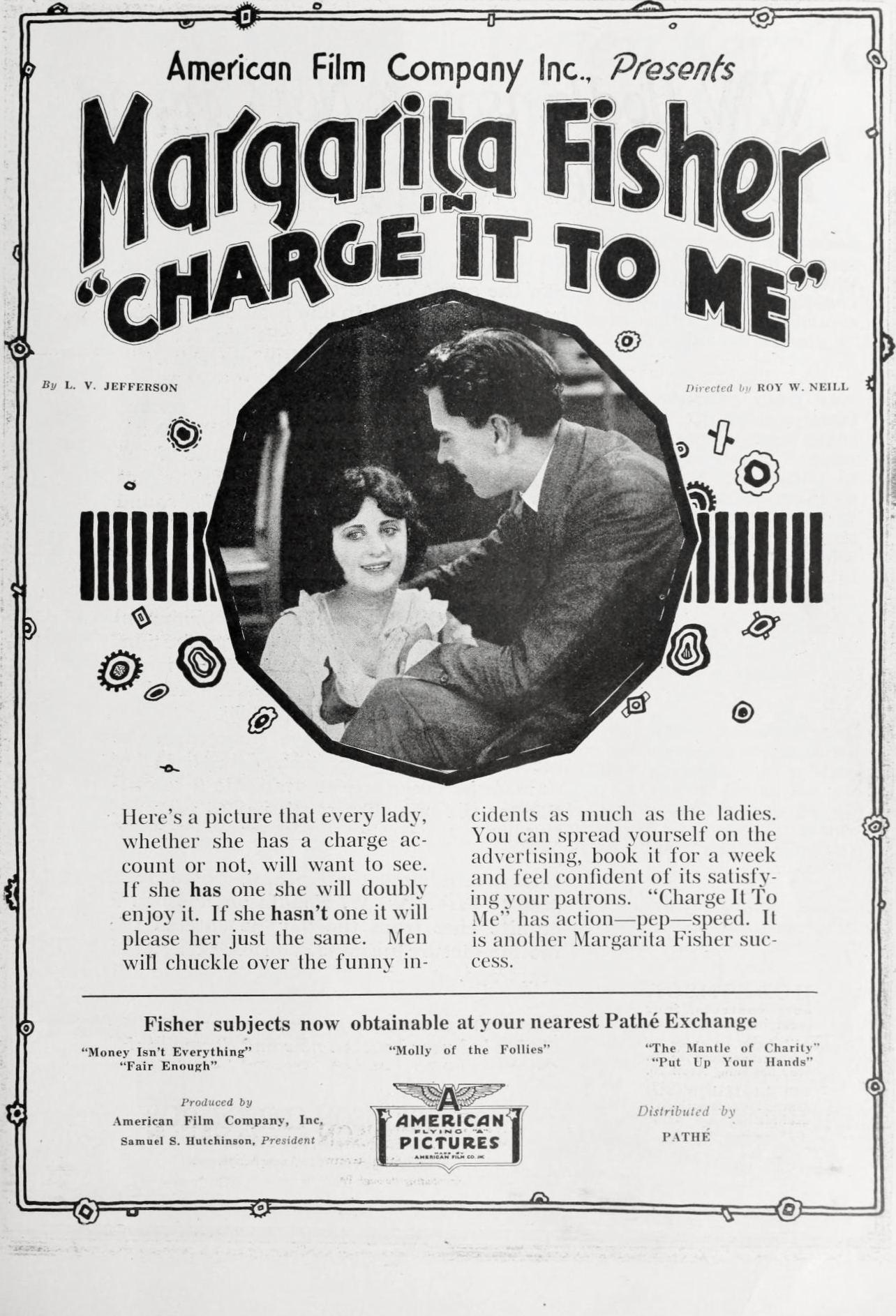
Stepping back into the cinematic landscape of 1918, one encounters a fascinating array of narratives that, despite their silent nature, spoke volumes about the shifting societal mores of the era. Among these, L.V. Jefferson's 'Charge It to Me,' brought to life on screen by director Roy William Neill (though uncredited in some records, Neill often collaborated with Fischer), stands out as a particularly prescient exploration of marital dynamics, female independence, and the subtle power plays inherent in domestic finance. This isn't merely a period piece; it's a vibrant snapshot of a moment when women were beginning to navigate new avenues of self-sufficiency, even if those paths were fraught with social expectation and patriarchal resistance.
At its core, 'Charge It to Me' is a delightful, if occasionally melodramatic, testament to the ingenuity of a new bride, Winnie Davis, portrayed with captivating vivacity by the indomitable Margarita Fischer. Winnie's initial predicament is disarmingly simple: she yearns to surprise her husband, Elmer (Emory Johnson), with a birthday gift, a seemingly innocuous act of affection. However, Elmer's rather rigid insistence on managing all household expenses through a centralized charge account inadvertently creates an insurmountable barrier to her secret endeavor. This seemingly minor domestic friction becomes the catalyst for Winnie's remarkable transformation, propelling her from a conventional housewife into an enterprising 'chauferette,' a term that itself evokes the novelty and subtle rebellion of women entering traditionally male-dominated professions.
Margarita Fischer, a prominent star of the silent screen, imbues Winnie with a spirited blend of charm, determination, and vulnerability. Her performance is a masterclass in silent acting, conveying a spectrum of emotions through nuanced facial expressions and expressive body language. She captures Winnie's initial frustration, her burgeoning confidence as she embraces her new role, and her eventual distress as external forces threaten her domestic bliss. Fischer was known for her independent spirit both on and off screen, and this role perfectly leverages her persona, making Winnie an aspirational figure for audiences of the time. Her decision to don a uniform and take to the roads, albeit in secret, is a quiet declaration of self-reliance, a theme that resonates with other films exploring female agency during the era, such as Susan Rocks the Boat, which similarly depicted women challenging conventional roles.
The concept of the 'chauferette' itself is ripe for analysis. In 1918, the automobile was still a relatively new and powerful symbol of modernity and freedom. For a woman to not only drive but to operate a commercial taxi service was a bold statement, subtly challenging the established gender roles that confined women primarily to the domestic sphere. Winnie’s clientele, predominantly male, further complicates matters, adding layers of social commentary about interaction between genders in a professional setting, and the potential for misinterpretation or even scandal. This narrative choice, in its understated way, reflects the nascent stages of women's entry into the workforce beyond traditional roles, a precursor to the more overt feminist movements that would follow.
The film's central conflict escalates with the introduction of Winnie's jealous former suitor. This character, whose possessive infatuation morphs into insidious manipulation, serves as a stark reminder of the patriarchal anxieties surrounding female independence. He doesn't merely wish to win Winnie back; he seeks to reassert control, employing financial leverage to dismantle Elmer's business and, by extension, Winnie's stability. This plot device brilliantly intertwines personal jealousy with economic warfare, highlighting how financial vulnerability could be weaponized in personal relationships. It's a darker undercurrent that prevents the film from becoming a mere romantic comedy, instead elevating it to a more nuanced social commentary. The pressures placed upon Elmer, as he grapples with unforeseen financial ruin, echo the struggles depicted in films like The Failure or The No-Good Guy, where male protagonists often found their identity and standing inextricably linked to their financial success.
Emory Johnson, as Elmer, provides a solid, if somewhat less flamboyant, counterpoint to Fischer's Winnie. His character represents the well-meaning but perhaps inadvertently controlling husband, whose rigid financial principles inadvertently push his wife towards independent action. Johnson effectively conveys Elmer's initial bewilderment at Winnie's secret activities and his growing despair as his business falters, creating a sympathetic figure caught in the crossfire of his wife's secret endeavors and an old rival's machinations. The dynamic between Fischer and Johnson is crucial; it’s a relationship built on affection, yet tested by miscommunication and external pressures, a relatable theme even today.
L.V. Jefferson's screenplay is a testament to the storytelling prowess of the silent era, balancing elements of domestic drama, romantic comedy, and thrilling melodrama. The narrative arc is skillfully constructed, building suspense as Winnie's secret life becomes increasingly precarious and the antagonist's plans draw tighter around Elmer. The dialogue, conveyed through intertitles, is concise yet effective, driving the plot forward and revealing character motivations. Jefferson manages to infuse the story with both a lighthearted charm and a serious exploration of marital trust and economic insecurity, making it more than just a frivolous diversion. This complexity in storytelling distinguishes it from simpler morality plays of the period, aligning it more with sophisticated narratives like Should a Woman Tell?, which also delved into the intricacies of female decision-making under duress.
The supporting cast, featuring talents like Sophie Todd, Lafe McKee, George Swann, J. Farrell MacDonald, Augustus Phillips, Charles A. Post, and Bull Montana, contributes significantly to the film’s texture. Each actor, in their respective roles, helps to populate Winnie's world, from her unsuspecting friends to the various characters she encounters during her chauferette escapades. J. Farrell MacDonald, often a reliable presence in silent films, likely brings his characteristic gravitas or comedic timing to his part, enhancing the overall ensemble performance.
Beyond the immediate plot, 'Charge It to Me' offers a rich tapestry of themes for contemporary viewers. The film subtly critiques the constraints placed upon women within marriage, particularly regarding financial autonomy. Winnie's desire for a secret income isn't merely about buying a present; it's about asserting a degree of financial independence, a personal sphere of influence outside her husband's purview. This resonates deeply with the burgeoning women's rights movements of the early 20th century, which sought to expand women's roles beyond the home. The film, therefore, can be seen as a gentle but firm nod to the evolving concept of womanhood.
Furthermore, the film touches upon the societal anxieties surrounding women working in public-facing roles. The 'chauferette' uniform, while practical, also signifies a blurring of traditional gender lines, inviting both admiration and scrutiny. The male customers Winnie attracts, and the jealous suitor's reaction, underscore the prevailing discomfort some segments of society felt about women venturing into public commerce, particularly in roles that involved direct interaction with men outside of conventional social settings. This aspect of the narrative provides a valuable historical insight into the social challenges faced by pioneering women in the workforce.
The resolution of such a narrative often involved a reaffirmation of marital harmony, but 'Charge It to Me' manages to do so while still acknowledging Winnie's growth and resourcefulness. It suggests that true partnership involves mutual respect and understanding, even when unconventional methods are employed to achieve personal goals. The film doesn't necessarily advocate for deception within marriage, but rather uses it as a dramatic device to explore deeper issues of autonomy and communication. It's a delicate balance, one that the filmmakers navigate with considerable skill, ensuring that the audience remains invested in Winnie's plight and her ultimate desire for her husband's happiness.
In comparing 'Charge It to Me' to other films of its era, one finds it holds its own as a compelling and entertaining piece of cinema. While it might lack the epic scope of a D.W. Griffith production or the avant-garde experimentation of some European films, its strength lies in its relatable characters and its engagement with contemporary social issues. Films like The Bells, also from 1918, offered darker, more dramatic fare, highlighting the breadth of storytelling during the period. Meanwhile, comedies like Laughing Bill Hyde focused on different forms of escapism. 'Charge It to Me' deftly blends these sensibilities, offering both lighthearted moments and genuine tension.
The film's exploration of financial pressure also offers a fascinating parallel to other dramas of the time. The weight of economic responsibility on Elmer, and the manipulative tactics of the suitor, resonate with films like The Black Stork, which, despite its vastly different subject matter, underscored the profound impact of societal and financial forces on individual lives. Even international productions such as Thomas Graals bästa barn explored complex marital dynamics, demonstrating a global interest in these universal themes.
Ultimately, 'Charge It to Me' is more than just a charming silent film; it is a significant cultural artifact. It captures a pivotal moment in history when traditional gender roles were being questioned and redefined, and when the notion of female independence was slowly but surely taking root. Margarita Fischer's performance as Winnie Davis remains a beacon of spirited determination, making this film a compelling watch for anyone interested in the evolution of women's roles, the dynamics of early cinema, or simply a well-told story that still manages to entertain and provoke thought over a century later. Its relevance persists, inviting contemporary audiences to reflect on the enduring challenges of balancing personal ambition with marital harmony, and the timeless quest for self-determination.
IMDb 7.3
1925
Community
Log in to comment.