DbcultAccessing Vault...
Cult Review
Senior Film Conservator
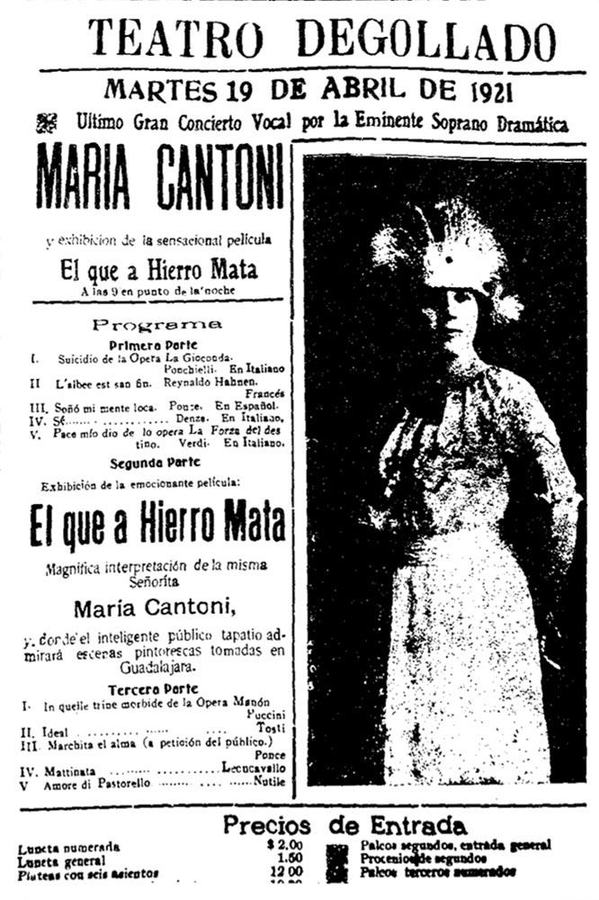
The opening frame of El que a hierro mata is a lie you want to believe: a sun-drenched almond grove, petals drifting like slow-motion snow, a lullaby of cicadas. Seconds later the camera tilts down to a scorpion skewered on a pruning hook—its tail still twitching—and you remember you’re in the hands of storytellers who flirt with paradise only to garrote it.
Director María Cantoni, also our steely Úrsula, refuses to separate beauty from brutality; she understands that in the dry southern heart of Spain the two share a marital bed, each turning the other’s screws at night. The film’s title, roughly “he who kills by iron,” is a proverb that promises reciprocity: live by weapon, die by weapon. Yet the picture’s genius lies in how it weaponizes atmosphere itself—heat, dust, church bells, the syrupy thickness of honey—so that every object becomes accomplice to the looming reprisal.
Watch how the color palette mutates: harvest golds at dawn, then the sulfuric yellow of bee pollen, finally the blistered copper of foraged metal. Each tonal shift tightens the noose.
Maria Cantoni’s Úrsula carries herself like a woman who has already died twice—once in childbirth, once in the courtroom—and now stalks the living out of spite. She speaks sparingly, letting the rasp in her throat imply every sermon she’ll never preach. When she finally utters “El hierro sabe mi nombre,” the line lands like a confession and a threat soldered together.
Amparo Ramos, as Mariana, is the film’s trembling metronome. Where Úrsula calcifies, Mariana leaks—tears, milk, lies. Ramos makes vulnerability feel predatory; watch her hover behind the drifter with a kettle of boiling water, hesitating just long enough for dread to mushroom. You can’t decide whether she wants to nurse the man or scald the sin off him.
Fernando Parra’s unnamed wanderer is less character than catalyst, a wound in human shape. He arrives on a mule that promptly dies beneath him—a punchline to a cosmic joke. Parra gives him the feral eyes of someone who has seen God and promptly mugged him. His shredded jacket, later elevated to macabre relic, is the film’s true protagonist: everyone projects their guilt onto its fraying threads.
Turn off the subtitles and you still comprehend every beat, thanks to a sonic tapestry that oscillates between whisper and clang. The anvil chorus at the festival is mixed so that each strike lands on the off-beat of your own pulse, inducing mild arrhythmia. Conversely, bee wings are amplified to helicopter roar, turning the apiary into a war zone where pollen drifts like shrapnel.
Credit composer Lucía Galdona for interpolating flamenco handclaps with the echo of shovels digging graves; rhythm becomes fate, and fate keeps sloppy time.
Place El que a hierro mata beside Riquette et le nouveau riche and you witness opposite alchemies: the French satire transmutes wealth into buffoonery, whereas Cantoni’s tragedy transfigures poverty into something far more corrosive—dignity armed with a pitchfork.
Black Shadows shares the same chiaroscuro DNA, but its urban expressionism keeps violence at arm’s length, a stylized dance. Here, the camera crouches inside the slaughter; you feel breath on the lens, blood in your mouth.
Curiously, the film’s matriarchal vengeance rhymes with In the Hollow of Her Hand, though that silent classic resolves into courtroom catharsis. Cantoni denies such release: her courthouse is a bonfire, her verdict a hive of bees dispatched like jurors with stingers.
Cinematographer Hugo Martínez shoots 35 mm, then leaves the reels in a sauna—literally—so emulsion blisters into constellations that CGI could never counterfeit. Sun flares leak across the frame like spilled yolk, baptizing characters in albumen light. When night falls, he switches to a custom lens salvaged from Soviet spy satellites; moonlight becomes a forensic tool, exposing every rake mark on the sisters’ arms.
Notice the 360-degree pan inside the chapel: candles fuse into a crown of thorns around the drifter’s jacket, the camera pirouetting until wall, icon, and garment converge into one exoskeleton of guilt. It’s the film’s silent assertion: objects outlive us, and they’re terrible storytellers.
Editor Aitana Puerta cuts on motion, not meaning: a sickle descending into frame matches a woman’s hand lifting a skirt, so violence and eroticism share a vertebra. Flashbacks surface without sepia signposts; you must navigate by scar tissue. The result is temporal vertigo—you emerge unsure whether the grove existed before the murder or was planted afterward to fertilize the myth.
This narrative slipperiness allies the film with Quicksand, though that thriller’s time loops serve as puzzle-box spectacle; here, the achronology feels septic, a fever you can’t sweat out.
Dialogue is sparse, but each aphorism carries the weight of scripture. “Los hombres se ahogan en lo que no beben” (“men drown in what they don’t drink”) is muttered while a bucket of tainted well-water is offered to a thirsty mule—an augury of communal complicity.
The almond harvest operates as capitalist microcosm: landowners weigh sacks using a scale balanced with a single bullet, reminding laborers that surplus value is always measured against the possibility of death. Bees, those proverbial workers, abscond; nature goes on strike.
Even children’s games are infected. A chorus of girls hopscothes while chanting “Hierro, miel, hueso, piel” (“iron, honey, bone, skin”), collapsing industry, sustenance, mortality, and sensuality into one morbid clap-song. The camera isolates one girl’s chipped tooth; you glimpse the adult she’ll never become.
Clerical presence is minimal yet oppressive. A priest arrives to bless the forge, but the anvil accidentally severs the ribbon, sending it slithering like a decapitated snake. He interprets the omen as divine mirth; villagers interpret it as permission. Faith here is not solace but corroboration: if God won’t sanction vengeance, the fire will.
Compare this to The Golem, where mysticism births a protector; in Cantoni’s world, mysticism miscarries, leaving only the afterbirth of superstition.
Some readings label the sisters’ rampage as feminist triumph, but the film is cannier. Úrsula and Mariana don’t dismantle patriarchy; they internalize its cruelties until the only exit is arson. The final conflagration consumes women, men, children, and the very concept of heir. The estate passes to no one; the bees inherit the earth.
Amparo’s declaration that her unborn child belongs to the river is less eco-feminist manifesto than surrender to a hydrological court higher than any mortal judge.
For all its sensory bravura, the film occasionally trips on its own barbed wire. A subplot involving forged land deeds surfaces so late it feels like a reshoot mandated by financiers. And the drifter’s backstory—hinted as military deserter—never materializes, leaving an emotional vacuum where specificity might have flourished.
Yet these are hairline fractures in an otherwise monolithic edifice. Better an over-ambitious myth with loose threads than a tidy morality play that trims the claws off terror.
El que a hierro mata does not end; it evacuates. Long after the credits, you’ll eye household objects with newfound suspicion: a cast-iron skillet becomes jury, a bee trapped in glass becomes conscience, a yellow jacket hanging on the door becomes subpoena. Few films rewire perception at such a granular level.
Seek it out if you revere The Habit of Happiness’s pastoral irony or Everywoman’s suffragist fury, but prepare for a far more corrosive aftertaste. This is rural gothic distilled to venom, decanted into a chipped terracotta cup, served with the stern instruction: drink, or be drank from.
IMDb —
1924
Community
Log in to comment.