DbcultAccessing Vault...
6/10
Senior Film Conservator
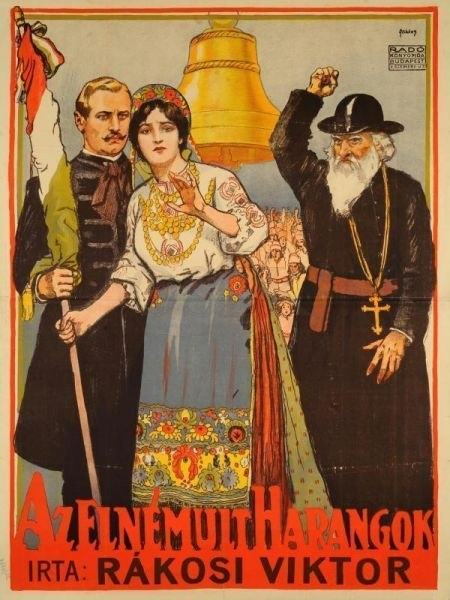
A definitive 6/10 rating for a film that redefined the boundaries of cult cinema. Elnémult harangok remains a cornerstone of transgressive art.
There are films that speak volumes, and then there are those that resonate through their very quietude. 'Elnémult harangok,' a Hungarian cinematic endeavor whose title translates hauntingly to 'Silenced Bells,' belongs unequivocally to the latter category. This is not merely a motion picture; it is an elegy captured on celluloid, a profound meditation on loss, faith, and the indelible scars left upon a community when its spiritual heart ceases to beat. From the opening frames, Márton Garas, with a directorial hand both delicate and unyielding, plunges us into the desolate yet deeply rooted world of Kétág, a village seemingly forgotten by time, where the cessation of the church bells' tolling isn't just an auditory absence but a metaphysical void.
The screenplay, crafted with meticulous detail and a palpable sense of historical weight by Viktor Rákosi, is less a conventional plot and more a tapestry of interconnected sorrows and quiet acts of defiance. It eschews grand pronouncements for the subtle language of human suffering and resilience. The 'silenced bells' of Kétág are not merely a plot device; they are the central metaphor, a visceral representation of a community's soul in crisis. We are introduced to a world where tradition, once a comforting anchor, now feels like a heavy chain, and where the collective memory of a vibrant past clashes starkly with a bleak, uncertain present. The film’s power emanates from its capacity to make this historical and spiritual vacuum feel intensely personal, touching upon universal anxieties about identity, belonging, and the search for meaning in a fractured world. It's a testament to the script's profundity that even without explicit exposition, the weight of the village's unspoken tragedy hangs heavy in every scene, a palpable presence that informs every gesture, every gaze.
Márton Garas navigates this emotionally charged landscape with an almost architectural precision, building a narrative that feels both expansive in its thematic scope and intimate in its human focus. His direction is characterized by a remarkable restraint, allowing the desolate beauty of the Hungarian landscape to speak volumes, often mirroring the internal desolation of the characters. Long, lingering shots of the empty bell tower, the wind rustling through barren fields, or the weary faces of the villagers become visual poems, each stanza contributing to the film's overarching mood of melancholic reflection. This deliberate pacing invites the audience to inhabit Kétág, to feel the chill of its silent mornings and the oppressive weight of its history. It reminds one of the contemplative, almost spiritual pacing found in films like Saints and Sorrows, where the environment itself becomes a character, imbued with history and sorrow, influencing the fates of those who tread upon it. Garas understands that true drama often resides not in explosive action, but in the quiet, internal battles waged by ordinary people against extraordinary circumstances.
The visual grammar of 'Elnémult harangok' is stark yet exquisitely composed. Garas employs a palette that emphasizes earthy tones, muted greys, and the occasional burst of natural light that feels almost like a fleeting hope. The cinematography, whether capturing the wide, unforgiving plains or the claustrophobic interiors of Kétág's humble homes, is consistently breathtaking, grounding the film in a tangible reality while simultaneously elevating it to the realm of allegory. One can almost feel the texture of the rough-hewn timber, the chill in the air, the dust on the unpaved roads. The framing often isolates characters within their environments, underscoring their individual struggles against the backdrop of a larger, collective fate. This is particularly effective in scenes depicting communal gatherings, where the camera subtly highlights the unspoken tensions and the shared burden of the village's plight, creating a sense of palpable unease despite the lack of explicit conflict. It's a masterclass in visual storytelling, where every shot is carefully considered, contributing to the film's profound emotional resonance.
The performances in 'Elnémult harangok' are uniformly exceptional, anchoring the film's philosophical underpinnings in raw, human experience. Erzsi Paulay delivers a truly unforgettable portrayal of Mária, a figure of quiet strength and unwavering resolve. Her eyes, often downcast yet brimming with an inner fire, convey a lifetime of hardship and a stubborn refusal to surrender to despair. Mária is the moral compass of Kétág, a woman who carries the weight of her community's grief while simultaneously nurturing the faint embers of hope. Paulay's performance is a masterclass in understated intensity, her every gesture, every subtle shift in expression speaking volumes about Mária's internal world. She doesn't need grand speeches; her quiet dignity and steadfast presence are enough to command the screen and the audience's profound empathy. Her journey through the film is one of quiet endurance, a testament to the human spirit's capacity to find meaning even in the face of overwhelming silence.
Béla Balogh, as Father István, offers a counterpoint to Mária's resilience, embodying the crisis of faith that grips the village. His portrayal is nuanced and deeply moving, capturing the internal struggle of a man torn between his spiritual duties and his own creeping doubts. Father István is not a caricature of a conflicted priest; he is a flesh-and-blood individual grappling with the inexplicable, his sermons becoming increasingly hollow echoes in a church where the bells no longer ring. Balogh imbues István with a vulnerability that is both heartbreaking and relatable, making his character's journey a central pillar of the film's exploration of belief in a world seemingly abandoned by divine grace. His performance is a poignant reminder that faith is often most tested not by outright evil, but by the slow, insidious erosion of hope and the deafening silence of a seemingly absent God. His quiet desperation evokes the existential dread found in works like The Raven, though here, the terror is internal and spiritual, rather than gothic and supernatural.
Ferenc Szécsi, Gusztáv Vándory, and Gida von Lazar, among others, round out the ensemble with equally compelling performances, each contributing to the rich tapestry of Kétág's inhabitants. Szécsi, often portraying figures of authority or influence, here brings a complex humanity to his role, depicting a character wrestling with the practicalities of survival against the village's spiritual decay. Vándory, with his characteristic gravitas, provides a grounding presence, perhaps as an elder statesman or a voice of tradition, struggling to reconcile the past with the present's harsh realities. Lazar, often known for more dramatic roles, might here embody a younger generation's despair or a burgeoning sense of rebellion, questioning the very foundations of their community. The ensemble works in remarkable synchronicity, each actor understanding their place within the larger narrative, allowing the collective weight of their performances to amplify the film's emotional impact. Their interactions, often minimal in dialogue, are rich with unspoken history and shared understanding, painting a vivid picture of a community bound by both love and sorrow.
'Elnémult harangok' transcends its specific setting to become a universal allegory for communities grappling with profound loss and the erosion of cultural identity. The silenced bells symbolize not only a loss of spiritual connection but also the silencing of dissent, the suppression of truth, or the quiet disappearance of cherished traditions under the weight of external pressures. In an era marked by rapid social and political upheaval, the film's exploration of how a community responds to such a fundamental breach of its identity remains remarkably pertinent. It forces us to confront uncomfortable questions about what truly defines a people, what sustains their spirit when the familiar anchors are wrenched away. Is it faith? Is it tradition? Or is it the sheer, unyielding will to remember and to rebuild?
The film also delves into the psychology of collective grief and the varied ways individuals process trauma. Some retreat into themselves, others seek solace in the past, and a few, like Mária, find strength in quiet resistance, in the simple act of continuing to live with dignity. This nuanced portrayal of human responses to adversity elevates 'Elnémult harangok' beyond a mere historical drama, transforming it into a timeless examination of the human condition. It speaks to the enduring power of community, even when frayed at the edges, and the often-overlooked heroism of those who simply refuse to give up, even when the odds are stacked impossibly against them. The struggle of Kétág, while specific to its context, echoes the struggles of any group facing an existential threat, reminding us of the fragility of peace and the enduring cost of silence. This resonance can be compared to the societal critiques embedded within films like The Price of Tyranny, where the suppression of the individual spirit by larger, oppressive forces is brought to the fore, albeit through different narrative lenses.
While the film’s central motif is an absence of sound, the sound design (or the strategic *lack* thereof, if an early silent film) is remarkably potent. The natural sounds of Kétág – the rustle of leaves, the distant cry of a bird, the creak of a wooden cart – are amplified, filling the void left by the bells. This meticulous attention to ambient sound underscores the unnaturalness of the silence, making it feel heavy, oppressive, almost a character in itself. The lack of the bells' familiar chime creates an auditory dissonance that constantly reminds the audience of what has been lost, a constant, nagging ache in the background of every scene. If it is an early silent film, the visual storytelling and the implied soundscape become even more critical, relying on the audience's imagination to fill the sonic gaps, making the 'silenced bells' even more impactful through their very absence.
The use of light and shadow further enhances the film's melancholic atmosphere. Cinematographer's choices often plunge interiors into deep shadow, with only slivers of light illuminating faces, emphasizing the characters' isolation and internal struggles. Exterior shots, while often bathed in natural light, frequently present a stark, almost desolate beauty, where the vastness of the landscape dwarfs the human figures, highlighting their vulnerability. This visual language is not merely aesthetic; it is deeply symbolic, reflecting the spiritual dimming within the village and the difficult path its inhabitants must navigate. The visual narrative is as carefully constructed as the script, with every frame contributing to the overall emotional and thematic weight of the film, creating a truly immersive and thought-provoking experience that stays with the viewer long after the credits roll.
'Elnémult harangok' stands as a powerful testament to the enduring strength of Hungarian cinema, a work that, despite its specific cultural and historical context, speaks to universal human experiences. It is a film that rewards repeated viewings, each time revealing new layers of meaning, new subtleties in performance, and new depths in its thematic exploration. It is a reminder that some of the most profound stories are told not with bombast, but with quiet conviction; not with a cacophony of sound, but with the eloquent power of silence. Its influence can be seen in later European dramas that explore similar themes of rural life, tradition, and the impact of historical change on small communities, echoing the contemplative spirit of films focused on societal transitions and personal resilience.
In an age saturated with noise, 'Elnémult harangok' offers a much-needed respite, a chance to listen to the silence and hear the profound truths it holds. It's a film that asks us to reflect on our own 'silenced bells' – the traditions we've lost, the voices we've suppressed, the spiritual connections we've allowed to fade. It’s a melancholic yet ultimately hopeful journey, suggesting that even in the deepest silence, the echoes of what once was, and what could still be, continue to resonate within the human heart. It’s a film that deserves to be rediscovered, studied, and cherished for its artistic integrity and its profound humanism. Its legacy isn't just in its historical place in Hungarian cinema, but in its timeless ability to stir the soul and provoke deep introspection, much like the lasting impression left by a truly significant piece of literature or a deeply moving musical composition. This film, truly, is a work of art that continues to speak, even without its bells.

IMDb —
1925
Community
Log in to comment.