DbcultAccessing Vault...
5.8/10
Senior Film Conservator
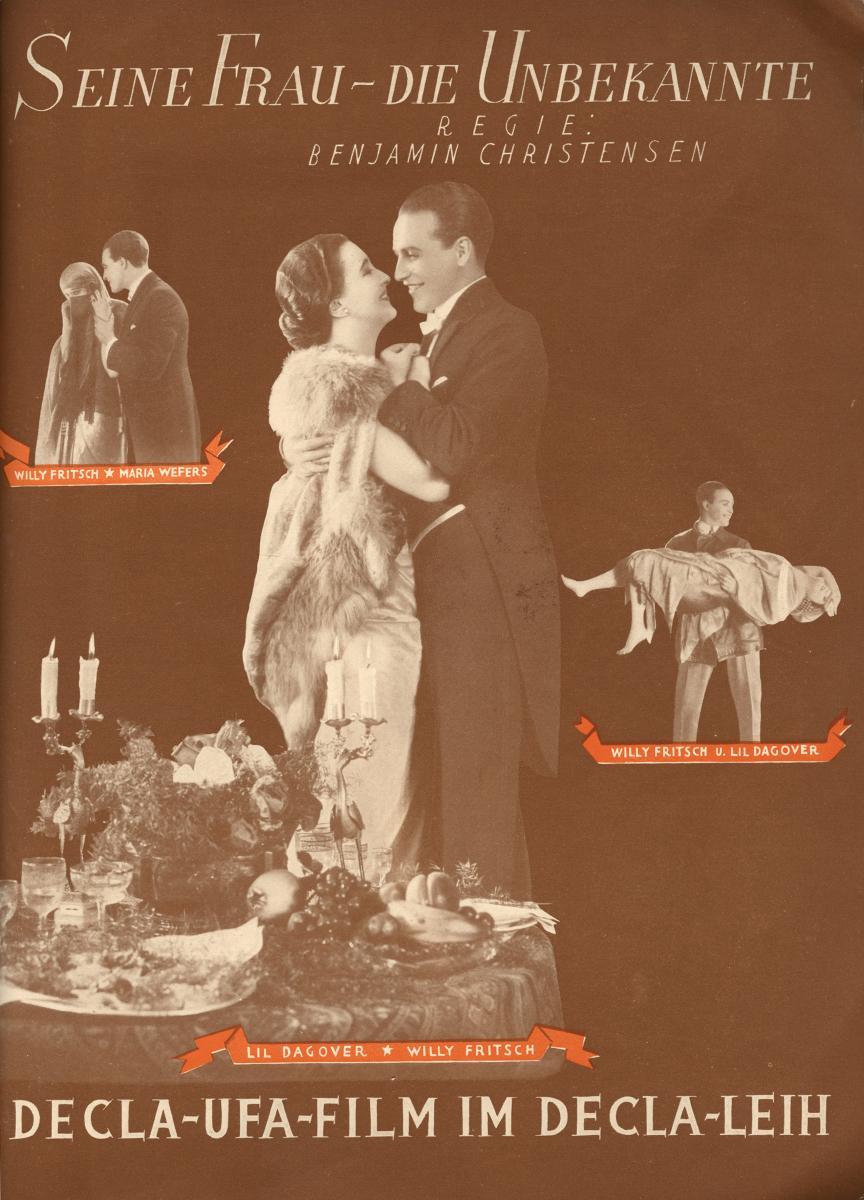
A definitive 5.8/10 rating for a film that redefined the boundaries of cult cinema. Seine Frau, die Unbekannte remains a cornerstone of transgressive art.
The cinematic landscape of 1923 was a crucible of expressionist fervor and burgeoning psychological realism, yet few works managed to capture the intersection of physical trauma and ontological crisis as poignantly as Benjamin Christensen’s Seine Frau, die Unbekannte. Moving away from the overtly diabolical aesthetic of his earlier masterpiece Häxan, Christensen here pivots toward a more intimate, though no less haunting, exploration of the human condition. The film serves as a somber meditation on the precarious nature of identity and the inherent fallibility of the gaze, framed within the post-war malaise that defined Weimar-era storytelling.
In this narrative, the protagonist’s blindness is not merely a clinical condition but a stylistic filter through which the audience experiences the initial acts. As a painter, his loss of sight is an existential erasure; his world is stripped of its chromatic vibrancy, leaving only the tactile and the auditory. Christensen utilizes the camera to mimic this sensory deprivation, focusing on close-up textures and the rhythmic movement of hands. When the painter marries his nurse, the union is one of pure, unadulterated essence. He loves not the form, but the presence. This thematic setup invites comparison to the emotional weight found in For a Woman's Fair Name, where the sacrifice of identity becomes a central pillar of the feminine experience.
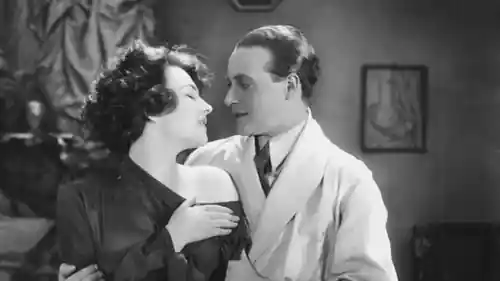
The pivot point of the film—the successful ocular surgery—is rendered with a clinical tension that borders on the divine. However, the restoration of sight brings about a tragic irony: the painter gains the world but loses his wife. The moment he opens his eyes, the woman who was his entire universe becomes a cipher, a stranger whose physical manifestation fails to trigger the recognition of the heart. It is a devastating critique of the superficiality of the visual world. Christensen suggests that the eyes are often the enemies of the soul, providing a deluge of data that obscures deeper truths.
Lil Dagover, a luminary of the silent era, delivers a performance of remarkable restraint and simmering desperation. Her character’s decision to leave and then return as a servant is not a mere plot device; it is a profound act of psychological subversion. She must negate her own selfhood to remain in the presence of the man she loves. This motif of the 'unknown' woman resonates with the atmospheric dread of The Trap (1922), where characters are frequently caught in the machinery of their own social and emotional circumstances.
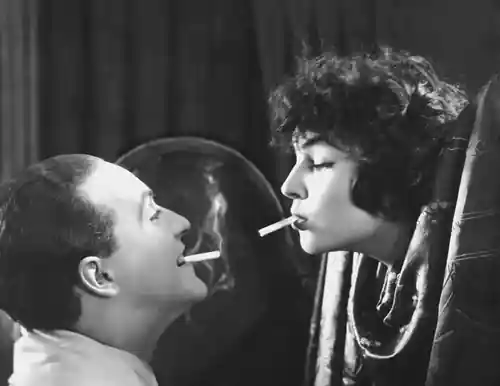
Dagover’s face becomes a canvas of unspoken grief. She watches her husband—now a man of sight—navigate a world she helped him reclaim, while she remains a ghost in his periphery. The tension is palpable as she performs domestic duties, her every movement a reminder of the intimacy they once shared in the dark. The film deftly navigates the fine line between melodrama and psychological thriller, as the audience waits for the inevitable moment of revelation that seems perpetually out of reach.
One cannot discuss Seine Frau, die Unbekannte without acknowledging the meticulous framing. Christensen, ever the master of spatial dynamics, uses the architecture of the painter’s home to emphasize the separation between the couple. Even when they occupy the same frame, they are often divided by shadows, doorways, or the stark lines of the painter’s own canvases. This visual language echoes the structural complexities of Die Stimme des Toten, where the past and present collide within the physical confines of the setting.
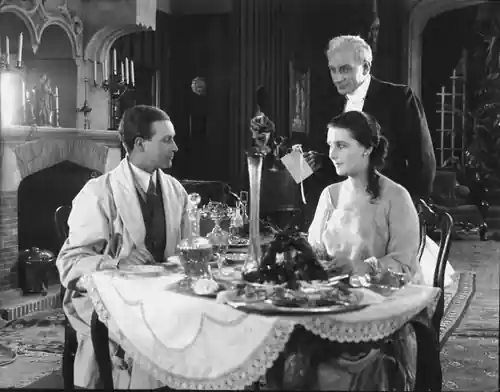
The cinematography by Frederik Fuglsang is nothing short of revolutionary for 1923. The way light spills across the painter’s studio, illuminating the dust motes while leaving the corners of the room in impenetrable darkness, serves as a metaphor for the painter’s partial understanding of his own reality. He sees the light, but he remains in the dark regarding the identity of the woman serving him tea. This interplay of light and shadow—the quintessential chiaroscuro—elevates the film from a simple domestic drama to a high-art exploration of human perception.
As we delve deeper into the second act, the painter’s obsession with his 'lost' wife—the woman of his darkness—reaches a fever pitch. He begins to paint her from memory, or rather, from the tactile memory of her. The irony is staggering: he is creating a portrait of the very woman who stands mere feet away from him, yet he cannot bridge the gap between the internal image and the external reality. This thematic thread shares a certain DNA with the narrative struggles in Fallen Angel, where the perception of purity and sin is constantly shifted by the observer’s own biases.
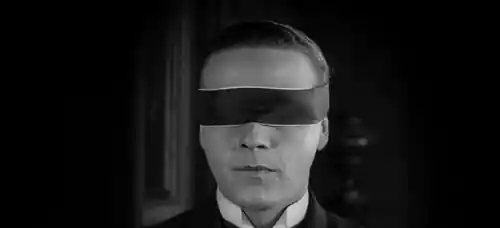
The supporting cast, including Willy Fritsch and Jaro Fürth, provide a necessary grounding for the central duo’s ethereal conflict. Fritsch, in particular, captures the youthful arrogance and eventual humility of a man who realizes that sight is a double-edged sword. The script, co-written by Christensen, avoids the pitfalls of easy sentimentality. Instead, it leans into the discomfort of the situation, forcing the viewer to question the ethics of the wife’s deception and the husband’s oblivious cruelty.
What does it mean to be 'known'? The film posits that true recognition is an act of the spirit rather than a function of the optic nerve. By stripping the painter of his sight, Christensen allows him to 'see' his wife’s soul. By restoring his sight, he condemns him to the surface level of existence. This philosophical inquiry is what separates Seine Frau, die Unbekannte from contemporary melodramas like The Man-Eater or A Twilight Baby, which, while entertaining, lack the same level of intellectual rigor.
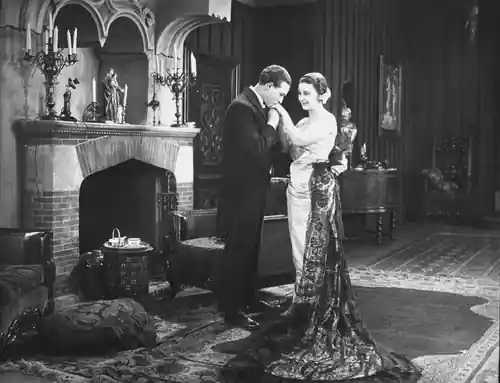
The resolution of the film is as bittersweet as it is inevitable. It suggests that while the truth may set us free, it also destroys the illusions that keep us comfortable. The wife’s ultimate unveiling is not a moment of triumph, but one of profound exhaustion. She has spent her identity to buy his happiness, a transaction that leaves her spiritually bankrupt even as it restores their union. This sense of costly redemption is a hallmark of Christensen’s more mature works, reflecting a world still reeling from the trauma of war and the dissolution of old certainties.
Technically, the film is a marvel of the silent era. The editing pace is deliberate, allowing the emotional beats to breathe and the silence to speak. In an era where many films relied on frantic action or broad pantomime, Christensen’s reliance on subtle facial expressions and symbolic objects is refreshing. The use of mirrors, for instance, serves as a recurring motif for the fragmented self, a technique also explored in The Turn of the Wheel.
The production design reflects the painter’s internal state. The transition from the cluttered, protective warmth of the blinded years to the stark, almost sterile clarity of the post-operative world is visually striking. It mirrors the coldness that enters the marriage—a coldness born of the husband’s inability to find the 'warmth' of his wife in her physical form. This visual storytelling is far more effective than any intertitle could ever be, proving Christensen’s mastery of the medium.
In the pantheon of Weimar cinema, Seine Frau, die Unbekannte often stands in the shadow of giants like Metropolis or Nosferatu, yet its psychological depth is arguably superior. It is a film that demands much from its audience—patience, empathy, and a willingness to confront the fragility of our own perceptions. It reminds us that we are all, in some way, 'unknown' to those who love us, and that the act of truly seeing another person is the greatest challenge of all.
As we look back at the film nearly a century later, its themes of war-induced trauma and the search for authentic connection remain hauntingly relevant. It is a testament to Benjamin Christensen’s vision that a story about 1920s blindness can still illuminate the dark corners of the modern psyche. Whether you are a scholar of silent film or a casual viewer looking for a story with substance, this film is an essential experience. It is a beautiful, tragic, and ultimately transcendent piece of art that deserves to be seen—truly seen—by a new generation.
For those interested in exploring more of this era's unique narrative structures, I highly recommend looking into The Bondman or the evocative Gypsy Anne, both of which grapple with identity in disparate but equally compelling ways. But for the sheer elegance of psychological torment, Seine Frau, die Unbekannte remains unparalleled.

IMDb —
1925
Community
Log in to comment.