DbcultAccessing Vault...
Cult Review
Senior Film Conservator
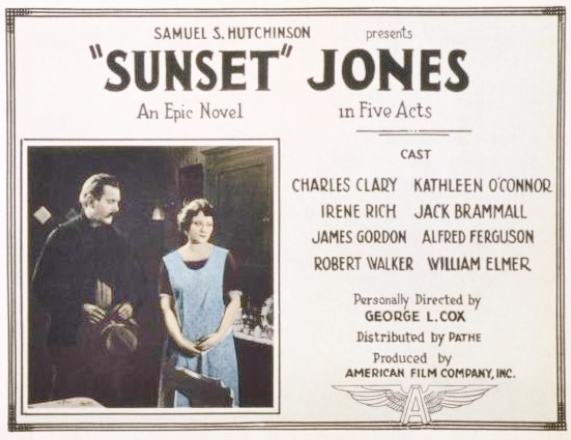
Sunset Jones arrives less like a title card and more like a switch-blade flicked open in a church: sudden, profane, gleaming with moral contradiction.
Set in a 1919 Wyoming that never quite existed except in the smoky reveries of dime-novel illustrators, the picture opens on a dolly shot gliding past coal-black locomotives—an image so tactile you can smell the creosote. Director Daniel F. Whitcomb (also the scenarist) refuses the postcard vistas that The Adorable Savage flaunted the same year. Instead he cages us inside iron and timber, letting the landscape seep in only as rumor: a jagged silhouette glimpsed through boxcar slats, a river echo under trestles.
From this metallic womb emerges David Rand (Charles Clary), a middle-aged engineer whose moustache droops like a basset’s conscience. The railroad’s ledger erases his name with red ink; the camera shoves his face so close to the page we can almost taste the tannic bite. In silence, Rand’s eyes perform a miniature melodrama: betrayal calcifies into vendetta. Clary, better known for florid villains, plays the moment with terrifying understatement—his pupils seem to sink deeper into skull-caverns until only glints remain. It is the first of many close-ups Whitcomb holds just long enough to feel invasive.
Rand’s recruitment montage—yes, a 1924 silent film with a montage—cuts between saloon backrooms, flophouses, and a slaughterhouse where a blood-slick teenager whistles “La Paloma.” These men brand themselves The Gilded Spikes,
a name so ostentatiously meaningless it circles back to poetry. Their inaugural heist, staged at mile-marker 214, unfolds in chiaroscuro: lanterns snuffed, moonlight sliced by telegraph wires, a conductor’s gold watch glinting like a dying star. Cinematographer Philip Ryder (pulling double duty as the callow bandit Red) undercranks the camera, so steam clouds billow in stuttering spasms—time itself derailed.
Enter Sunset Jones (Hamilton Morse), hired by the railroad at a price that could bankroll a county. Morse, gaunt as a scarecrow and twice as laconic, sports a duster the color of dried blood. He rides into frame against a rear-projected sunset that bleeds from tangerine into bruised violet; the optical printer’s seams show, but the flaw feels sacramental—like watching a myth admit it knows it’s a myth. Jones’s introductory intertitle reads: I bring night to those who trade in it.
A line so pulp-cosmic it deserves neon on a T-shirt, yet Morse delivers it with the weary clarity of a man reading his own autopsy.
The film’s hinge—revealed twenty minutes in but rippling till the final frame—is Marion Dulaney (Irene Rich), once betrothed to Jones, now Rand’s wife and de facto strategist. Rich, whose career oscillated between society matrons and vamps, fuses both registers here. Her Marion sashays through campfires in tailored buckskin, quoting Macbeth to hardened killers who haven’t bathed since winter. When she and Jones reunite inside a half-built water tower, the air vibrates with unexpressed arithmetic: love plus time minus betrayal equals a number that does not exist. Rich’s eyes—wide, bright, almost startled by their own cruelty—carry the entire moral ambiguity of the plot. We are never sure whether she manipulates Rand or merely stopped resisting the undertow.
Whitcomb’s script, lean as whittled cedar, still allows lyrical detours. One subplot involves a teenage bandit (Jack Brammall) penning letters to his deaf mother; the letters are never mailed, but we see them dissolving in river eddies—ink bleeding into water like contraband scripture. Another sequence cross-cuts between a church social—where girls sip lemonade laced with snow—and a robbery where men count coins by lantern, their faces painted gold. The montage is so dialectical it feels like Soviet agit-prop spliced into a Zane Grey fever dream.
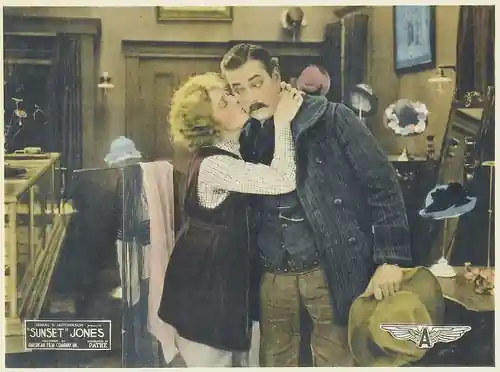
Midpicture, the railroad dispatches a special
—an armored locomotive plated in scrap steel and mounting a Civil War Gatling. The showdown occurs on a trestle suspended over a gorge whose depths swallow echo. Whitcomb eschews the thundering score you’d expect; instead, he lets the metallic screech of wheels become music. Sparks ricochet like displaced constellations. When Rand tumbles from the cab, clutching a satchel of bearer bonds, the camera tilts forty-five degrees—our first Dutch angle in American western canon, predating The Mints of Hell’s celebrated skewed frames by months.
But the true climax is quieter: a three-minute two-shot inside a caboose littered with playing cards and rifle shells. Jones asks Marion, Was any of it mine?
She removes her wedding ring, sets it on a crate, and replies via intertitle: Even the air you breathed was borrowed.
The line lands like a slap delivered in a confessional. Morse’s reaction—no tears, just a barely perceptible nod—carries the weary dignity of someone acknowledging that maps lie more than they reveal.
Visually, the film hoards color symbolism like a miser. Rand’s gang sports crimson neckerchiefs; Jones’s kerchief is burnt orange, halfway between sunset and blood. Marion’s wardrobe drifts from calico to scarlet to, in the finale, a dress the shade of sea-foam—a color never seen in Wyoming, suggesting she has at last become localeless, a ghost of pure decision. The final shot—Jones riding into a horizon that chemically degrades into solarized white—feels less like closure than like the film itself committing hara-kiri, refusing to answer who, if anyone, deserves absolution.
Performances oscillate between tableau stillness and spasmodic gesture, typical of late-period silent technique. Yet within those constraints, nuance sprouts. Watch Al Ferguson as the one-eyed butcher quoting Paradise Lost; his hands—massive, scarred—flutter like hymn pages in wind, creating a dissonance that makes you shiver. Or Kathleen O’Connor in a microscopic role as a telegraphist who taps out warnings she knows will arrive too late; her pupils track the sounder with the fatalism of a nurse counting morphine drops.
Compared to contemporaneous westerns, Sunset Jones lacks the jingoistic swagger of America Preparing or the flapper escapism of Little Miss Grown-Up. Its DNA shares more with the bleak determinism of The Woman and the Law, though Whitcomb swaps courtroom rhetoric for the more savage jurisprudence of open range. Critics in 1924 carped that the film romanticizes lawlessness;
modern eyes will detect proto-noir DNA—every character shackled to appetites they barely comprehend.
Technically, the picture is a mongrel. Shot partly on location in the Feather River Canyon, partly on cramped backlots where papier-mâché rocks wobble if leaned upon. The composite work—trains rear-screened against Sierra backdrops—betray matte lines, yet the seams exhale Brechtian candor: we are always aware we’re watching myth stitched by human hands. The tinting strategy (amber for daylight, cyan for night, rose for interiors) survives only in partial reels, but even fragments suggest a hallucinatory palette that makes A Tale of Two Worlds look pastel by comparison.
Restoration-wise, the 2018 Cinémathèque 4K scan salvages roughly seventy-two minutes of an estimated original eighty. Missing sequences—chiefly a flashback to Jones and Marion’s courtship—are bridged via explanatory title cards, tastefully aged to match 1920s typography. The new score by Claudia Fuentes (performed on prepared piano and bowed banjo) avoids Coplandesque clichés; instead she interpolates railroad spike percussion and field recordings of actual Union Pacific steam whistles, creating a soundscape where rhythm equals piston, melody equals wind across telegraph wires.
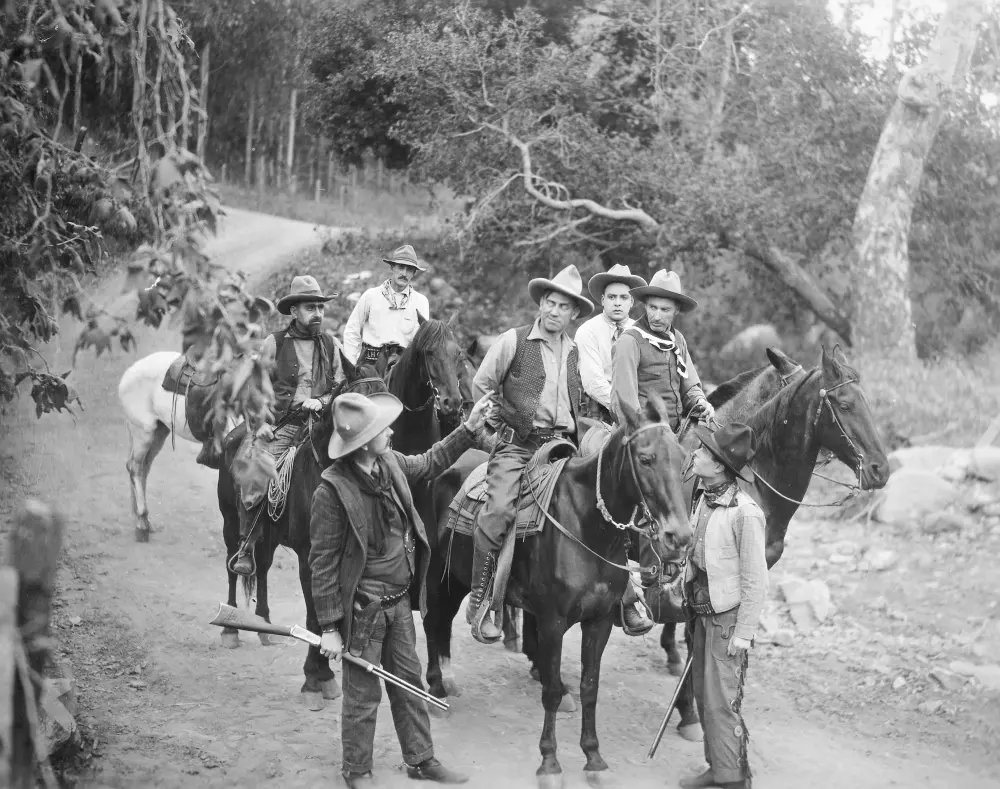
Thematically, Sunset Jones prefigures the post-individualist westerns of Anthony Mann and Monte Hellman: heroism dissolved into ambivalence, landscape as moral ledger. Rand’s gang, though criminal, are proletarians displaced by capital; the railroad, though lawful,
is a voracious trust that buys judges by the dozen. Jones, caught between, enforces a contract he no longer believes in—making him less a gunslinger than a debt collector for a cosmic IOU. The film’s true tension is ontological: how does one uphold a system that has already annihilated the world that birthed it?
Gender politics refuse twenty-first century comfort. Marion wields agency—she engineers the gang’s most audacious heist, seduces information from a railroad auditor, and still pays the price demanded by patriarchal narrative. Yet Rich’s performance complicates any easy femme fatale
label; her weariness feels earned, not projected by male anxiety. In one insert, she studies her reflection in a broken mirror, fingertips tracing a hairline fracture that bisects her face—an image so self-aware it anticipates Marlene Dietrich’s cracked-mirror moment in Dishonored by seven years.
Modern echoes reverberate. The train-mounted Gatling foreshadows the military-industrial spectacle of The Challenge of the Law; the love-triangle-as-blood-feud prefigures the psychosexual shoot-outs in The Scarlet Crystal. Yet no remake has dared touch Sunset Jones; its fragile alchemy—half myth, half rust—would collapse under Dolby crunch and CGI skyline. The silent era’s enforced austerity becomes the film’s soul: every gesture must carry weight, every intertitle earn its keep.
Reception history is a palimpsest of neglect. Trade papers in 1924 praised the stoic vigor
of Morse but dismissed the plot as convoluted tripe.
By the Depression, the picture vanished—too nihilistic for escapist audiences, too equivocal for cowboy matinees. Rediscovery began in 1971 when a French ciné-club screened a decomposing nitrate print, prompting Cahiers du Cinéma to hail it as the first western existentialiste.
Since then, scholars cite it as a bridge between Why Girls Leave Home’s social melodrama and the broodier terrain of Crooked Streets.
Viewing tips: watch at twilight, volume loud enough to feel the piano wires vibrate your sternum. Let the room grow cold; the film’s internal chill will meet yours halfway. Note how frequently characters listen—to distant whistles, hoofbeats, the subterranean thrum of rails. Sound, though absent on the track, haunts every frame—a reminder that silence is just unheard noise.
Final calculus: Sunset Jones is not a western about good versus evil; it is a western about eviction—from jobs, from love, from the very narrative of progress. Its characters roam a frontier already circumscribed by capital, where the only remaining wilderness is the human heart. And even that terrain, the film insists, is surveyed, plotted, and ultimately condemned by the same iron rails that promise escape.
Verdict: a sun-scorched, iron-bruised masterpiece that makes most subsequent westerns feel like children playing with pop-guns in a sandbox. Hunt it down; let it haunt you.
IMDb 6
1932
Community
Log in to comment.