DbcultAccessing Vault...
6.2/10
Senior Film Conservator
A definitive 6.2/10 rating for a film that redefined the boundaries of cult cinema. The Darkest Hour remains a cornerstone of transgressive art.
Ah, the grand old days of cinema, when narratives unfolded with a silent grandeur, propelled by the sheer force of visual storytelling and the emotive power of human expression. "The Darkest Hour," a cinematic relic from 1919, emerges from this era not merely as a historical artifact but as a surprisingly potent exploration of identity, betrayal, and the curious resilience of the human spirit. It’s a film that, despite its age, manages to weave a tapestry of intrigue that feels both timeless and deeply rooted in the dramatic conventions of its period. For those accustomed to the rapid-fire editing and complex soundscapes of modern cinema, diving into a silent picture like this is akin to stepping into a dream, where gestures speak volumes and the weight of a gaze can carry an entire monologue, inviting a more contemplative and engaged form of spectatorship.
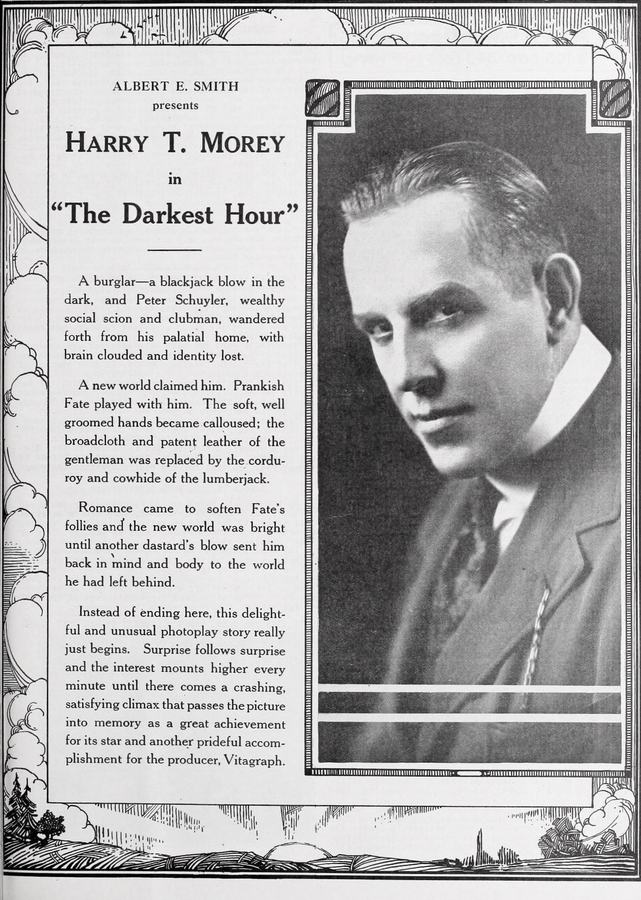
The narrative commences within the gilded cages of New York's high society, introducing us to Peter Schuyler, a man whose vast wealth is matched only by his profound naiveté. Schuyler, portrayed with a certain earnest vulnerability, believes himself to be blessed with a loyal confidant in Lee Austin. Yet, beneath this veneer of friendship festers a serpent's nest of deceit. Austin, a master manipulator, orchestrates a truly Machiavellian scheme with Marion Dinsmore, a woman whose beauty is merely a cloak for her avarice. Their plan is chillingly simple, yet devastatingly effective: Dinsmore is to ensnare Schuyler in marriage, secure a hefty divorce settlement, and then, flush with illicit gains, marry Austin. It's a classic setup of the predatory against the unsuspecting, a theme that resonates across countless narratives, from the theatrical machinations of a "Julius Caesar" to the more intimate betrayals seen in films like "The Virtuous Thief". The film wastes no time in establishing these stakes, drawing the audience into a web of impending doom for our unsuspecting protagonist, making us acutely aware of the moral quicksand beneath his feet.
However, fate, that most unpredictable of dramatists, intervenes with a brutal, unexpected hand. In a moment of chaotic violence—a robbery—Schuyler suffers a traumatic head injury. This isn't merely a convenient plot device; it's a profound exploration of identity's fragility. The sudden erasure of Peter's past transforms him into a tabula rasa, a blank slate upon which a new self can be inscribed. He awakens to a world where his past is a blank canvas, his identity erased by the cruel stroke of amnesia. This trope, while familiar, is handled here with a compelling sense of disorientation. The wealthy New Yorker, a man whose life was defined by luxury and social standing, is stripped bare, his very essence reduced to an empty vessel. It's a fascinating character reset, forcing him—and us—to confront the question of what truly constitutes identity when all external markers are removed. Is it memory? Is it inherent character? Or is it simply the circumstances into which one is thrust? This existential crisis, though silent, resonates deeply, inviting viewers to ponder the very foundations of selfhood.
His subsequent journey is a stark contrast to his former life. Drifting far from the urban sprawl, he finds himself marooned in the rugged, untamed wilderness of a Northwestern lumber camp. Here, he is reborn as "John Doe," a moniker that perfectly encapsulates his anonymity. The transition from penthouse to pine forest is visually striking, a testament to the film's ability to convey dramatic shifts in environment and social strata without a single spoken word. The rough-hewn camaraderie, the arduous physical labor, the raw beauty of nature—all these elements conspire to forge a new man. He sheds the soft edges of his former self, developing a resilience that his privileged past had never demanded. This transformation is a powerful narrative engine, allowing the audience to witness a profound character evolution, unburdened by the baggage of memory. The environment itself becomes a character, a harsh yet honest crucible where the dross of his former life is burned away, leaving behind a core of genuine humanity.
It is within this rugged new world that "John Doe" finds not only a new purpose but also love. He forms a connection with the niece of the camp's manager, a relationship that blooms amidst the harsh realities of their existence. This romance is portrayed with a tender authenticity, a stark counterpoint to the calculated, mercenary intentions of Marion Dinsmore. The niece represents purity, genuine affection, and a life built on honest labor, values diametrically opposed to the deceit that once defined Schuyler’s impending doom. However, the lumber camp is not without its own shadows. The manager, far from being a benevolent figure, harbors his own crooked schemes. It is here that Schuyler's inherent sense of justice, perhaps an echo of his true self, reasserts itself. Despite his amnesia, his moral compass remains intact, leading him to expose the manager's illicit dealings. This act of heroism cements his place within his new community, solidifying his new identity as a man of integrity and courage. This segment of the film could almost stand as its own distinct story, reminiscent of other narratives where individuals find themselves in unfamiliar territories, struggling against local corruption, much like the themes explored in "The Girl from Outside". It underscores the idea that true character transcends circumstance and memory.
Yet, the tendrils of his past, though severed by amnesia, are not entirely dormant. Austin and Dinsmore, relentless in their pursuit of Schuyler's fortune, have not forgotten him. Their malevolent designs linger like a specter, threatening to shatter the fragile peace "John Doe" has painstakingly built. The irony is palpable: while Schuyler has found a measure of peace and purpose in his forgotten state, his former "friends" remain fixated on his material wealth, their greed undiminished and their moral compass utterly broken. The film masterfully builds tension around this impending collision, the audience keenly aware that the two worlds—the forgotten past and the fragile present—are destined to collide. This sense of an inescapable past, even when one is unaware of it, adds a layer of tragic irony to the narrative, a feeling of being hunted by shadows you don't even know exist. The narrative suspense is expertly crafted, making the eventual confrontation feel not just inevitable, but deeply deserved for the villains and terrifying for our hero.
The performances, particularly from Anna Lehr as the innocent niece and Harry T. Morey as the duplicitous Lee Austin, are crucial in conveying the film's emotional depth without dialogue. Lehr brings a warmth and sincerity that anchors Schuyler's new life, her expressions of tenderness and concern providing a stark contrast to the cold calculation of Marion Dinsmore (likely portrayed by Jane Jennings, who embodies the role of the avaricious schemer). Morey, as Austin, projects a chilling menace that underscores the pervasive threat to Schuyler's happiness. Even in the silent era, the power of an actor's gaze, their posture, and their carefully choreographed movements could speak volumes, and these performers demonstrate that mastery. Their ability to communicate complex emotions and motivations purely through physical presence and facial expressions is a testament to the artistry of silent film acting. One can imagine the palpable tension in the theater as audiences watched their intricate dance of love and betrayal unfold, their faces telling stories that words never could.
Thematically, "The Darkest Hour" is a rich tapestry. It delves deep into the nature of identity, questioning whether memory alone defines who we are. Schuyler's journey suggests that fundamental character traits—integrity, a sense of justice, the capacity for love—can persist even when personal history is obliterated. It’s a compelling argument against the purely deterministic view of self, suggesting an innate moral core that can survive even the most profound external changes. The film also starkly contrasts the corrupting influence of wealth and ambition with the simple virtues of honesty and hard work. The opulent, deceitful world of New York society is juxtaposed against the rugged, more authentic life of the lumber camp, suggesting a moral superiority in the latter. This critique of high society's moral decay was a common thread in early 20th-century cinema, offering audiences a vicarious escape or perhaps a confirmation of their own societal observations, much like the social commentary found in "The Little Duchess" or "The Envoy Extraordinary".
Furthermore, the film explores the enduring power of betrayal. The initial scheme by Austin and Dinsmore is not just a plot device; it's a commentary on the fragility of trust and the destructive force of unchecked greed. Even with amnesia, the consequences of this betrayal continue to ripple through Schuyler's life, highlighting how actions, once set in motion, can have far-reaching and unforeseen repercussions. It's a reminder that while individual memory might fade, the impact of human choices often leaves indelible marks on the fabric of existence. This echoes the long-lasting consequences of choices made in films like "The Strange Case of Mary Page", where past actions inevitably catch up with characters, demonstrating that some debts, even forgotten ones, must eventually be paid.
Visually, the film, while limited by the technology of its time, uses its settings effectively to underscore the narrative's themes. The stark contrast between the lavish interiors of New York and the expansive, natural landscapes of the Northwest is more than just a change of scenery; it's a symbolic representation of Schuyler's internal and external transformation. The wilderness, initially a place of isolation, becomes a crucible for his rebirth, a place where genuine connections can be forged, free from the artifice of his former life. The cinematography, even in its early form, manages to convey the grandeur and isolation of the lumber camp, making it a character in itself, shaping John Doe's new reality. The use of light and shadow, characteristic of the era, further enhances the dramatic tension, with moments of happiness bathed in bright, open settings contrasting with the darker, more conspiratorial scenes.
As a piece of silent cinema, "The Darkest Hour" relies heavily on visual cues, exaggerated expressions, and intertitles to propel the plot and convey dialogue. Modern viewers might find the pacing deliberate, but it allows for a deeper immersion into the emotional states of the characters. Each gesture, each glance, is imbued with significance, demanding a different kind of engagement from the audience. It’s a masterclass in non-verbal communication, a skill that contemporary filmmakers often overlook in their reliance on dialogue. The film's strength lies in its ability to tell a complex story using the universal language of human emotion, transcending the spoken word. It’s a testament to the foundational principles of cinematic storytelling that remain relevant even today, reminding us of the raw, unfiltered power of early film to communicate profound narratives.
In conclusion, "The Darkest Hour" is far more than a simple melodrama from the silent era. It is a compelling psychological drama wrapped in a tale of adventure and romance. It challenges notions of identity, exposes the insidious nature of greed, and ultimately celebrates the enduring capacity for renewal and love. While it might not possess the grand scale of an epic like "Potop" or the historical weight of "The Spirit of '76", its strength lies in its intimate yet expansive exploration of one man's journey through oblivion and rebirth. It reminds us that even in our darkest hour, the possibility of a new dawn, a new self, always flickers. For those willing to suspend their modern cinematic expectations, this film offers a richly rewarding experience, a poignant reminder of the power of early filmmaking to captivate, provoke, and entertain. It stands as a compelling example of how a well-crafted narrative, supported by strong performances and evocative visual storytelling, can transcend time and technological limitations to deliver a truly memorable cinematic experience. It's a film that lingers, prompting reflection on what truly defines us when everything we think we know is stripped away, much like the existential quandaries faced by characters in films such as "Mr. Opp" or "Her Own Way" when confronted with life-altering circumstances. The legacy of such films is not just in their plots, but in their quiet yet profound exploration of the human condition, making them enduring pieces of art that continue to resonate with audiences who appreciate the depth and artistry of early cinema. It's a journey from the depths of betrayal to the heights of self-discovery, a testament to the enduring human quest for truth and belonging.
IMDb 6.5
1928
Community
Log in to comment.