DbcultAccessing Vault...
6.3/10
Senior Film Conservator
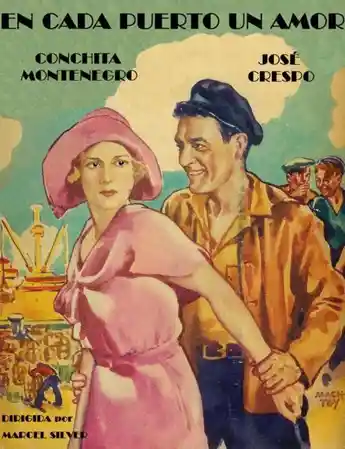
A definitive 6.3/10 rating for a film that redefined the boundaries of cult cinema. En cada puerto un amor remains a cornerstone of transgressive art.
If you're here looking for something to just kick back and enjoy this weekend, En cada puerto un amor from 1931 probably isn't it. This one's really for the deep-cut film historians, the folks who get a thrill out of seeing how early Spanish-language talkies actually worked. Most modern viewers, I'd bet, will find it slow and a bit... stiff.
The film, as its title suggests, is a melodrama about love and perhaps, the sea. We follow... well, let's just say there are *feelings* involved, and a few goodbyes. It's a snapshot of a very different time in filmmaking.
The acting styles are a big part of it. Conchita Montenegro, for instance, has these moments where her eyes just widen at everything. It’s not subtle. You can almost feel the director telling her, "Bigger! Make them feel it in the back row!"
José Crespo, playing perhaps our wandering heart, often delivers lines with this very deliberate, almost *recited* quality. It's like he's making sure every single word lands, even if it feels a bit unnatural to us now. The technology back then, those clunky microphones, probably didn't allow for much improvising or natural cadence.
There’s this one scene, quite early on, where a character is just staring out a window. It goes on for what feels like *ages*. Like, a full minute and a half of just a face, contemplating. You can almost hear the projectionist wondering if the film had jammed. It builds a mood, I guess, but man, it asks for some patience.
The sound itself is a character here. Sometimes the dialogue sounds crisp, then suddenly it's muffled, or someone moves just slightly off-mic, and their voice drops to a whisper you can barely catch. It's a reminder of how *hard* it must have been to make these movies. 🎙️
The story itself, without giving too much away, relies on some very familiar dramatic beats. There's probably a misunderstanding, a sacrifice, maybe a tearful reunion. It’s all very earnest. You want to root for them, but sometimes the sheer formality of it all keeps you at arm's length.
It’s not trying to be a modern blockbuster, obviously. It’s a piece of history. A fascinating, if somewhat slow, look at what Spanish cinema was doing when it first found its voice. Don't expect a thrilling plot, but appreciate the sheer effort.
I thought about how different it is from, say, Going Wild, which was also from around this time. That one had a certain *zip* to it, even with its own limitations. En cada puerto un amor leans harder into the serious drama, maybe a bit too much for its own good in some spots.
It’s an interesting curio. For film students or just anyone interested in the very beginnings of sound in non-Hollywood productions, there's something to chew on. For everyone else? Maybe save it for a very rainy afternoon when you've exhausted everything else. It won't hurt, but it won't necessarily thrill either.
IMDb 3.9
1933
Community
Log in to comment.