DbcultAccessing Vault...
5.6/10
Senior Film Conservator
A definitive 5.6/10 rating for a film that redefined the boundaries of cult cinema. En Skuespillers Kærlighed remains a cornerstone of transgressive art.
There is a moment—roughly twelve minutes in—when Melitta’s silhouette hesitates outside the stage door, her gloved hand hovering an inch from the brass handle, and the entire frame vibrates with the hush before overture. Director August Blom, never one to waste a close-up, lets the camera linger until the suspense metastasizes into something almost erotic. That microscopic beat is the whole film in miniature: a study of thresholds, of wanting to step into the spotlight yet fearing the scorch it brings.
Irma Strakosch’s screenplay, adapted from a scandalous newspaper serial, could have ossified into standard-issue morality play; instead it pirouettes on the knife-edge between Grand Guignol and chamber piece. The intertitles—spare, almost haiku—refuse to over-explain. When Romay whispers "Jeg er ikke en mand, jeg er en rolle" ("I am not a man, I am a role"), the subtitle flickers just long enough for the paradox to lodge under your ribs. Modern viewers conditioned to expositional hand-holding may gasp at the austerity; silents, after all, were never mute, only eloquent in a dialect we’ve forgotten.
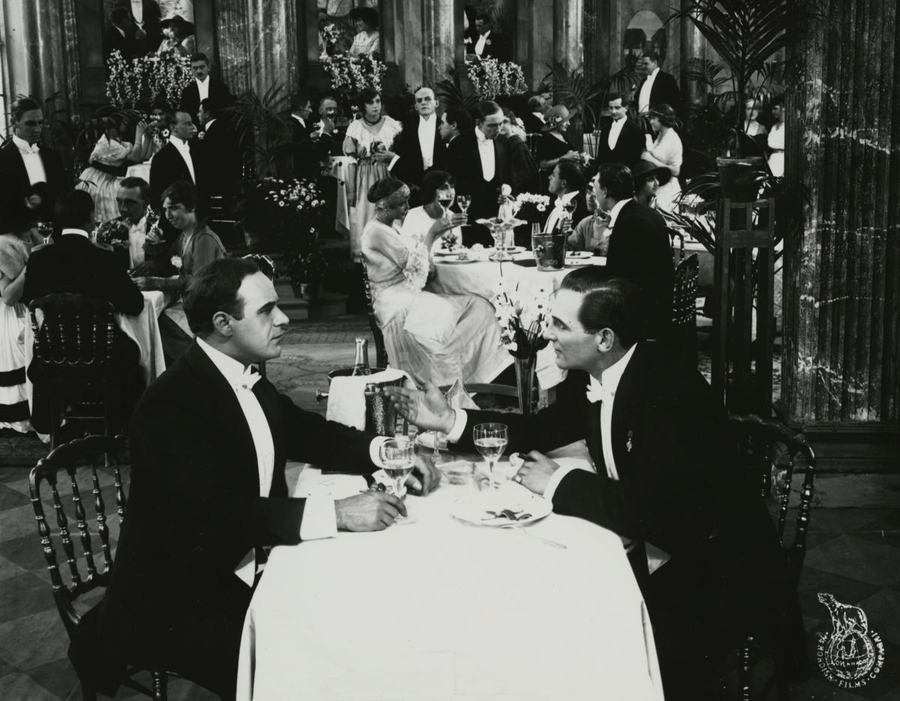
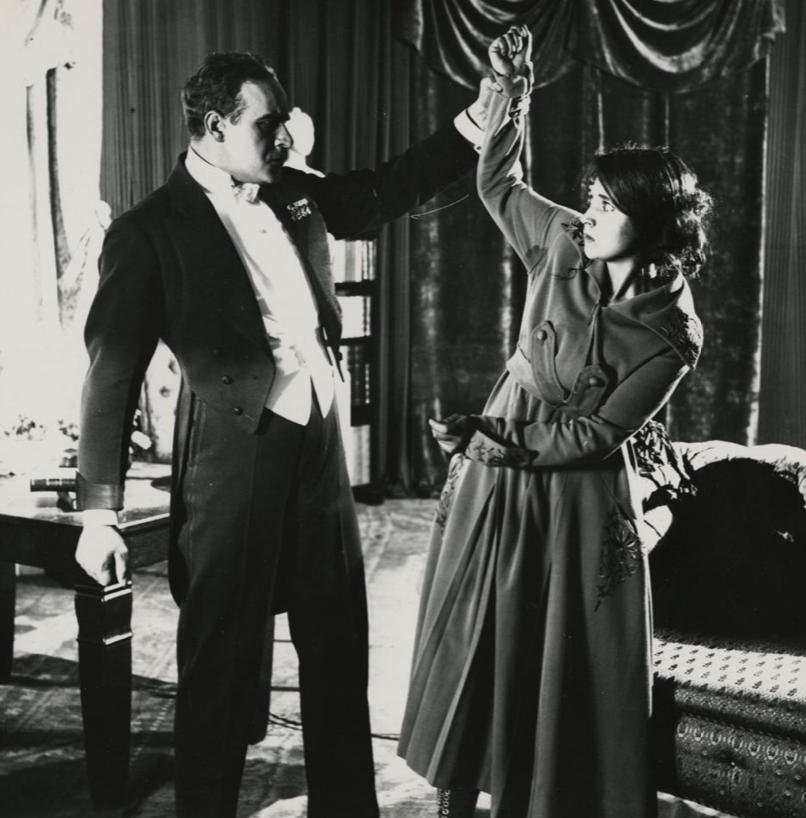
Valdemar Psilander, the Brad Pitt of Copenhagen’s 1910s, possessed a face calibrated for nitrate: cheekbones capable of slicing shadow, eyes that registered micro-tremors of self-loathing. Watch the way he removes his stage wig: not a hunky heart-throb flourish but a tiny funeral, tuft by tuft, revealing the bald insecurity beneath celebrity. Alma Hinding, only seventeen during principal photography, reciprocates with a proto-feminist ferocity. She never begs the lens for sympathy; rather, she commands it to witness. Their first tête-à-tête—in a cramped dressing room overflowing with greasepaint funk—uncoils like a masterclass in power dynamics: every step she takes forward he counter retreats, a slow-motion tango played out in the geography of crumpled costume baskets.
Ebba Thomsen, saddled with the "other woman" trope, sabotages cliché by playing her character as a curator of her own desirability, fully aware that beauty is a currency that devalues unless reinvested. In an exquisite tableau toward the finale, she studies her reflection in a darkened window until the glass transforms into a twin who might betray her. One senses the influence of The Scarlet Letter’s brand of Puritanical voyeurism, though here the scarlet letter is replaced by a silk chemise dropped carelessly across a chaise longue—evidence enough for the court of public opinion.
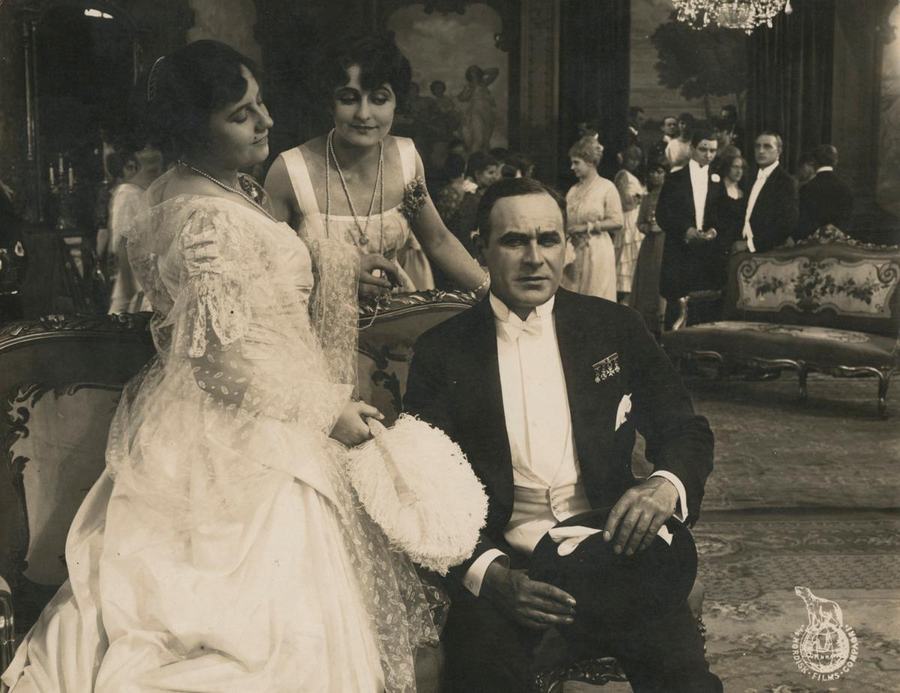
Cinematographer Carl Ferdinand Fischer, later famed for Hell’s Hinges, shot the entire picture on orthochromatic stock that turns skin into alabaster and lipstick into void. The resultant chiaroscuro makes every kiss resemble a bruise. Notice the repeated visual motif of curtains: brocade theatre curtains, lace café curtains, the diaphanous curtain of Melitta’s bridal chamber. Each veil promises revelation yet delivers obfuscation, as though the universe itself were engaged in a striptease it never intends to finish.
Blom’s blocking deserves a dissertation. In one bravura sequence, the camera tracks laterally along a row of chorus girls awaiting entrance cues; their faces flick past like flip-book marginalia, each girl embodying a slightly varied response to anticipation—yawn, prayer, sneer, grin—until the dolly lands on Melitta, center-stage of the pan yet emotionally off-kilter. Without a single intertitle, the shot establishes her as the outsider among insiders, the spectator trapped inside the spectacle.
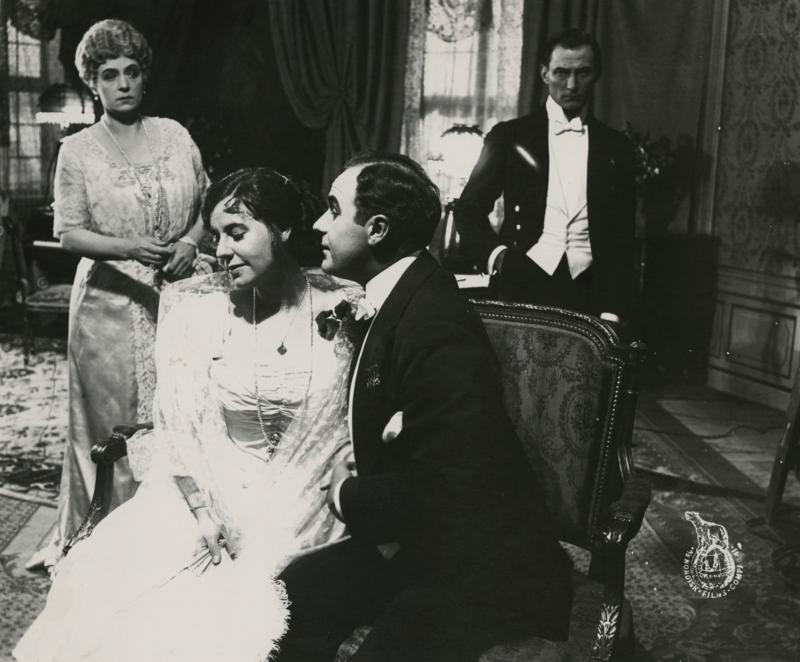
Though originally accompanied by a live orchestra pounding out Grieg and Sinding, the current restoration offers a newly commissioned score by Norwegian minimalist Åse Thoresen—sparse piano motifs punctuated by glass harmonica glissandi that mimic the flicker of projector shutter. The effect is hypnotic: every time a character lies, the harmonica slides a semitone lower, an aural tell that turns the viewer into complicit detective. Keep an ear out for the faint mechanical click during Romay’s soliloquies; Thoresen sampled the actual 1916 Bell & Howell camera used on set, looping its ratchet so destiny itself ticks like a time-bomb.
Contemporary gender theorists could feast on this carcass for weeks. Melitta’s desire is never passive; she engineers encounters, commandeers letters, even purchases her own train ticket to follow Romay on tour—an act of agency that shocks the 1916 audience perhaps more than any bedroom shenanigan. Yet the film refuses to crown her proto-#girlboss. The final reel lands like a corrective slap: success in the public sphere equals fragility in the private, a zero-sum equation the narrative refuses to solve. One exits the theatre vibrating with the same ambivalence that fuels For the Defense’s courtroom pyrotechnics, though here the verdict is delivered by gossip, not judge.
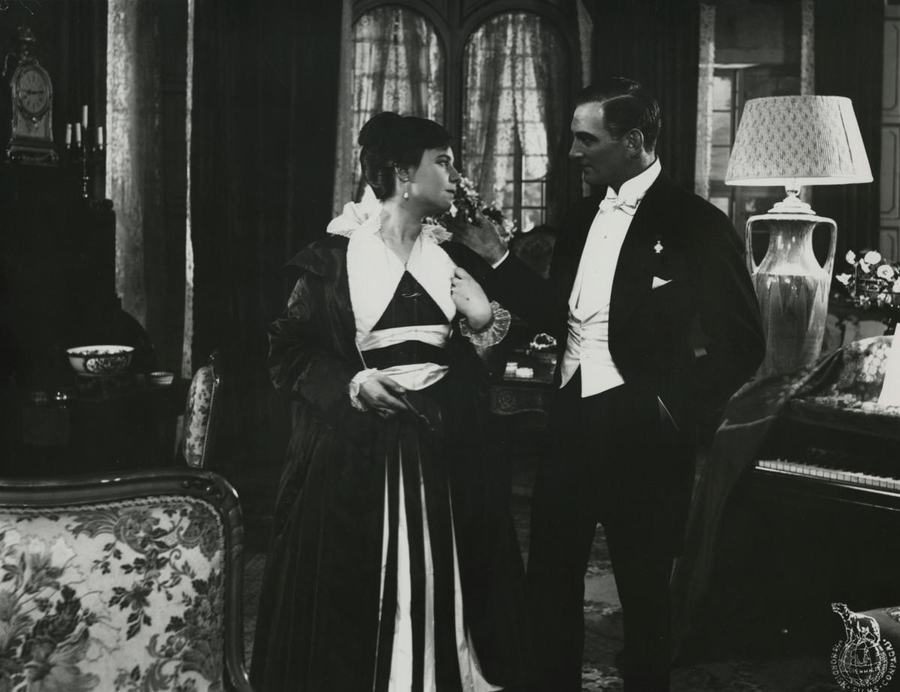
Rudolf, played by Tronier Funder with the hangdog elegance of a poet who’s misplaced his final stanza, embodies the collateral damage of female self-determination. His unspoken love is rendered via absence: empty chair at the wedding feast, unclaimed coat at the cloakroom, silhouette glimpsed through frosted glass as the honeymoon train pulls away. The film declines to paint him as beta-male victim; instead he becomes the gravitational dark matter around which the couple’s luminous toxicity orbits.
Cinephiles often trace Scandinavian gloom back to Bergman and Sjöström, yet En Skuespillers Kærlighed predates both, predates even The Man from Home’s transatlantic moralizing. Its DNA can be spotted in later Danish works like Corruption, where systemic rot mirrors personal decay, and in the voyeuristic Catholic guilt of Tepeyac. Even Hitchcock cribbed notes: the attic scene where Melitta discovers a cache of Romay’s old love-letters anticipates Vertigo’s necklace revelation by four decades.
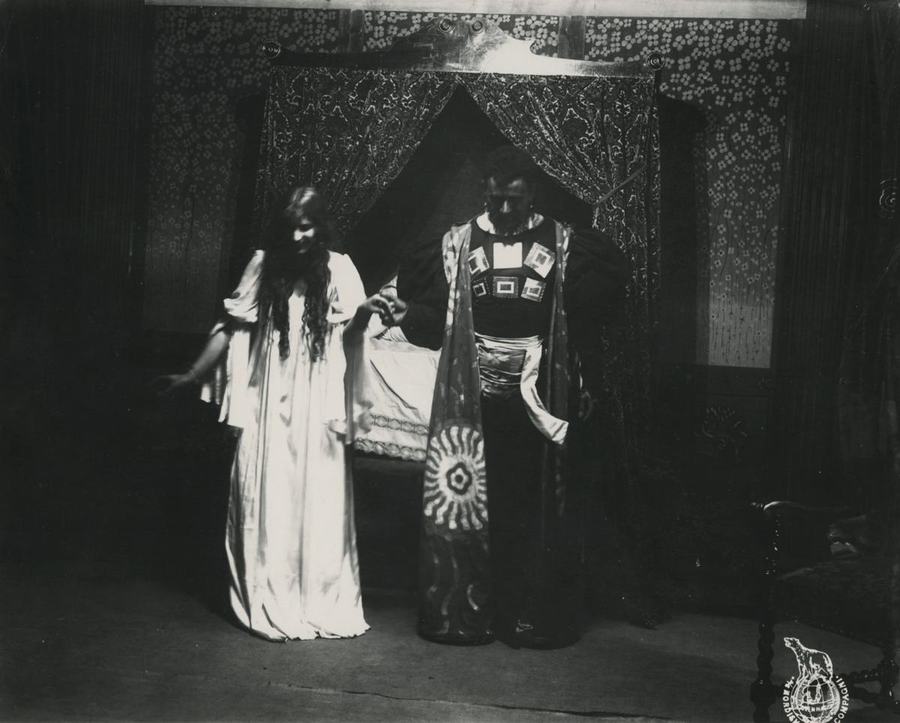
Yet the film also converses with its contemporaries. Where The Spirit of '76 flaunts patriotic bombast and Public Defender polishes courtroom clichés to chrome, Blom’s melodrama opts for claustrophobic intimacy—three lives, a handful of rooms, and the abyss that yawns between curtain calls.
The recent 4K restoration by the Danish Film Institute is a revelation. Scratches that once resembled vertical rain have been excised, revealing details previously legible only to rumor: the tiny beauty mark on Melitta’s shoulder that Romay kisses like a signature; the reflection of cinematographer Fischer himself caught in a dressing-room mirror, ghost-cameo of the author within the text. Grain structure has been preserved, so faces retain the texture of living parchment. Color tinting follows historical precedent—amber for interiors, viridian for exteriors, rose for amorous interludes—yet the grading team introduced a subtle desaturation during the final act, draining warmth as the marriage corrodes. The result is a film that feels neither embalmed nor modernized but re-ignited, like a phoenix that remembers every ash it once shed.
Forget the received wisdom that silent cinema is a primitive warm-up for the talkie "real thing." En Skuespillers Kærlighed demonstrates how silence can articulate lust, envy, and existential dread with a precision words muffled by dialogue. It is a film that anticipates postmodern identity politics, Method acting, even reality-TV’s toxic courtship of fame—yet it never feels academic. On the contrary, it pulses with the carnal urgency of a last-minute backstage tryst.
Yes, the gender politics grate if you insist on 21st-century yardsticks. Yes, the denouement metes out Victorian retribution with a rig that creaks. But great art is not a mirror; it is an X-ray, and this particular exposure reveals the hairline fractures of a society negotiating the perilous shift from agrarian certitude to metropolitan vertigo. To watch it is to eavesdrop on modernity’s birth-groan.
Seek it out on the big screen if you can—35mm prints still tour cinematheques from Tromsø to Taipei. If confined to home viewing, dim the lights, silence your phone, and let the 74-minute runtime remind you that brevity can be a scalpel. Afterwards, go stare at your own reflection until it begins to question you back. That is the film’s final, uncredited performance, and it runs indefinitely.
IMDb —
1920
Community
Log in to comment.