DbcultAccessing Vault...
Cult Review
Senior Film Conservator
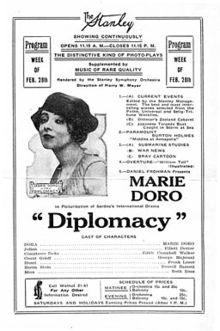
Stepping back into the annals of early cinema, one occasionally unearths a gem that, despite its silent nature and vintage aesthetic, still pulses with a vibrant dramatic heartbeat. Hugh Ford's 1916 adaptation of Victorien Sardou's acclaimed play, Diplomacy, is precisely such a discovery. It’s a film that masterfully weaves together the threads of romance, class ambition, and high-stakes international espionage, delivering a narrative that remains surprisingly taut and emotionally resonant even a century later. For those accustomed to the rapid-fire editing and sophisticated soundscapes of modern thrillers, Diplomacy offers a fascinating glimpse into how tension and character depth were conveyed through visual storytelling alone, relying on the expressive power of its actors and the meticulous staging of its scenes.
The film commences with a premise as old as societal stratification itself: the desperate pursuit of financial security through marriage. We are introduced to Dora and her formidable mother, women whose economic circumstances have taken a precipitous turn for the worse. Their solution? A transatlantic voyage to Europe, a hunting ground for eligible bachelors of means. This societal pressure, a recurring motif in literature and film of the period, immediately sets a tone of both aspiration and vulnerability. Dora's mother, a character imbued with a certain ruthless pragmatism, views matrimony as a strategic alliance, a means to replenish dwindling coffers and secure their place in the upper echelons of society. Her expectations are clear, her demands unwavering, painting a vivid picture of the transactional nature of high-society unions in that era. The social commentary, though subtle in its execution, is potent, reflecting the stark realities faced by women who lacked independent financial standing.
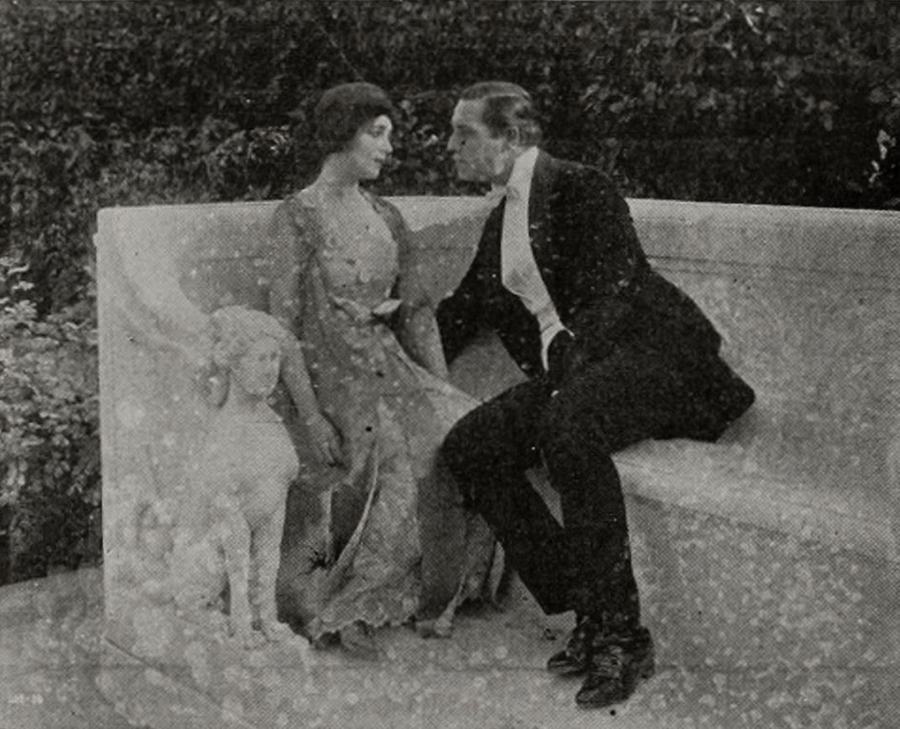
However, the best-laid plans of mothers and social climbers often go awry, particularly when the unpredictable force of genuine affection intervenes. Dora, despite the pressing financial dictates of her family, finds herself drawn to Julian Beauclerc, a nobleman whose charm and character far outweigh his rather threadbare bank account. This initial romantic entanglement presents a fascinating conflict: the heart's true desires pitted against the cold, hard logic of economic necessity. It's a classic setup, but one that gains particular poignancy in the silent era, where the unspoken glances and gestures of Marie Doro as Dora and George Majeroni as Julian had to convey the depth of their burgeoning love amidst the societal constraints. Their forbidden romance feels genuine, a quiet rebellion against the materialistic machinations surrounding them, and sets the stage for the dramatic twists yet to come. This initial phase of the story explores themes reminiscent of other contemporary dramas, like The Ragged Earl, where class differences often dictated the course of romantic destinies.
Just as their love appears destined for the tragic fate of unfulfilled desire, fortune intervenes with a dramatic flourish worthy of any grand melodrama. Julian, the penniless nobleman, unexpectedly inherits a vast fortune, transforming him overnight into a man of considerable wealth and influence. This sudden turn of events not only legitimizes his pursuit of Dora in the eyes of her calculating mother but also elevates his standing in society. Concurrently, he is appointed to a prestigious attaché position within the British embassy, thrusting him into the delicate and often perilous world of international diplomacy. This confluence of personal prosperity and professional prominence seems to promise a future of unbridled happiness for the young couple, a testament to the power of serendipity in changing the course of lives. The rapid ascent of Julian’s fortunes and his entry into the political sphere resonate with the broader socio-political anxieties of the early 20th century, a time rife with international tensions and shifting alliances.
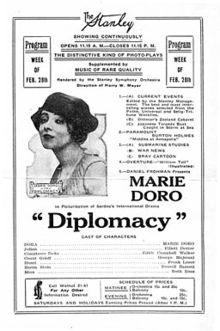
Their marriage, now sanctioned by both love and lucre, appears idyllic. Yet, this newfound bliss is disturbingly short-lived. The narrative takes a sharp, suspenseful turn when highly sensitive defense documents, explicitly entrusted to Julian's care, vanish without a trace. This incident is not merely a bureaucratic mishap; it is an act of espionage with potentially devastating international consequences. The missing papers introduce a palpable sense of danger and urgency, transforming the romantic drama into a gripping thriller. The film expertly uses the visual language of silent cinema—close-ups on anxious faces, furtive glances, and the dramatic revelation of an empty safe—to convey the gravity of the situation. This plot point immediately raises the stakes, moving beyond personal romance into the realm of national security, a theme that would become increasingly prevalent in the cinema of the era, mirroring global anxieties leading up to and during World War I.
The immediate aftermath of the theft plunges Julian into a maelstrom of doubt and suspicion. Tragically, his gaze falls upon the person closest to him: his new wife, Dora. The very woman he loves, the one he fought to marry, becomes the prime suspect in his mind. This devastating breach of trust is the emotional core of the film's middle act. The audience feels the weight of Julian’s internal conflict, the agonizing struggle between his love for Dora and the damning circumstantial evidence that seems to incriminate her. Marie Doro's portrayal of Dora during this period is particularly poignant; her silent anguish and bewildered innocence are conveyed through subtle expressions and body language, drawing the viewer into her unjust predicament. The film smartly leverages the silent medium to amplify these emotional beats, allowing the audience to project their own understanding onto the characters’ unspoken torment. This particular narrative device—the wrongful suspicion of a loved one—is a powerful dramatic engine, seen in countless stories across genres, and here, it is executed with a compelling intensity that transcends the limitations of its time.
As Julian's trust in Dora falters, threatening to unravel their fragile union, a new figure emerges to take center stage: Julian's astute and loyal brother, Henri. It is Henri who, refusing to accept Dora's guilt, takes it upon himself to uncover the truth. Henri embodies the classic detective archetype, a keen observer whose intellect and dedication drive the plot towards its resolution. His entrance injects a fresh surge of momentum into the narrative, shifting the focus from internal emotional turmoil to active investigation. While Julian is consumed by his personal anguish, Henri maintains a detached, logical approach, a stark contrast that highlights the different ways individuals react to crisis. This shift transforms the domestic drama into a full-blown espionage thriller, a genre that was rapidly gaining popularity in the early 20th century, as seen in other films of intrigue like The Criminal Path or The Mystery of St. Martin's Bridge, which similarly explored complex networks of deceit and detection.
Henri’s investigation culminates in a remarkably ingenious plot device: the discovery of the stolen papers, not through conventional means, but through the power of scent. Stumbling upon the pilfered documents, Henri's keen senses detect the unmistakable, lingering fragrance of a particular perfume. This seemingly minor detail becomes the linchpin of the entire mystery. In a brilliant piece of deductive reasoning, Henri unerringly links this specific aroma to the enigmatic Countess Zicka, a character whose presence up to this point may have seemed merely part of the opulent backdrop of European society. The use of an olfactory clue is particularly innovative for silent cinema, requiring careful visual cues and intertitles to convey this subtle yet crucial piece of evidence to the audience. It elevates the detective work beyond mere visual observation, adding a layer of sophisticated sensory perception to the narrative.
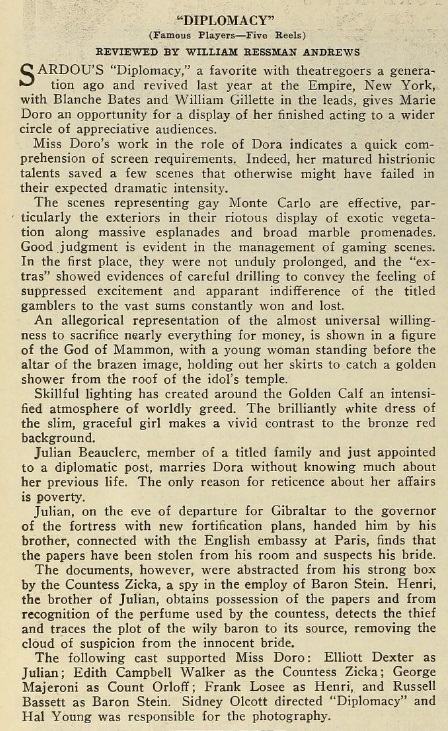
Armed with this irrefutable proof, Henri decisively confronts the Countess Zicka, exposing her clandestine espionage and revealing her as the true culprit. This revelation is not just a triumph of detective work; it is a moment of profound vindication for Dora and a cathartic release for Julian. The Countess’s unmasking not only clarifies the political intrigue but also serves to mend the rapidly disintegrating trust and affection between Julian and Dora. The film’s resolution is deeply satisfying, demonstrating how truth, however obscured, ultimately prevails, and how brotherly devotion can bridge the chasm of suspicion. The final scenes, with the couple reunited and their relationship salvaged, offer a powerful affirmation of love and loyalty against a backdrop of international deceit. The narrative arc, from initial romantic bliss to agonizing suspicion and finally to triumphant vindication, is a testament to the enduring appeal of well-crafted dramatic tension and resolution.
The success of any silent film hinges almost entirely on the expressive capabilities of its cast, and Diplomacy is no exception. Marie Doro, in the pivotal role of Dora, delivers a performance that is both delicate and powerful. Her ability to convey innocence, heartbreak, and resilience through facial expressions and gestures is remarkable. Doro, already a stage star, brought a theatricality to her cinematic roles that translated exceptionally well to the silent screen, capturing the audience's empathy without uttering a single word. Her portrayal of Dora's journey from a hopeful romantic to a woman unjustly accused, and finally to one vindicated, is the emotional anchor of the film. Her nuanced acting ensures that Dora never feels like a mere damsel in distress, but a woman of strength and conviction caught in extraordinary circumstances.
George Majeroni as Julian Beauclerc provides a compelling counterpart to Doro. His portrayal captures the aristocratic bearing of his character, as well as the torment of a man torn between love and duty, suspicion and faith. Majeroni effectively communicates Julian's initial idealism, his later agonizing doubt, and his eventual relief, grounding the character in a believable emotional reality. Elliott Dexter, as the astute brother Henri, is another standout. Dexter brings a calm intelligence and unwavering determination to his role, making Henri’s detective work feel both credible and compelling. His measured performance provides a steadying influence amidst the emotional turbulence of the other characters, embodying the voice of reason and loyalty. The dynamic between the two brothers, one consumed by passion and the other by logic, adds another layer of depth to the narrative.
The supporting cast, including Edith Campbell as Dora's pragmatic mother, Russell Bassett, Ruth Rose, and Frank Losee, all contribute to the film’s rich tapestry. Campbell, in particular, excels in portraying the matriarch whose initial motivations drive much of the plot. Her character, though seemingly cold and calculating, is also a product of her time, navigating a world where women's economic security was often contingent on strategic marital alliances. Each actor, through their command of pantomime and dramatic gesture, brings a distinct flavor to their roles, ensuring that even minor characters leave a lasting impression. The collective strength of these performances is a testament to the sophisticated acting techniques developed during the silent era, techniques that prioritized visual storytelling and emotional clarity over verbal exposition.
Hugh Ford's direction of Diplomacy is a masterclass in adapting a popular stage play for the burgeoning cinematic medium. The original play by Victorien Sardou was a theatrical sensation, known for its intricate plot and dramatic tension. Ford, alongside his writers, faced the challenge of translating dialogue-heavy exposition and nuanced stagecraft into a purely visual narrative. He succeeds admirably, utilizing techniques such as clear intertitles to convey crucial plot points and character thoughts, while relying heavily on the actors' physical expressions to carry the emotional weight. The pacing, while deliberate by modern standards, is effective for its time, allowing the audience to absorb the visual information and emotional beats without feeling rushed. Ford demonstrates a keen understanding of how to build suspense visually, using cross-cutting to show parallel actions and careful framing to highlight key details, such as the missing papers or the moment of suspicion.
The adaptation process itself is fascinating. Transforming a successful play into a successful film often requires more than just filming the stage production. Ford understood the unique grammar of cinema, employing techniques that allowed the story to expand beyond the confines of a proscenium arch. He uses varied camera angles and compositions to create visual interest and emphasize dramatic moments, something that would have been impossible in a fixed theatrical setting. The film’s ability to maintain the play’s intricate plotting and character development without the aid of spoken dialogue is a significant achievement, highlighting the ingenuity of early filmmakers in forging a new artistic language. This skill in adaptation is often overlooked in discussions of silent film, but it was crucial for bringing popular stories to a wider, cinematic audience, much like how other literary works found new life on screen, such as Oliver Twist.
Beyond its engaging plot and strong performances, Diplomacy offers a rich ground for exploring the cinematic language of its era and its thematic depths. The cinematography, though lacking the sophisticated camera movements of later decades, is often quite effective in its use of deep focus and chiaroscuro lighting to create mood and emphasize dramatic moments. The intertitles are not merely functional; they are often crafted with a flair for the dramatic, providing exposition, conveying dialogue, and sometimes even offering philosophical insights that guide the viewer through the narrative. The film's pacing, while slower than contemporary cinema, allows for a more contemplative viewing experience, inviting the audience to immerse themselves fully in the emotional states of the characters and the unfolding mystery. This deliberate pace was a hallmark of early feature films, allowing for a gradual build-up of tension and character development.
Thematically, Diplomacy delves into several enduring human concerns. It examines the corrosive nature of suspicion and the fragility of trust, particularly within intimate relationships. It also scrutinizes the societal pressures of class and wealth, illustrating how these external factors can influence personal choices and destinies. The underlying tension of international intrigue and espionage, set against the backdrop of European high society, reflects the political climate of the early 20th century, a period marked by shifting allegiances and the looming shadow of global conflict. The film subtly explores themes of patriotism versus personal loyalty, and the complex web of duty and desire. The narrative champions the power of truth and the importance of unwavering loyalty, even when faced with seemingly insurmountable evidence to the contrary. These themes make Diplomacy more than just a period piece; they ensure its continued relevance as a study of human nature under duress, much like other dramas of social commentary such as The Little Gray Lady, which similarly dissected societal expectations and moral dilemmas.
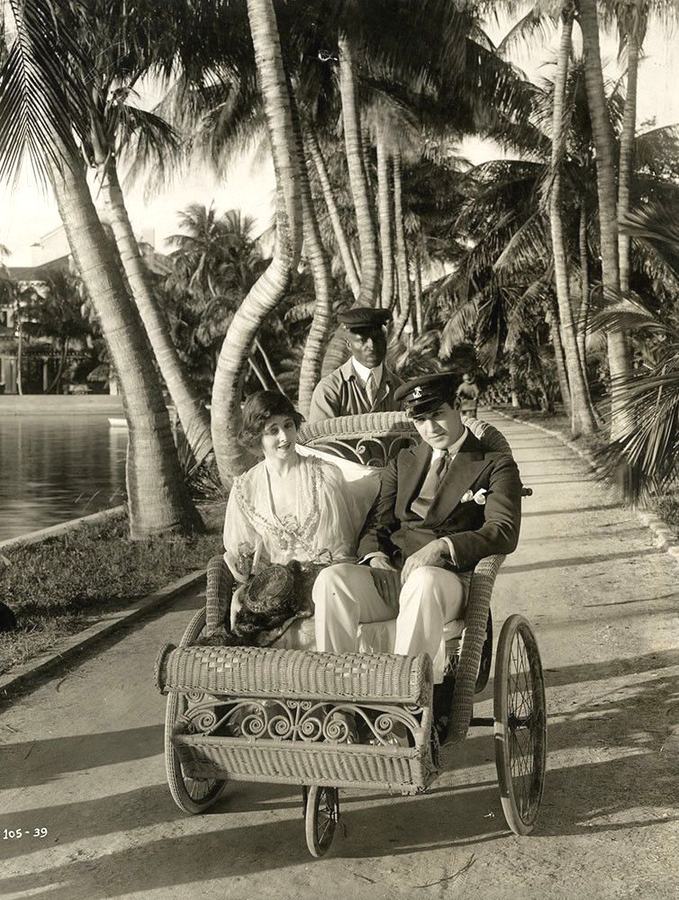
When considering Diplomacy within the broader context of early cinema, its strengths become even more apparent. While it shares the dramatic sensibilities of films like The Fall of a Nation in its portrayal of national stakes and intrigue, Diplomacy grounds its grand narrative in deeply personal stakes, making the espionage feel more intimate and impactful. Unlike the overt propaganda of some contemporary films, Diplomacy uses its political backdrop as a catalyst for personal drama, rather than as its sole focus. The film's emphasis on intricate plotting and character-driven suspense can also be seen in contrast to more straightforward adventure serials of the time. Its ability to maintain a sense of mystery and unravel it logically, rather than relying on spectacle, places it among the more sophisticated narratives of the era.
Furthermore, the romantic conflict in Diplomacy, particularly the initial class disparity between Dora and Julian, echoes themes explored in films such as The Ragged Earl, though Diplomacy adds the layer of international espionage to elevate the stakes beyond mere societal acceptance. The dramatic tension arising from false accusations and the quest for truth finds parallels in other early thrillers like The Criminal Path, where characters navigate treacherous landscapes of deceit to clear their names. The film’s exploration of trust and betrayal within marriage also puts it in conversation with more domestic dramas, even as its scope expands to global politics. It’s a testament to the film's multifaceted approach that it can resonate across various genre comparisons, demonstrating a complexity that was often ahead of its time. The subtle interplay of character motivations and external pressures makes it a compelling watch for anyone interested in the evolution of cinematic storytelling.
Diplomacy stands as a remarkable example of early silent cinema's capacity for sophisticated storytelling and emotional depth. It is a film that rewards patient viewing, drawing the audience into its intricate web of romance, suspicion, and international intrigue. The strong performances, particularly from Marie Doro and Elliott Dexter, ensure that the characters’ struggles and triumphs resonate across the decades. Hugh Ford's adept direction, coupled with Victorien Sardou's compelling source material, crafts a narrative that is both thrilling and profoundly human. For cinephiles and historians alike, it offers a valuable window into the artistic and technical achievements of a bygone era, demonstrating how powerful narratives could be conveyed without a single spoken word.
Ultimately, Diplomacy is more than just a historical curiosity; it is a genuinely engaging piece of cinematic artistry that continues to captivate with its timeless themes and expertly constructed plot. Its exploration of love, loyalty, and the treacherous world of espionage ensures its place as a compelling watch, proving that true drama, when skillfully executed, transcends the limitations of its medium and era. If you appreciate the intricate narratives and expressive power of silent film, this is an essential viewing experience that masterfully combines the thrill of a spy story with the emotional depth of a romantic drama, leaving a lasting impression long after the final intertitle fades.
IMDb 5.8
1932
Community
Log in to comment.