DbcultAccessing Vault...
6.5/10
Senior Film Conservator
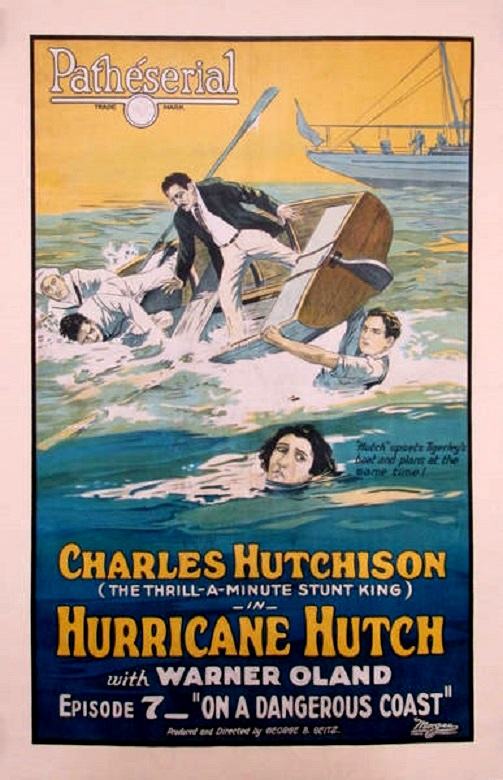
A definitive 6.5/10 rating for a film that redefined the boundaries of cult cinema. Hurricane Hutch remains a cornerstone of transgressive art.
Imagine, if you will, the acrid perfume of sodium sulfide drifting through a clapboard town whose only reason to exist is the ceaseless exhalation of a paper mill. The whistle shrieks at dawn; the river coughs up suds the color of spoiled milk. Into this tableau strides Hutch—half swashbuckler, half debt-clock crusader—tasked with safeguarding a family legacy stitched together by promissory notes and brine-soaked secrets. Hurricane Hutch is less a title than a meteorological condition, a narrative cyclone that sucks every cliffhanger serial trope into its low-pressure core, then spits them out slick with seaweed pulp.
The plot, deceptively simple on ledgers, swirls around a single missing chemotactic equation: how to transmute Atlantic kelp into saleable cellulose. Possession of that grimoire guarantees solvency; its absence ensures the banker’s iron-toothed grin will gnaw through every mortgaged beam in sight. Yet within that skeletal armature, director-writer-star Charles Hutchison grafts a carnival of kinetic invention: wing-walks sans parachute, high-speed handcar hijackings, underwater fisticuffs filmed through wavering glass, and a chase that ricochets from foundry floor to log flume to rooftop weathervane, all stitched together with iris-wipes that feel like eyelids slamming in disbelief.
Where contemporaries such as The Vampires: The Thunder Master rely on montage menace—shadows lengthening, knives glinting—Hurricane Hutch opts for the corporeal lyric. The actor’s own ligaments author each thrill. When Hutch dangles above the boiling vat, the camera refuses rear projection; steam clouds the lens, droplets hiss on the celluloid itself. The resulting texture is closer to newsreel than narrative cinema, a proto-viral stunt vlog avant la lettre.
Take the famed biplane sequence: a de Havilland curves above breakers, Hutch clings to a strut, then transfers mid-air to a descending rope ladder dangling from another aircraft. The cut is invisible, the sky a continuous cobalt sheet, but the risk is legible in the tremor of his biceps. One slip and the Pacific claims another daredevil. That willingness to wager life for mise-en-scène lends the serial a feral authenticity that CGI-laden blockbusters still chase a century later.
Beneath the derring-do lies a brittle economic parable. The mill stands as colossus and crucifix: livelihood, yes, but also ecological scourge. Hutch’s father figure, old man Semels, embodies paternalistic capitalism—benevolent on payday, tyrannical when profits sour. The seaweed formula promises redemption without contrition: keep the jobs, spare the forests, harvest the ocean’s excess. It’s eco-industrial utopia wrapped in a single chemical stanza, and everyone wants authorship.
That thematic ambition distinguishes Hurricane HutchAmbrose and the Bathing Girls, where gags frolic in a consequence-free sandbox. Here, every pratfall reverberates against wage garnishment, eviction, or the mill’s closure. Even the slapstick brawl inside the company store—flour sacks exploding like white grenades—carries the tang of desperation because the ledger’s ink is still wet.
Charles Hutchison’s screen persona splits the difference between Fairbanksque swagger and Keatonesque stoicism. His grin arrives half a second before the rest of his face, a semaphore of confidence that sells the ludicrous as inevitable. Yet watch his eyes during quieter beats—when he studies the seaweed parchment beneath a guttering kerosene lamp—and you’ll spot the tremor of a man who knows one misprint could flatten an entire workforce.
Ann Hastings, saddled with the thankless "girl reporter" archetype, weaponizes micro-gestures: a lifted eyebrow when some mansplainer botches valence terminology, a half-smirk when she pockets evidence. Her chemistry with Hutch crackles not via swooning clinches but through competitive sprinting; each tries to outpace the other toward the next plot clue, boots hammering cobblestones like typewriter keys.
Warner Oland, years before embodying Charlie Chan, perfects the banker-villain as metaphysical constant: silk hat a black hole absorbing light, ledger a reliquary of broken futures. His soft-spoken menace—offering Hutch a cigar while signing foreclosure papers—etches itself into memory precisely because it lacks Snidely Whiplash theatrics.
Cinematographer Frank Redman—pulling double duty as co-star—bathes night exteriors in cyanotype blue, while interiors smolder with umber shadows that seem scraped from the mill’s own soot. Seaweed pulp, once rendered, glows an unearthly chartreuse, a color that shouldn’t exist in 1921 yet arrives via two-tone tinting that anticipates digital color grading. Each reel shift feels like breathing between seasons: bruised maritime winter bleeding into sulphuric industrial spring.
Noteworthy is the underwater sabotage episode. Submerged crates of explosives rest beneath kelp forests that sway like gothic chandeliers. Shot through a flat glass tank at the Balboa studios, the sequence prefigures Severo Torelli’s abyssal tableaux yet maintains documentary verve: bubbles erupt from Hutch’s nostrils in real time, a reminder of lungs clocking mortal seconds.
Across fifteen two-reel chapters, Hurricane Hutch alternates cliff-edge crescendos with expository lulls that flirt with tedium. Chapter seven’s sawmill showdown—Hutch strapped to a conveyor heading toward screaming teeth—ends on a whip-pan to black. Chapter eight opens with a seemingly endless council meeting where chemists debate lignin ratios. That oscillation between vertiginous spectacle and procedural gab foreshadows modern prestige TV pacing, though 1921 audiences reportedly hurled popcorn during the gab.
Still, the structural whiplash serves thematic purpose: every breathless escape reminds you that capital itself is a runaway conveyor. When Hutch finally tames the machinery—jamming a wooden shoe into the cog—he’s not just saving skin but arresting the inexorable grind of debt accumulation. It’s a populist fantasy rendered with gears and sweat.
Stacked against Louis Feuillade’s The Vampires, Hutch’s yarn feels less conspiratorial maze than Olympic obstacle course. Feuillade luxuriates in criminal labyrinths; Hutchison opts for kinetic rectitude—solve formula, defeat banker, restore payroll. Where I’ll Get Him Yet leans into screwball repartee, Hutch communicates via sinew and spectacle, a Buster Keaton thrill ride welded to a labor-union pamphlet.
Curiously, the film’s eco-industrial premise anticipates The Girl from Nowhere’s back-to-the-land romanticism, but without pastoral escapism. Hutch’s utopia is firmly inside the factory gates; salvation means smarter chemistry, not agrarian withdrawal. That technocratic optimism feels startlingly modern, akin to today’s algae-biofuel discourse.
For all its progressivist tinges, the serial can’t escape epochal gender fault lines. Ann Hastings ultimately trades notebook for nursemaid as Hutch’s concussion demands tending. Yet her earlier triumph—decoding the seaweed cipher while locked inside a freight car—carries narrative heft. She doesn’t merely discover the answer; she rewrites the equation, correcting the men’s stoichiometric error. The film half-recognizes, half-buries this intellectual coup, a telltale wrinkle of early-twentieth-century sexual politics.
Diana Deer’s nightclub siren owns her sexuality as commodity, auctioning info to the highest bidder. The camera lingers on her kohl-rimmed eyes, equal parts predator and prey. When she finally double-crosses Oland’s banker, the moment lacks moralistic comeuppance; instead, she exits into fog, pockets heavy, hat brim pulled low—a rare example of a woman keeping profit without narrative punishment.
Most extant prints circulate sans original cue sheets, inviting modern accompanists to improvise. The current Kino restoration overlays a chamber ensemble that plucks pizzicato during rooftop scrambles and unfurls Wagnerian brass inside the mill. The dissonance is instructive: capitalist sublime meets proletarian ballet. When the orchestra drops to a single bass drum during Hutch’s underwater knife fight, you hear oxygen-starved heartbeats, cinema’s primal appeal robed in symphonic guise.
While Trouble Makers and Pardners milked similar stunt veins for pure slapstick, Hutch’s fusion of social critique and physical spectacle remains sui generis. Harold Lloyd would borrow the vertical-climb grammar for Safety Last!; Jackie Chan cites Hutchison’s no-stand-in ethos as gospel. Even the eco-capitalist tension resurfaces in contemporary fare like Dark Waters, though now stripped of pulp-poetic optimism.
Tragically, only nine of the fifteen chapters survive in 4K scans; the rest linger as 16mm condensation prints, vinegar-syndrome ghosts. Each viewing risks further dissolution, a celluloid reminder that even nitrate dreams can’t escape entropy’s mortgage.
Yes, the plotting wobbles, the exposition wheezes, and the racial caricatures in the dockside scenes grate. Yet Hurricane Hutch delivers something franchise cinema often forfeits: the visceral tremor of bodies in harm’s way, tethered to an economic fable that still stings. Watching Hutch surf that slurry of seaweed pulp feels like witnessing the entire silent era dare modern Hollywood to reclaim corporeal truth. Until CGI bleeds actual plasma, this cyclone of brine, bravado, and bankruptcy will howl across the century, demanding we decode our own formulas for survival.
"To pulp is human; to transmute, divine."—scribbled on the back of a surviving lobby card
If you crave a Saturday adrenaline shot that also questions who owns the means of production, hunt down Hurricane Hutch. Bring friends, a live organist, and maybe a respirator—because that sea-salt steam still singes.

IMDb 6.9
1933
Community
Log in to comment.