DbcultAccessing Vault...
6.2/10
Senior Film Conservator
A definitive 6.2/10 rating for a film that redefined the boundaries of cult cinema. Enchantment remains a cornerstone of transgressive art.
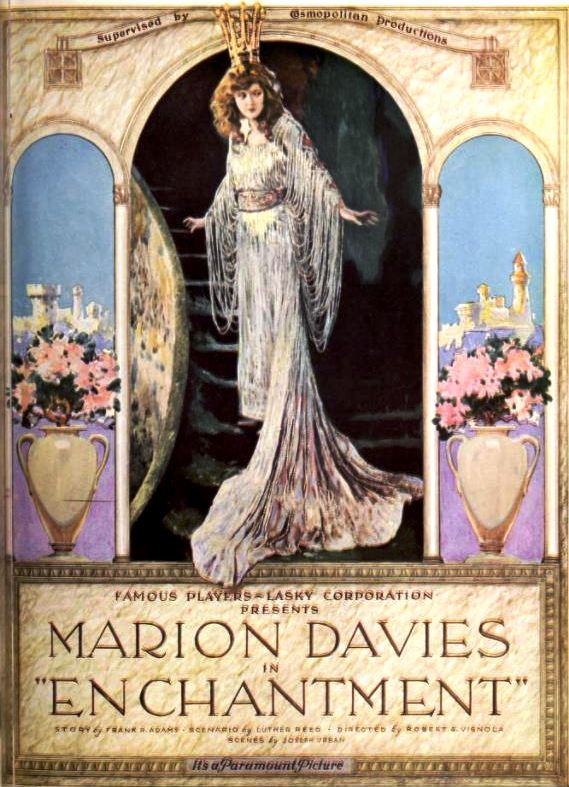
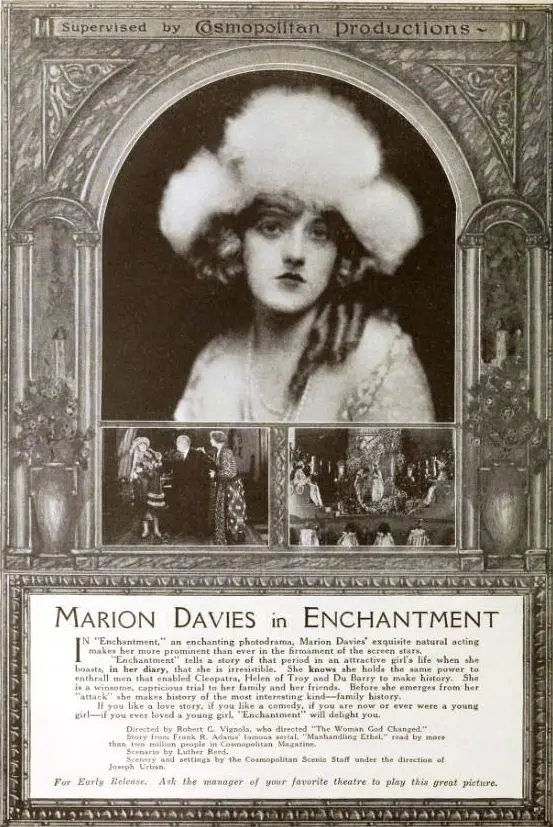
To gaze upon the 1921 production of Enchantment is to witness a pivotal moment in the evolution of the American silent cinema, where the raw energy of the flapper era met the sophisticated architectural sensibilities of the European avant-garde. Directed by Robert G. Vignola and produced under the watchful, lavish eye of William Randolph Hearst, this film is far more than a simple moralizing fable. It is a visual manifesto of the 'New Woman'—even if that woman is eventually funneled back into the patriarchal structures of the time. Marion Davies, an actress whose genuine comedic brilliance was often unfairly eclipsed by the shadow of her benefactor, delivers a performance here that is both light as air and sharp as a stiletto.
One cannot discuss Enchantment without first acknowledging the breathtaking production design of Joseph Urban. Unlike the gritty, naturalistic settings found in contemporaneous dramas like Salvation Nell, Urban transforms the Hoyt household into a surrealist dreamscape. The sets are defined by their geometric precision, towering archways, and a sense of depth that feels almost three-dimensional in a two-dimensional medium. The Art Deco influence is palpable, predating the mainstream adoption of the style by several years. Every frame is composed like a painting, utilizing light and shadow to accentuate the isolation and the eventual 'awakening' of our protagonist, Ethel Hoyt.
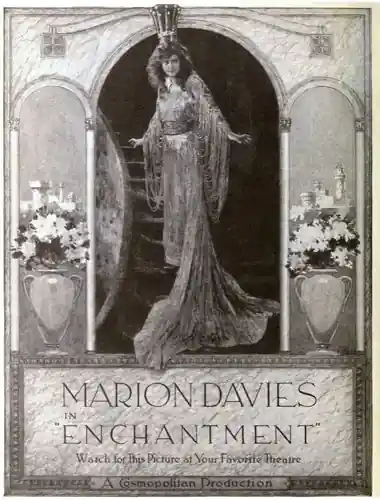
The visual language here contrasts sharply with the more traditional, almost Victorian aesthetics of films like Love, Honor and Obey. While the latter leans into the moral weight of its title, Enchantment uses its environment to reflect the internal chaos of its lead. Ethel is a creature of her surroundings—vain, flighty, and utterly captivated by the shimmer of her own reflection. Urban’s sets act as a gilded cage, beautiful yet restrictive, mirroring the social expectations that Ethel both exploits and suffers under.
The narrative pivot of the film—the introduction of the 'gentlemanly cave man'—is a fascinating relic of early 20th-century gender politics. Tom Lewis, playing the exasperated father, represents the old guard, terrified by the burgeoning independence of the younger generation. His solution, to hire an actor (played with a delightful mix of stoicism and camp by Forrest Stanley) to play the role of a primitive conqueror, is a direct nod to Shakespeare’s Petruchio. However, Vignola’s interpretation adds a layer of meta-theatricality. We are watching an actor play an actor playing a role. This layers the artifice, suggesting that gender roles themselves are merely performances.
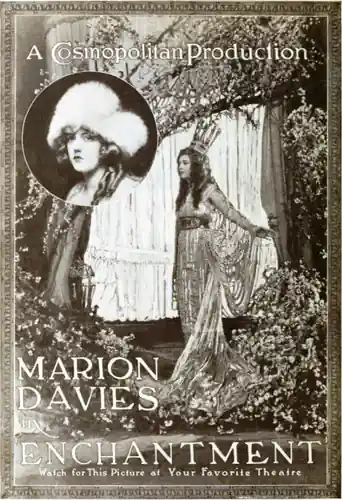
In many ways, the film shares a thematic DNA with The Girl Who Didn't Think, which also explored the perceived intellectual vacuity of the modern socialite. Yet, Davies brings a level of self-awareness to Ethel that elevates the character beyond a mere caricature. When she is confronted by the 'cave man,' her reaction isn't one of simple fear, but of a strange, burgeoning curiosity. It is as if she recognizes a different kind of performance, one that is more compelling than the vapid suitors who usually surround her.
History has often been unkind to Marion Davies, painting her as a talentless ingenue propped up by wealth. Enchantment serves as a definitive rebuttal to that narrative. Her comedic timing is impeccable. She possesses a plastic face capable of transitioning from haughty disdain to wide-eyed wonder in a single beat. In the scenes where she is 'tamed,' Davies manages to maintain a sense of agency; she isn't so much broken as she is intrigued. She plays the flapper not as a villain, but as a bored spirit looking for a stage worthy of her energy.
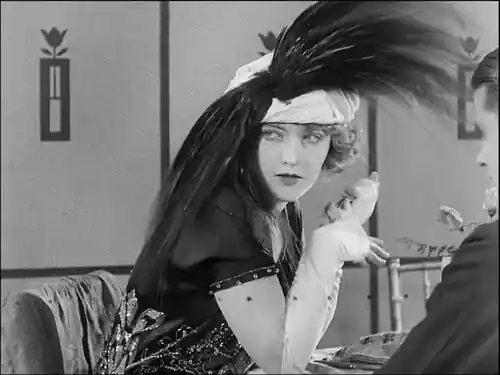
Compare her performance here to the more somber, dramatic turns seen in The Right to Love. While Davies could handle drama, her true element was this kind of light, satirical comedy. She understood the 'flapper' archetype from the inside out, and she wasn't afraid to poke fun at the very culture that celebrated her beauty. The supporting cast, including the formidable Maude Turner Gordon and the charismatic Huntley Gordon, provide a solid foundation, but the film undeniably belongs to Davies and the lens that adores her.
Technically, Enchantment is a marvel of its era. The cinematography by Ira H. Morgan utilizes soft focus and intricate lighting setups that create a shimmering, ethereal quality—true to its title. This isn't the gritty, high-contrast world of The Spiders - Episode 1: The Golden Sea, where shadows portend danger. Here, light is a tool of enchantment, used to soften the edges of the Hoyt’s high-society world and make the 'cave man’s' rustic intrusion seem all the more jarring.
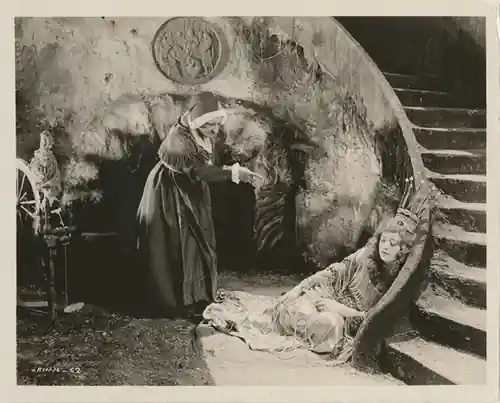
The pacing of the film is surprisingly modern. Vignola avoids the sluggishness that plagues many early features, opting instead for a rhythmic editing style that keeps the 'Taming of the Shrew' beats moving briskly. The use of intertitles is sparse but effective, allowing the visual storytelling and the actors' expressions to carry the narrative weight. This is cinema as a visual symphony, where the sets, costumes, and faces are the instruments.
The film also serves as a fascinating sociological document. It captures the tension between the post-Victorian morality and the hedonism of the 1920s. We see echoes of this struggle in other films of the period, such as Sex (1920), which took a much more scandalous approach to the shifting social mores. Enchantment, by contrast, wraps its critique in a bow of whimsy and high-end production. It suggests that the 'shrewishness' of the flapper is merely a symptom of a world that offers her plenty of toys but no real purpose.
The resolution, where Ethel is 'tamed,' might ring hollow to modern audiences, but within the context of 1921, it was seen as a romantic triumph. The 'cave man' isn't actually a brute; he is a gentleman playing a role to save a woman from her own superficiality. This subversion allows the film to have its cake and eat it too—offering the thrill of rebellion followed by the comfort of traditional restoration. It lacks the stark social realism of And the Children Pay or the raw survivalism of Rough and Ready, but it possesses a polished charm that those films lack.
The ensemble cast adds layers of texture to the Hoyt household. Tom Lewis as the father provides a grounded, if somewhat blustering, counterpoint to Ethel’s flightiness. Edith Shayne and Huntley Gordon round out the social circle, embodying the various archetypes of the era—the concerned mother and the dashing but ultimately hollow suitor. Even the bit parts, like those played by Arthur Rankin and Julia Hurley, are handled with a level of detail that suggests a fully realized world beyond the central conflict.
The script by Frank R. Adams and Luther Reed is witty, leaning into the absurdity of the premise. They understand that for the 'taming' to work, the audience must first fall in love with the 'shrew.' They achieve this by making Ethel’s vanity seem like a form of creative expression. She isn't just selfish; she is an artist whose only medium is herself. This makes her transformation more of a redirection of energy than a destruction of personality.
In the grand tapestry of silent film, Enchantment remains a vibrant, shimmering thread. It is a testament to what could be achieved when unlimited resources were placed in the hands of genuine artists. While it may not possess the philosophical depth of the era's great tragedies, it excels as a piece of high-style entertainment. It is a film that demands to be seen on the largest screen possible, if only to soak in the architectural majesty of Joseph Urban’s vision and the luminous presence of Marion Davies.
For those exploring the history of the flapper on film, this is an essential text. It sits alongside The Empty Cab or even the satirical The Kaiser's New Dentist as a reflection of a world in transition—a world that was desperately trying to reconcile its past with a loud, vibrant, and 'enchanting' future. Ultimately, the film reminds us that while styles change and sets are struck, the human desire for a grand performance—and a grander love—remains eternally unchanged.
Reviewed by the Editorial Staff at Silent Frame Archives.
IMDb 4.8
1935
Community
Log in to comment.