DbcultAccessing Vault...
Cult Review
Senior Film Conservator
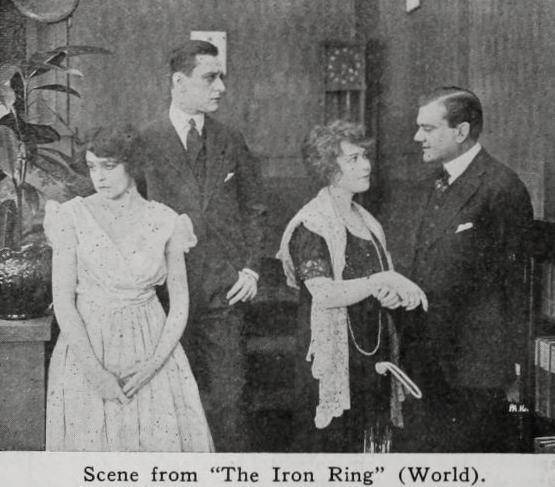
From the very first frames, The Iron Ring plunges its audience into the disquieting waters of domestic dissatisfaction, a narrative current that, even a century later, retains its potent, unsettling relevance. Horace Hazeltine, the film's writer, constructs a remarkably intricate psychological drama, eschewing simplistic hero-villain dynamics for a more nuanced exploration of human vulnerability and the insidious creep of emotional neglect. At its core lies Bess Hulette, portrayed with a compelling fragility by Alexandria Carewe, a woman whose inner world is slowly crumbling under the weight of her husband Aleck's (Edward Langford) burgeoning career.
Aleck’s new partnership in Stephen Graves’ advertising agency, while a professional triumph, inadvertently casts a long shadow over his marriage. Bess perceives this ascent not as shared success, but as a symbolic withdrawal, a silent declaration that her emotional needs are secondary to the demands of ambition. This isn't merely a tale of a wife feeling ignored; it's a poignant depiction of a spirit slowly suffocating in the absence of affirmation and connection. Carewe’s performance, even through the lens of silent cinema, must have conveyed the subtle shifts from quiet disappointment to profound despair, her eyes, perhaps, reflecting the growing chasm between her and Aleck.
The narrative then introduces a character whose moral compass is conspicuously askew: Mrs. Leonard, Bess's neighbor, brought to life by Gerda Holmes. Mrs. Leonard isn't merely a confidante; she's an agent of temptation, a cynical reflection of societal ennui. Her own marital infidelity renders her advice not as empathetic guidance, but as a subtle poison, encouraging Bess to seek solace outside her vows. This dynamic is crucial, for it highlights the pervasive influence of social circles and the insidious ease with which disaffection can be normalized, even encouraged. Holmes, in this role, would have needed to project a worldly weariness, a seductive pragmatism that makes her counsel seem appealingly liberating to a woman starved for attention. It's a stark contrast to the more overt moralizing found in films like Thou Shalt Not Steal, where the lines of right and wrong are drawn with far greater clarity. Here, the transgression is whispered, not shouted, making it all the more dangerous.
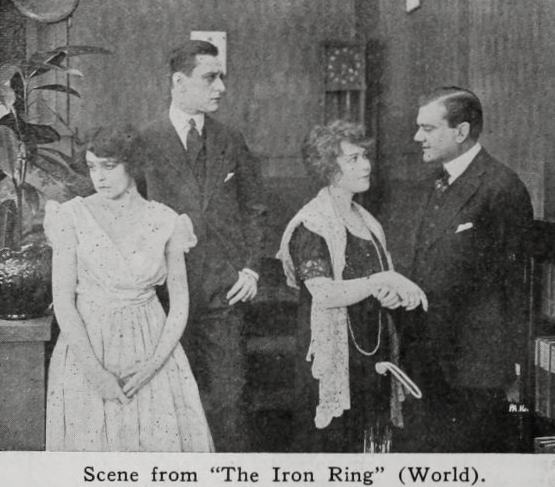
The arrival of Jack Delamore (George MacQuarrie) is orchestrated with a stroke of dramatic convenience: a car accident outside the Hulettes' residence. This seemingly random event serves as a classic narrative device, propelling Bess into a new, potentially perilous orbit. Jack, the brother of the injured Dorothy, embodies everything Aleck, in Bess's eyes, is not: attentive, charismatic, and overtly drawn to her. MacQuarrie's portrayal would have been pivotal here, needing to exude an almost magnetic charm, a seductive presence that offers Bess a tantalizing glimpse of the affection she craves. His attraction to her is immediate and undeniable, acting as a powerful counterpoint to Aleck's distant demeanor. The film cleverly sets up this romantic triangle, not as a simple choice between two men, but as a complex interplay of emotional needs, societal pressures, and personal ethics.
Bess's decision to accept Jack's invitation to a party is not merely an act of defiance; it's a desperate reach for validation, a tentative step into a world that promises to acknowledge her. The film's brilliance lies in its refusal to condemn Bess outright for this initial foray. Instead, it invites the audience to empathize with her predicament, to understand the human impulse to seek warmth when one feels perpetually cold. This nuanced approach to marital strain and the temptations of infidelity is what elevates The Iron Ring beyond a simple morality play, placing it closer to the psychological depths explored in films like The Strength of the Weak, which often grappled with the internal conflicts arising from societal expectations and personal desires.
However, the narrative takes a sharp, unexpected turn at Jack's party. The initial allure of a clandestine romance gives way to a chilling revelation: "things aren't exactly what they seem." This twist, masterfully withheld in the plot synopsis, is where Hazeltine's writing truly shines. It suggests a deeper layer of deception, a meticulously crafted illusion designed to ensnare Bess, or perhaps to expose a truth far more unsettling than simple infidelity. Is Jack merely a philanderer, or is he part of a more elaborate scheme? Is Mrs. Leonard an unwitting pawn, or a more malicious orchestrator? The film transforms from a domestic drama into something akin to a psychological thriller, where trust is a fragile commodity and appearances are dangerously misleading. This narrative pivot prevents the film from becoming predictable, instead imbuing it with a sense of genuine suspense and moral complexity.
The title itself, The Iron Ring, is a potent symbol. It evokes the binding nature of marriage, a covenant that can feel like both a protective embrace and an inescapable manacle. For Bess, it represents the perceived entrapment within a loveless or attention-starved union. The "iron" suggests rigidity, strength, and perhaps a cold, unyielding quality to the societal expectations placed upon women in her position. It speaks to the societal structures that dictated women's roles and often left them emotionally vulnerable when their husbands' attentions wandered or became solely focused on external pursuits. This metaphorical weight elevates the film beyond a mere story of infidelity; it becomes a commentary on the inherent pressures and often unspoken resentments within the institution of marriage itself. One might draw parallels to the societal critiques embedded in films like The Absentee, which often explored the ramifications of neglect within the domestic sphere, albeit through different narrative lenses.
The ensemble cast, including Katherine Johnston, J. Herbert Frank, and Victor Kennard in supporting roles, would have contributed to the rich tapestry of this domestic drama. In silent cinema, every gesture, every facial expression, and every intertitle carries immense weight. The subtle interplay between the characters, particularly in scenes of social gathering or private confession, would have been paramount to conveying the film's intricate emotional landscape. Edward Langford, as Aleck, would have faced the challenge of portraying a man whose actions, though not overtly malicious, inflict significant emotional damage. His character's journey, from oblivious ambition to perhaps a dawning realization of his wife's suffering, is as crucial as Bess's own.
While the director's name isn't provided, the narrative structure crafted by Horace Hazeltine suggests a thoughtful and deliberate approach to storytelling. The pacing, presumably building from the slow burn of Bess’s discontent to the sudden jolt of Jack’s introduction, and culminating in the dramatic reveal at the party, indicates a sophisticated understanding of tension and release. Silent films of this era often relied on dramatic staging and expressive performances to convey complex emotions, and The Iron Ring appears to be a prime example of such craftsmanship. The use of close-ups to capture Bess’s internal turmoil, or wider shots to emphasize her isolation within her own home, would have been essential tools in the director’s arsenal.
Ultimately, The Iron Ring stands as a compelling artifact of early 20th-century cinema, offering a profound glimpse into the moral complexities and psychological struggles that transcend time. It's a film that asks uncomfortable questions about the nature of commitment, the deceptive allure of external validation, and the often-unseen consequences of neglect. It doesn't offer easy answers, but rather invites contemplation on the delicate balance required to sustain a relationship, and the treacherous paths that open up when that balance is lost. The film's enduring power lies in its ability to tap into universal human experiences: the yearning for connection, the pain of feeling unseen, and the perilous journey of self-discovery, even if that journey leads through a labyrinth of deceit. Its legacy is not just in its dramatic twists, but in its empathetic portrayal of a woman caught between societal expectations and her own yearning heart.
The film’s exploration of underlying societal pressures and the precarious position of women within marriage resonates with the themes of empowerment and disillusionment that were increasingly appearing in the cinema of the time. While not a direct comparison in plot, the film's nuanced look at domestic strife and hidden motives could be seen as a precursor to more overt social commentaries, much like how The Reclamation or The Child of Destiny might have explored the individual's struggle against larger forces. The Iron Ring, with its subtle yet impactful narrative, ensures its place as a significant contribution to the evolving landscape of cinematic storytelling, a reminder that even in silence, the human heart speaks volumes.
IMDb 5.7
1933
Community
Log in to comment.