DbcultAccessing Vault...
4.6/10
Senior Film Conservator
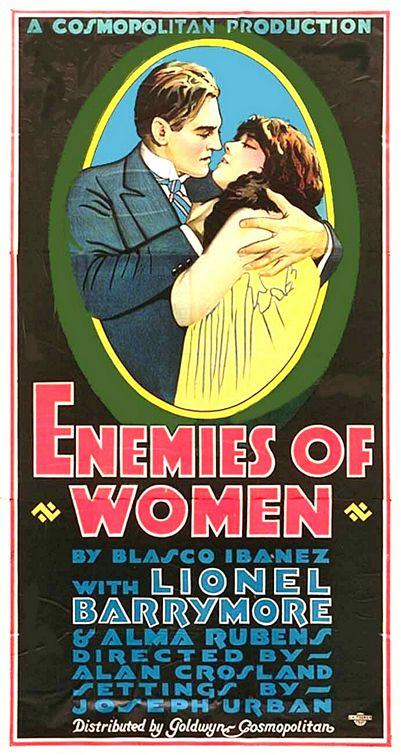
A definitive 4.6/10 rating for a film that redefined the boundaries of cult cinema. Enemies of Women remains a cornerstone of transgressive art.
Stepping back into the cinematic annals of 1923, one encounters Enemies of Women, a film that, even in its silent grandeur, speaks volumes about the tumultuous human heart. Directed with a certain theatrical flourish and adapted from Vicente Blasco Ibáñez's novel by John Lynch, this motion picture plunges viewers into a world of aristocratic melodrama, where honor, passion, and exile intertwine with devastating consequences. It's a testament to the era's storytelling prowess, relying heavily on the expressive power of its cast and the evocative sweep of its visual narrative to convey a tale of profound emotional upheaval.
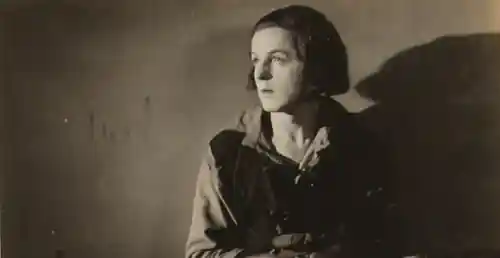
The narrative unfurls against the backdrop of a post-revolutionary Europe, a continent still reeling from the echoes of war and the seismic shifts in its social order. Our protagonist, Prince Michael, portrayed with a brooding intensity by Mario Majeroni, is a man whose very existence is defined by the rigid codes of his former life. Forced to flee his native Russia after a duel – a poignant symbol of a bygone era's adherence to honor – he finds himself a refugee, albeit a privileged one, in the sun-drenched, yet emotionally volatile, landscapes of Monte Carlo. This initial premise immediately sets a tone of displacement and longing, a theme that resonates deeply throughout the film. Majeroni, while perhaps not as widely remembered as some of his contemporaries, delivers a performance that hints at the internal torment of a man stripped of his homeland and grappling with a new, less predictable reality.
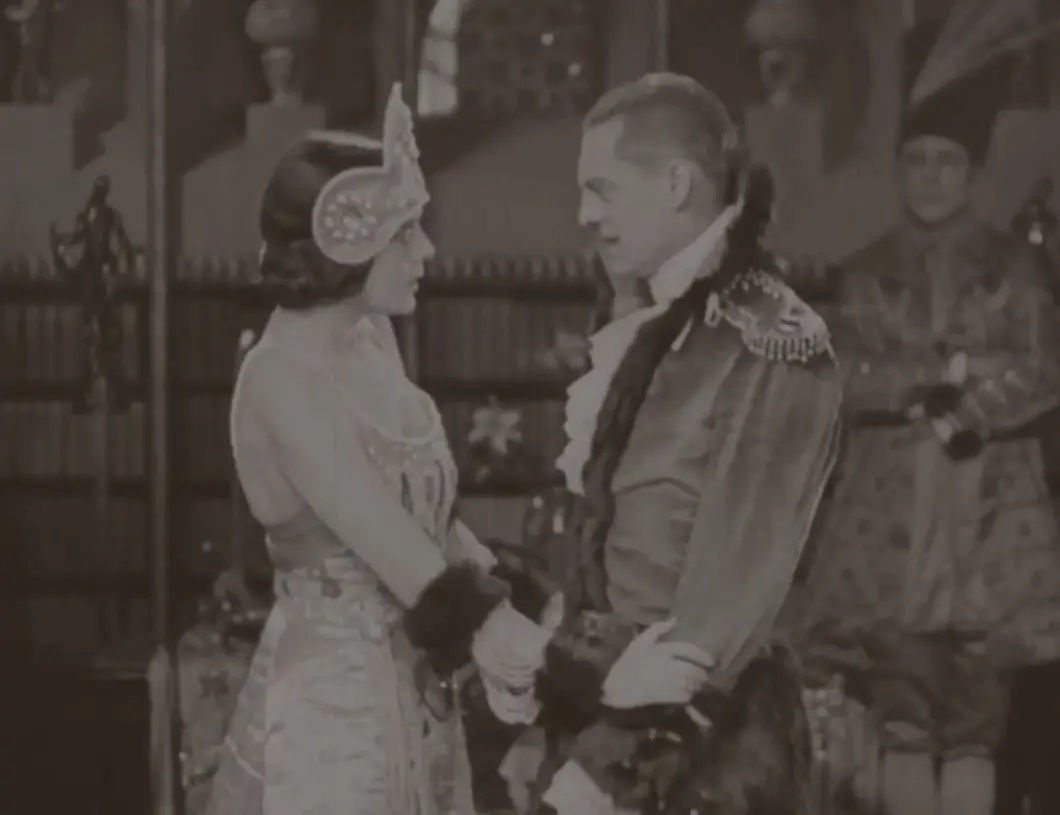
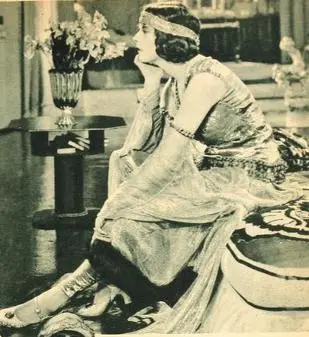
It is in this new milieu that he encounters the alluring Duchess Marie, brought to life with captivating elegance and a hint of tragic vulnerability by Alma Rubens. Rubens, a star of the silent screen, imbues Marie with a complexity that transcends the typical damsel-in-distress trope. She is a woman of agency, albeit one constrained by societal expectations, whose past is as intriguing as her present. The chemistry between Majeroni and Rubens, though wordless, is palpable, building a foundation for the inevitable dramatic crescendo. Their initial attraction blossoms into a passionate affair, a fleeting solace for two souls adrift. However, this nascent love story is not destined for simple serenity. Prince Michael, still haunted by his past and prone to a possessiveness born of his aristocratic upbringing, discovers that Marie harbors a secret lover. This revelation, delivered with a gut-wrenching force, shatters his fragile peace and ignites a furious jealousy that threatens to consume him entirely. It's a classic cinematic trope, certainly, but one executed with a raw emotionality that distinguishes it from lesser melodramas like, say, the more straightforward romantic entanglements seen in Easy Money or even the lighter fare of Beaches and Peaches.
The true standout performance, however, comes from Lionel Barrymore as the volatile and enigmatic Fédor. Barrymore, a titan of early Hollywood, commands the screen with a magnetic intensity that is both terrifying and compelling. His portrayal of Fédor, the duchess's secret lover, is a masterclass in silent film acting. He conveys a dangerous charm, a brooding menace, and an underlying sense of desperation that makes him a formidable antagonist and a fascinating counterpoint to Prince Michael's more conventional anguish. Barrymore's Fédor is not merely a plot device; he is a force of nature, a living embodiment of the 'enemies' the title alludes to – perhaps the internal demons of jealousy and possessiveness, or the external forces of societal judgment. His scenes crackle with an unspoken tension, often overshadowing the central romance and elevating the film from a mere love triangle to a psychological drama of considerable depth. It's a performance that rivals his more celebrated roles and showcases his incredible range, reminiscent of the complex villainy he brought to later sound pictures.
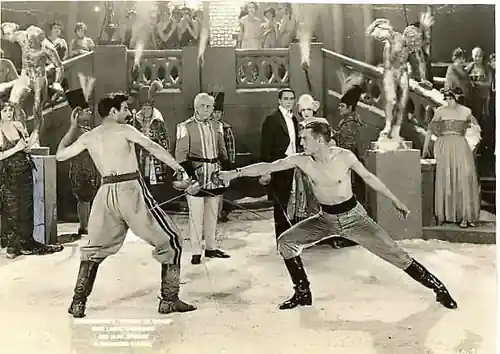
The supporting cast, a veritable who's who of the era, adds considerable texture to the film's rich tapestry. Louis Wolheim, known for his rugged portrayals, brings a certain gravitas to his role, while Gladys Hulette adds a touch of youthful innocence. Even Clara Bow, in an early, uncredited appearance, hints at the vivacious star she would soon become. Margaret Dumont, surprisingly, appears in a non-comedic role, showcasing a versatility that would later be overshadowed by her iconic straight-woman performances opposite the Marx Brothers. The sheer breadth of talent, including names like William Collier Jr., Paul Panzer, and Alma Rubens's sister, Evelyn Arnold, speaks to the film's ambition and the collaborative spirit of the silent era. The Salzedo Harpists, a unique inclusion, contribute to the film's artistic aspirations, even if their presence is more of a curiosity from a modern perspective.
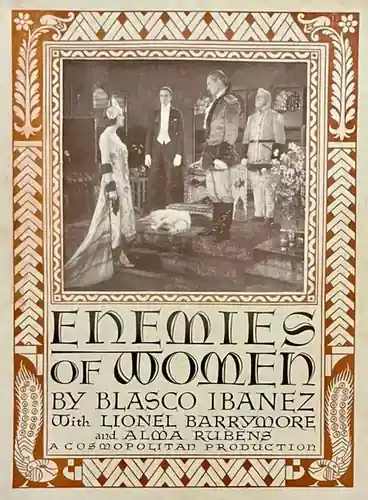
Visually, Enemies of Women is a feast for the eyes, typical of the grand productions of its time. The sets are opulent, reflecting the lavish lifestyles of the aristocracy, while the cinematography captures the sun-drenched landscapes of Monte Carlo with a romanticism that belies the darkness simmering beneath the surface. The use of light and shadow is particularly effective in enhancing the emotional states of the characters, a hallmark of silent film artistry. Close-ups are employed judiciously to emphasize facial expressions, allowing the actors' nuanced performances to truly shine. One can almost feel the weight of Prince Michael's despair or the flicker of defiance in Duchess Marie's eyes, conveyed entirely through their silent gazes and gestures. The film's aesthetic grandeur positions it alongside other epic productions of the period, though perhaps without the same sweeping scope as something like Vera, the Medium, it certainly holds its own in terms of visual storytelling.
Thematically, Enemies of Women delves into the destructive power of jealousy and the inherent vulnerability of love in a world dictated by social conventions. Prince Michael's jealousy is not merely a personal failing; it is amplified by his aristocratic pride and his inability to reconcile the duchess's past with his idealized vision of her. The title itself, 'Enemies of Women,' is provocative and open to interpretation. Is it referring to the societal constraints placed upon women, forcing them into difficult choices? Or is it a more cynical commentary on the destructive potential of female agency from a patriarchal viewpoint? The film doesn't offer easy answers, instead inviting the audience to ponder the complexities of human relationships and the often-unseen battles waged within the heart. This exploration of complex emotional landscapes distinguishes it from simpler adventure narratives like God's Country and the Law or the more straightforward morality plays of the era.
The adaptation by John Lynch from Vicente Blasco Ibáñez's novel is noteworthy. Ibáñez, a Spanish realist writer, was known for his vivid characterizations and social commentary, and Lynch manages to translate much of this depth to the screen, even within the limitations of silent cinema. The plot, while adhering to melodramatic conventions, possesses a certain psychological realism that prevents it from descending into mere histrionics. The motivations of the characters, particularly Prince Michael's descent into obsessive jealousy, feel earned, if exaggerated for dramatic effect. The film skillfully navigates the intricacies of the novel's plot, distilling its essence into a visual narrative that is both engaging and emotionally resonant. One could argue that the film captures a similar spirit of intense human drama found in works like El zarco, another adaptation of a literary work that grapples with passion and societal conflict.
However, like many films of its era, Enemies of Women is not without its anachronisms or moments that might feel dated to a modern viewer. The pacing, while deliberate and effective for its time, might seem slow to contemporary audiences accustomed to faster cuts and more frenetic narratives. Some of the dramatic gestures, while powerful in the silent era, could be perceived as overly theatrical today. Yet, these are minor quibbles in the grand scheme of its artistic achievement. The film's enduring power lies in its ability to evoke universal emotions – love, betrayal, jealousy, and redemption – through the sheer artistry of its visual storytelling and the compelling performances of its cast.
In conclusion, Enemies of Women stands as a fascinating artifact of early 20th-century cinema, a lavish production that offers a window into the social mores and dramatic sensibilities of its time. It is a film that demands patience and an appreciation for the unique language of silent movies, but one that richly rewards those who invest in its world. Lionel Barrymore's performance alone is worth the price of admission, showcasing his formidable talent and reminding us why he remained a screen legend for decades. Beyond the stellar acting, it's a profound exploration of human frailty and the destructive forces that can lurk beneath the surface of even the most glittering lives. While it might not possess the universal recognition of some other classics, its thematic depth and artistic execution firmly cement its place as a significant, if somewhat overlooked, contribution to the silent film canon. It's a reminder that the 'enemies' of women, or indeed of any individual, often reside not in external forces, but in the tempestuous landscape of the human heart itself. And for a film from nearly a century ago to still provoke such introspection is, in itself, a remarkable achievement. One could draw parallels to the psychological intensity of Nemesis, or the weighty emotional burden found in Das ganze Sein ist flammend Leid, proving that the silent era was anything but silent in its exploration of profound human experience.

IMDb —
1926
Community
Log in to comment.