DbcultAccessing Vault...
Cult Review
Senior Film Conservator
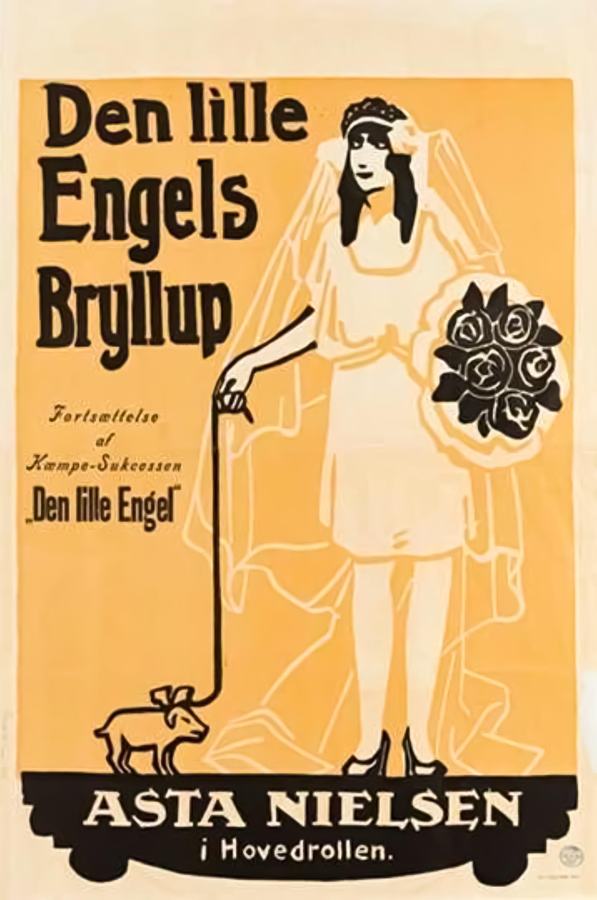
There are films that whisper, and then there are those that resonate with the profound, unsettling silence of a forgotten era, echoing sentiments that remain disturbingly relevant today. Urban Gad's 'Engeleins Hochzeit' (Angel's Wedding), a cinematic artifact featuring the incomparable Asta Nielsen, belongs firmly to the latter category. It's not merely a historical curiosity but a stark, often uncomfortable, mirror reflecting societal anxieties about female agency, patriarchal control, and the perilous fragility of innocence. To approach this film is to step into a meticulously crafted world where the unspoken carries more weight than any dialogue ever could, a testament to the power of early silent cinema.
The narrative itself, deceptively simple in its premise, spirals into layers of psychological complexity. We are introduced to Jesta, portrayed with an exquisite blend of vulnerability and nascent strength by Asta Nielsen, on the precipice of a marriage not of her choosing. Her intended, Uncle Peter, played by Max Landa, embodies a suffocating possessiveness that feels both archaic and chillingly familiar. This isn't a love story; it's a transaction, a transfer of ownership, an assertion of patriarchal right. Nielsen, a titan of the silent screen, communicates Jesta's internal turmoil with a subtlety that transcends the lack of spoken word, her expressive eyes and body language conveying a lifetime of resigned acceptance, punctuated by fleeting moments of youthful longing. Her performance here is a masterclass in cinematic emoting, much like her nuanced work in Die blaue Laterne, where she similarly navigated complex emotional landscapes.
The true pivot of the story, however, arrives with the sudden appearance of a squadron of hussars, seeking overnight shelter at the isolated farm. This external intrusion acts as a catalyst, igniting Peter's latent insecurities and revealing the depths of his controlling nature. His subsequent demand—that Jesta disguise herself as a twelve-year-old—is nothing short of a psychological violation. It's a perverse attempt to infantilize her, to strip away her burgeoning womanhood and render her invisible to the male gaze, thus preserving his 'property' before their impending union. This act speaks volumes about the societal anxieties surrounding female sexuality and ownership during the period, where a woman's value was often tied to her perceived purity and the control exerted over her by male relatives.
Gad's direction in these scenes is particularly effective. He doesn't shy away from the inherent discomfort, allowing the audience to feel the weight of Peter's demand and Jesta's forced compliance. The visual contrast between Nielsen's adult frame attempting to emulate childishness is stark and poignant, highlighting the tragic irony of the situation. It's a moment that could easily veer into caricature, but under Gad's precise guidance and Nielsen's profound understanding of her character, it becomes a heartbreaking depiction of coerced innocence. One might draw parallels to the constrained roles of women depicted in films like A napraforgós hölgy, where societal expectations similarly dictate female behavior, albeit through different means.
The arrival of the hussars, initially seen as a threat by Peter, inadvertently becomes a moment of potential liberation, or at least a temporary reprieve, for Jesta. Despite Peter's elaborate charade, four of the hussars—played by actors including Hanns Kräly and Bruno Kastner—are not so easily fooled. Their discerning eyes pierce through the superficial disguise, recognizing the vibrant young woman beneath the childish clothes. This act of 'seeing' Jesta for who she truly is, despite the efforts to conceal her, is a powerful moment. It's a recognition of her intrinsic worth and attractiveness, independent of Peter's possessive narrative. This subtle defiance of Peter's control, manifested in the hussars' admiration, introduces a flicker of hope, a momentary acknowledgment of Jesta's true identity. The film masterfully uses the male gaze, typically a tool of objectification, to instead highlight Jesta's undeniable presence and appeal, subverting expectations.
Gad expertly builds the tension, allowing these unspoken glances and shared moments to unfold with a delicate precision. There's no overt flirtation, no grand gestures, but rather a series of subtle interactions that convey mutual recognition and a burgeoning, albeit fleeting, connection. The performances of the hussars are crucial here; they must convey admiration without predatory intent, a delicate balance that is largely achieved. This is where the film's silent artistry truly shines, relying on facial expressions, body language, and carefully orchestrated mise-en-scène to communicate complex emotional states. The silent era was a crucible for such nuanced storytelling, forcing filmmakers to be incredibly inventive with visual language, much like the intricate narratives woven in films such as 20,000 Leagues Under the Sea, which relied heavily on visual spectacle and character reactions to convey its epic scope.
It is impossible to discuss 'Engeleins Hochzeit' without dedicating significant attention to Asta Nielsen. She was, quite simply, a phenomenon. Her ability to convey profound psychological states through minimal gestures and intensely expressive eyes cemented her status as one of the silent era's most compelling actors. In Jesta, Nielsen crafts a character who is outwardly submissive yet internally seething with a quiet rebellion. Her performance elevates the film from a simple melodrama to a powerful psychological drama. The scene where she dons the childish attire is particularly impactful, her movements hesitant, her gaze filled with a mixture of shame and defiance. She doesn't just play the part; she embodies the emotional weight of a young woman caught between societal expectation and personal yearning.
Nielsen's Jesta is a testament to the enduring power of the female gaze, even when constrained. She is an object of desire, yes, but her internal world is rich and complex, a silent testament to a spirit that refuses to be entirely extinguished. Her portrayal stands in stark contrast to the more overtly rebellious or independent female characters sometimes seen in other films of the period, such as those in The Adventures of Peg o' the Ring. Instead, Nielsen's strength lies in her quiet resilience, her ability to communicate depths of emotion without needing to break free of her circumstances. This nuanced approach makes Jesta a deeply empathetic figure, her plight resonating long after the credits roll.
Urban Gad, Nielsen's husband and frequent collaborator, demonstrates a keen understanding of visual storytelling. His direction is precise, economical, and deeply atmospheric. The setting of the isolated farm, often dimly lit and rustic, contributes significantly to the film's mood of confinement and impending doom. Gad uses close-ups sparingly but effectively, drawing the audience into the characters' inner worlds, particularly Jesta's. He understands the power of staging and composition to convey power dynamics and emotional states. The way Peter looms over Jesta, or the subtle framing that isolates her, speaks volumes about her predicament. This careful attention to visual detail is a hallmark of early cinematic artistry, a skill shared by directors who understood the nascent language of film, much like those behind the visually inventive Pidgin Island.
The pacing of 'Engeleins Hochzeit' is deliberate, allowing the psychological tension to build organically. Gad doesn't rush the narrative; instead, he lets the moments breathe, allowing the audience to absorb the implications of each gesture and glance. This measured approach heightens the dramatic impact, making the eventual confrontations and revelations all the more potent. The film's aesthetic is typical of early European cinema, characterized by a certain naturalism blended with dramatic theatricality, a style that prioritized character over spectacle, a trend also evident in contemporary works like The Clock which, despite its title, focuses on human interaction.
At its core, 'Engeleins Hochzeit' is a profound exploration of control. Peter's control over Jesta is absolute, a suffocating blanket woven from societal norms and personal insecurity. His attempt to infantilize her is a desperate measure to maintain that control in the face of perceived threats. The film deftly explores the psychological toll of such subjugation, highlighting Jesta's struggle to retain a semblance of selfhood amidst the crushing weight of expectation. It's a poignant commentary on the limitations placed upon women in that era, often viewed as property rather than autonomous individuals.
The theme of deception is also central. Peter's deception is overt and manipulative, designed to mislead the hussars. However, Jesta's compliance is also a form of deception, a forced performance that hides her true feelings and identity. The hussars, in their ability to see through the charade, represent a temporary breach in this web of deceit, offering a glimpse of a world where Jesta might be seen and appreciated for her authentic self. This ephemeral freedom, however, is precisely that—ephemeral. The film's conclusion, while not explicitly detailed in the plot summary, often leaves the audience contemplating the lasting impact of such experiences on a character like Jesta. It's a narrative device that encourages deep reflection, much like the introspective quality found in Ein Gruss aus der Tiefe, where characters grapple with their circumstances.
'Engeleins Hochzeit' is more than just a historical film; it's a powerful statement about the human condition. Its themes of control, identity, and the struggle for personal autonomy resonate deeply even today. The film serves as a vital reminder of the artistic sophistication of early cinema and the profound impact that dedicated artists like Urban Gad and Asta Nielsen had on its development. It's a film that demands to be seen, studied, and discussed, not just for its historical significance, but for its enduring capacity to provoke thought and emotion.
The film's exploration of a woman's vulnerability in a patriarchal society, and the insidious ways in which control can be exerted, remains strikingly relevant in contemporary discussions about gender dynamics and power imbalances. Nielsen's Jesta, a figure of quiet defiance, becomes an archetype for all those who navigate oppressive circumstances with inner strength. Her performance ensures that Jesta is not merely a victim but a complex individual whose spirit, though tested, never fully breaks. This enduring resonance is what elevates 'Engeleins Hochzeit' beyond a mere period piece, making it a compelling watch for anyone interested in the psychological depths of cinema and the timeless struggles of the human spirit. Its ability to communicate such weighty themes without a single spoken word is a testament to the mastery of its creators, solidifying its place as a significant work in the annals of film history, much like the impactful storytelling seen in The Bushranger's Bride, another film leveraging powerful visual narrative.
In an era where cinematic spectacle often overshadows nuanced character development, revisiting films like 'Engeleins Hochzeit' is a vital exercise. It reminds us that true artistry lies not in grand explosions or elaborate CGI, but in the subtle interplay of human emotion, the power of a glance, and the profound silence that can speak volumes. Gad and Nielsen, through this collaboration, crafted a work that continues to challenge, to move, and to inspire, proving that the most powerful stories are often those told with the most profound restraint. The film, in its quiet intensity, leaves an indelible mark, prompting introspection on the boundaries of freedom and the indelible spirit of those who subtly resist. This enduring quality is a hallmark of truly great cinema, a resonance that transcends the specific historical context, much like the universal themes explored in My Little Boy, which also delves into profound human connections and societal pressures, albeit from a different angle.
The subtle interplay of light and shadow, the meticulously composed frames, and the raw, unadorned performances combine to create an experience that is both aesthetically rich and emotionally harrowing. It's a film that demands active engagement from its audience, inviting them to decipher the unspoken and to delve into the psychological undercurrents that drive the narrative. The absence of dialogue forces a deeper connection with the visual language, transforming every gesture, every flicker of expression, into a crucial piece of the storytelling puzzle. This commitment to visual narrative is a defining characteristic of the era, and 'Engeleins Hochzeit' stands as a brilliant exemplar, demonstrating how effectively complex themes could be conveyed without the crutch of spoken words. The film’s capacity to evoke such strong feelings through purely visual means is a testament to the mastery of its craft, a skill that continues to captivate and challenge modern audiences who might be accustomed to more explicit forms of storytelling. It’s a compelling argument for the enduring power and artistic merit of silent cinema, showcasing its unique ability to transcend linguistic barriers and connect with universal human experiences, much like the universally understood visual comedy in Come Robinet sposò Robinette, though with a dramatically different emotional register.
Ultimately, 'Engeleins Hochzeit' is a profound cinematic experience that transcends its historical context. It’s a testament to the enduring power of silent film to tell complex, emotionally resonant stories. Through the masterful direction of Urban Gad and the unparalleled artistry of Asta Nielsen, the film dissects themes of control, identity, and the subtle dance of deception and recognition with an intensity that is rarely matched. It's a film that stays with you, prompting reflection on the societal constructs that shape our lives and the quiet resilience of the human spirit. Its historical significance is undeniable, but its emotional and thematic impact is what truly cements its status as a timeless piece of cinematic art, a work that continues to speak volumes without uttering a single word. The film, in its quiet revolution against patriarchal norms, offers a stark reminder of the battles fought and those still being waged for personal autonomy and true self-expression, a struggle perhaps subtly echoed in the thematic underpinnings of Genie tegen geweld, albeit through a different genre lens.
IMDb —
1916
Community
Log in to comment.