DbcultAccessing Vault...
Cult Review
Senior Film Conservator
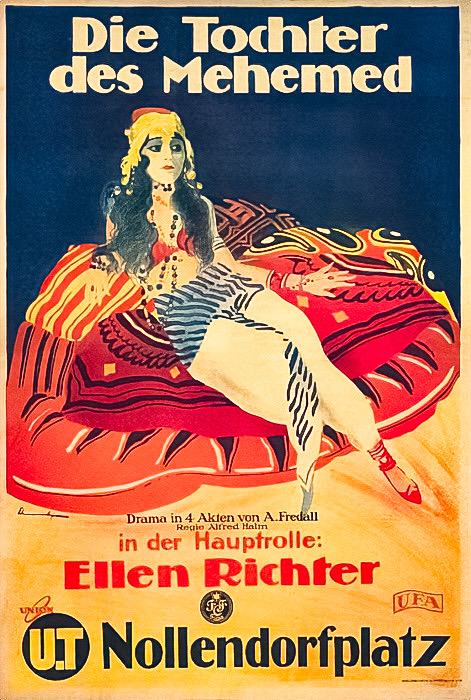
Ah, the silent era! A canvas of grand gestures, exquisite shadow play, and narratives that, despite their muteness, spoke volumes to the human condition. Among the myriad cinematic gems from this epoch, Die Tochter des Mehemed emerges as a compelling, albeit perhaps lesser-known, epic that richly deserves a contemporary re-evaluation. It’s a film that, even a century removed, resonates with a profound emotionality and a sophisticated exploration of cultural friction and personal yearning. To approach it merely as a historical artifact would be to miss the pulsating heart beating beneath its sepia-toned surface. This isn't just a story; it's a meticulously crafted tableau of human struggle against the backdrop of an exoticized, yet deeply resonant, world.
The narrative unfurls within a realm where ancient customs hold sway, a vibrant, if rigidly structured, Ottoman province governed by the iron will of Mehemed Pasha. Emil Jannings, an actor whose very presence could command the screen with a gravitational force, embodies Mehemed with a chilling gravitas that is both terrifying and tragically human. His Mehemed is not a caricature of eastern despotism, but a man burdened by the weight of tradition, power, and an almost suffocating sense of duty to his lineage. He is a patriarch whose authority is absolute, yet beneath the façade of unyielding control, one senses the tremors of a soul grappling with the complexities of his own existence. It is a performance that, like his work in The Last Laugh or even his more villainous turns, showcases his unparalleled ability to convey immense inner turmoil with minimal external flourish, relying instead on the subtle shifts of his imposing physique and the piercing intensity of his gaze.
Into this tightly controlled world steps Zora, Mehemed's daughter, brought to life with captivating dynamism by Ellen Richter. Richter, a star whose formidable screen presence often saw her cast as adventurous heroines or alluring vamps, delivers a portrayal here that is both fiery and vulnerable. Zora is no demure wallflower; she is a woman of incandescent spirit and keen intellect, whose burgeoning independence is stifled by the rigid societal expectations that dictate her every move. Her yearning for a life beyond the gilded cage of her ancestral home is palpable, a silent scream against the constraints of her heritage. Richter masterfully conveys this internal conflict, her expressive eyes and graceful movements painting a portrait of a soul on the verge of rebellion. Her performance stands in fascinating contrast to the more overtly tragic heroines of the era, such as those found in Anna Karenina, offering a more defiant, proactive struggle against fate.
The catalyst for this simmering domestic drama is Captain Karl von Richter, portrayed by the dashing Harry Liedtke. Liedtke, known for his romantic leads, imbues Karl with an appealing blend of diplomatic shrewdness and genuine curiosity. He arrives ostensibly to forge trade alliances, but his true mission – to assess Mehemed's growing regional influence – adds a layer of geopolitical intrigue to the personal drama. The initial encounters between Karl and Zora are charged with a subtle tension, a dance of cultural misunderstanding and burgeoning mutual fascination. Liedtke's portrayal of Karl is one of restrained passion, a man torn between his professional duty and an irresistible attraction to Zora's exotic allure and spirited independence. It's a classic silent film romance, where glances and gestures convey more than any dialogue ever could, reminiscent of the emotional intensity in films like Love Never Dies, though with a distinctly international flavor.
The film excels in illustrating the friction between Eastern tradition and Western modernity through their interactions. Zora, captivated by Karl's worldliness and the subtle ways he challenges the autocratic views ingrained in her upbringing, begins to envision a future radically different from the one prescribed for her. This intellectual and emotional awakening is a central pillar of the film's thematic strength. The film doesn't shy away from depicting the inherent power imbalances, but it also grants Zora agency, however constrained, in her pursuit of self-determination. Her journey echoes the struggles of strong female characters in films like The Woman and the Law, where societal norms are questioned and challenged by individual will.
Mehemed, ever the astute observer, quickly perceives the burgeoning romance between his daughter and the foreign diplomat. In a move calculated to solidify his power, quell potential dissent from within his own ranks, and reinforce his authority, he orchestrates Zora's marriage to Omar. Max Kronert, though perhaps in a more supporting role, brings a formidable presence to Omar, the ruthless but loyal tribal chieftain. Kronert's portrayal is one of blunt force and unwavering devotion to Mehemed, making him a compelling antagonist to Karl and a formidable barrier to Zora's desires. His character embodies the raw, traditional power that Mehemed seeks to leverage, and Kronert conveys this with a menacing authenticity that chills the audience.
The supporting cast further enriches this intricate tapestry. Albert Patry, in a role that could be a trusted advisor or a figure of quiet wisdom, adds a layer of subtle intrigue to the Pasha's court. His nuanced performance, often conveyed through subtle glances and composed demeanor, suggests a deeper understanding of the political machinations at play. Ernst Immler, perhaps as a loyal soldier or a stern official, contributes to the atmosphere of a realm under constant surveillance and rigid control, his presence reinforcing the Pasha's formidable authority. Emilie Kurz and Lotte Davis, likely portraying ladies-in-waiting or other members of Zora's retinue, provide glimpses into the daily life and constraints of women within the Pasha's household, their performances adding texture and depth to Zora's isolated existence. These actors, though their specific roles might be secondary, contribute significantly to the film's immersive quality, creating a believable and bustling backdrop for the central drama.
The ensuing drama is a masterclass in silent film storytelling, replete with heightened emotions and grand cinematic gestures. Zora finds herself agonizingly torn between the unyielding bonds of filial duty and the tumultuous stirrings of personal desire. This internal conflict is exquisitely rendered through Richter’s expressive performance, her face a canvas of conflicting emotions. Karl, meanwhile, grapples with the severe dichotomy of his diplomatic imperative and his profound personal devotion, a struggle that Liedtke portrays with a compelling blend of frustration and resolve. And Mehemed, the seemingly impregnable patriarch, is forced to confront the intricate interplay of allegiance, dominion, and the unforeseen fragility of his own paternal affection. Jannings, in particular, imbues Mehemed's moments of vulnerability with a heartbreaking authenticity, revealing the man beneath the mantle of power.
The film’s visual language is equally compelling. The use of elaborate sets and costumes transports the viewer to this exotic locale, creating a sense of grandeur and authenticity. Cinematography, a crucial element in silent cinema, likely employed dramatic lighting and evocative framing to enhance the emotional impact of each scene. Imagine the stark contrasts of light and shadow emphasizing Mehemed's formidable presence, or soft, diffused light bathing Zora's moments of introspection. The pacing, a skill often perfected in the silent era, would have allowed for lingering shots on faces to convey complex emotions, building tension through slow dissolves and rapid cuts during moments of crisis. This nuanced approach to visual storytelling elevates the narrative beyond simple melodrama, positioning it as a significant work of art.
The climax of Die Tochter des Mehemed is an emotionally charged denouement, compelling each protagonist to confront the inexorable pull of tradition, the volatile currents of political machination, and the devastating, often irreparable, toll exacted by a love striving to bridge an unyielding cultural chasm. It’s a resolution that doesn't offer easy answers, but instead leaves the audience contemplating the profound sacrifices made in the name of duty and desire. This narrative sophistication positions it alongside other thematically rich silent dramas like The Fixer, which also explored the individual's struggle against overwhelming societal forces.
In an era where global interconnectivity is both celebrated and scrutinized, the themes explored in Die Tochter des Mehemed remain remarkably pertinent. The clash of cultures, the struggle for individual agency within rigid societal structures, and the timeless agony of forbidden love are universal motifs that transcend the specific historical and geographical context of the film. It serves as a potent reminder that while the mediums of storytelling evolve, the core human experiences remain constant.
The film’s artistic merit lies not only in its compelling narrative and powerful performances but also in its contribution to the evolution of cinematic language. Silent films, often dismissed by casual viewers, were pioneers in visual storytelling, developing techniques that continue to influence filmmaking today. The ability of actors like Jannings and Richter to convey such profound emotion without spoken dialogue is a testament to their craft and the power of the medium itself. It prompts reflection on how much can be communicated through expression, posture, and the carefully orchestrated rhythm of a scene.
For enthusiasts of classic cinema, or indeed, anyone with an appreciation for dramatic storytelling, Die Tochter des Mehemed offers a rich and rewarding viewing experience. It invites us to delve into a world where emotions are writ large, where personal destinies collide with geopolitical forces, and where the silent gaze of a protagonist can convey more depth than a thousand words. Its existence, even if in fragments or restored versions, is a treasure, offering a window into the artistic ambitions and cultural preoccupations of a bygone era. It’s a film that speaks to the enduring power of love and conflict, a true testament to the timeless art of cinema. Much like the adventurous spirit seen in The Isle of Conquest, or the dramatic tensions of The War of the Tongs, this movie uses its setting to amplify the inherent human drama, making it a truly engaging piece of cinematic history.
The film's exploration of identity and cultural belonging also resonates deeply. Zora's internal conflict, torn between her heritage and her burgeoning desire for self-determination, is a universal struggle. How many individuals throughout history have felt the weight of tradition pressing down on their aspirations? This theme, though presented in an exoticized context, is fundamentally human and timeless. It aligns with the introspective journeys found in films like The Simple Life, albeit with a far grander, more dramatic scale. The intricate dance between individual will and societal expectation is a narrative thread that continues to captivate audiences, making this silent film a relevant and thought-provoking piece even today.
Ultimately, Die Tochter des Mehemed is more than just a historical curiosity; it is a vibrant, emotionally charged drama that speaks to the heart of human experience. It is a testament to the power of silent cinema to transcend the absence of spoken word and deliver a narrative that is both epic in scope and profoundly intimate in its exploration of character. It deserves its place among the celebrated works of its time, offering a rich tapestry of drama, romance, and cultural reflection that continues to captivate and provoke thought.

IMDb 6.5
1934
Community
Log in to comment.