DbcultAccessing Vault...
Cult Review
Senior Film Conservator
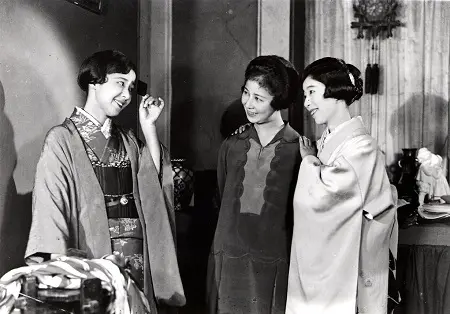
Is this film worth watching today? Short answer: yes, if you are a dedicated student of global cinema history, but it is likely too esoteric for those seeking modern narrative pacing. It is a film for the patient observer of the Taisho era's aesthetic and social shifts, and definitely not for viewers who cannot tolerate the theatrical artifice of silent-era melodrama.
Direct Answer: This film works because it captures a specific moment of Japanese cultural transition with startling clarity. It fails because its episodic structure prevents any single relationship from achieving true emotional depth. You should watch it if you appreciate the evolution of the 'Modern Girl' in cinema, similar to the themes found in The Chorus Girl's Romance.
Five Women Around Him is more than a title; it is a structural manifesto. Director Eizô Tanaka, a pivotal figure in the transition from stage-influenced 'Shinpa' to modern 'Shingeki' cinema, uses his protagonist as a mirror. We do not learn about the man through his actions, but through his reactions to the five women who orbit him. This was a radical departure for 1927. In many ways, it mirrors the thematic ambition of Western films like Extravagance, yet it remains rooted in a uniquely Japanese anxiety about Westernization.
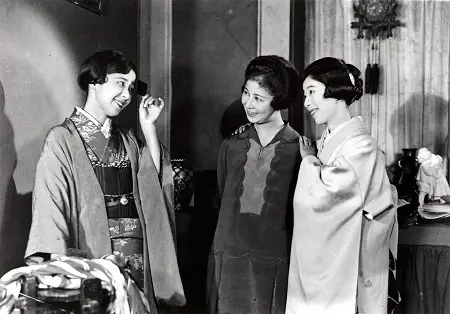
The film captures a Tokyo that is rebuilding, both physically and morally, after the Great Kanto Earthquake. The cinematography by the Nikkatsu veterans leans into the contrast between soft-focus romanticism and the sharp, jagged lines of modern urban life. One specific scene, where the protagonist walks through a neon-lit street, feels like a precursor to the noir aesthetics that would dominate decades later. It is a visual representation of a man lost in a forest of choices.
Tokihiko Okada was the Rudolph Valentino of Japan, but with a more cerebral, melancholic edge. In this film, he delivers a performance that is surprisingly restrained for the era. While many silent actors relied on wild gesticulation, Okada uses his eyes to convey a sense of mounting exhaustion. He isn't a hero; he is a man being slowly erased by his own indecision. His chemistry with the five actresses—particularly Shizue Natsukawa and Yoshiko Okada—varies wildly, which seems to be a deliberate directorial choice.
Consider the moment he shares a quiet tea with the more traditional of the five women. The camera stays static, mimicking the rigid social expectations of the past. Contrast this with his frantic, almost slapstick interactions with the 'Modern Girl' character. The acting styles clash intentionally. It works. But it’s flawed. The tonal shifts can be jarring, making the protagonist feel like a different person in every reel. This lack of a cohesive 'self' is the film's strongest, and most debatable, point.
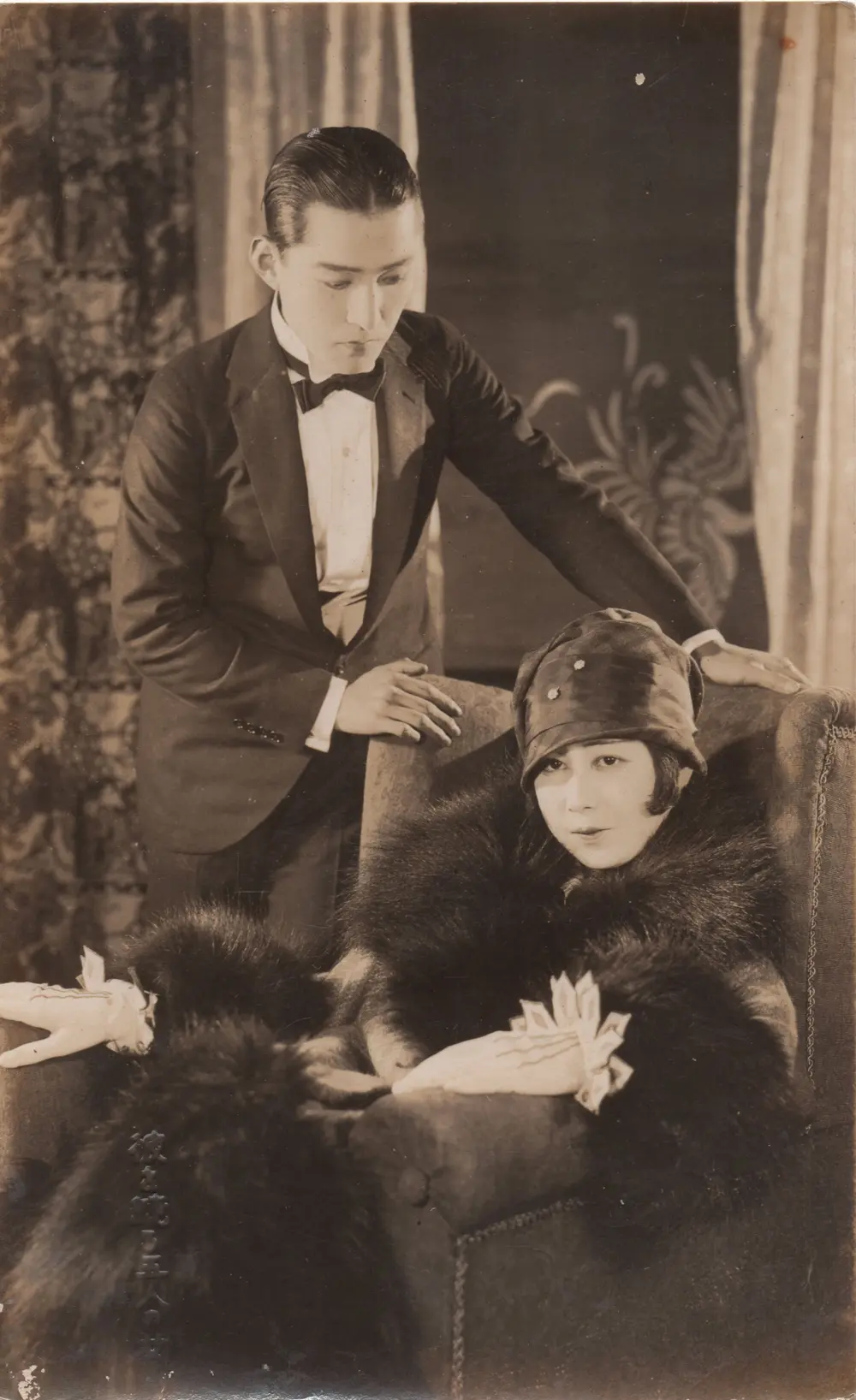
No, it is a fascinating historical document rather than a perfect film. While it lacks the fluid visual language of a Murnau or a Griffith, it offers a rare, unvarnished look at Japanese gender politics before the rise of militarism. It is a bridge between the old world and the new.
The film’s portrayal of the 'Modern Girl' is particularly striking. Unlike the caricatures seen in some contemporary American films like The Splendid Sinner, Tanaka treats these women with a mix of fascination and fear. They are the ones driving the plot; the man is merely the passenger. This inversion of power is what makes the film feel surprisingly modern, even when the intertitles feel archaic.
The pacing is the film's Achilles' heel. Because it must give screen time to five different subplots, the middle act sags under the weight of its own ambition. Each woman represents a 'type'—the mother figure, the temptress, the intellectual, the traditionalist, and the waif. By trying to cover all bases, Tanaka occasionally loses the thread of the central psychological journey. It feels less like a narrative and more like a gallery of social portraits.
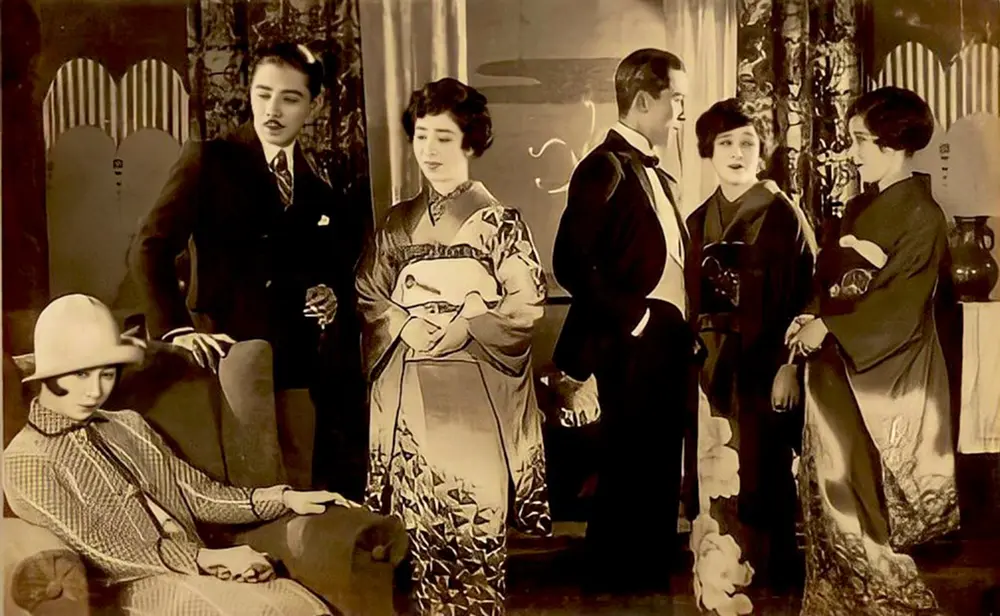
However, the tone is masterfully inconsistent. I say 'masterfully' because life in 1920s Tokyo was inconsistent. One moment we are in a high-society ballroom that wouldn't look out of place in My Official Wife, and the next we are in a cramped, shadowy apartment that feels like a precursor to Italian Neorealism. This jarring transition is where the film finds its truth. It reflects a society that doesn't know what it wants to be when it grows up.
Pros:
The film offers an incredible visual record of 1920s Japanese fashion and interior design. The lighting in the night scenes is ahead of its time, utilizing shadows to create a sense of psychological entrapment. It also features a rare ensemble of the era's greatest actresses, making it a 'who's who' of silent Nikkatsu cinema.
Cons:
The survival of the film is patchy, and existing prints often suffer from significant degradation. The narrative logic is sometimes sacrificed for the sake of theatrical 'moments.' If you aren't familiar with the 'Benshi' tradition of live narration, some of the long pauses between dialogue may feel interminable.
If you have ever wondered how Japan viewed itself before the shadow of the Second World War fell over the Pacific, this film is essential. It is a time capsule. It captures the fleeting, fragile beauty of a culture trying to have it all—the benefits of modernity and the comfort of tradition. It is a struggle that remains relevant today. While it may not have the polish of The Moment Before, its cultural specificity makes it a more rewarding watch for the serious cinephile.
Five Women Around Him is a messy, beautiful, and deeply cynical look at the male ego. It suggests that a man is not the sum of his parts, but the sum of the people who tolerate him. It is a brutal observation wrapped in the silk of a silent melodrama. Despite its technical age and fragmented storytelling, the film’s core question—who are we when we are alone?—remains hauntingly unanswered. It is a ghost of a film, but one that still has plenty to say to a modern audience. Watch it for the history, stay for the haunting eyes of Tokihiko Okada, and leave with a deeper understanding of the complexities of the human heart in a changing world. It is flawed. It is slow. But it is vital.

IMDb 6.6
1932
Community
Log in to comment.