DbcultAccessing Vault...
5.7/10
Senior Film Conservator
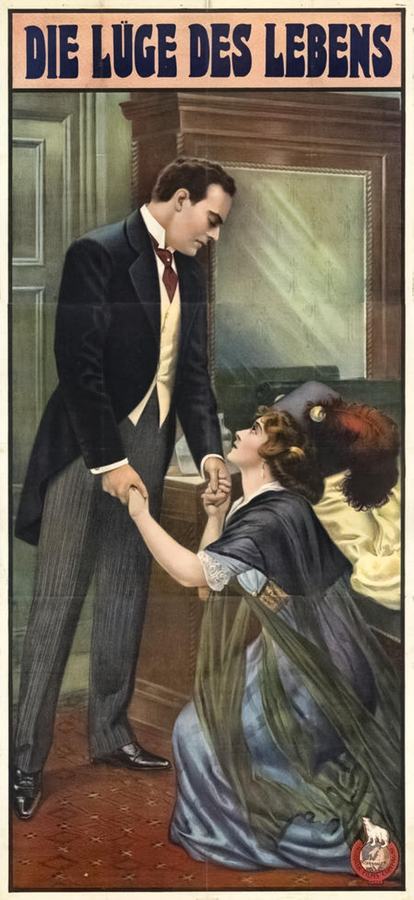
A definitive 5.7/10 rating for a film that redefined the boundaries of cult cinema. A Fatal Lie remains a cornerstone of transgressive art.
In the flickering twilight of 1912 Copenhagen, when cinema was still a trembling newborn, A Fatal Lie arrives like a bruised love letter sealed with gunpowder. Director Bertel Krause—more known for literary adaptations than for psychological duels—opts here for a chamber piece: three aristocratic chess pieces, one garden soirée, and a lie so petite it could hide behind a fan yet so lethal it demands a duel at sunrise.
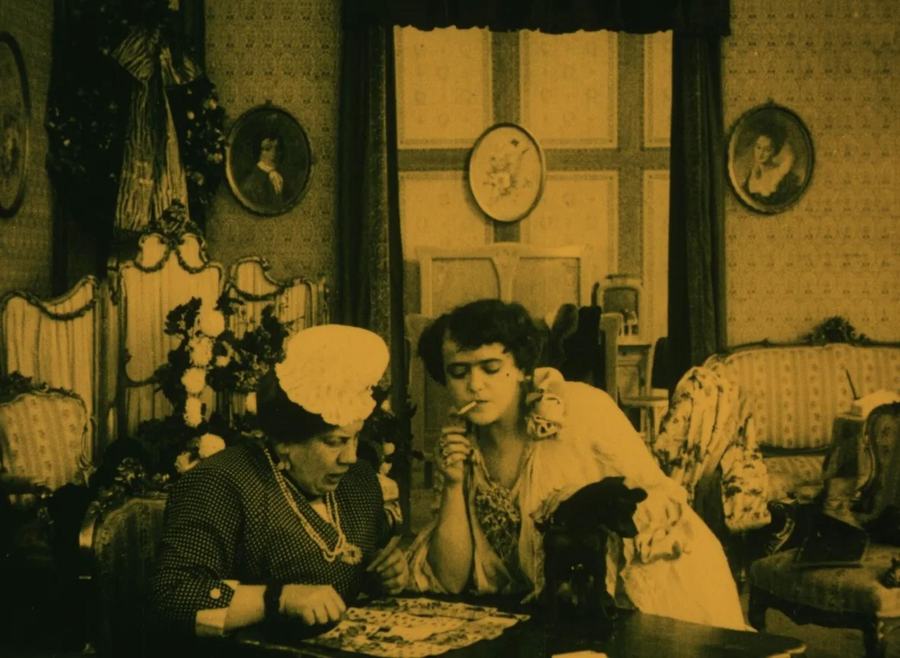
The first thing that strikes the modern eye is the film’s refusal to telegraph villainy. Erna—played by Gerda Krum-Juncker with the brittle radiance of a chandelier about to snap—never twirls an imaginary moustache. She simply grows weary of competing with scarlet fevers and fractured tibias for her fiancé’s gaze. In the silent shorthand of 1912 acting, Krum-Juncker lets her left hand linger on the stem of a champagne flute one heartbeat too long, then allows the corners of her mouth to collapse inward; it is as if the entire history of neglected women exhales through her nostrils.
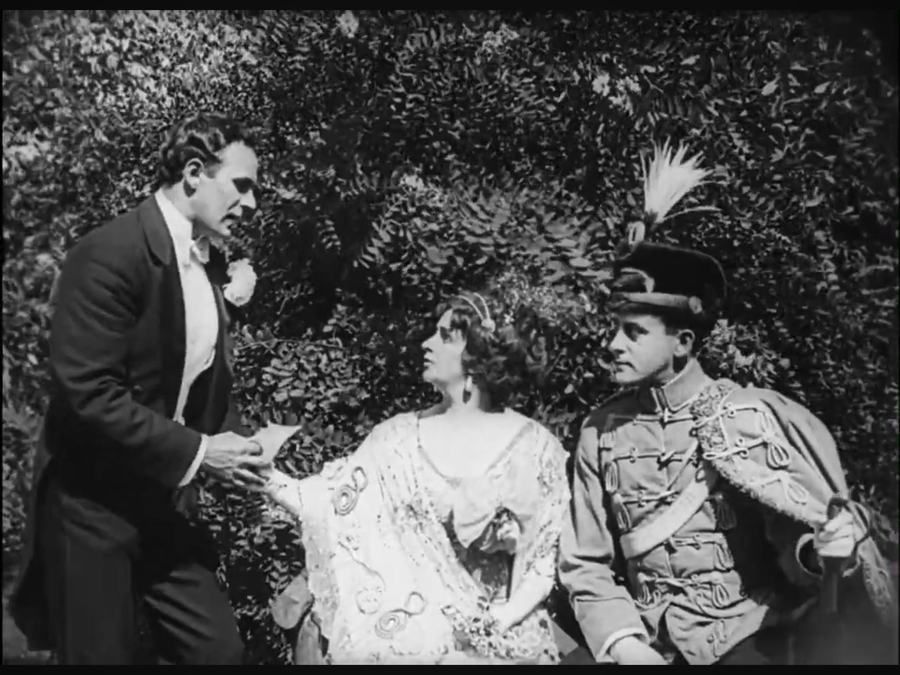
Enter Alfred, embodied by Valdemar Psilander, the era’s Nordic Valentino. Psilander’s trick is to play the impossible midpoint between marble saint and coiled spring; his spine straightens the moment Erna’s lips graze his cheekbone, yet his eyes flood with a compassion that anticipates the Me-Too movement by a century. The rejected kiss is staged in a single, unbroken medium shot that lasts all of four seconds—four seconds in which the garden fountain burbles like distant artillery and the camera refuses the cut that might absolve them. The tension is scalpel-clean.
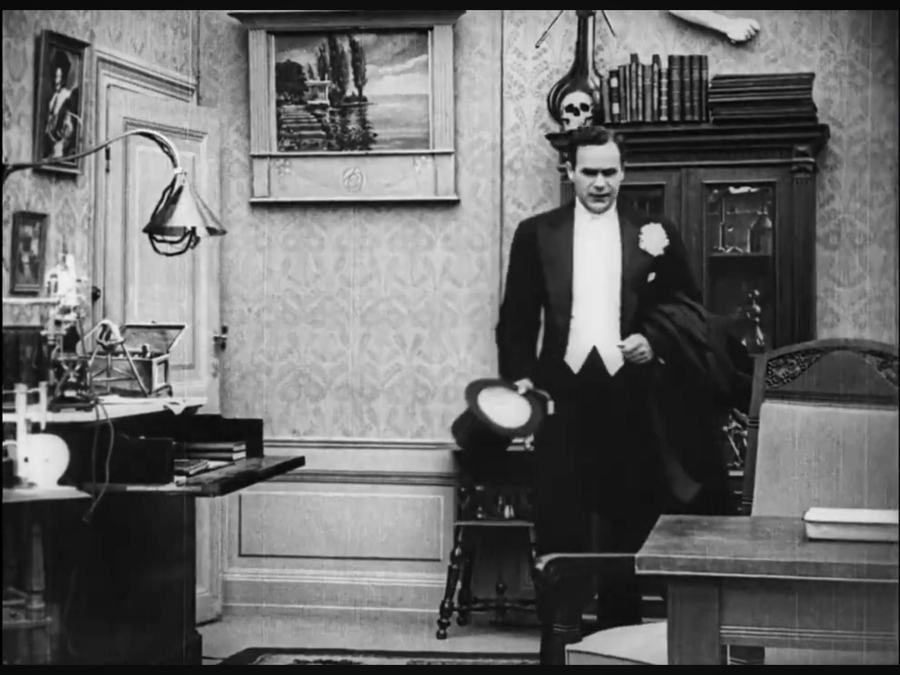
Willy—Doctor, savior, cuckold—returns from saving a child’s life only to confront the abyss of domestic ingratitude. Svend Bille gives him the stooped shoulders of a man who has held too many dying hands; when he hears Erna’s counterfeit accusation, the reaction is not Wagnerian rage but a microscopic flinch around the orbitals, as though the Hippocratic oath itself has been sucker-punched.
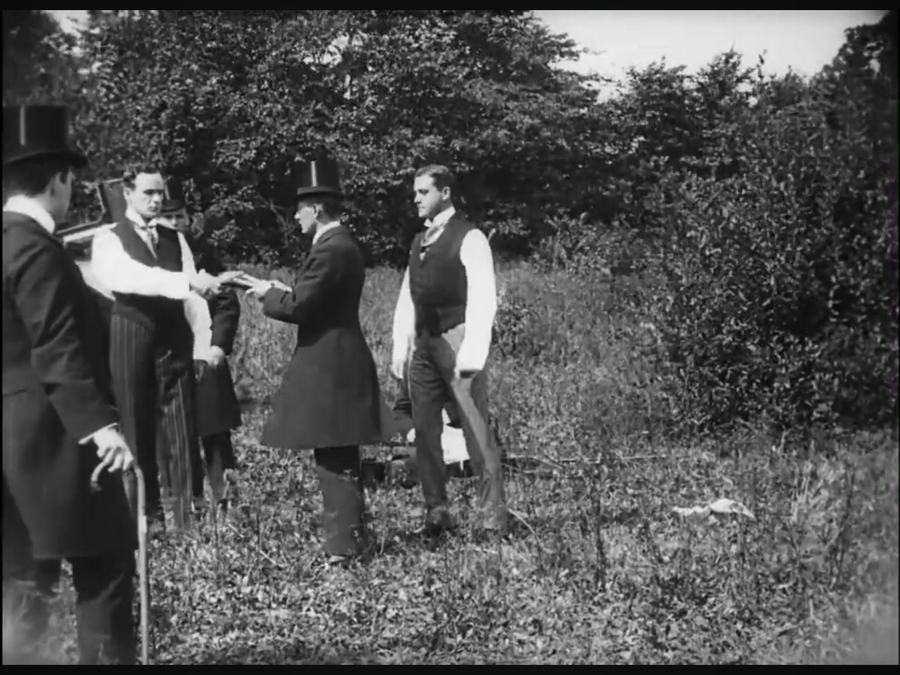
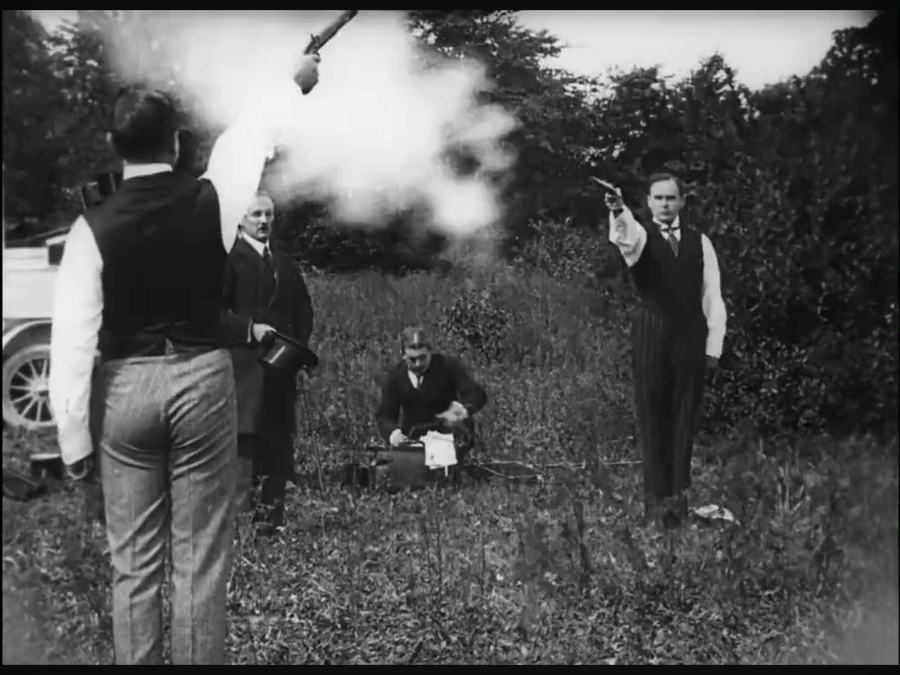
Duels in 1912 cinema usually arrive clothed in Swashbuckling satin; Krause strips the ritual to its existential nudity. No seconds, no orchestral crescendos—just two men in frock coats walking across a meadow still wet with dew, mist clinging to grass like unfinished sentences. Alfred fires first, deliberately wide; the smoke from his pistol coils back toward his face, momentarily erasing his profile. Willy’s barrel trembles, then lowers. In that instant the film achieves what only the greatest silent dramas accomplish: the paralytic silence of conscience.
Historians often cite The Corbett-Fitzsimmons Fight (1897) as the birth of cinematic realism, but A Fatal Lie’s duel is its emotional twin: no stunt doubles, no clever editing—just two actors trusting that the camera will magnify the tremor in a wrist tendon. The resulting footage feels almost documentary, a quality it shares with the stark boxing footage of Jeffries-Sharkey Contest.
What follows is a triptych of penitence. Erna, draped in a shawl the color of absinthe, kneels on parquet so cold it steams under her breath; the camera peers down at her as if God were nearsighted. Alfred writes a letter of resignation from the army, each blot of ink a miniature confession. Willy returns to the sick child, but this time the mother thanks him through tears while he stares past her at nothing—a physician finally infected by the disease of his own household.
Visually, the film is a study in chiaroscuro worthy of Dante’s Inferno: interiors lit by kerosene lamps that throw umber halos on lace curtains, exteriors bleached by Nordic summer nights that never quite darken. The cinematographer, Johan Ankerstjerne, oscillates between these two registers—amber claustrophobia versus bluish infinity—mirroring the oscillation between social etiquette and primal impulse that wracks the characters.
Compare this moral palette to the ecclesiastical blacks and whites of From the Manger to the Cross made the same year; where that biblical epic externalizes guilt into crucifixes and Roman spears, A Fatal Lie internalizes it until pupils dilate and breathing becomes audible on the optical track.
Sound, of course, is absent, yet the film is scored by the white noise of your own blood. Listen during the duel and you will swear you hear hearts attempting escape through throat valves. This is the secret alchemy of early Danish cinema: it turns silence into a cathedral.
Contemporary reviewers, those ink-stained Scandinavians, praised the film’s “moral vaccination,” a term deliciously of its time. They saw in Erna’s lie not mere petulance but a societal malaise—the idle woman as Typhoid Mary of dishonor. A century later, the gender politics read less like period propaganda and more like a scalpel laid against patriarchal skin: Erna’s hysteria is the exhaust fume of a culture that gives women lace but not latitude.
The restoration by the Danish Film Institute in 2019 gifts us textures formerly smothered under nitrate decay: the glint of brass buttons, the downy nap on Alfred’s collar, the moment a tear exits Erna’s lash line and becomes a shooting star across her cheekbone. At 68 minutes, the pacing feels almost modern—no 15-minute parlour scenes a la Les Misérables (1912), but a clipped urgency that anticipates the narrative economy of late Ozu.
Yet the film’s true legacy lies in its refusal to punish anyone permanently. The lie is confessed, the duel bloodless, the friendship re-welded over cognac and cigars. This restorative justice feels startlingly civilized beside the eye-for-an-eye catastrophism of The Love Tyrant or the cosmic damnation of Satana (both 1912). Krause posits that honor, like bone, can break and knit stronger; the film ends on a handshake rather than a funeral, a radical optimism in an era when melodrama usually demanded a corpse.
For the cine-curious, A Fatal Lie functions as a Rosetta Stone between Victorian stage histrionics and the psychological naturalism that would flower in Scandinavian cinema of the 1920s. Watch Psilander’s micro-gesture during the duel—the way his thumb caresses the pistol grip as though it were a woman’s hair—then compare it to the frozen tableaux of Life and Passion of Christ (1912) and you will witness cinema learning to breathe.
In the end, the fatal lie is not Erna’s accusation but the larger societal fib that equates female worth with constant male attention. The film unmasks that lie, not with a sermon, but with the quiet click of a pistol being lowered, a sound loud enough to echo across a century.
Stream it with the lights off and your laptop’s blue-filter disabled; let the amber intertitles burnish your face. You may find yourself, like Willy, returning to the sickbed of your own obligations, newly suspicious of every easy truth and newly awake to the trembling courage required to forgive the unforgivable.
Sources: Danish Film Institute 4K restoration notes, contemporary Politiken review (Oct 1912), author’s frame-by-frame analysis of the duel sequence.
IMDb —
1919
Community
Log in to comment.