DbcultAccessing Vault...
Cult Review
Senior Film Conservator
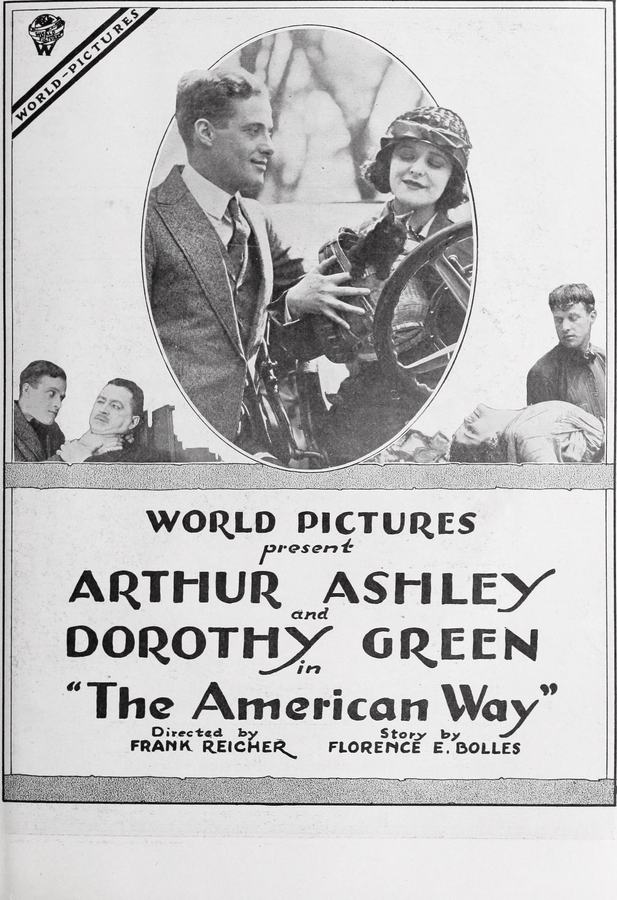
Stepping back into the nascent days of cinema, one occasionally unearths a forgotten gem, a film that, despite its age and silent medium, still manages to captivate with its wit and charm. Such is the case with "The American Way," a 1915 production that, even over a century later, offers a fascinating glimpse into early romantic comedies and the societal anxieties of its era. This isn't merely a quaint relic; it's a vibrant tapestry woven with threads of mistaken identity, cross-cultural misunderstandings, and the eternal quest for love, all delivered with an earnestness that transcends the limitations of its time.
The narrative unfurls with a premise ripe for comedic exploration. We are introduced to Richard Farrington, a young man whose lineage boasts both English nobility and American pragmatism, though his current demeanor leans heavily towards the 'hell-raising' side of the ledger. His exasperated parents, clearly at their wit's end, dispatch him across the Atlantic to the seemingly calmer shores of Long Island, to the care of his aunt and uncle. This transatlantic journey, intended as a correctional sabbatical, quickly transforms into the crucible of his romantic destiny. It's aboard this very vessel that Richard encounters Betty Winthrop, the vivacious ward of the affluent Van Allen family. Their initial meeting is a delightful tableau of classic cinematic heroism: Richard gallantly rescues Betty's beloved feline companion, an act that immediately establishes his chivalrous, if somewhat clumsy, credentials. However, in an unfortunate twist of fate, or perhaps a premonition of the delightful chaos to come, Richard, in introducing himself, inadvertently presents Betty with the calling card of John Smithers, a notorious con-man who had recently relieved him of his cash at a London card table. This seemingly innocuous error becomes the linchpin of the entire narrative, setting in motion a cascade of comedic complications that are both predictable and utterly charming.
The true genius of the plot, penned by Wallace Clifton and Florence Bolles, lies in its shrewd observation of societal expectations and the lengths to which individuals will go to meet them, or, in Richard's case, to subvert them. Following Betty to the opulent Van Allen estate, Richard becomes an unwitting eavesdropper to a declaration that fundamentally reshapes his romantic strategy. Betty, with a spirit and independence that feels remarkably modern for a 1915 character, boldly proclaims her preference for an American criminal over a 'weakling' English aristocrat. This pronouncement is a fascinating window into the evolving perception of masculinity and national identity in the early 20th century. It challenges the traditional allure of European gentility, positing a rugged, perhaps even dangerous, American self-made man as the more desirable suitor. For Richard, this overheard sentiment is not a deterrent but an unexpected gauntlet thrown. Determined to win her heart, and perhaps a little intrigued by the challenge, he makes the audacious decision to embody the very persona he mistakenly introduced: he will pretend to be Smithers, the American rogue. What follows is a delicious descent into a carefully constructed, yet inevitably precarious, charade, where Richard navigates the treacherous waters of assumed identity, all while trying to genuinely woo the woman who inspired his deception.
Edward Roseman, in the role of Richard Farrington, delivers a performance that is both nuanced and uproariously funny. His initial portrayal of Richard as a somewhat foppish, albeit well-meaning, English gentleman provides a stark contrast to his subsequent transformation into the (pretend) hardened American criminal. Roseman’s physical comedy, so crucial in the silent era, is expertly deployed, conveying Richard's internal struggle between his true self and his adopted persona. We see the earnestness in his eyes even as his actions become increasingly absurd, grounding the farce in genuine romantic intent. Barbara Butler, as Betty Winthrop, is equally captivating. She imbues Betty with a remarkable blend of spunk, intelligence, and romantic idealism. Her desire for a man of action, rather than a mere title, speaks volumes about a shifting cultural landscape, and Butler portrays this with a spirited conviction that makes her character genuinely admirable and her choices understandable. The chemistry between Roseman and Butler is palpable, forming the emotional core that elevates the film beyond mere slapstick. The supporting cast, including Franklyn Hanna as the actual Smithers whose untimely reappearance threatens to unravel Richard's carefully spun web, and Lisle Leigh, Arthur Ashley, Stewart Fisher, Carl Sauerman, Hazel Sexton, Charles Wellesley, Robert Fisher, Dorothy Green, and Harry Semels, all contribute to the film’s vibrant atmosphere, each character playing their part in the escalating comedic tension.
The screenplay by Wallace Clifton and Florence Bolles is a masterclass in comedic construction, particularly for its time. They meticulously build a narrative where each misunderstanding compounds the last, yet never feels forced or illogical within the film's established reality. The pacing is brisk, a testament to the efficient visual storytelling of the silent era, where every gesture, every intertitle, must convey maximum information and emotion. The film doesn't waste a single frame, moving from one delightful complication to the next with an assured hand. While we don't have explicit dialogue, the implied exchanges, conveyed through the actors' expressions and the well-placed intertitles, are sharp and often humorous. The film's strength lies in its ability to take a relatively simple premise – mistaken identity – and explore its thematic implications with depth, touching upon class, nationality, and the very nature of authenticity in love. It’s a testament to the writers that the central conceit remains engaging throughout, resisting the temptation to become overly repetitive. The way the plot twists and turns keeps the audience invested, eagerly anticipating how Richard will extricate himself from his self-made predicament.
Visually, "The American Way", while adhering to the cinematic conventions of 1915, still manages to convey a sense of place and period. The opulent settings of the Van Allen estate contrast sharply with the more modest, though still refined, environments, highlighting the class distinctions that form a subtle backdrop to the romantic comedy. The direction, though often uncredited or attributed vaguely in this era, clearly understands the medium's strengths. Close-ups are used judiciously to emphasize key emotional moments or comedic reactions, drawing the audience into the characters' inner worlds. The broad physical comedy is balanced with more subtle character beats, preventing the film from descending into mere caricature. One can see echoes of similar comedic sensibilities in films like The College Widow, which also leveraged collegiate settings and romantic entanglements for comedic effect, albeit with a different cultural backdrop. Both films demonstrate a keen understanding of their target audience's appetite for lighthearted romance and a good laugh.
The film’s title itself, "The American Way," is a fascinating touchstone. It invites us to ponder what exactly constitutes this 'way' in the context of the film. Is it Betty's preference for rugged individualism over aristocratic languor? Is it the spirit of reinvention and self-determination that Richard attempts to embody? Or is it simply the chaotic, yet ultimately triumphant, path to true love that transcends social artifice? The film playfully engages with these questions, never providing a definitive answer, but rather celebrating the melting pot of ideals that defined early 20th-century America. It's a delightful counterpoint to the more serious social commentaries of the era, such as The Woman Suffers, which grappled with profound societal injustices. Instead, "The American Way" uses its comedic lens to explore cultural identity and personal agency in a lighter, yet still insightful, manner. The film, in its own charming way, suggests that the 'American Way' might simply be the freedom to choose one's own destiny, even if it means bending the rules a little and embracing a bit of playful deception along the way.
In an era when cinema was still finding its voice, "The American Way" stands out as a remarkably coherent and entertaining piece of filmmaking. It manages to deliver genuine laughs, a heartwarming romance, and a subtle commentary on cultural identity, all without uttering a single spoken word. The film’s ability to build such a compelling narrative through visual storytelling and expressive performances is a testament to the talent involved. It reminds us that the fundamental elements of compelling cinema – engaging characters, witty plots, and emotional resonance – are timeless, transcending technological advancements. While it might lack the grandiosity of some epic productions of the era, its intimate charm and well-executed premise make it a film well worth rediscovering. It’s a delightful journey back to a time when the silver screen was a canvas for pure imagination, and a simple case of mistaken identity could spin into a wonderfully complex and endearing tale of love. It is a film that, despite its century-long slumber in the archives, still resonates with a fresh, vibrant energy, proving that some stories, and the way they are told, truly are timeless. The enduring appeal of this type of romantic farce, where identity is fluid and love conquers all, can be seen in countless films that followed, a testament to the solid foundation laid by features like this one. Its lighthearted approach to serious themes of class and belonging offers a refreshing perspective, making it not just a historical curiosity, but a genuinely enjoyable cinematic experience even today. It underscores the idea that sometimes, the most complex truths about human nature are best revealed through the most delightfully simple deceptions.
IMDb 6.5
1931
Community
Log in to comment.