DbcultAccessing Vault...
5.3/10
Senior Film Conservator
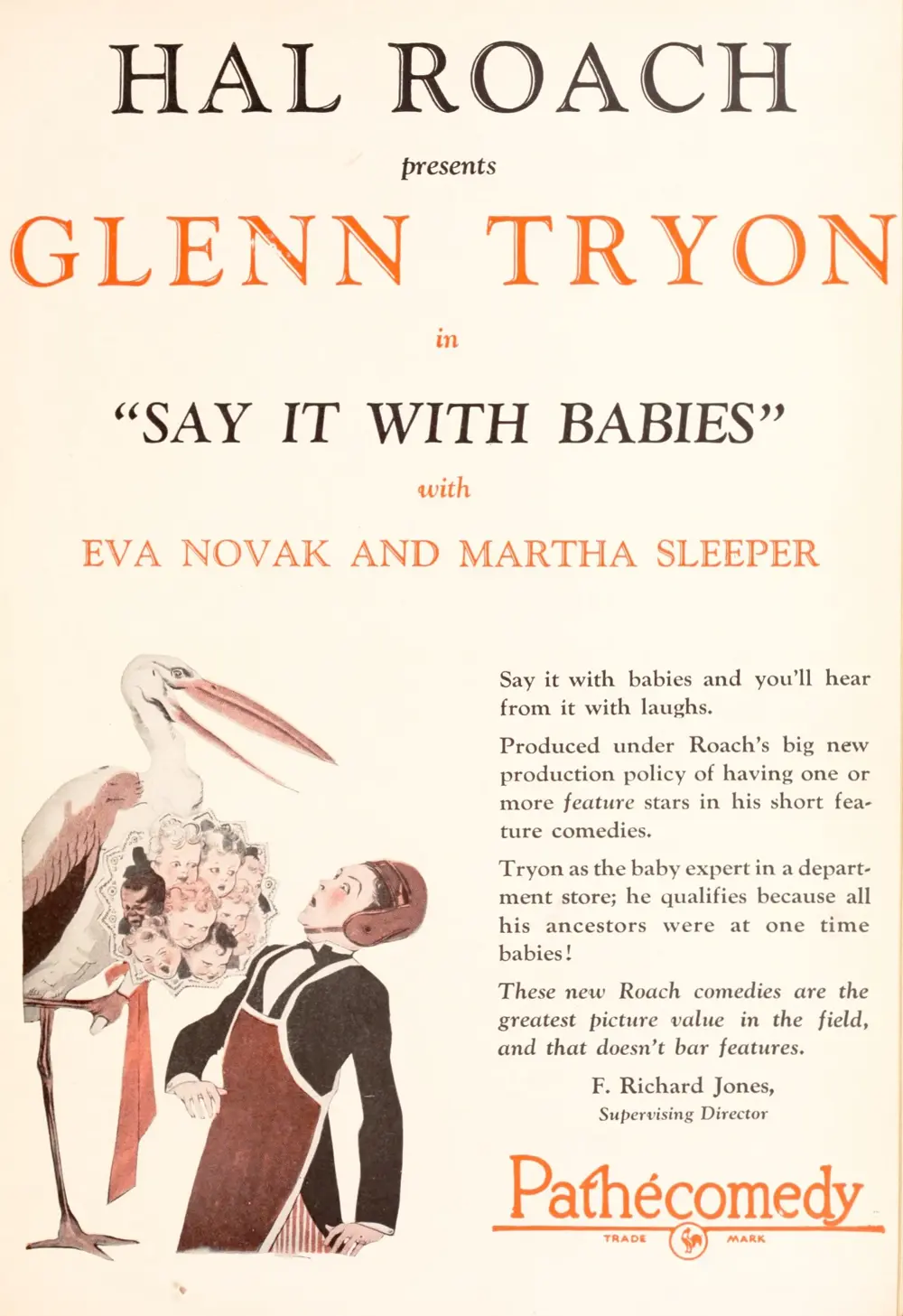
A definitive 5.3/10 rating for a film that redefined the boundaries of cult cinema. Say It with Babies remains a cornerstone of transgressive art.
Is 'Say It with Babies' worth your time in the modern era? Short answer: Yes, but primarily as a fascinating artifact of pre-Laurel and Hardy slapstick architecture that rewards the patient viewer with some genuinely mean-spirited laughs. This film is specifically for those who appreciate the evolution of silent comedy and the Hal Roach studio style, while it will likely alienate those who find repetitive, primitive sight gags tiresome.
This film works because the physical chemistry between Glenn Tryon and Oliver Hardy creates a friction that elevates standard slapstick into a character-driven conflict. This film fails because the opening sequence in the department store lingers too long on redundant gags that don't always build to a satisfying crescendo. You should watch it if you want to see Oliver Hardy developing the 'heavy' persona that would eventually make him a household name.
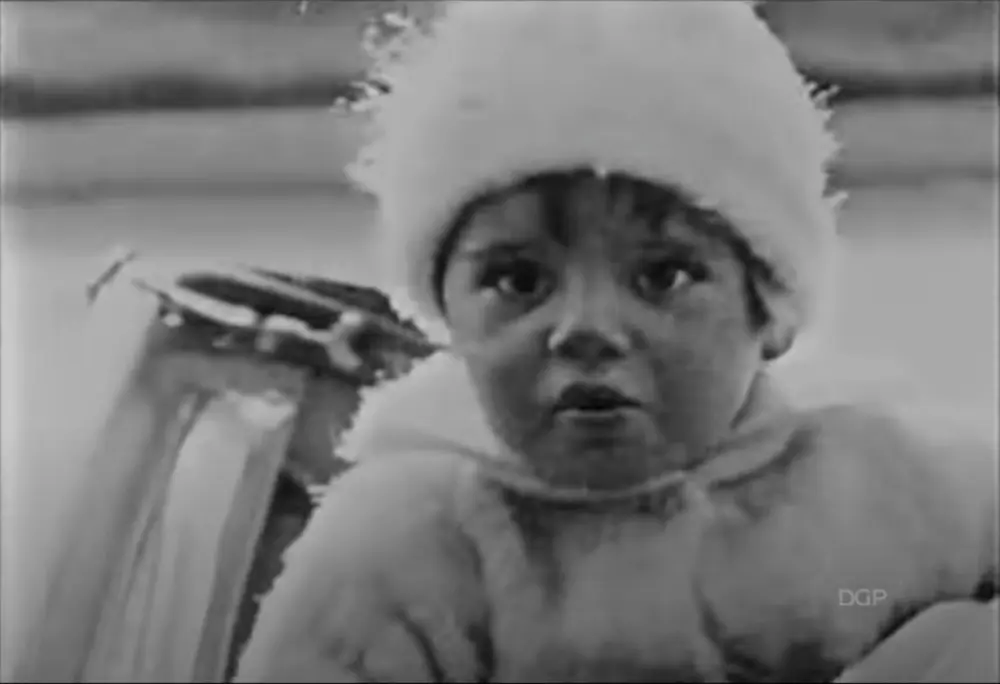
Yes, 'Say It with Babies' is worth watching for anyone interested in the DNA of 1920s comedy. It offers a rare look at Glenn Tryon, a performer who had all the technical skills of a star but lacked the singular 'hook' of a Buster Keaton or a Harold Lloyd. The film provides a direct link to the transition of silent comedy from pure chaos to the more structured situational humor seen in later masterpieces like Faint Hearts. It is a quick, punchy experience that doesn't overstay its welcome.
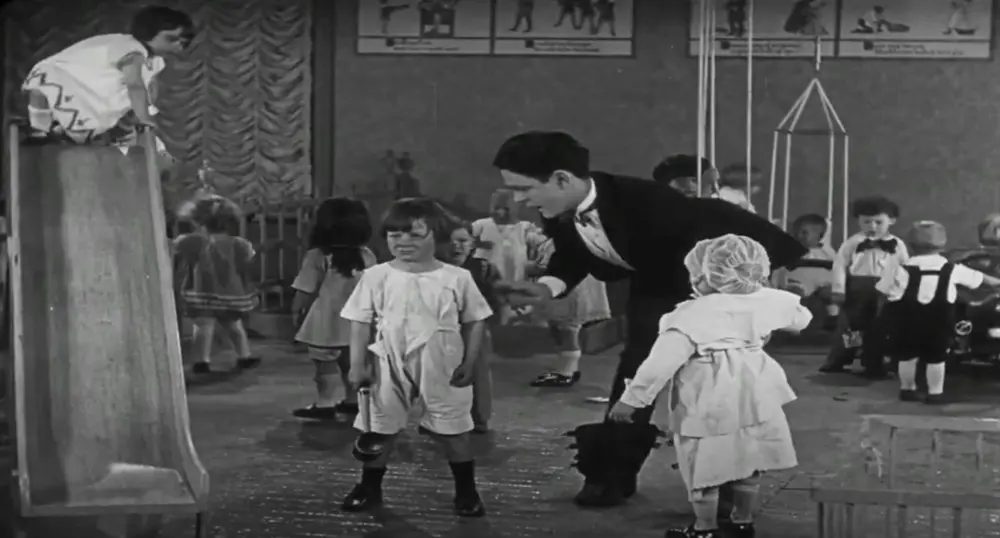
The first act of the film establishes Casper's world as one of constant, low-level humiliation. The department store setting is a classic trope, yet the writers—including James Parrott and Carl Harbaugh—twist it by making the 'experts' the victims of the very subjects they are supposed to control. One specific moment that stands out is when Casper attempts to demonstrate a baby carriage, only to have the mechanical elements betray him in a way that feels almost sentient. This isn't just a man tripping over a rug; it’s a man being bullied by the inanimate objects of his trade.
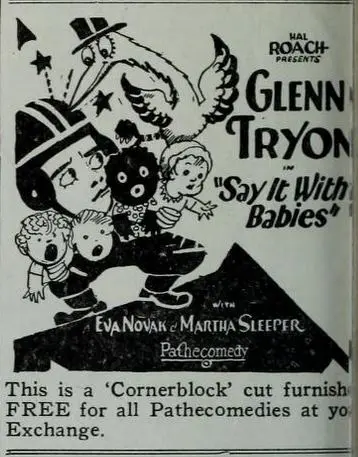
The use of infants as a cynical audience is a stroke of minor genius. Throughout the store scenes, the camera frequently cuts to the babies, who watch Casper’s failures with a cold, unblinking detachment. It’s a subversion of the 'cute baby' trope found in films like The Waif. Here, the children are the masters, and Casper is the court jester. The pacing here is frantic, almost breathlessly so, which was a hallmark of the Roach studio compared to the more deliberate pacing found in Sennett shorts.
While Glenn Tryon is the lead, it is impossible to watch 'Say It with Babies' without focusing on Oliver Hardy. At this stage in his career, Hardy was often cast as the 'neighbor' or the 'heavy'—a role he played with a unique blend of physical intimidation and dainty mannerisms. His presence here provides a necessary foil to Tryon’s more manic energy. When the two families prepare for the picnic, the tension between the two men is palpable. Hardy doesn't need to do much; a simple adjustment of his tie or a judgmental glance at Casper’s car is enough to generate a laugh.
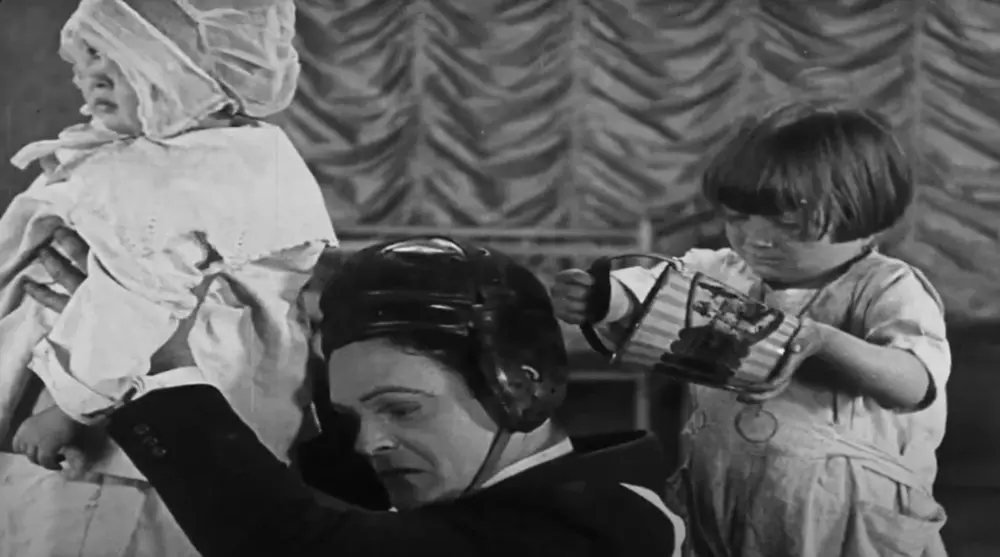
Consider the scene where the two families are packing the car. The spatial comedy—trying to fit too many people and too much gear into a confined space—predates the more famous 'crammed car' sequences in later Laurel and Hardy films. It’s fascinating to see the seeds of that genius being planted here. If you’ve seen Off the Trolley, you’ll recognize the same interest in the frustrations of modern transportation that plagued the 1920s Everyman.
The second half of the film moves to the outdoors, and the shift in environment brings a shift in the type of comedy. We move from situational retail humor to man-versus-nature slapstick. The Sunday picnic was a sacred institution in 1920s America, a symbol of domestic bliss. 'Say It with Babies' takes a sledgehammer to this ideal. The sequence involving the traffic tickets is particularly telling. It highlights a burgeoning anxiety of the era: the rise of the automobile and the subsequent rise of the 'traffic cop' as a new kind of urban villain.
Then there are the hornets. The hornet's nest sequence is a masterclass in escalating stakes. Casper’s attempts to 'amuse' the hornets—or at least coexist with them—are doomed from the start. The physical comedy here is brutal. Tryon takes several hard falls that look genuinely painful. It’s a reminder that silent comedy was a high-contact sport. Unlike the more poetic struggles in A Tale of the Far North, the struggle here is purely for the sake of the gag. It works. But it’s flawed in its predictability.
Directing a silent comedy requires a rhythmic sensibility akin to music. Fred Guiol (though uncredited in some records, his influence is all over this) understands the 'rule of three.' A gag is introduced, repeated with a variation, and then subverted. In 'Say It with Babies', the timing is mostly sharp, though the editing in the middle section feels a bit loose. Compared to a high-drama piece like Just a Woman, the cinematography here is functional rather than expressive. The camera stays wide to capture the full range of physical movement, only moving in for close-ups to capture Casper’s mounting despair.
The tone is surprisingly dark for a 'baby' movie. There is a streak of misanthropy running through the script. Casper isn't just unlucky; he’s a man the universe has decided to punish for the crime of existing. This makes the film feel more modern than many of its contemporaries. It lacks the sentimentality found in The Dream Cheater. Instead, it embraces the chaos of a world that simply won't let a man sit down and eat a sandwich in peace.
Pros:
The film features excellent ensemble work, particularly from the supporting cast like Vivien Oakland and Sammy Brooks. The physical stunts are executed with a high level of technical skill, and the film serves as a perfect time capsule of 1920s consumer and leisure culture. It’s also genuinely funny in its most aggressive moments.
Cons:
The character of Casper can be somewhat grating; he lacks the pathos of Chaplin or the cleverness of Lloyd. Some of the gags involving the car feel dated even by 1926 standards, having been done better in films like Off the Trolley. The ending feels slightly abrupt, leaving the viewer wanting a bit more resolution to the chaos.
'Say It with Babies' is a solid, if not spectacular, entry in the Hal Roach library. It doesn't reach the heights of the later Laurel and Hardy shorts, but it provides the essential foundation for what was to come. Glenn Tryon is a capable lead, but the film is ultimately stolen by Oliver Hardy’s burgeoning screen presence. It is a cynical, fast-paced, and occasionally painful look at the impossibility of a quiet life. If you can handle a bit of 1920s mean-spiritedness, it’s a trip worth taking. It’s not a masterpiece, but it is a fascinating, funny failure of a Sunday afternoon.
IMDb 6.3
1925
Community
Log in to comment.