DbcultAccessing Vault...
Cult Review
Senior Film Conservator
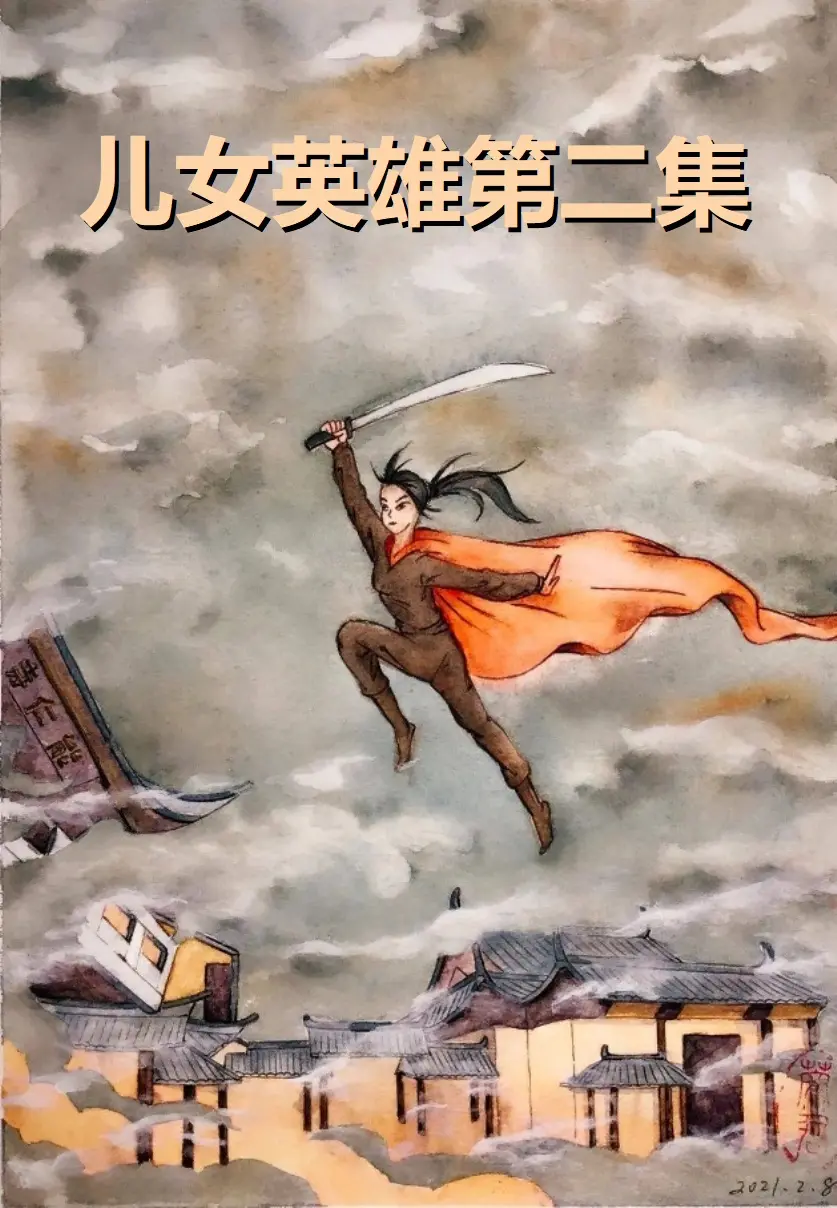
Is Ernu yingxiong di er ji worth watching today? Short answer: yes, but with significant caveats that demand a specific palate. This film is a fascinating, if sometimes frustrating, artifact for those deeply invested in the evolution of wuxia cinema and historical Chinese storytelling.
It's a journey best suited for cinephiles who appreciate the foundational elements of martial arts epics, even when delivered with pacing and stylistic choices that predate modern conventions. Conversely, viewers accustomed to contemporary narrative speed, intricate character development, or high-budget spectacle may find its deliberate rhythm and simpler execution a challenging watch.
This film works because of its unyielding commitment to a particular brand of heroic narrative, where honor and vengeance drive every beat. It establishes a clear, compelling conflict early on, giving the audience a tangible antagonist in Chi Mianhu and a clear objective for our protagonists.
This film fails because its execution, while authentic to its era, can feel ponderous by today's standards, often sacrificing dynamic engagement for a more formal, almost ritualistic progression of events. Character motivations, while clear, often lack the nuanced depth modern audiences expect.
You should watch it if you are a student of early wuxia, interested in the historical context of its tropes, or simply curious about the foundational cinematic language of the genre. It's an important piece of the puzzle, even if it's not the most immediately accessible.
The plot of Ernu yingxiong di er ji, while seemingly straightforward, carries the weight of a traditional narrative form. It centers on Ji’s summons to the capital, a summons that immediately suggests consequence and political intrigue, even if those elements remain largely in the background of this particular installment. The decision to have Thirteenth Sister accompany him is crucial, positioning her not just as a supporting character, but as an active participant in the unfolding drama.
This companionship sets up a dynamic where her formidable skills and loyalty are immediately placed at the forefront of the audience’s expectations. The narrative doesn't waste time in establishing the stakes, quickly moving to the perilous stretch of 'Cloud Piercing Peak'. This location isn't just a geographical marker; it’s a symbolic gauntlet, a place where the journey transforms from administrative duty to a fight for survival.
The ambush by Chi Mianhu is not merely an act of banditry. It’s presented as the re-ignition of an old feud, adding a layer of personal history and gravitas to the conflict. This isn't a random encounter; it's a destiny-driven confrontation, echoing classic narratives where past grievances inevitably resurface. The writers, Bibo Xu and Kang Wen, craft a setup that, while lean, is rich in implication. They understand that sometimes, the most potent drama stems from the simplest, most direct clash of wills and histories.
However, this simplicity can also be a double-edged sword. While it provides a clear dramatic thrust, it leaves less room for the intricate subplots or moral ambiguities that define many contemporary narratives. The pacing, characteristic of its era, allows moments to breathe, perhaps too much for those accustomed to the rapid-fire editing of modern action films. The tension builds deliberately, almost stately, rather than explosively. This can test the patience of some viewers, as the film prioritizes a measured unfolding over relentless excitement.
For example, the initial journey sequences, while visually establishing the landscape, spend a considerable amount of time simply depicting travel, building a sense of foreboding rather than immediate action. This choice, common in earlier cinema, forces the audience into a different rhythm, one that demands a certain meditative engagement rather than passive consumption. The narrative is less about twists and turns, and more about the inevitable collision of forces long destined to meet.
The performances in Ernu yingxiong di er ji are largely defined by the conventions of the time, favoring strong, archetypal portrayals over deep psychological exploration. Xuepeng Fan, as Ji, embodies the stoic, honorable protagonist with a quiet intensity. His presence suggests a man burdened by duty and history, even if his emotional range is often understated. He carries the weight of his character through posture and gaze, rather than overt expression.
Yi-Min Wen, as the Thirteenth Sister, is arguably the more compelling figure. She brings a necessary dynamism to the screen, a blend of fierce martial prowess and unwavering loyalty. Her character feels like the true engine of proactive heroism, a counterpoint to Ji’s more reactive stoicism. There’s a particular scene where she prepares for the ambush, her movements precise and deliberate, conveying her readiness without a single line of dialogue. It’s a powerful testament to Wen’s ability to communicate strength through physicality.
Guanwu Shang and Juefei Shi, along with the rest of the supporting cast, fill out the world with credible adversaries and loyal retainers. Chi Mianhu, as the antagonist, is painted with broad strokes – a figure of pure malice and old hatred. While he might not possess the layered villainy of more recent antagonists, his clear-cut malevolence serves the narrative purpose perfectly, providing a tangible threat that justifies the heroes’ actions.
The acting style is theatrical, often demanding a certain grandiosity that might feel unfamiliar to those accustomed to naturalistic performances. Yet, within its own framework, it is effective. The actors are not merely reciting lines; they are embodying mythic figures in a grand, dramatic tableau. This approach allows the audience to project their understanding of heroism and villainy onto the characters, fostering a connection through archetype rather than intricate psychology.
One could argue that the film’s strength lies in its ability to present clear moral lines, where heroes are unequivocally good and villains are unequivocally bad. This clarity, while simplistic, allows the audience to fully invest in the impending clash without distraction. The performances, therefore, serve the larger narrative rather than demanding individualistic showcases. It works. But it’s flawed.
The direction in Ernu yingxiong di er ji, while not groundbreaking by modern standards, demonstrates a solid understanding of visual storytelling within its historical context. The director, whose name isn't explicitly listed but whose vision permeates the film, uses the landscape of 'Cloud Piercing Peak' to great effect. The shots of the rugged terrain and winding paths aren't just establishing shots; they actively contribute to the sense of isolation and vulnerability that precedes the ambush.
Cinematography, while perhaps limited by the technology of its time, manages to convey a sense of grandeur and impending danger. There’s a particular wide shot, just before the attack, that captures the smallness of the traveling party against the vast, indifferent mountains. This visual metaphor powerfully underscores the odds stacked against Ji and Thirteenth Sister.
Action sequences, while not as frenetic or elaborately choreographed as later wuxia films, possess a raw, visceral quality. The camera often maintains a slightly wider perspective, allowing the audience to see the full body movements of the combatants, emphasizing the skill and physicality involved. This contrasts sharply with the quick cuts and close-ups prevalent in modern action cinema, offering a different kind of engagement with the fight choreography.
The use of natural light, where possible, lends an authenticity to the outdoor scenes, grounding the fantastical elements of wuxia in a more tangible reality. While there are moments of static framing, these often serve to highlight the theatricality of the performances, allowing the actors to command the space within the frame. It's a directorial choice that prioritizes clarity of action and character presence over dynamic camera movement.
Compared to something like Vampyrdanserinden from a similar era, which revels in expressionistic shadows, Ernu yingxiong di er ji opts for a more direct, almost documentary-like approach to its action, albeit within a fantastical narrative. This choice, whether deliberate or born of necessity, gives the film a unique texture, making the violence feel less stylized and more immediate. It’s not necessarily ‘better’ or ‘worse’, just different, and an important consideration for audiences approaching it today.
The tone of Ernu yingxiong di er ji is predominantly serious, imbued with a sense of honor, duty, and the enduring nature of conflict. There’s little room for levity, as the narrative is driven by the grave implications of Ji’s summons and the violent interruption of his journey. This gravitas is a hallmark of many early wuxia films, which often drew heavily from classical literature and operatic traditions.
Thematic resonance revolves around familiar wuxia principles: the burden of past grievances, the unyielding pursuit of justice (or vengeance), and the individual's strength against overwhelming odds. The loyalty of Thirteenth Sister to Ji, and her readiness to face danger alongside him, speaks volumes about the bonds of camaraderie and marital partnership in a world where personal honor is paramount.
The film doesn’t shy away from depicting the harsh realities of its world, even if the violence is presented in a less explicit manner than modern cinema. The threat is palpable, the stakes are clear, and the characters’ commitment to their respective causes is unwavering. This thematic clarity is one of the film’s strongest assets, providing a sturdy framework for its action and drama.
An unconventional observation here is how the film, despite its focus on martial prowess, subtly underscores the psychological toll of constant vigilance. The journey itself, before the ambush, is not peaceful; it’s a period of anticipation, a quiet before the storm, suggesting that for figures like Ji and Thirteenth Sister, peace is always temporary, always shadowed by past conflicts. This undercurrent of perpetual readiness adds a layer of quiet melancholy to the heroic narrative.
The film’s tone is consistent, which is a testament to its singular vision. It doesn't waver into unexpected genres or tonal shifts, maintaining its serious, heroic posture throughout. This makes for a cohesive, if sometimes relentless, viewing experience, reinforcing the idea that these characters inhabit a world where their actions have immediate and profound consequences.
Yes, for a select audience, Ernu yingxiong di er ji remains a valuable watch. It offers a glimpse into the foundational elements of the wuxia genre. The film presents a clear, direct narrative. It highlights the early cinematic techniques used to convey action and drama. Its historical significance alone makes it worth considering. However, casual viewers might find its pacing challenging. The film's style is very much of its era.
Ernu yingxiong di er ji stands as a critical piece of early wuxia cinema, a testament to the genre's enduring appeal and foundational storytelling. It is not a film for everyone, nor does it attempt to be. Its value lies not in its ability to compete with modern blockbusters, but in its historical significance and its authentic representation of a particular cinematic era. For those willing to adjust their expectations and immerse themselves in its deliberate pace, there's a rewarding experience to be found – a raw, earnest portrayal of heroism and conflict. It's a film that demands respect for its origins, even as it reveals the vast evolutionary journey cinema has undertaken. While its flaws are evident through a contemporary lens, its core strengths—a compelling central conflict and a truly memorable Thirteenth Sister—resonate beyond the passage of time. Give it a chance, not as entertainment, but as an essential lesson in film history. You might just find yourself captivated by its antique charm and potent simplicity.
IMDb —
1931
Community
Log in to comment.