DbcultAccessing Vault...
Cult Review
Senior Film Conservator
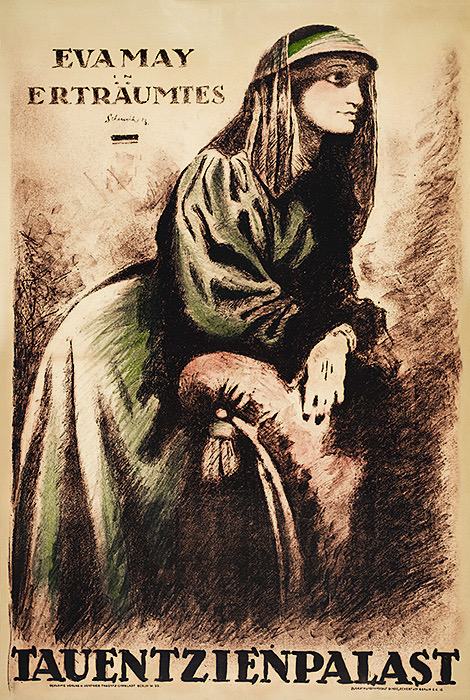
Stepping back into the flickering shadows of early German cinema, one encounters a cinematic tapestry often woven with threads of profound emotionality and intricate social commentary. Among these, Erträumtes, a 1917 production, emerges as a particularly resonant piece, a silent film that dares to explore the chasm between aspiration and actuality with a tender yet unflinching gaze. It is a work that, even a century later, speaks volumes about the human condition, particularly the yearning for a life unburdened by the strictures of convention and expectation. This is not merely a period piece; it is a timeless meditation on the nature of dreams, the power of art, and the often-painful realities of love in a world that seldom accommodates the exceptional.
The film introduces us to Elise, portrayed with breathtaking vulnerability and spirited defiance by Eva May. May, an actress whose tragically short career belied her immense talent, imbues Elise with a captivating blend of aristocratic grace and an almost ethereal longing. Elise is a young woman trapped within the gilded cage of her family’s fading grandeur. Her world is one of hushed drawing-rooms and calculated social maneuvers, orchestrated by her formidable mother, Frau von Hohenstein, a role brought to life with imposing gravitas by Olga Engl. Engl’s performance is a masterclass in silent film acting, conveying a mother’s iron will and underlying anxieties with a mere glance or a subtle tightening of the jaw. Frau von Hohenstein is not a caricature of a villain; she is a product of her time, desperately clinging to status and security, seeing her daughter’s marriage as the sole salvation for their genteel poverty. The dramatic tension between May’s yearning spirit and Engl’s unyielding pragmatism forms the very backbone of the narrative, a clash of generations and ideologies that resonates with surprising force.
Elise’s escape from this suffocating reality lies in her "erträumtes" – her dreamt-of world, a sanctuary of imagination brimming with passion, beauty, and authentic connection. This inner life is vividly contrasted with the dreary prospect of a union with Baron von Klingen, played by Rudolf Lettinger. Lettinger, often cast in roles demanding a certain stolid respectability, perfectly embodies the Baron’s well-meaning but utterly uninspired nature. He is the epitome of a 'suitable' match, lacking any spark to ignite Elise’s poetic soul. The film masterfully uses visual metaphors to highlight this contrast: the Baron’s stiff, formal attire against the flowing fabrics Elise wears in her moments of reverie; the sterile, ornate interiors of her home versus the sun-dappled, earthy studio of Viktor, the sculptor who captures her heart.
Leopold von Ledebur, as Viktor, is a revelation. He portrays the struggling artist with a raw intensity and an undeniable charisma that makes his appeal to Elise entirely understandable. Viktor is the antithesis of the Baron: passionate, driven by creative fire, and unburdened by societal pretense. Their clandestine meetings, often depicted with a delicate intimacy, are moments of profound beauty. The camera lingers on their faces, capturing the unspoken understanding, the shared yearning that transcends their disparate social standings. One particularly poignant sequence involves Viktor sketching Elise, his gaze reflecting not just her physical beauty, but the very essence of her soul. This visual shorthand, a hallmark of powerful silent film, communicates volumes without a single intertitle. The director (whose identity remains elusive, adding to the film's mystique) employs close-ups with judicious precision, allowing the audience to witness the blossoming of a forbidden love in the minute expressions of the actors.
The central artistic creation within the film, Viktor's monumental sculpture inspired by Elise, serves as a powerful symbol. It is a female figure, arms outstretched, head tilted towards an unseen horizon, a tangible representation of Elise's internal world – her dreams of freedom, artistic expression, and uninhibited selfhood. The scenes depicting Viktor at work, his hands molding the clay, are shot with a reverence that elevates the act of creation to a spiritual plane. This sculpture becomes a silent character in itself, a testament to a love that dares to manifest itself in defiance of social codes. When the Baron eventually discovers this artistic testament to their affair, the sculpture transforms from a symbol of love into an emblem of scandal, a visual trigger for the inevitable confrontation.
The film’s emotional arc is skillfully managed, building suspense not through overt action, but through the escalating internal turmoil of its protagonist. Käthe Haack, as Marianne, Elise’s confidante, provides a crucial counterpoint. Her performance is subtle yet impactful, offering moments of quiet support and unspoken understanding. Marianne represents the voice of empathy and reason, a silent witness to Elise's agonizing struggle. Her presence underscores the isolating nature of Elise's predicament, highlighting the societal pressures that force individuals to conform or risk ostracization. The intricate web of relationships is beautifully rendered, demonstrating a nuanced understanding of human connection and conflict.
Erträumtes is not afraid to delve into the complexities of its themes. It doesn't offer simplistic resolutions, but rather explores the profound implications of choice. The climax, a tense social gathering where the truth is unveiled, forces Elise into an impossible position. Her decision, while perhaps not overtly dramatic by modern standards, is deeply impactful. She doesn't necessarily defy all societal norms in a grand, rebellious gesture, but rather makes a quiet, profound assertion of her inner spirit. The film suggests that true freedom and the realization of one's dreams might not always lie in external circumstances, but in the unwavering conviction of one's internal world. This nuanced ending elevates the film beyond mere melodrama, imbuing it with a philosophical depth that lingers long after the final fade to black.
Comparing Erträumtes to its contemporaries reveals its unique strengths. While films like A School for Husbands might satirize marital conventions, Erträumtes delves deeper into the psychological toll of such expectations, painting a more somber, yet ultimately more empowering, portrait of female agency. The artistic and romantic yearning present here finds echoes in Victor Sjöström’s Vingarne, another silent masterpiece grappling with artistic passion, unrequited love, and the often-destructive nature of obsession. Both films showcase the silent era's remarkable ability to convey profound emotional states through visual storytelling, with minimal reliance on intertitles.
The film’s exploration of class distinction and the struggles of the working artist against an entrenched aristocracy also brings to mind parallels with George Loane Tucker's The Italian, which similarly depicted the harsh realities faced by those outside the dominant social strata. However, Erträumtes shifts the focus from purely economic hardship to the more ethereal, yet equally potent, struggle for emotional and spiritual autonomy. The protagonist's journey of self-discovery, fueled by her internal world, also aligns with the spirit of films like The Goddess, which often featured strong female leads navigating challenging social landscapes.
Technically, Erträumtes showcases the nascent sophistication of German silent cinema. The cinematography, while perhaps not as overtly experimental as some later expressionist works, is nonetheless evocative. The use of natural light in Viktor’s studio, contrasted with the more artificial, controlled lighting of the aristocratic interiors, subtly reinforces the film’s thematic concerns. The pacing is deliberate, allowing moments of quiet contemplation to breathe, punctuated by bursts of intense emotional drama. The intertitles are spare, used only when absolutely necessary, allowing the powerful performances and visual storytelling to carry the narrative weight. This restraint speaks to a confidence in the medium's expressive capabilities, a common trait in the best silent films.
The legacy of Erträumtes lies not just in its compelling narrative or the captivating performances of its cast, but in its enduring relevance. It reminds us that the struggle between individual aspiration and societal expectation is a perennial one. The film's title, meaning "dreamt-of," encapsulates its core message: that sometimes, the most profound aspects of our lives exist within the realm of the ideal, shaping our reality even when they are never fully realized in the tangible world. Elise's journey is one of compromise, certainly, but also one of profound self-acceptance, a testament to the power of maintaining one's inner sanctuary against external pressures. It is a film that champions the quiet rebellion of the spirit, a powerful message delivered with grace and artistic integrity.
In an era often remembered for its grand spectacles and melodramatic flourishes, Erträumtes stands out for its delicate psychological nuance and its poignant exploration of the human heart. It is a work that deserves rediscovery, a silent film that speaks volumes about the universal quest for authenticity and the enduring power of dreams. The performances, particularly Eva May’s luminous portrayal of Elise, remain etched in the memory, embodying the very essence of a soul caught between duty and desire. This is German silent cinema at its most affecting and thoughtful, a true gem that continues to resonate with anyone who has ever dared to dream of a different life.
IMDb 7.2
1931
Community
Log in to comment.