DbcultAccessing Vault...
6.2/10
Senior Film Conservator
A definitive 6.2/10 rating for a film that redefined the boundaries of cult cinema. Zew morza remains a cornerstone of transgressive art.
Is 'Zew morza' worth watching today? Short answer: yes, but with significant caveats that demand a particular kind of cinematic appreciation. This film is an absolute must-see for ardent cinephiles, historians of Polish cinema, and those fascinated by the nascent storytelling techniques of the silent era. However, it will likely prove a challenging, even frustrating, experience for viewers accustomed to modern pacing, narrative clarity, and sophisticated character development.
This rarely seen Polish drama, a relic from the silent film era, offers a fascinating, if sometimes bewildering, window into early 20th-century storytelling. Its melodramatic heart beats strongly, even through the haze of time and the limitations of its format. To engage with 'Zew morza' is to embark on an archaeological dig into cinematic history, unearthing both its strengths and its undeniable quirks.
This film works because of its raw emotional core and its historical significance as a surviving piece of Polish silent cinema, showcasing ambitious thematic scope for its time. It attempts to grapple with grand themes of fate, societal pressure, and the siren call of personal freedom, all within a visually driven narrative.
This film fails because its narrative can feel disjointed, its character motivations occasionally opaque, and its pacing, by contemporary standards, undeniably slow. There are moments where the story meanders, leaving the audience to piece together crucial emotional beats that modern cinema would explicitly state.
You should watch it if you possess a genuine curiosity for early 20th-century filmmaking, appreciate melodramatic storytelling, and are willing to engage with a film that requires active interpretation and a deep understanding of its historical context. If you prefer narratives that unfold with contemporary speed and clarity, this might not be your cinematic cup of tea.
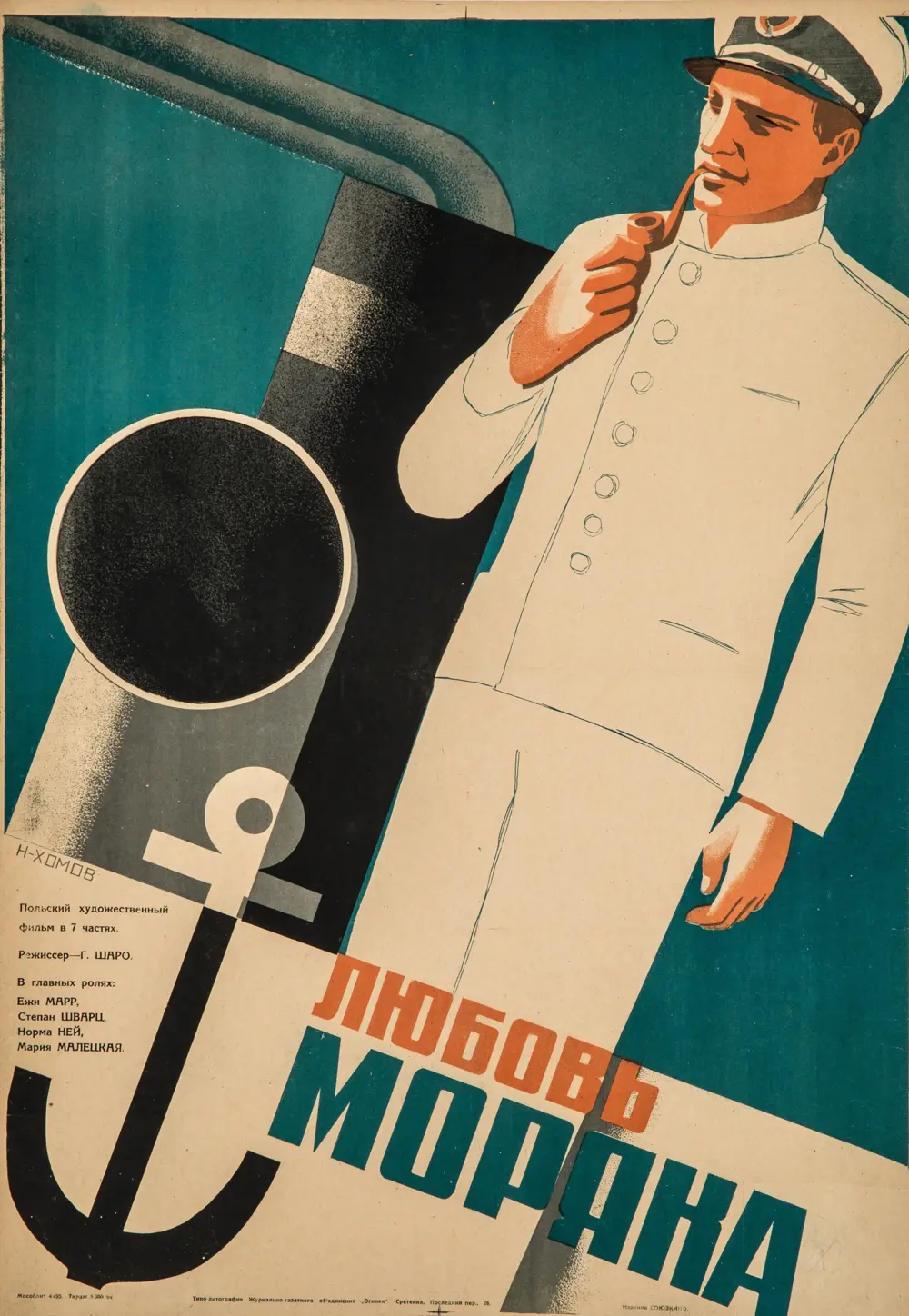
To discuss 'Zew morza' is to acknowledge its very existence as a triumph. Surviving silent films, particularly from less-documented national cinemas, are precious artifacts. This film, directed by Henryk Szaro, stands as a testament to the ambitions and capabilities of Polish filmmakers during a period of intense artistic experimentation and national resurgence. It's not merely a movie; it's a historical document, a whisper from a bygone age.
The film’s title, translating to 'The Call of the Sea,' immediately establishes its central metaphor. The sea here is not just a setting; it is a character, a force of nature, a symbol of freedom, danger, and an escape from the terrestrial constraints of duty and societal expectation. This personification of the natural world is a common trope in early cinema, but here, it feels particularly potent, almost a rival for the protagonist's affections.
Its enduring appeal, beyond pure academic interest, lies in its unflinching melodrama. Silent cinema, often dismissed as simplistic, excelled at conveying heightened emotions through visual cues and exaggerated performance. 'Zew morza' embraces this wholeheartedly, delivering a narrative steeped in tragic romance and desperate choices, a formula that, when stripped of dialogue, relies entirely on the universal language of human feeling.
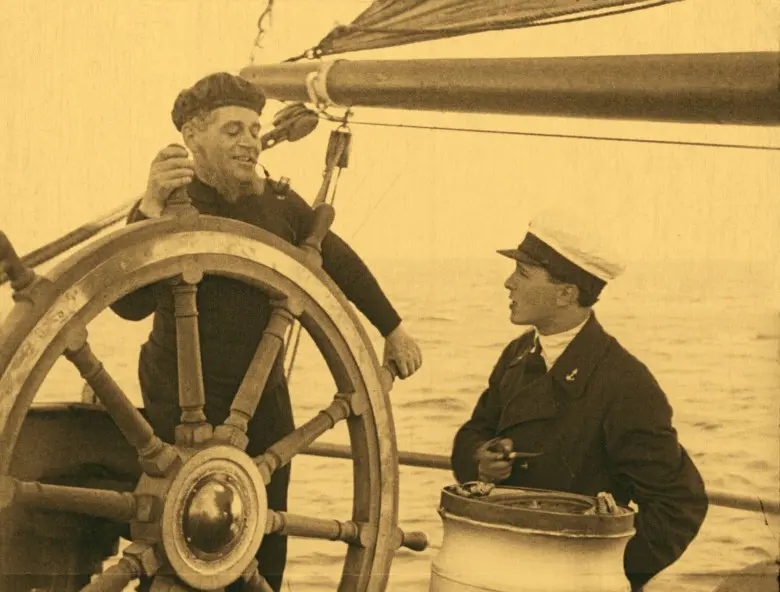
The plot, as outlined, follows a miller's son, torn between the landlocked life of his birth and the boundless allure of the ocean. This conflict is the dramatic engine of the film. His initial escape to the sea is a declaration of independence, a rejection of the predetermined path. Yet, the narrative pulls him back, not just to his family, but to Hanka, his childhood love, played by Izabella Kalitowicz. Their reunion is brief, tinged with a melancholy that permeates the entire film.
Hanka's predicament is perhaps the most tragic element of the story. Forced by her family's impending financial ruin to consider a marriage of convenience to a wealthy, older man, she embodies the crushing weight of societal expectation. The scene where she accidentally overhears her parents' desperate conversation is particularly effective, relying on Kalitowicz's subtle facial expressions to convey the dawning horror and resignation. It's a moment that resonates even today, highlighting the sacrifices individuals, especially women, were expected to make for familial honor and stability.
The protagonist's subsequent flight back to the sea, driven by heartbreak, leads him into the clutches of a smuggling gang. This development, while adding a layer of thrilling peril, feels somewhat abrupt, a convenient plot device to propel the narrative towards its climax. It's a common silent film trope – the hero falling into an unexpected, life-threatening situation – but here, it feels a little less organic than the preceding romantic tragedy. One might argue it's an over-reliance on external danger when the internal conflict was already so rich.
In silent film, acting is a demanding art, requiring actors to convey complex emotions without uttering a single word. Mariusz Maszynski, as the miller's son, delivers a performance that is, at times, admirably physical and emotionally raw. His gestures are broad, his expressions often intense, a necessity for projecting feeling to the back rows of a silent cinema. There’s a palpable sense of his character’s yearning for freedom, a restless spirit that the screen struggles to contain.
Izabella Kalitowicz, as Hanka, offers a more nuanced portrayal. Her beauty is undeniable, but it is her capacity for conveying quiet suffering and internal conflict that truly stands out. Her moments of heartbreak, especially when contemplating her forced marriage, are genuinely moving, relying on a delicate balance of posture and gaze rather than overt histrionics. This restraint makes her character's sacrifice all the more poignant. Her performance is a highlight, demonstrating that silent film acting wasn't always about grand gestures; sometimes, it was about the subtle shift of an eye or the tremor of a hand.
The supporting cast, while less developed, provides the necessary archetypes for this melodramatic world. The villainous smugglers are suitably menacing, and the wealthy suitor appropriately unlikable. While not every performance reaches the heights of, say, Buster Keaton's precise physicality in The Busher or Lillian Gish's ethereal suffering in A Daughter of the Law, the ensemble effectively serves the film's dramatic intentions, painting a vivid, if somewhat black-and-white, picture of good and evil, love and despair.
The cinematography of 'Zew morza' is a fascinating study in early film aesthetics. Shot in black and white, the film often uses stark contrasts to create mood and emphasize dramatic tension. The expansive shots of the sea, while undoubtedly limited by the technology of the era, still convey a sense of grandeur and isolation. The waves crash with a timeless rhythm, reminding the viewer of the protagonist's deep connection to this elemental force.
Indoor scenes, particularly those depicting Hanka's privileged but constrained life, utilize a more theatrical lighting style, highlighting the opulence of the court against the encroaching shadow of financial ruin. There's a certain charm in these static, tableau-like compositions, a direct lineage from stage plays to early cinema. While it lacks the kinetic dynamism of later silent films like Dangerous Waters, 'Zew morza' compensates with its atmospheric ambition.
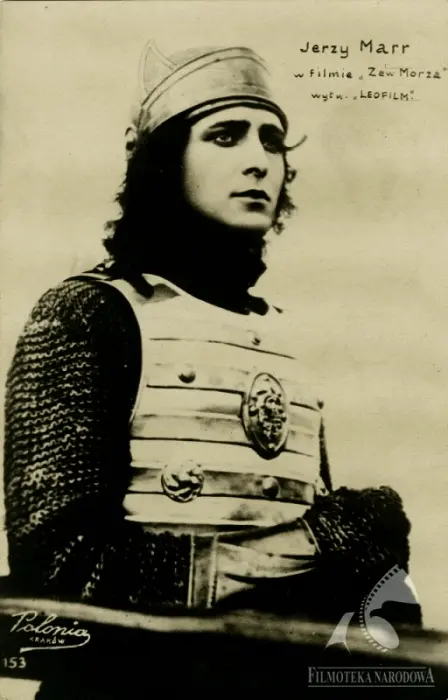
The film's visual language, heavily reliant on intertitles to convey dialogue and narrative exposition, is typical of its time. These intertitles, while necessary, occasionally break the visual flow, reminding the viewer of the film's age. However, they also offer a glimpse into the narrative conventions of the period, where direct statements were often preferred over subtle implications, ensuring audiences understood the often complex plots being presented.
Pacing is perhaps the most significant hurdle for modern viewers approaching 'Zew morza.' Silent films often operated at a much slower tempo than contemporary cinema. Scenes linger, emotional beats are drawn out, and narrative progression can feel deliberate, almost stately. This isn't a flaw of the film itself, but rather a characteristic of its era. Viewers accustomed to rapid cuts and constant narrative propulsion will need to adjust their expectations significantly.
The tone is overwhelmingly melancholic, tinged with romantic despair. Even moments of joy feel fleeting, overshadowed by the characters' predetermined fates. This pervasive sense of tragedy is a hallmark of melodrama, and 'Zew morza' leans into it with conviction. It's a film that asks its audience to sit with sadness, to contemplate the inevitability of heartbreak, and to appreciate the beauty found within suffering.
There's a certain brutal simplicity to its emotional arc. Characters make choices, often driven by external pressures, and then face the consequences. There isn't much room for introspection or complex psychological development in the modern sense. It works. But it’s flawed. The film's strength lies in its ability to evoke universal feelings through its specific, period-bound story, requiring a generous and patient viewer to fully appreciate its emotional depth.
Yes, 'Zew morza' is absolutely worth watching, but with a clear understanding of what you're getting into. It’s not a film for a casual Friday night viewing if you're looking for escapism or a fast-paced thriller. This is a film for the dedicated cinephile, for the student of film history, and for anyone who finds beauty in the foundational works of cinema.
Its value lies in its historical significance and its raw, unfiltered emotionality. It offers a unique opportunity to witness early Polish cinema in action, to see how filmmakers navigated the challenges of storytelling without sound, and to appreciate the dramatic power of a well-executed melodrama. It's a challenging watch, but a rewarding one for those willing to meet it on its own terms.
Expect a slow pace. Expect exaggerated acting. Expect to fill in some narrative gaps yourself. But also expect moments of genuine pathos, striking visual compositions, and a profound sense of connecting with a piece of cultural heritage that very nearly vanished. It's a journey back in time, and like any good journey, it requires an open mind and a spirit of adventure.
"Zew morza" is more than just a film; it's a journey back in time, an artifact that speaks volumes about the early days of cinematic storytelling in Poland. It will not appeal to everyone, and it certainly asks for a degree of patience and historical empathy from its audience. However, for those willing to engage with its unique rhythms and visual language, it offers a profoundly rewarding experience.
This is a film that deserves to be seen, studied, and appreciated, not as a flawless masterpiece, but as a vital piece of cinematic heritage. Its power lies not in its modern polish, but in its raw, unfiltered ambition and its ability to evoke universal human emotions through the silent poetry of the moving image. It's a testament to the enduring human desire for freedom and the tragic beauty of love constrained by fate. Watch it, but watch it with an open mind and a genuine appreciation for the art of early cinema.

IMDb 5.5
1934
Community
Log in to comment.