DbcultAccessing Vault...
Cult Review
Senior Film Conservator
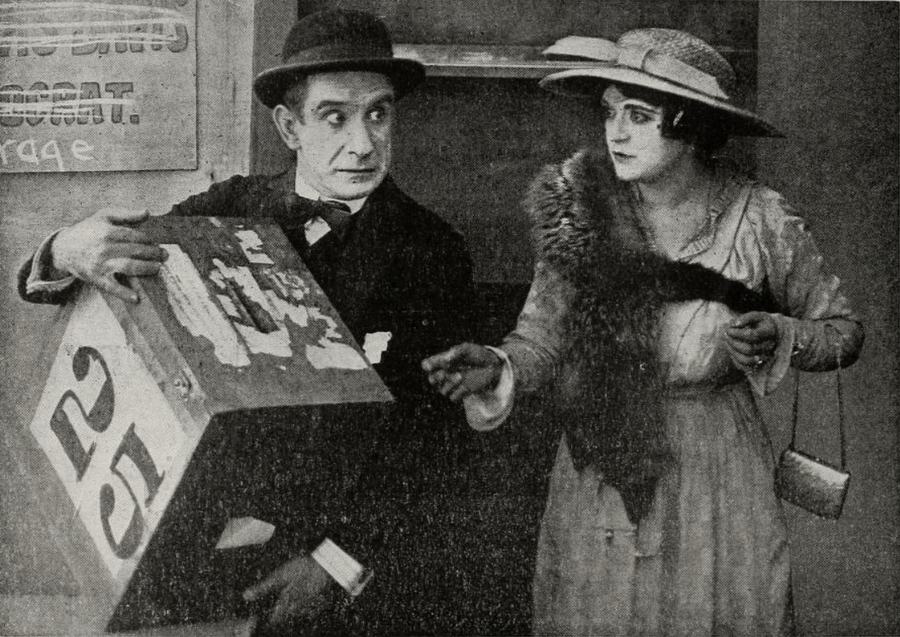
In the nascent epoch of cinematic storytelling, when the silver screen was still finding its voice in the expressive silence of pantomime and intertitles, a film like "The Politicians" emerges as a fascinating artifact. Released in 1915, this five-reel comedy, penned by the prolific Aaron Hoffman, is far more than a mere historical curiosity; it’s a vibrant, often prescient, commentary on human nature, the allure of power, and the delightful absurdity inherent in both. It’s a testament to the fact that even over a century ago, the machinations of political ambition and the pursuit of justice provided fertile ground for both uproarious laughter and keen social observation.
The narrative ignites with a spark of scandal in the bustling metropolis of New York. McQuire and Olson, two seasoned practitioners of political strong-arming, find their urban dominion crumbling under the weight of exposed election frauds. Their hasty, ignominious flight from the city is not merely an escape; it's a strategic retreat, a recalibration of their nefarious ambitions. This initial premise immediately sets a tone of high-stakes hijinks, reminiscent of other early films that playfully explored the underbelly of society, albeit with a comedic lens. The very idea of these urban schemers being chased by the law and then finding a new hunting ground speaks to a universal human impulse for reinvention, however morally bankrupt.
Their pursuer, the indomitable female detective Ruby Swift, portrayed with an arresting blend of tenacity and charm by Florence Morrison, adds a layer of modern appeal to the proceedings. In an era where female roles were often relegated to damsels in distress, Swift stands as a refreshing counterpoint, a woman of agency and intellect. Her relentless pursuit isn't just a plot device; it's a thematic anchor, representing the unwavering force of justice against the tide of corruption. One can draw parallels to other films of the period that dared to feature strong female characters, such as the adventurous spirit found in Saved from the Harem, though Swift's battleground is the political arena rather than exotic lands. The energy she brings to the screen is palpable, driving much of the film's comedic tension.
The duo's acquisition of an ancient automobile, a symbol of early 20th-century mobility and perhaps their antiquated approach to modern problems, transports them to the idyllic, yet soon-to-be-disrupted, rural community of Hicktown. This shift in setting is crucial. It’s a classic comedic trope: the sophisticated, albeit villainous, urbanites clashing with the presumed innocence of provincial life. The timing of their arrival, coinciding with the yearly mayoral election, is a stroke of narrative genius, providing a ready-made arena for their manipulative talents. The contrast between their big-city cynicism and Hicktown's rustic simplicity is the wellspring of much of the film's humor.
Ruby Swift, with her uncanny ability to track, arrives on the scene just as the politicians begin to deploy their "big-city political knowledge." This phrase, laden with ironic implication, refers to their mastery of electoral fraud. The film cleverly uses their methods to satirize the very foundations of democratic processes, albeit in a lighthearted manner. They adopt "suffrage" as their party platform, a truly audacious and darkly humorous move, considering their utter disregard for genuine representation. This appropriation of a progressive movement for nefarious ends is a brilliant piece of satire, highlighting the superficiality that can often underpin political rhetoric. It speaks volumes about the cynical exploitation of public sentiment, a theme that remains remarkably relevant even today.
The incumbent, Mayor Franklin Bond, played by Snitz Edwards, is depicted as a man so entrenched in his small bailiwick, so "hard shelled," that his defeat is rendered almost inevitable by the dynamic, albeit dishonest, onslaught of McQuire and Olson. This portrayal is a nuanced critique of political complacency, suggesting that even a seemingly unassailable position can crumble when faced with cunning and novelty, regardless of its ethical grounding. Edwards, a veteran character actor, likely brought a wonderful blend of bluster and bewildered indignation to the role, making Bond's downfall both comedic and subtly poignant.
Ruby's decision to pose as an "adventuress" and infiltrate the politicians' inner circle is a pivotal moment, showcasing her intelligence and daring. Enlisted to help them "trim" the town – a euphemism for fleecing the populace – she becomes an eyewitness to the ballot box theft and their subsequent fraudulent victory. Her presence in the heart of their operation, while privy to their methods, keeps the audience on edge as she grapples with the unknown location of the hidden ballots. This dramatic irony fuels the suspense, even within the comedic framework. The tension between her role as an accomplice and her true mission as an agent of justice creates a compelling internal conflict, expertly conveyed through the nuanced performance of Morrison.
The subplot involving the mayor's daughter, who loves the candidate opposing her father, adds a layer of romantic entanglement and further complicates the political landscape. Her persuasion of her beloved to withdraw, clearing the path for her father, is a classic dramatic device, setting up an ostensibly easy victory that is then abruptly shattered by the ballot box theft. This emotional core provides a counterpoint to the broader political satire, grounding the narrative in personal stakes. The subsequent framing of the withdrawn candidate by a rival suitor for the daughter’s affections, leading to his unjust imprisonment, ratchets up the drama considerably. It’s a stark reminder that political corruption often has devastating personal consequences, even in a comedy.
Ruby's next move is a stroke of psychological genius. As the politicians' secretary, she deliberately cultivates a romantic interest from both McQuire and Olson, hoping to exploit their rivalry. This gambit, designed to cause them to quarrel and inadvertently reveal the location of the hidden ballots, is a brilliant demonstration of her cunning. The silent film medium excels at conveying such intricate emotional manipulation through exaggerated expressions and gestures, and one can only imagine the delightful contortions of jealousy and misplaced affection displayed by John Nicholson and Willis Reed (presumably playing McQuire and Olson, though the plot summary doesn't explicitly link names to roles beyond the two main politicians). Their performances would have been crucial in selling this complex emotional dance.
As predicted, jealousy ignites a fierce quarrel between the two politicians. This internecine conflict is so potent that even the suffragette Chief of Police – another wonderfully progressive, albeit comically ineffectual, character – cannot reconcile them. This detail is particularly noteworthy, highlighting the film's playful engagement with contemporary social movements. The Chief of Police’s inability to mediate underscores the depth of the politicians’ personal animosity, which has now superseded their professional alliance. This internal fracturing is precisely what Ruby has been waiting for, setting the stage for the film's exhilarating climax.
The resolution, hinging on Ruby’s masterful exploitation of their bickering, promises a satisfying conclusion to this comedic web of deceit. Her ability to leverage their personal flaws to achieve justice is the ultimate triumph of intellect over brute cunning. This narrative arc, where a clever protagonist outwits a pair of morally compromised antagonists, is a timeless formula, echoing the intricate plots of detective stories and farcical comedies alike. The five-reel format would have allowed for a gradual build-up of these tensions, culminating in a grand, theatrical reveal and resolution.
The success of "The Politicians" undoubtedly rested on the shoulders of its talented cast. While specific roles are not fully detailed for all, the presence of names like John Nicholson, Snitz Edwards, Martin Reagan, Florence Morrison, Willis Reed, Alma Hanlon, Ruby Hoffman, Harry Watson, and George Bickel suggests a robust ensemble capable of delivering the broad physical comedy and nuanced emotional expressions required by silent cinema. Each actor would have contributed to the vibrant tapestry of Hicktown, from the blustering Mayor Bond to the conniving McQuire and Olson, and the steadfast Ruby Swift. Their exaggerated yet precise movements, facial expressions, and timing were the very language of the film.
Aaron Hoffman, the film's writer, evidently possessed a keen eye for social satire and a knack for crafting intricate comedic plots. His ability to weave together political commentary, romantic intrigue, and detective work into a cohesive, entertaining narrative speaks to a sophisticated understanding of dramatic structure, even in the early days of the medium. The themes he explores – political corruption, the power of the individual (especially a woman) to effect change, and the folly of human ambition – are universal and enduring, which explains the film's continued resonance. One might compare his ability to construct a world of cunning and misdirection to the narrative complexity found in films like Monsieur Lecoq, albeit filtered through a comedic lens.
"The Politicians" stands as a fascinating example of early American cinema's capacity for both entertainment and social critique. It's a film that, despite its century-old vintage, still manages to speak to contemporary issues. The portrayal of political opportunism, the vulnerability of small communities to external manipulation, and the persistent struggle for justice are themes that transcend time. While it may lack the grandiosity of epics like Strathmore or the dark allure of Vampire, its charm lies in its grounded, yet exaggerated, depiction of human folly. Its comedic insights into electoral fraud and the seductive power of populist rhetoric are particularly striking, especially when considering the historical context of the suffrage movement that it so audaciously, and comically, appropriates.
The film's exploration of a love triangle amidst political intrigue also finds echoes in other period dramas, though perhaps with a lighter touch than something like The Love Tyrant. Here, the romance serves not just as a diversion, but as a critical tool for Ruby to achieve her ends, making it integral to the plot's resolution. The comedic elements, too, are expertly handled, relying on situational irony, character eccentricities, and the inherent absurdity of the politicians' schemes. The contrast between the presumed sophistication of urban politics and the perceived naivety of rural voters offers a rich vein of humor, a trope also explored in films like The Country Boy, but here with a more cynical, yet still hilarious, edge.
In conclusion, "The Politicians" is a robust, engaging silent comedy that offers more than just laughs. It’s a subtle commentary on the societal currents of its time, wrapped in an entertaining package of chase sequences, disguises, and romantic misdirection. It showcases the ingenuity of early filmmakers in crafting complex narratives without spoken dialogue, relying instead on the universal language of human emotion and physical comedy. For those interested in the evolution of political satire, the role of women in early cinema, or simply a good old-fashioned comedic romp, this film remains a compelling watch, a vibrant snapshot of a bygone era that still speaks volumes today.
IMDb 6.6
1931
Community
Log in to comment.