DbcultAccessing Vault...
Cult Review
Senior Film Conservator
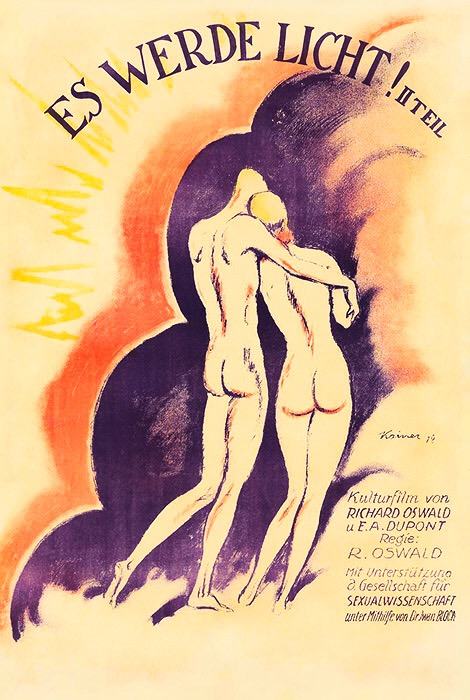
Richard Oswald's 1918 cinematic offering, Es werde Licht! 2. Teil, emerges not merely as a motion picture but as a visceral social commentary, a daring exploration into the murky waters of public health, personal morality, and the devastating stigma associated with venereal disease in the early 20th century. This isn't just a film; it's a polemic, a passionate plea for understanding and a scathing critique of the judgmental attitudes that often accompanied illness. It forces us, even a century later, to confront uncomfortable truths about how society often weaponizes morality against the afflicted, turning a medical condition into a badge of shame.
The narrative thrust of this sequel to the earlier, equally provocative Es werde Licht! is anchored in the journey of a young, intellectually formidable doctor, whose professional acumen is unfortunately paired with a deeply entrenched, almost puritanical moral framework. He embodies the very societal judgment the film seeks to dismantle, firmly believing that syphilis, the central antagonist of this drama, is exclusively the consequence of 'reprehensible actions,' a scourge reserved for the 'characterless.' This conviction isn't merely an opinion; it's a dogma, informing his interactions and shaping his professional identity. It’s a worldview that, while perhaps comforting in its simplistic categorization of good and bad, ultimately blinds him to the complexities of human experience and the indiscriminate nature of disease.
The film masterfully sets the stage for a profound ideological clash. A pivotal scene unfolds at a venerated venereologist's meeting, a gathering presumably dedicated to scientific discourse and patient welfare. Here, our protagonist's rigid moral categories collide head-on with a colleague advocating for a more objective, empathetic, and medically sound approach. This isn't a mere academic debate; it's a heated, emotional confrontation, a microcosm of the larger societal struggle between compassion and condemnation. The tension in this sequence, even without spoken dialogue, must have been palpable, driven by the actors' expressions and the very architecture of the scene, designed to highlight the profound chasm between their respective philosophies. It’s a testament to the power of silent film to convey such intricate intellectual and emotional conflict.
What sets Es werde Licht! 2. Teil apart is its unflinching willingness to dismantle its protagonist's deeply held biases through personal tragedy and direct experience. The film doesn't merely argue against his dogmatism; it subjects him to a crucible of suffering that forces a radical re-evaluation. The first crack in his ideological armor appears with the marriage of his own sister to a man who, unbeknownst to her and perhaps to himself, is still battling the insidious grip of syphilis. This revelation, when it inevitably surfaces, must shatter his carefully constructed world, forcing him to reconcile his abstract moral judgments with the concrete reality of his own family's vulnerability. It transforms the 'characterless' other into a beloved kin, making the disease a profoundly personal threat rather than a distant, easily judged affliction.
The second, even more devastating blow, is the doctor's own contraction of the disease. This is not some abstract clinical case study; it is a direct, intimate betrayal of his own body, brought about by something as innocent and tender as a kiss from a young woman who also suffers from syphilis. This twist is nothing short of brilliant in its narrative economy and emotional impact. It’s a cruel irony, a poetic justice that forces him to walk in the very shoes of those he once so readily condemned. The physical manifestation of the disease, the pain, the uncertainty, the fear of social ostracism – all these experiences strip away his intellectual arrogance, leaving him raw and exposed to the harsh realities faced by his patients. Theodor Loos, in the role of the young doctor, would have had to convey this profound internal struggle with immense subtlety and power, relying solely on his physicality and facial expressions to communicate a world collapsing and reforming within him. His journey from self-righteousness to humility, from judgment to empathy, forms the emotional core of the film.
The genius of Richard Oswald and Ewald André Dupont's screenplay lies in its refusal to offer easy answers. The doctor's recovery, while a narrative necessity, is not presented as a simple 'cure-all.' Instead, it is the catalyst for a profound internal transformation. He reconsiders his previous attitude, not just towards syphilis, but towards illness, morality, and the very essence of human dignity. This shift is the film's ultimate triumph, advocating for a medical profession rooted in empathy rather than moral policing. It’s a powerful statement, particularly for its time, challenging the prevailing societal norms that often conflated illness with sin.
In an era where public health campaigns were often rudimentary and highly moralistic, Es werde Licht! 2. Teil dared to suggest a more nuanced approach. It implicitly argues for education, understanding, and compassion over judgment and isolation. The film speaks to a broader human truth: that suffering transcends social strata and moral standing, and that true healing, both physical and societal, begins with empathy. This theme resonates even today, in discussions around various stigmatized conditions, reminding us that the battle against disease is often intertwined with the battle against prejudice.
Considering the constraints and conventions of silent cinema, the film's ability to tackle such a sensitive and complex subject matter is remarkable. The performances, particularly from Theodor Loos, Paul Hartmann, and Eva Speyer, must have been crucial in conveying the emotional weight of the narrative. Rita Clermont and Bernd Aldor would have contributed to the ensemble, each playing a part in the unfolding drama that forces the doctor's introspection. Silent films relied heavily on exaggerated expressions, dramatic gestures, and intertitles to convey dialogue and internal monologues. For a film dealing with such nuanced moral and medical debates, the clarity and impact of these elements would have been paramount. Imagine the close-ups, the shifts in lighting, the deliberate pacing designed to draw the audience into the doctor's internal turmoil.
The boldness of Es werde Licht! 2. Teil can hardly be overstated. In 1918, discussing syphilis so openly, let alone making a film that critiqued societal attitudes towards it, was revolutionary. It speaks to a nascent understanding of cinema's power not just as entertainment, but as a tool for social reform and public education. This film is part of a lineage of socially conscious cinema that sought to provoke thought and instigate change. One might draw parallels to other films that dared to expose societal ills, though perhaps with different focuses. For instance, a film like Sins of Ambition, while likely dealing with different forms of moral transgression, probably shared a common thread of exploring human failings and their consequences. Or perhaps The Broken Promise, which could have delved into the moral decay resulting from deceit, echoing the hidden truths and eventual revelations in Oswald’s film.
Richard Oswald, a prolific director of the era, was known for his willingness to tackle controversial subjects, often blending melodrama with social commentary. His collaboration with Ewald André Dupont, who would later achieve international acclaim, likely contributed to the film's narrative sophistication. The period itself, reeling from the devastations of World War I, was ripe for introspection and a questioning of established norms. Public health was a pressing concern, and films like this served a dual purpose: to entertain and to educate, albeit often through dramatic exaggeration.
The film’s title, Es werde Licht! (Let there be light!), is itself a profound metaphor. It’s a call for enlightenment, for shedding light on ignorance, prejudice, and the hidden realities of disease. The '2. Teil' suggests a continuation of this illumination, delving deeper into the ramifications of such societal blindness. It’s a powerful, almost biblical invocation, elevating the subject matter beyond mere medical drama to a discourse on human morality and societal progress.
Beyond the explicit plot, Es werde Licht! 2. Teil implicitly paints a picture of early 20th-century German society. It reflects anxieties about public health, the role of women, and the nascent discussions around sexual health. The fact that the doctor contracts the disease from a kiss, rather than a more overtly 'reprehensible' act, underscores the film's message that syphilis was not solely a punishment for promiscuity but a widespread public health issue that could affect anyone, regardless of their perceived moral standing. This was a radical idea for the time, challenging deeply ingrained Victorian-era sensibilities.
The portrayal of characters like the young woman with syphilis, or the sister's husband, would have been critical. Were they depicted as victims, or as morally compromised individuals? The film’s progressive stance suggests a more sympathetic portrayal, designed to elicit empathy from the audience rather than condemnation. The performances of actors like Rita Clermont and Bernd Aldor would have been instrumental in conveying the human cost of the disease and the societal judgment that accompanied it. Their roles, though perhaps secondary to the doctor's arc, would have been vital in illustrating the broader impact of syphilis on ordinary lives.
The very existence of this film, and its predecessor, highlights a fascinating period in cinematic history where the medium was rapidly evolving and being recognized for its potential beyond simple entertainment. It was a time when filmmakers were experimenting with narrative forms and exploring themes that were often taboo in other art forms. This film, in particular, stands as a testament to the courage of its creators to confront a difficult subject head-on, using the power of the moving image to challenge prevailing prejudices and advocate for a more enlightened approach to public health.
Ultimately, Es werde Licht! 2. Teil transcends its specific historical context to deliver a timeless message about empathy, understanding, and the dangers of moral absolutism. The transformation of the young doctor is not just a personal journey but a metaphorical one for society itself. It’s a call to move beyond simplistic judgments and embrace a more humane, scientifically informed approach to human suffering. The film's insistence on the doctor's personal experience as the catalyst for his change suggests that true empathy often requires stepping into another's shoes, experiencing their pain, and shedding one's own biases.
While we may not have direct access to every nuance of its original presentation or audience reception, the enduring plot summary alone speaks volumes about its progressive intent. It's a reminder that cinema, even in its earliest forms, possessed the capacity to be a powerful agent for social change, challenging audiences to look beyond superficial judgments and confront the deeper complexities of the human condition. It stands as a vital piece of cinematic history, not just for its narrative boldness, but for its pioneering spirit in using film as a platform for public discourse and enlightenment. It asks us to consider: how far should an illness be considered a human disgrace? And its answer, delivered through the harrowing personal journey of its protagonist, is unequivocally: not at all.
The film’s relevance, even today, is striking. We still grapple with stigmatized diseases, with the tendency to blame the victim, and with the tension between moral judgment and compassionate care. Es werde Licht! 2. Teil serves as a historical touchstone, a powerful reminder of how far we've come in some respects, and how much further we still have to go in others. It's a testament to the power of storytelling to educate, to provoke, and ultimately, to foster a more empathetic world. The legacy of this film is not just in its historical place in cinema, but in its enduring message that light must indeed be shed on ignorance and prejudice, allowing understanding and compassion to flourish.
IMDb 6.6
1927
Community
Log in to comment.