DbcultAccessing Vault...
Cult Review
Senior Film Conservator
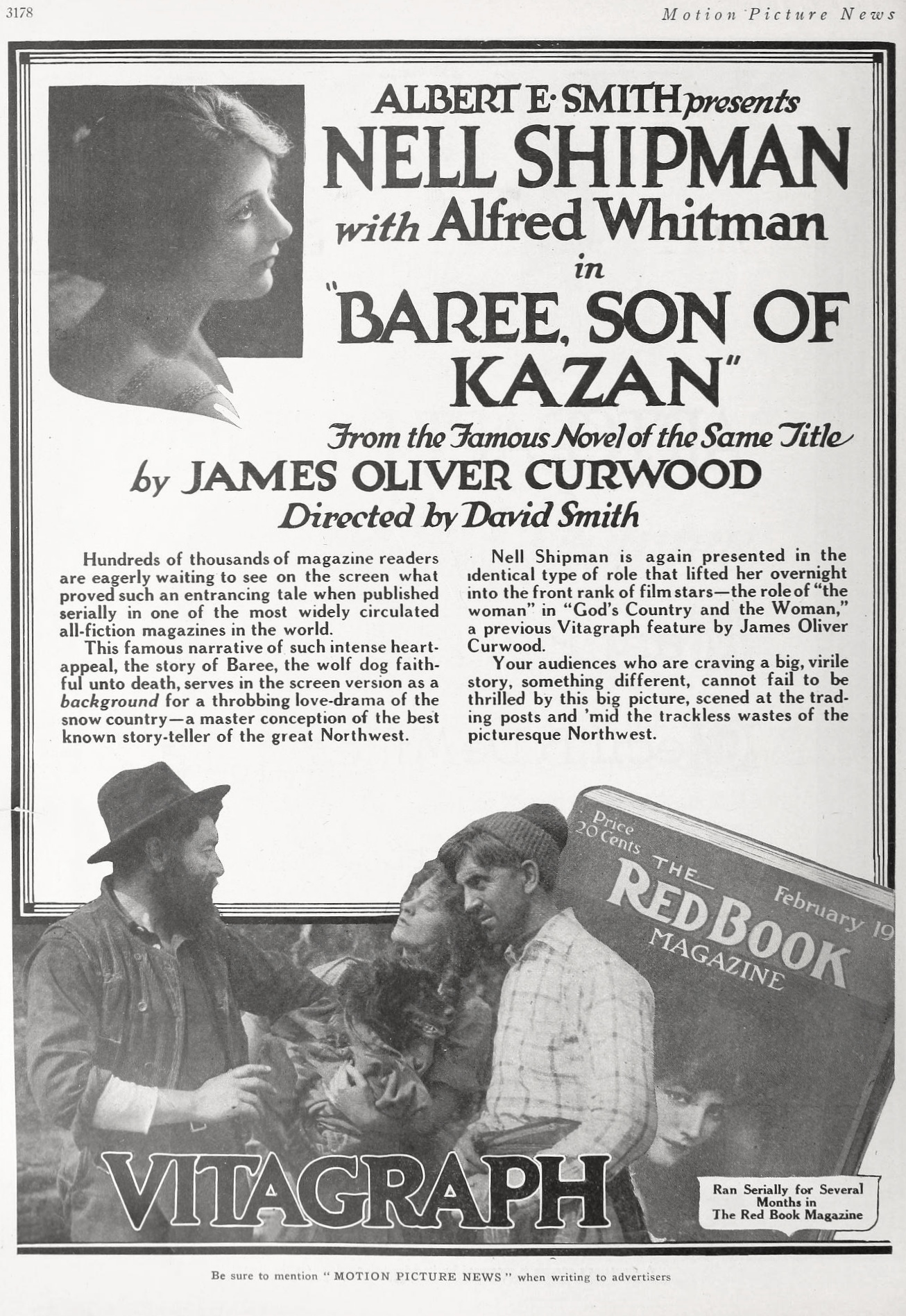
The silent era often grappled with the dichotomy between the rotting structures of civilization and the purifying, if lethal, embrace of the natural world. In Baree, Son of Kazan, this tension is not merely a background element but the very engine of the plot. Adapted from the rugged prose of James Oliver Curwood, the film serves as a foundational text for the 'Northland' genre, a cinematic space where the moral compass is frequently dictated by the elements rather than the statutes of man.
Before we are introduced to the majestic vistas of the Canadian Northwest, the story anchors itself in the grime of political malfeasance. Jim Carvel, portrayed with a desperate intensity by Gayne Whitman, is a man forged in the fires of personal tragedy. His father, Henry Carvel, represents the last vestige of civic integrity, a newspaper owner whose refusal to bow to a local political boss leads to his untimely demise. This initial act of violence sets the stage for a transformation. When Jim kills his father's murderer, he isn't just seeking revenge; he is severing his ties to a society that permits such atrocities. This transition from the city to the wild is a common trope, yet here it feels more like a spiritual migration. Unlike the protagonists in The Yankee Way, who often navigate social hierarchies with a sense of bravado, Carvel is a man stripped of his status, seeking anonymity in the silence of the snow.
The arrival of Nepeese, played by the legendary Nell Shipman, shifts the film's energy. Shipman was more than an actress; she was a pioneer of animal-centric filmmaking and a staunch advocate for shooting on location. Her presence brings an authenticity to the screen that was often lacking in contemporary studio-bound productions. In Baree, Son of Kazan, Nepeese is not the typical damsel in distress found in films like The Mysterious Mrs. Musslewhite. While she is victimized by the grotesque 'Bush' McTaggart, her connection to the land and to Baree suggests a hidden strength. Shipman’s ability to interact naturally with the wolf-dog provides the film with its most poignant moments, grounding the melodrama in a palpable physical reality.
Joe Rickson’s portrayal of 'Bush' McTaggart is a masterclass in silent-screen villainy. McTaggart is the antithesis of the noble frontiersman; he is a parasite who utilizes the isolation of the trading post to exercise a tyrannical will. His attack on Nepeese and the subsequent murder of her father, Pierre, are filmed with a starkness that avoids the theatrical flourishes of Satana. Instead, the violence feels claustrophobic and inevitable. McTaggart’s decision to frame Jim Carvel for the murder is a calculated move that weaponizes the local indigenous population against the fugitive. This manipulation of justice is a recurring theme in Curwood’s work, highlighting the vulnerability of the innocent in a land where the law is often represented by the most corrupt individual within a hundred-mile radius.
The most fascinating aspect of the film is the agency granted to Baree. In many films of this era, animals were relegated to the status of props or comic relief. However, in the lineage of Kazan, the dog is the moral center. Baree is the one who perceives McTaggart's true nature long before the human characters do. The hunt for McTaggart is not merely a chase sequence; it is a ritualistic purging of evil. While Jim Carvel is rescued by De Bar—a character whose 'half-breed' status reflects the film’s complex, if dated, racial politics—it is Baree who delivers the final blow. This reliance on animal instinct over human intervention offers a critique of civilization that mirrors the cynicism found in A Tale of the Australian Bush, where the environment itself becomes an active participant in the narrative's resolution.
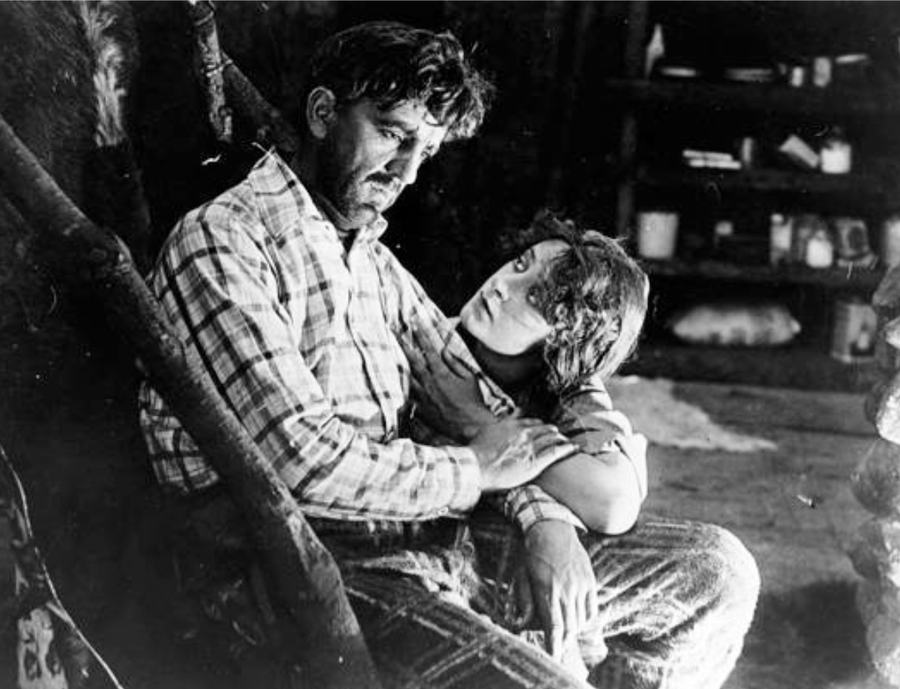
Visually, the film benefits from the stark contrast of the Canadian winter. The cinematography captures the duality of the landscape—its breathtaking beauty and its lethal indifference. The use of wide shots to emphasize the isolation of the cabin against the vastness of the forest creates a sense of existential dread. This is not the curated nature of The Miracle of Life; this is a terrain that demands survival as a prerequisite for existence. The editing during the climax, where the film cuts between the fleeing McTaggart and the relentless pursuit by Baree, builds a tension that transcends the limitations of silent technology. It is a primitive, rhythmic pacing that mirrors the beating of a heart under duress.
When placing Baree, Son of Kazan alongside other films of the period, its unique texture becomes even more apparent. While The Redemption of Dave Darcey focuses on the internal moral awakening of its lead, Baree’s world is one where internal change is irrelevant compared to external action. There is no room for the psychological nuances of Sposa nella morte! or the investigative curiosity of Detective Brown. In the North, you are either the hunter or the hunted. The film shares a certain gritty DNA with Unclaimed Goods, particularly in its depiction of the harsh realities of frontier life, but it elevates the material through its quasi-mythological treatment of the animal protagonist.
Even in the quieter moments, such as Jim’s growing affection for Nepeese, there is an underlying sense of fragility. Their union at the end of the film is not a return to domestic bliss but a commitment to survival together in a world that remains fundamentally hostile. Unlike the resolution in The Big Sister, which seeks a societal reintegration, Jim and Nepeese seem to find their peace by remaining on the periphery of the known world. They are, in many ways, like the characters in In Search of the Castaways—drifting in a vast ocean of nature, bound only by their shared trauma and their mutual respect for the wild.
The enduring appeal of Baree, Son of Kazan lies in its refusal to sentimentalize the wilderness. It acknowledges that while the city is corrupt, the forest is brutal. The film doesn't offer an easy escape; it offers a harder, more honest way of living. For modern viewers, the film is a fascinating artifact of a time when the boundaries of cinema were still being explored. It predates the more polished but perhaps less soulful animal adventures of later decades, providing a raw look at the intersection of human greed and animal loyalty. It stands as a testament to Nell Shipman’s vision and Curwood’s enduring influence on the American and Canadian imagination.
In the wider scope of early 20th-century cinema, this film occupies a space between the sensationalism of Der Bär von Baskerville and the sentimental family dynamics of The General's Children. It is a work of stark contrasts—white snow against dark deeds, silent screams against the howling of the wind. Even as we look back from a century away, the image of Baree standing guard over his masters remains a powerful symbol of a justice that exists beyond the reach of the gavel, a justice that is as old as the mountains themselves.
Ultimately, Baree, Son of Kazan is a reminder that the most compelling stories are often those that strip away the veneer of civilization to reveal the beating heart of the primitive. It is a film that demands to be seen not just as a historical curiosity, but as a vibrant, breathing piece of cinematic art that still has the power to unsettle and inspire.
IMDb 5.5
1935
Community
Log in to comment.