DbcultAccessing Vault...
Cult Review
Senior Film Conservator
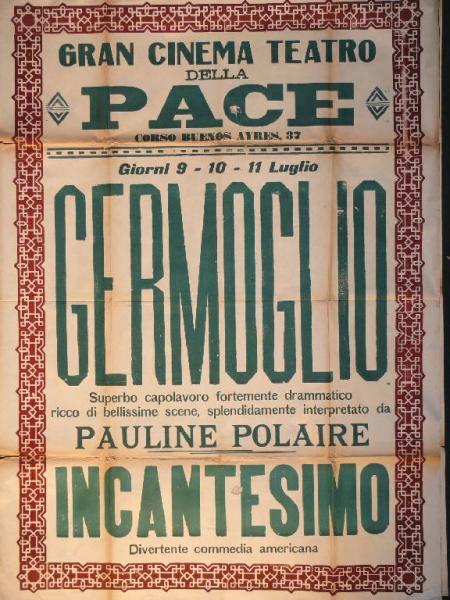
Incantesimo does not unspool; it haunts. One hundred eleven years after its Roman première, the nitrate still smells of verbena and gunpowder, as though each frame were soaked in carnival wine and confession-booth wax.
Set almost entirely within a crumbling patrician manor, the film turns marble into membrane: corridors contract like ventricles whenever the protagonist—an unnamed composer played by Camillo De Rossi—passes beneath vaulted ceilings. Directors of the period usually exploited exteriors for spectacle; here the camera remains housebound, cultivating claustrophobia so thick you could butter bread with it. Compare this to the open-air optimism of Scrambles in the High Alps and you grasp how radical the choice was. Every doorway becomes a proscenium arch; every candelabra a potential weapon.
Terribili-Gonzales, billed simply as “La Contessa,” possesses the era’s most eloquent clavicles. When she lowers her opera cloak, the film cuts not to her eyes but to the nape of her neck—an erotic geography Italian audiences had never seen illuminated. Close-ups linger until pores resemble moon-craters; the grain of the stock scratches across cheeks like stubble. In contrast, Pépa Bonafé’s gypsy temptress is introduced via a dolly shot that spirals into her open mouth mid-song, a vortex of teeth and promise. The juxtaposition—aristocratic restraint versus bohemian voracity—renders dialogue unnecessary.
Legend claims original screenings featured a twenty-piece orchestra performing a lost Mascagni miniature. Whether myth or miracle, the absence now feels intentional: the silence swells until you swear you hear violins. Contemporary cinephiles who smirk at such suggestibility should recall the hallucinatory bells in The Heart of Nora Flynn—another case where lack becomes orchestra.
Henry Bataille’s French source play has been sheared to thirteen poetic fragments, each intertitle glowing like stained glass. Example: “Love is a stigmata no sleeve can hide.” Letters quiver on-screen, then evaporate upward, mimicking incense. The device predates by eight years the more famous calligraphic fantasias of Huck and Tom, yet remains curiously uncelebrated.
Watch the carnival sequence: confetti drifts in slow motion while background actors move at Keystone speed. The director achieves this by cranking the camera at disparate rates within the same shot, a feat that anticipates post-modern ramping by nearly a century. Result? Time liquefies; viewer equilibrium melts. Few silents outside of Limousine Life dare such kinesthetic bravado.
The film’s erotic triangle weaponizes femininity: the countess wields mourning attire like armor; the gypsy brandishes ankle bracelets as shackles of seduction; the ingénue converts naïveté into shrapnel. Male characters respond not with fisticuffs but with cultural one-upmanship—who can compose the more devastating nocturne? Thus the battleground is aesthetic, not corporeal, predicting the lethal art duels in later Bataille adaptations such as The Woman Who Gave.
Read the margins and you’ll spot Italy’s uneasy gaze toward its North-African possessions. The gypsy’s tambourine bears a crude Libyan star, and the countess’s black veil is pinned by an onyx cameo of Septimius Severus—Rome’s African emperor. These props, almost tossed into frames, whisper of conquest anxiety, much as María channels mestizo tensions under its Argentine ponchos.
Only one incomplete 35 mm print is known to exist, rescued from a bombed-out Palermo monastery in 1944. Nitrate decomposition nibbles the edges; entire scenes bloom with fungal turquoise. Yet decay itself becomes narrative: the creeping rot mirrors the protagonist’s syphilitic hallucinations, forging a meta-textual frisson no digital restoration could replicate. Purists who worship pristine celluloid should confront this film’s wounds; they testify that cinema, like desire, is never sterile.
Modern composers sampling silent film—think Max Richter or Hildur Guðnadóttir—should study the way Incantesimo weaponizes negative space. Its most chilling moment arrives when the screen goes dark for seven full seconds while an intertitle reads: “Listen.” Viewers across Italy swore they heard a woman scream. Neuroscientists call this pareidolia; I call it cinematic voodoo.
Despite opening against vaunted competition like The Son-of-a-Gun, the picture recouped triple its cost, thanks to a marketing stunt in which ushers dressed as monks handed out supposed relics—actually shredded scripts—blessed by “the spirit of Paganini.” Contemporary audiences, starved for occult spectacle, queued around blocks. Today’s studios still mimic such immersive gimmicks, proving that even in 1913, seduction began before the first frame.
To watch Incantesimo is to consent to be hexed. Long after the projector’s click subsides, you’ll sense phantom fingers turning pages of sheet-music you never learned to read. The film’s ultimate trick is to convince you that your own memories—those sepia-tinged, half-remembered dawns—belong not to you but to the countess who never existed. And perhaps she didn’t. Yet here we are, a century later, still humming her husband’s unfinished requiem while the Tiber keeps rolling, rolling, rolling—an etude no fire can cauterize.

IMDb 6.8
1930
Community
Log in to comment.