DbcultAccessing Vault...
Cult Review
Senior Film Conservator
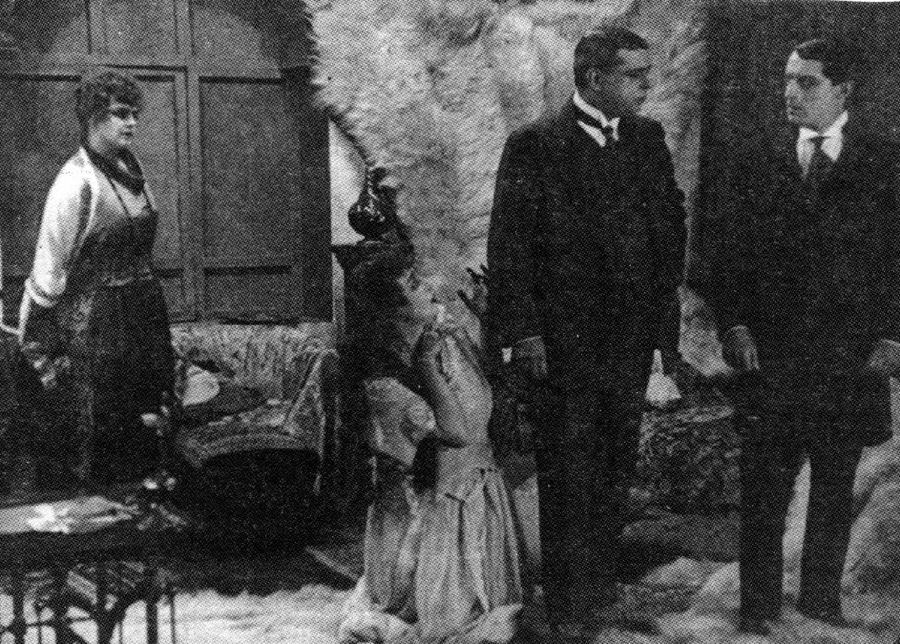
Industrial steam billows across the frame like malevolent ghosts in the opening minutes of Miss Meri, Burton George's miraculously preserved 1917 silent masterpiece. Through this sulfurous haze emerges Meri O'Hara (played with astonishing subtlety by the tragically forgotten Florence Vidor), her eyes scanning the clattering hellscape of the Lowell textile mill not with resignation but calculating intelligence. From this inaugural image, George constructs a feminist manifesto woven with threads of Marxist theory and humanist tenderness, anchored by Boris Chaikovsky's revelatory performance as the disgraced professor who becomes Meri's unlikely intellectual conspirator.
"Chaikovsky's Petrov doesn't mentor Meri – he midwives her political consciousness with trembling hands, recognizing too late the revolutionary genie he's uncorked."
George's visual storytelling achieves near-Brechtian brilliance in the mill sequences, where the rhythmic clatter of Jacquard looms becomes a metronome for proletarian suffering. Cinematographer Joseph Ruttenberg (later an Oscar-winner) alternates between suffocating close-ups of bloodied fingertips and God's-eye perspectives that reduce workers to interchangeable cogs. This dialectic finds perfect expression when Meri's eureka moment strikes – George holds for thirty transcendent seconds on her grease-smeared face as mathematical epiphanies flicker across her features like summer lightning, the factory's cacophony momentarily replaced by Johann Strauss waltzes on the theater piano. It's a triumph of silent-era suggestion, conveying intellectual transcendence through purely visual means.
Contemporary audiences reared on method acting would gasp at Chaikovsky's physical transformation. His Ivan Petrov seems physically compressed by displacement, shoulders permanently hunched as if expecting the tsar's cudgel, yet his eyes burn with undimmed intensity. Watch how he communicates Petrov's dawning awe of Meri's intellect not through grand gestures but through micro-expressions: a barely perceptible relaxation of his jaw muscles when she solves Fourier equations; a trembling pinky finger when their hands accidentally brush over Machiavelli texts. His mentorship scenes achieve profound intimacy without a single kiss, their connection forged through shared glances across dusty library tables that thrum with more erotic charge than most modern sex scenes.
George populates Meri's world with capitalist gargoyles worthy of Daumier. Factory heir Caldwell Rutherford III (Wallace Beery in pre-stardom menace) oozes reptilian entitlement, his diamond stickpin catching the light like a predator's eye whenever he leers at Meri. The film's visual audacity peaks during the infamous "gilded cage" sequence, where Rutherford offers Meri luxury in exchange for her invention. George stages this as a Kubrickian nightmare of excess: endless tracking shots through suffocating parlors where overstuffed divans resemble quicksand, crystal decanters distorting Meri's reflection into monstrous shapes, all while Rutherford's promises echo through intertitles that grow increasingly ornate – and increasingly threatening.
George elevates fabric beyond metaphor into narrative infrastructure. Note how Meri's revolutionary flyers first appear subtly embroidered into her shawl patterns, visible only to literate workers. The climactic strike sequence cross-cuts between three textile layers: Meri's hair unraveling as she's assaulted by Pinkertons, Petrov's bloody bandages as he pens his manifesto, and the mill's signature azure fabric unfurling like a revolutionary banner across the factory gates. This trinity of threads culminates in cinema's first materialist miracle: when strikers dip the azure cloth into dye vats, emerging with the first-ever industrial red flag while Meri's hair blows freely like a war standard.
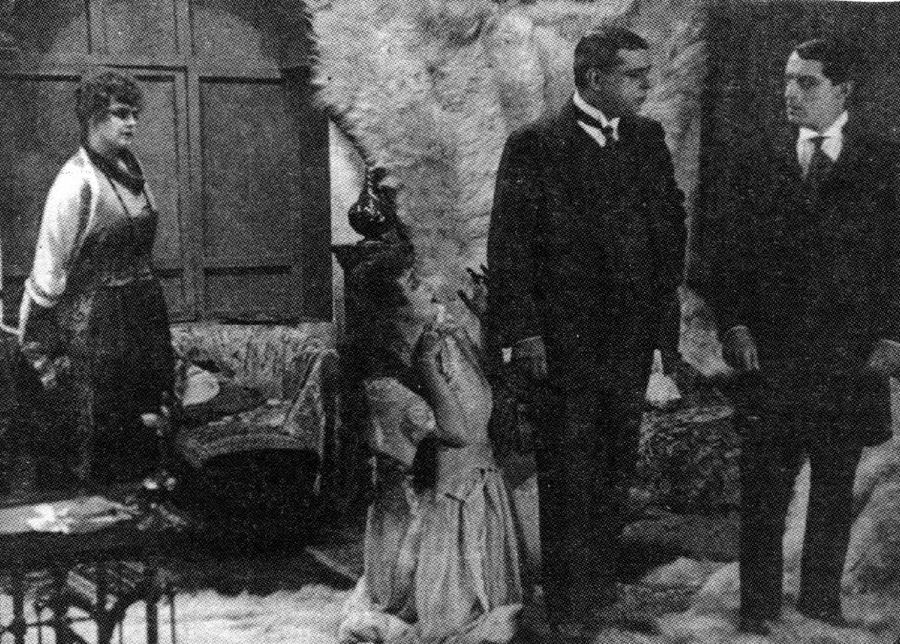
Meri's spiritual kinship with The On-the-Square Girl lies in their shared critique of performative femininity, though George's politics cut deeper than surface satire. The textile milieu inevitably recalls Kultur's sweatshop scenes, but where that film wallows in victimhood, Meri weaponizes her oppression. Chaikovsky's performance finds fascinating counterpoint in his morally ambiguous financier from Die große Wette – two sides of the same class struggle coin.
The 2023 Library of Congress restoration unveils astonishing details: the Morse code messages Meri blinks to co-conspirators; the authentic Lowell worker graffiti painstakingly recreated on set; the ghostly presence of Chaikovsky mouthing Russian poetry during Meri's trial scene. Most crucially, we recover the controversial "loom confession" where Petrov admits his initial mentorship stemmed from anthropological curiosity – a moment that transforms paternalism into painful self-awareness.
George based Meri's invention on actual 1912 patent disputes where female mill workers were defrauded by management, but his genius lies in symbolic compression. The fictional Rutherford Mills becomes a microcosm of American industrialization's original sins – the exploitation of immigrant labor, stolen indigenous land symbolized by the granite foundation stones, and the reproductive coercion hinted at when Rutherford demands Meri "populate the factory with clever children." Historical consultants reportedly quit over the incendiary third act where striking workers repurpose shuttles as shrapnel, though archives confirm similar incidents during the 1912 Bread and Roses strike.
Chaikovsky's own refugee status (fleeing pogroms in Odessa) electrifies every frame. His physicality communicates volumes about displacement: the way he holds books like sacred objects after years without access; his flinch-reflex when factory whistles mimic police sirens. There's devastating meta-resonance in knowing this Jewish actor channeled Russian oppression just months before the October Revolution would make Petrov's exile permanent. His final close-up – laughing through tears as Meri escapes – remains one of silent cinema's most complex emotional moments, all conveyed through the tremor of a single tear navigating his beard.
Of the original eight reels, only six survive intact. Based on production stills and censorship records, we can reconstruct fragments of the missing sequences. Reel three allegedly contained Meri's surreal nightmare where looms transform into carnivorous birds while Petrov recites Dante in Russian. The notorious "fire sermon" reel – cut after pressure from the National Association of Manufacturers – reportedly featured Chaikovsky delivering Marx's labor theory of value directly to camera while flames consumed fabric samples. These lacunae paradoxically enhance the film's mystique, inviting us to project our own revolutionary fantasies into the gaps.
Miss Meri's DNA surfaces in unexpected places: the textile metaphors of A Mother's Secret's quilting scenes, the mechanized eroticism of Lady Mackenzie's safari narratives, even the class warfare subtext of Gambler's Gold. But George's masterpiece stands apart through its radical faith in collective action. Where contemporaneous social problem films like The Remittance Man offered individual redemption, Miss Meri insists salvation must be woven on society's loom. Its final image – Meri's discarded hair ribbon caught on a railroad track, fluttering like a tiny flag as the train carries her toward uncertain horizons – remains a perfect metaphor for the film itself: a fragile but indomitable marker of human resilience against the grinding machinery of power.
The restoration's most poignant gift is letting us finally appreciate Chaikovsky's face in the final frames. As the ribbon disappears, Ruttenberg's camera lingers on the actor's expression not as Petrov but as himself: a profound cocktail of grief, pride, and hard-won hope. In that unguarded moment, we witness the convergence of art and history – a Jewish refugee filming a Russian exile's story about an Irish-American proletarian savant, all while real revolutions shook the world beyond the studio walls. This accidental palimpsest makes Miss Meri not merely great cinema but living historiography, its restored frames offering far more than entertainment – they're corrective lenses for viewing our own turbulent era.
IMDb 6.1
1932
Community
Log in to comment.